
Forensic Engineering Investigation Guide for Accurate Results
Every year, engineering failures cost thousands of organizations millions in damages and disruption. Whether you are investigating a structural collapse or a mysterious equipment breakdown, the stakes are high. A well-structured forensic engineering investigation not only uncovers the root cause but also helps prevent future incidents. This step-by-step guide walks you through a process trusted by experts to ensure your findings are accurate, credible, and legally defensible.
Table of Contents
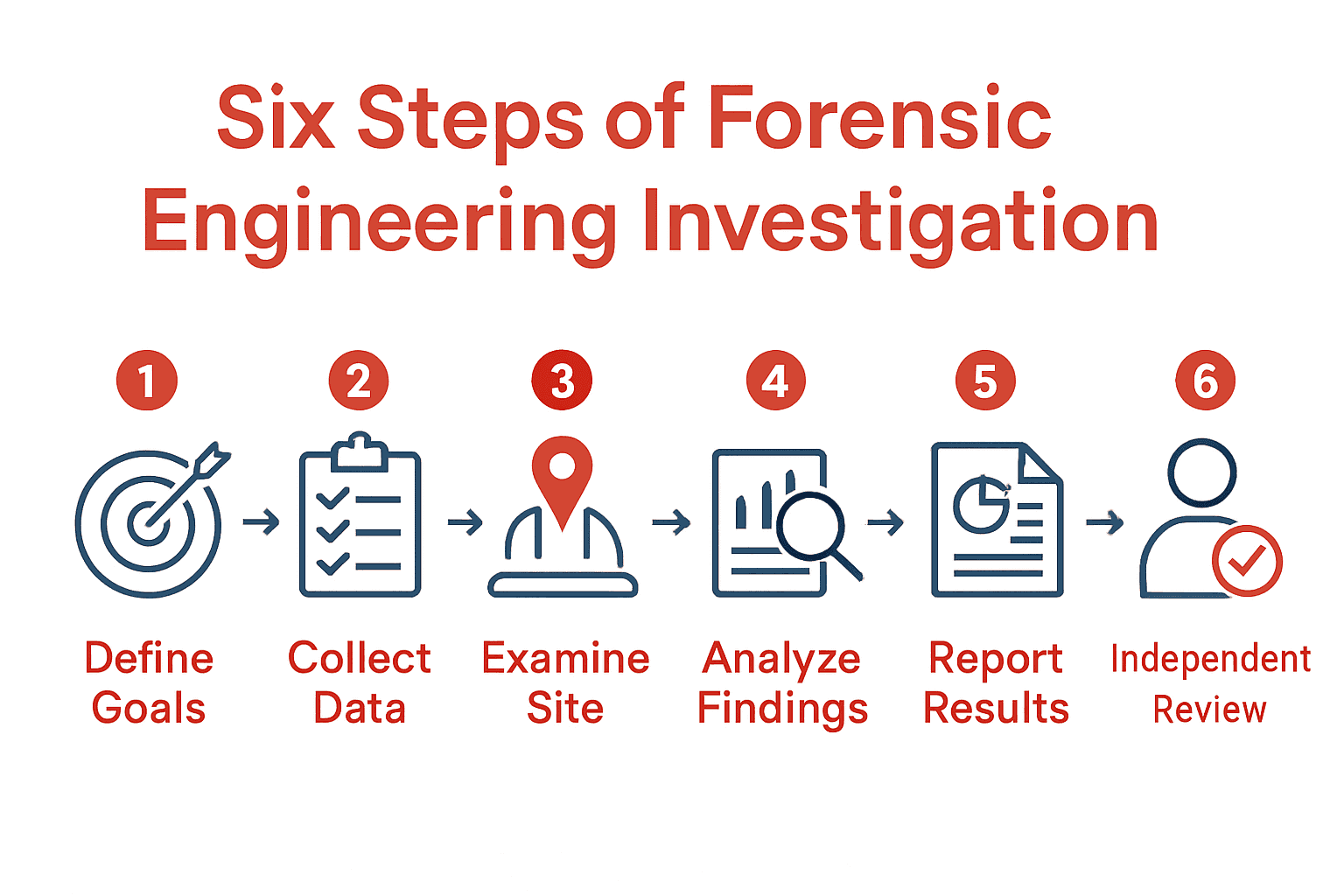
- Step 1: Define Investigation Goals And Requirements
- Step 2: Collect Relevant Site Data And Documentation
- Step 3: Conduct Thorough On-Site Examination
- Step 4: Analyze Findings With Engineering Principles
- Step 5: Prepare Comprehensive Forensic Engineering Report
- Step 6: Verify Accuracy With Independent Review
Quick Summary
| Key Point | Explanation |
|---|---|
| 1. Establish clear investigation goals | Define what you aim to understand or prove during your forensic investigation. This guides your entire analysis process. |
| 2. Collect comprehensive site data | Gather all relevant documentation, photographs, and measurements systematically to support accurate technical analysis of the site. |
| 3. Conduct thorough on-site examinations | Perform hands-on analysis with systematic documentation to identify root causes of structural failures or performance issues. |
| 4. Apply rigorous engineering principles | Use advanced methods to analyze findings, ensuring objectivity while validating initial hypotheses against established standards. |
| 5. Verify findings through independent review | Engage a third-party expert to validate your investigation’s methods and conclusions, ensuring technical accuracy and integrity. |
Step 1: Define investigation goals and requirements
When you begin a forensic engineering investigation, establishing clear and precise goals is your critical first step. According to research from the National Academy of Forensic Engineers, this initial phase ensures unbiased data collection and systematically derived conclusions.
Your investigation goals should precisely outline what you want to understand or prove. Start by asking fundamental questions: What specific failure or performance issue are you investigating? Are you trying to determine the root cause of a structural problem, assess potential liability, or evaluate engineering design effectiveness? The University of Texas Center for Transportation Research emphasizes that establishing clear requirements helps forensic engineers effectively address complex technical challenges.
To create comprehensive investigation goals, consider these practical steps: document the specific incident or problem in detail, identify all relevant physical evidence, determine the scope of your investigation, and outline the potential technical and professional questions you need to answer. A well structured goal statement will guide your entire investigative process and help ensure that your findings are rigorous, credible, and defensible. Your next step will involve gathering initial documentation and preparing for an in depth site or evidence examination.
Pro Tip: Always maintain objectivity. Your goal is to discover the truth through systematic analysis, not to prove a predetermined outcome.
Step 2: Collect relevant site data and documentation
Collecting comprehensive site data and documentation is a crucial phase in forensic engineering investigations where precision matters most. National Academy of Forensic Engineers research highlights the importance of capturing detailed site specific information to support accurate technical analysis.
Your documentation collection process should be systematic and thorough. Begin by creating a comprehensive inventory of all available records including architectural blueprints, construction permits, maintenance logs, and previous inspection reports. Take detailed photographic evidence documenting the entire site from multiple angles. Pay special attention to areas showing potential damage or structural irregularities. According to research on building investigations, National Academy of Forensic Engineers recommends capturing precise measurements of key structural elements like stairways including tread depths, riser heights, and handrail configurations.
As you gather documentation, maintain meticulous organization. Create digital and physical backup copies of all materials. Use high resolution cameras with timestamp features and include scale references in your photographs. Ensure your documentation includes contextual information like weather conditions, surrounding environment, and potential external factors that might have influenced the site condition. Your collected data will serve as the foundational evidence for subsequent analytical steps in the forensic investigation.
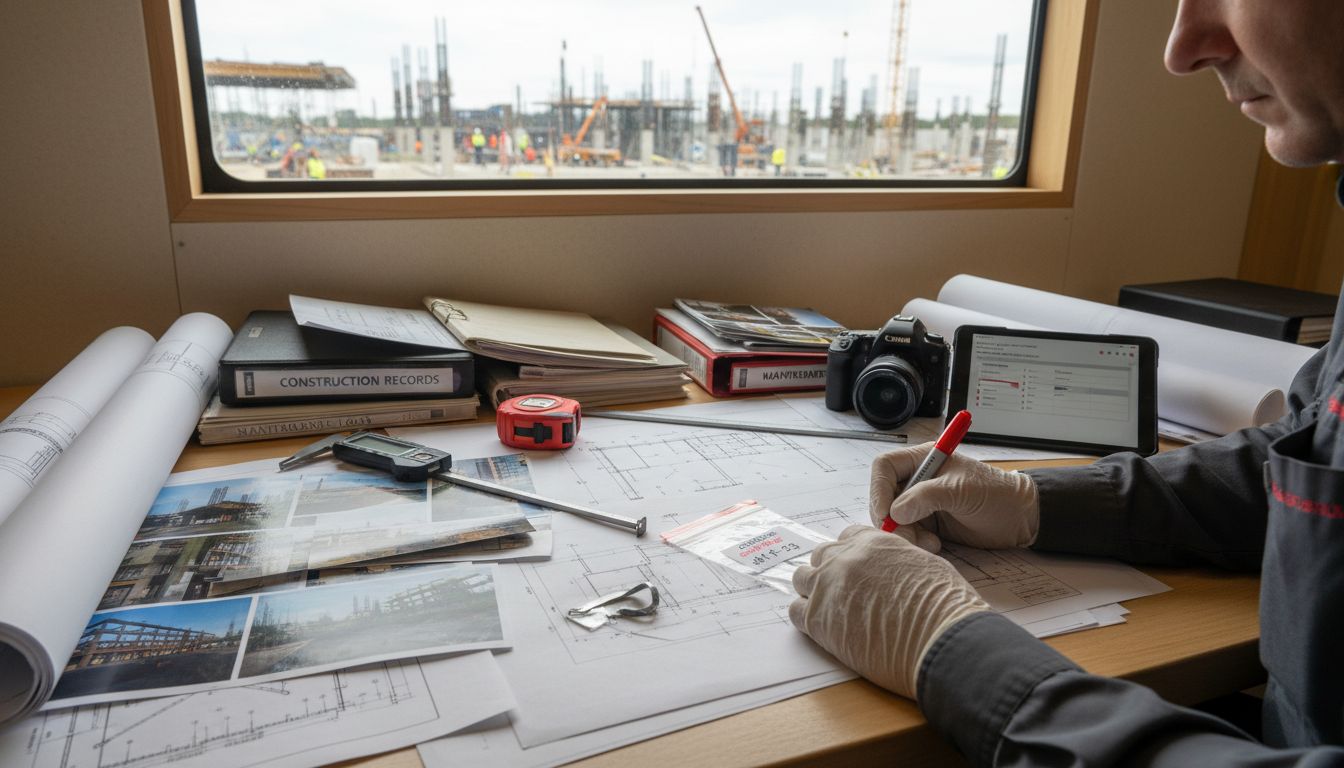
Pro Tip: Always document the chain of custody for your collected evidence to maintain its legal and scientific integrity.
Step 3: Conduct thorough on-site examination
Conducting a thorough on-site examination is the critical moment where your forensic investigation transforms from theoretical planning to hands-on analysis. National Academy of Forensic Engineers research emphasizes that detailed site investigations are fundamental to identifying root causes of structural failures or performance issues.
Approach your on-site examination systematically. Start by wearing appropriate personal protective equipment and bringing comprehensive documentation tools like high resolution cameras, measurement devices, and detailed sketching materials. Methodically document every aspect of the site conditions. According to forensic research on complex investigations, National Academy of Forensic Engineers recommends capturing precise sequential data and environmental context during your examination. Pay special attention to potential indicators of damage structural irregularities or environmental factors that might have contributed to the issue you are investigating.
While examining the site, maintain an objective and methodical approach. Take multiple measurements from different angles. Create comprehensive visual and written documentation that includes scaled photographs contextual notes and precise measurements. Look beyond the obvious and document even seemingly minor details that could become significant during later analysis. Your goal is to create a comprehensive record that will support rigorous scientific investigation.
Pro Tip: Always document your examination process chronologically and maintain a clear chain of evidence to ensure the scientific and legal integrity of your findings.
Step 4: Analyze findings with engineering principles
Analyzing your forensic investigation findings requires a systematic application of rigorous engineering principles that transform raw data into meaningful technical insights. National Academy of Forensic Engineers research emphasizes the critical importance of applying specialized engineering methodologies to uncover root causes of complex technical failures.
Begin your analysis by organizing all collected data systematically. Use advanced analytical techniques like finite element analysis to model and simulate potential failure scenarios. According to National Academy of Forensic Engineers, visual presentation methodologies can help translate complex mechanical system data into comprehensible insights. Compare your findings against established engineering standards materials performance benchmarks and industry best practices. Look for patterns anomalies and potential causative factors that might explain the observed failure or performance issue.
During your analysis maintain objectivity and scientific rigor. Cross reference multiple data sources validate your initial hypotheses and be prepared to challenge your own assumptions. Document each step of your analytical process creating a clear logical narrative that explains how you reached your conclusions. Your goal is to produce a technically sound reproducible analysis that can withstand professional and potentially legal scrutiny.
Pro Tip: Always triangulate your findings using multiple analytical approaches to ensure comprehensive and credible results.
For more detailed guidance on forensic investigation processes, check out our forensic engineering process investigation guide.
Step 5: Prepare comprehensive forensic engineering report
Preparing a comprehensive forensic engineering report represents the culmination of your entire investigative process where you transform complex technical findings into a clear professional narrative. ASTM International provides detailed guidance on creating expert reports that effectively communicate technical investigations with precision and clarity.
Structure your report systematically to ensure maximum comprehension and professional credibility. Begin with a detailed executive summary that concisely outlines your key findings investigation methodology and primary conclusions. According to National Academy of Forensic Engineers recommendations include comprehensive sections that explain your investigative techniques analytical approaches and the scientific reasoning behind your conclusions. Incorporate high quality visual documentation such as photographs technical diagrams and graphical representations of your data to enhance understanding.
Ensure your report maintains strict technical objectivity and follows professional standards. Clearly document your methodology explain any limitations in your investigation and provide a transparent account of how you reached your conclusions. Include detailed references supporting your findings and be prepared to explain your technical rationale. Your report should serve as a robust technical document that can withstand professional and potentially legal scrutiny.
Pro Tip: Always have a colleague or senior engineer review your report to ensure technical accuracy and clarity before final submission.
For additional insights into crafting professional engineering reports, explore our engineering reports comprehensive guide.
Step 6: Verify accuracy with independent review
Verifying the accuracy of your forensic engineering investigation through an independent review is a critical final step that ensures the credibility and reliability of your technical findings. National Academy of Forensic Engineers research emphasizes the importance of rigorous third party validation in engineering analyses.
Seek out an independent forensic engineering expert who has no prior involvement in your investigation. This reviewer should possess specialized expertise relevant to your specific technical domain. According to National Academy of Forensic Engineers, independent verification protocols are essential for confirming the scientific integrity of your investigative methods and conclusions. Provide this expert with your complete investigation documentation allowing them to conduct a thorough and unbiased assessment of your methodological approach analytical techniques and final interpretations.
During the independent review process remain open to constructive feedback and potential refinements. The goal is not to defend your original findings but to validate their technical soundness. Carefully consider any alternative perspectives or additional insights offered by the independent reviewer. If significant discrepancies emerge be prepared to revisit your original analysis conduct additional research or modify your conclusions to reflect the most accurate technical understanding.
Pro Tip: Choose an independent reviewer with a reputation for technical rigor and professional objectivity who is not connected to your original investigation.
For more comprehensive guidance on forensic investigation processes, explore our forensic engineering process investigation guide.
Ensure Reliable Results with Expert Forensic Engineering Support
Navigating the complexities of a forensic engineering investigation demands precision and objectivity to uncover the truth behind structural failures. This guide highlights essential steps like thorough site data collection and rigorous analysis—key challenges when facing unfamiliar technical details or legal scrutiny. If you are seeking to turn these detailed investigative processes into supported, credible findings, professional assistance can make all the difference.

Trust our team at Florida Licensed Engineers to provide comprehensive forensic investigation and detailed reporting that meet the highest industry standards. Explore insights and updates in the Uncategorized Archives – Global Forensic Engineers to deepen your understanding of forensic methods. Take control of uncertainty now by partnering with experts who can deliver clear, defensible conclusions for your residential or commercial project. Start your investigation journey with us today and ensure accuracy every step of the way.
Frequently Asked Questions
What are the initial steps in a forensic engineering investigation?
The initial steps involve defining your investigation goals and requirements clearly. Document the specific incident, identify relevant physical evidence, and outline the scope of the investigation to guide your process effectively.
How should I collect site data and documentation for my investigation?
Collect comprehensive site data by creating an inventory of records like blueprints and maintenance logs, and ensure to take detailed photographs. Organize this information meticulously and maintain backup copies to support accurate analysis.
What should I include in the on-site examination process?
During the on-site examination, systematically document all aspects of the site condition, including measurements and environmental factors. Use personal protective equipment and recording tools to ensure you capture every relevant detail for later analysis.
What methodologies can I apply when analyzing my forensic investigation findings?
Apply rigorous engineering principles and advanced analytical techniques, such as finite element analysis, to interpret your data correctly. Organize your findings systematically and compare them against established engineering standards and benchmarks.
How can I ensure the credibility of my forensic engineering report?
To ensure credibility, structure your report with a clear executive summary and detailed sections that explain your methods and findings. Include visual documentation and references to support your conclusions and maintain technical objectivity throughout.
Why is an independent review important in a forensic engineering investigation?
An independent review is crucial for validating the accuracy of your findings and ensuring scientific integrity. Seek feedback from an unbiased expert in your field to confirm your analysis and be open to potential revisions based on their insights.
Recommended
- Complete Guide to the Role of Forensic Engineering – FloridaLicensedEngineers.com
- Forensic Engineering Process: Step-by-Step Investigation Guide – FloridaLicensedEngineers.com
- Top Forensic Engineering Solutions – Expert Comparison 2025 – FloridaLicensedEngineers.com
- Best Forensic Engineering Report Tools – Expert Comparison 2025 – FloridaLicensedEngineers.com
- Role of Forensic Analysis: Complete Guide for 2025
