
Why Hire an Engineering Firm: Complete Expert Guide
Over 80 percent of large building projects depend on expert engineering firms to ensure safety, efficiency, and legal compliance. Whether you are planning a home renovation or managing a municipal development, the challenges soon become clear. Engineering firms provide the specialized technical knowledge that turns ambitious ideas into reliable structures, handling every detail from design and analysis to navigating regulations. Knowing what these organizations actually do helps you make better decisions and avoid costly mistakes right from the start.
Table of Contents
- What Is an Engineering Firm? Core Functions Explained
- Service Types: Residential, Commercial, and Civil Projects
- How Engineering Firms Drive Project Success
- Legal Compliance and Permitting Responsibilities
- Risks of DIY Versus Professional Engineering Services
Key Takeaways
| Point | Details |
|---|---|
| Role of Engineering Firms | Engineering firms provide specialized technical expertise across various disciplines, facilitating safe and sustainable infrastructure projects. |
| Project Domains | Services are offered across residential, commercial, and civil engineering projects, each requiring unique technical knowledge and regulatory understanding. |
| Importance of Compliance | These firms play a crucial role in ensuring projects meet legal requirements and managing permitting strategies to navigate regulatory landscapes. |
| Professional versus DIY | Engaging professional engineering services mitigates risks associated with safety, compliance, and project management that DIY solutions cannot adequately address. |
What Is an Engineering Firm? Core Functions Explained
An engineering firm is a professional organization that provides specialized technical expertise and services across multiple engineering disciplines. These multifaceted organizations design, analyze, and solve complex technical challenges for residential, commercial, and public infrastructure projects. According to Wikipedia, engineering firms focus on creating safe and comfortable environments while minimizing environmental impact through integrated mechanical, electrical, and plumbing (MEP) systems.
The core functions of an engineering firm encompass a wide range of professional services. These typically include:
- Architectural Design: Creating comprehensive blueprints and structural plans
- Structural Analysis: Evaluating building integrity and load-bearing capacities
- Civil Infrastructure: Designing roads, utilities, drainage systems, and public spaces
- Mechanical Engineering: Developing mechanical systems and equipment specifications
- Electrical Planning: Designing electrical distribution and communication networks
- Permitting and Compliance: Navigating regulatory requirements and obtaining necessary approvals
As Wikipedia explains, engineering firms play a critical role in coordinating complex infrastructure networks, ensuring efficient integration of various technical systems. Their expertise extends beyond simple design work – they serve as problem solvers who transform conceptual ideas into functional, safe, and sustainable real-world solutions. Whether it’s a residential renovation, commercial construction project, or municipal infrastructure development, engineering firms provide the technical knowledge and strategic planning necessary to bring complex projects from conception to completion.
Understanding the comprehensive scope of an engineering firm helps clients recognize the immense value these professionals bring. Explore our complete guide to engineering services to learn more about how specialized technical expertise can transform your next project.
Service Types: Residential, Commercial, and Civil Projects
Engineering firms offer specialized services across three primary project domains: residential, commercial, and civil projects. According to Construction Placements, these services encompass diverse activities ranging from infrastructure development to comprehensive building construction and environmental project management.
Residential Engineering Services
Residential engineering focuses on designing, analyzing, and improving living spaces. Key services include:
- Structural home assessments
- Foundation and structural design
- Home renovation planning
- Permitting and code compliance
- Building system evaluations
Commercial Engineering Projects
Commercial engineering addresses complex technical challenges for business and institutional structures. These services typically involve:
- Office building design and analysis
- Industrial facility planning
- Complex mechanical and electrical system integration
- Seismic and structural safety assessments
- Large-scale infrastructure development
Civil Engineering Projects
As Noble Consultants explains, civil engineering covers an expansive range of public and community infrastructure projects, including:
- Transportation system design
- Water management infrastructure
- Utility network planning
- Public facility construction
- Shoreline and marina development
- Environmental conservation projects
Each project type requires unique technical expertise, specialized knowledge, and a deep understanding of regulatory requirements.
 Learn more about our residential engineering approach to understand how professional engineering services can transform your specific project needs.
How Engineering Firms Drive Project Success
Engineering firms are the strategic architects of successful project implementation, bringing technical expertise and systematic approaches to transform complex challenges into achievable solutions. According to Wikipedia, these firms apply sophisticated project management techniques to control critical project dimensions including scope, time, cost, and quality.
Strategic Project Planning
Successful project delivery hinges on meticulous planning and proactive problem-solving. Engineering firms excel by:
- Conducting comprehensive feasibility studies
- Identifying potential risks and mitigation strategies
- Developing detailed project timelines
- Establishing clear performance benchmarks
- Ensuring regulatory compliance
Technical Expertise and Coordination
The true value of an engineering firm emerges through its ability to coordinate complex technical requirements. This involves:
- Integrating multidisciplinary engineering approaches
- Managing diverse stakeholder expectations
- Providing specialized technical insights
- Implementing advanced technological solutions
- Ensuring seamless communication across project teams
Value Engineering and Optimization
Noble Consultants highlights that engineering firms contribute to project success through value engineering, which focuses on maximizing efficiency and minimizing unnecessary expenses. This approach involves:
- Analyzing cost-effective design alternatives
- Recommending innovative technological solutions
- Balancing performance with budgetary constraints
- Implementing sustainable design principles
- Reducing long-term operational costs
By leveraging technical expertise and strategic methodologies, engineering firms transform potential project challenges into successful, streamlined implementations. Explore our guide on civil engineering workflow for deeper insights into how professional engineering services can optimize your project’s potential.
Legal Compliance and Permitting Responsibilities
Engineering firms play a critical role in navigating the complex landscape of legal requirements and regulatory compliance for construction and development projects. These specialized professionals serve as essential intermediaries between project stakeholders and local, state, and federal regulatory bodies, ensuring that every aspect of a project meets stringent legal standards.
Comprehensive Permitting Strategies
Effective legal compliance involves a multifaceted approach to obtaining and managing necessary permits:
- Identifying all required governmental approvals
- Preparing detailed documentation for permit applications
- Conducting thorough code and zoning compliance reviews
- Managing interactions with regulatory agencies
- Tracking and maintaining permit validity
Regulatory Navigation and Risk Mitigation
Engineering firms provide crucial expertise in understanding and implementing complex regulatory requirements:
- Interpreting local and state building codes
- Ensuring structural and safety compliance
- Addressing environmental protection regulations
- Managing potential legal and financial risks
- Developing strategies to meet regulatory standards
Documentation and Compliance Reporting
Maintaining meticulous documentation is a cornerstone of legal compliance. This involves:
- Preparing comprehensive engineering reports
- Documenting design modifications
- Creating detailed compliance tracking systems
- Maintaining accurate project records
- Preparing evidence of regulatory adherence
The intricate process of legal compliance demands specialized knowledge and proactive management. Learn more about our engineering inspection process to understand how we ensure your project meets every legal requirement with precision and expertise.
Risks of DIY Versus Professional Engineering Services
Attempting do-it-yourself engineering solutions can expose property owners to significant financial, legal, and safety risks that far outweigh potential cost savings. According to the Civil Engineering Body of Knowledge, professional engineers possess specialized knowledge critical for ensuring structural integrity and safety – expertise that cannot be replicated through amateur approaches.
Technical Complexity and Knowledge Gaps
Professional engineering services differ dramatically from DIY attempts in several key areas:
- Advanced technical understanding of complex systems
- Comprehensive knowledge of building codes and regulations
- Sophisticated risk assessment capabilities
- Precision in design and implementation
- Access to specialized tools and technologies
Financial and Legal Vulnerabilities
DIY engineering projects introduce multiple potential financial and legal vulnerabilities:
- Potential code violation penalties
- Increased liability for structural failures
- Invalidated property insurance
- Reduced property value
- Expensive future remediation costs
Safety and Performance Risks
Building Services Engineering research highlights the intricate nature of engineering systems like HVAC, electrical, and plumbing. DIY approaches in these domains can create:
- Immediate safety hazards
- Inefficient system performance
- Potential health risks
- Compromised structural integrity
- Long-term functionality problems
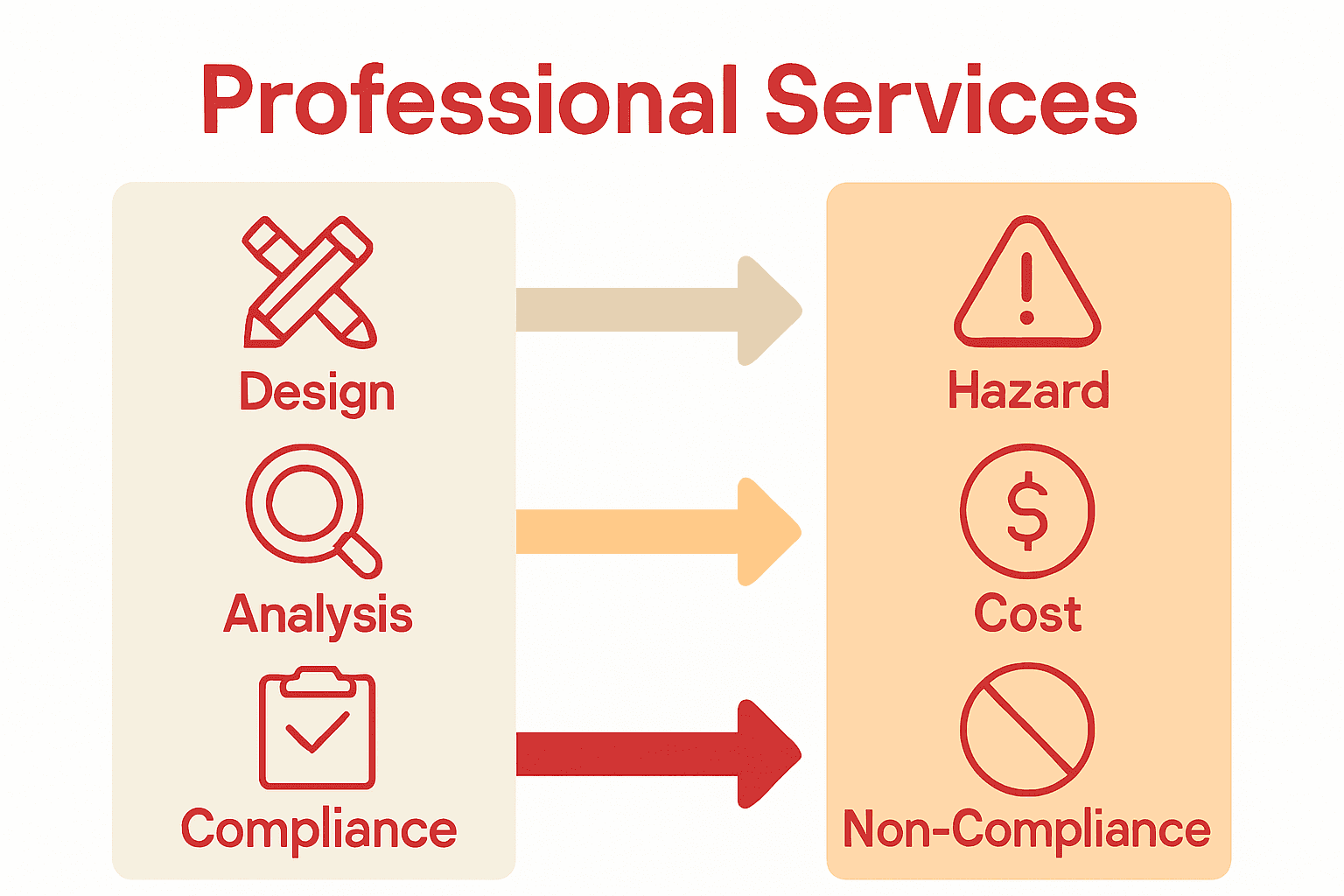
Learn more about the critical benefits of professional engineering inspections to understand how expert oversight can protect your investment and ensure optimal project outcomes.
Why Trust Experienced Engineering Firms for Your Project Success
When navigating complex challenges like permitting, structural design, or civil engineering, hiring a professional engineering firm removes the guesswork and risk. This article highlights how expert knowledge in architectural, mechanical, electrical, and plumbing plans plus thorough inspections ensures your project meets safety standards and legal compliance with confidence. Avoid costly mistakes by relying on specialists who provide the strategic planning and technical expertise your residential or commercial project demands.

Ready to move forward with trusted professionals who understand every nuance of engineering from foundations to flood mitigation? Our team at Florida Licensed Engineers offers full-service solutions including permitting expediter services and forensic reports. Learn how top experts can guide you through your project by visiting Uncategorized Archives – Connecticut Licensed Engineers and Uncategorized Archives – Pennsylvania Licensed Engineers. Contact us today to secure peace of mind and a successful outcome.
Frequently Asked Questions
What are the core services provided by engineering firms?
Engineering firms offer a range of services including architectural design, structural analysis, civil infrastructure design, mechanical and electrical planning, as well as permitting and compliance management.
How do engineering firms contribute to project success?
Engineering firms apply strategic project planning, technical expertise, and value engineering to drive project success by ensuring efficient implementation and compliance with regulatory standards.
Why is it important to hire professionals instead of opting for DIY engineering?
Hiring professionals mitigates risks associated with technical complexity, financial vulnerabilities, and safety concerns, ensuring structural integrity and legal compliance that DIY attempts often lack.
How do engineering firms manage legal compliance and permits for construction projects?
Engineering firms navigate legal compliance by identifying required permits, preparing documentation for applications, conducting compliance reviews, and maintaining accurate project records to ensure regulatory adherence.
