
Why Building Inspections Matter for Property Owners
Every American property owner faces serious stakes when it comes to building safety and compliance. Skipping professional building inspections can put you at risk for costly repairs or even legal troubles down the line. Studies show that overlooked structural issues account for up to 30 percent of unexpected property expenses nationwide. Understanding why comprehensive inspections matter empowers you to protect your investment, meet regulatory requirements, and avoid financial surprises.
Table of Contents
- Core Purpose of Building Inspections
- Different Types of Building Inspections Explained
- How Building Inspections Ensure Safety and Compliance
- Legal and Financial Implications of Inspections
- Common Pitfalls and What to Avoid
Key Takeaways
| Point | Details |
|---|---|
| Importance of Building Inspections | Building inspections assess structural integrity and safety, helping property owners identify potential hazards early. |
| Types of Inspections | Various inspections like residential, commercial, and specialized assessments ensure comprehensive evaluation of property conditions. |
| Legal and Financial Risks | Regular inspections mitigate legal and financial liabilities by ensuring compliance with building codes and documenting property conditions. |
| Proactive Maintenance | Establishing a systematic inspection schedule can prevent costly repairs and enhance property safety and value. |
Core Purpose of Building Inspections
Building inspections are comprehensive evaluations designed to assess the structural integrity, safety, and regulatory compliance of properties. These systematic assessments aim to provide clients with critical insights into a property’s current condition, revealing potential issues that might compromise safety or future value.
At their core, building inspections serve multiple crucial purposes. They help property owners identify structural damage, potential defects, and areas requiring immediate or future intervention. Inspections act as a critical safeguard against unforeseen liabilities by detecting structural weaknesses and environmental risks. This proactive approach enables property owners to make informed decisions about maintenance, renovation, or potential real estate transactions.
Beyond immediate risk assessment, building inspections play a pivotal role in ensuring long-term property sustainability. They verify compliance with local building codes and regulations, which protects not just the current property owner but also future occupants. Inspectors methodically examine electrical systems, plumbing, structural foundations, roofing, and other critical components to guarantee they meet established safety standards.
Pro Tip: Schedule regular building inspections every 3-5 years, or immediately before major property transactions, to catch potential issues early and prevent costly future repairs.
Different Types of Building Inspections Explained
Building inspections encompass a diverse range of specialized assessments designed to evaluate different aspects of property structures. These comprehensive evaluations help property owners and professionals understand the condition, safety, and compliance of various building systems and components.
The primary types of building inspections include residential and commercial property assessments, which cover multiple critical areas. Residential inspections typically examine structural integrity, electrical systems, plumbing, roofing, and potential environmental hazards. Commercial inspections are more complex, often involving detailed evaluations of mechanical systems, fire safety infrastructure, accessibility standards, and specialized equipment functionality.
Some specialized inspections focus on specific environmental challenges and regional risks. Windstorm inspections, for instance, assess a structure’s resilience against strong winds and hurricanes by evaluating roof design, construction materials, and protective elements. Other specialized assessments might include facade inspections, seismic evaluations, energy efficiency audits, and forensic investigations that determine the cause of structural failures or damage.
Pro Tip: When purchasing a property, request a comprehensive inspection that includes multiple specialized assessments to gain a complete understanding of the building’s condition and potential hidden issues.
Here’s a comparison of key types of building inspections and what each focuses on:
| Inspection Type | Main Focus | Typical Components Assessed |
|---|---|---|
| Residential | Home safety and integrity | Foundation, wiring, plumbing, roof |
| Commercial | Code compliance and functionality | Mechanical, fire safety, accessibility |
| Windstorm | Resistance to wind damage | Roofing, materials, structural ties |
| Energy Efficiency Audit | Lower energy costs | Insulation, HVAC, windows, lighting |
| Forensic | Source of structural issues | Damage causes, material failure, stress |
| Facade | Exterior safety and stability | Cladding, windows, balconies |
| Seismic | Earthquake resilience | Foundations, reinforcements, sway |
How Building Inspections Ensure Safety and Compliance
Building inspectors are critical professionals who verify that structures meet rigorous safety standards and comply with complex building regulations. Their systematic approach involves comprehensive assessments that go far beyond simple visual examinations, encompassing detailed evaluations of structural integrity, electrical systems, fire safety measures, and overall building performance.
The primary objective of building inspections is proactive risk management. Inspectors meticulously examine every critical component of a structure, identifying potential hazards before they can evolve into significant safety threats. They assess everything from foundation stability and load-bearing capacity to electrical wiring, plumbing systems, and environmental risk factors that could compromise the building’s safety or its occupants’ wellbeing.

Systematic evaluations help identify potential hazards and ensure buildings meet established safety standards, protecting not just the physical structure but also the lives of those who inhabit or interact with the building. These inspections serve as a critical line of defense, preventing catastrophic failures, minimizing liability risks, and ensuring that properties remain compliant with ever-evolving local, state, and federal building codes and regulations.
Pro Tip: Request a detailed written report after each inspection, documenting all findings and recommendations to maintain a comprehensive record of your property’s condition and potential improvement areas.
Legal and Financial Implications of Inspections
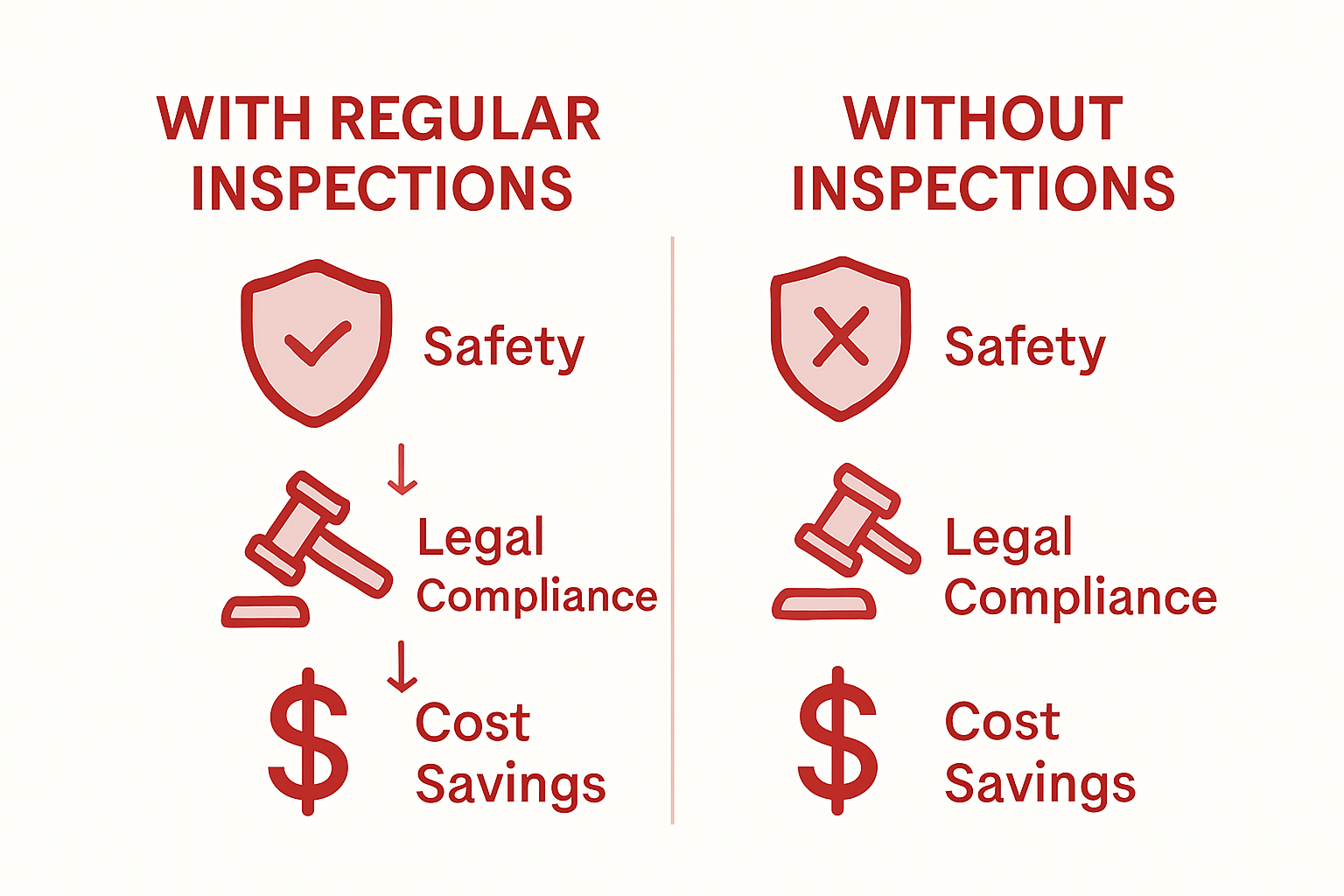
Building inspections play a critical role in preventing potential legal and financial complications by ensuring comprehensive compliance with complex regulatory standards. Property owners who neglect thorough inspections risk substantial financial penalties, operational disruptions, and potential legal challenges that can significantly impact their investment and business continuity.
The legal landscape surrounding property ownership and maintenance is intricate, with building codes and regulations constantly evolving. Inspections serve as a proactive mechanism to mitigate risks, documenting a property’s condition and identifying potential violations before they escalate into expensive legal disputes. These assessments help property owners demonstrate due diligence, which can be crucial in protecting against liability claims and ensuring continued operational legitimacy.
A certificate of occupancy represents the ultimate legal validation of a building’s compliance, serving as an official document that certifies a structure meets all necessary legal requirements for safe occupancy. This critical certification can directly impact property transactions, insurance rates, financing opportunities, and overall property value. Potential buyers, lenders, and insurers frequently require recent inspection reports to validate a property’s condition and legal standing.
Pro Tip: Maintain a comprehensive file of all inspection reports and certificates, creating a documented history of your property’s maintenance and compliance that can be invaluable during property sales, insurance negotiations, or potential legal proceedings.
Below is a summary of inspection report benefits for property owners:
| Benefit | Legal Impact | Financial Impact |
|---|---|---|
| Proof of code compliance | Reduces liability | Prevents penalties and lawsuits |
| Early issue detection | Demonstrates due diligence | Lowers long-term repair costs |
| Up-to-date property documentation | Speeds up legal processes | Eases sales and insurance tasks |
| Certificate of occupancy | Enables property use legally | Increases loan approval chances |
Common Pitfalls and What to Avoid
Neglecting regular building inspections can create substantial risks that extend far beyond simple maintenance concerns. Property owners often underestimate the potential consequences of overlooking systematic evaluations, which can lead to hidden structural problems, safety hazards, and significant financial liabilities that emerge unexpectedly and cost exponentially more to repair.
One of the most critical mistakes property owners make is assuming that visual assessments are sufficient for understanding a building’s condition. Superficial examinations fail to reveal underlying issues such as electrical system vulnerabilities, structural microdefects, potential moisture damage, or incremental foundation shifts. These hidden problems can compromise a building’s integrity, create safety risks, and potentially invalidate insurance claims or property warranties.
Failing to conduct thorough inspections can result in severe legal and operational consequences that extend well beyond immediate repair costs. Non-compliance with safety standards can trigger regulatory penalties, potential litigation, increased insurance premiums, and even forced property closures. Property owners may find themselves facing complex legal challenges that could have been entirely prevented through proactive, comprehensive inspection protocols.
Pro Tip: Develop a systematic inspection schedule that includes professional assessments at least annually, and maintain detailed documentation of all inspection reports, repairs, and maintenance activities to protect your property investment.
Protect Your Property with Expert Building Inspection Services
Understanding why building inspections matter is key to safeguarding your investment from hidden risks and costly repairs. This article highlights critical pain points such as identifying structural weaknesses, ensuring code compliance, and avoiding legal complications. If you want to take control and avoid the emotional stress of unexpected damage or financial penalties, professional engineering services are your solution.
At Texas Licensed Engineers, we specialize in comprehensive inspections for residential and commercial properties. Our team offers detailed architectural, structural, mechanical, electrical, and plumbing plans as well as forensic investigations. We also provide civil engineering solutions including drainage, flood mitigation, and site plans to ensure your property meets all safety and legal standards.

Don’t wait until small problems turn into expensive disasters. Visit Florida Licensed Engineers today to schedule your detailed building inspection. Take the first step to protect your property and gain peace of mind with thorough documentation and expert guidance. Learn more about our full range of services in the Uncategorized Archives – Texas Structural Inspectors section and secure your investment now.
Frequently Asked Questions
What are building inspections and why are they important?
Building inspections are comprehensive evaluations of a property’s structural integrity, safety, and regulatory compliance. They help property owners identify potential issues, preventing costly repairs and ensuring safety for current and future occupants.
How often should I schedule a building inspection?
It’s recommended to schedule regular building inspections every 3-5 years, or immediately prior to major property transactions, to catch any potential issues early and maintain the property’s value.
What types of inspections should I consider for my property?
Key types of inspections include residential and commercial assessments, windstorm inspections, energy efficiency audits, facade inspections, seismic evaluations, and forensic inspections. Requesting a comprehensive inspection that covers multiple assessments can provide a complete understanding of your property’s condition.
What are the legal and financial implications of skipping building inspections?
Neglecting building inspections can lead to legal penalties, increased insurance rates, and potential litigation due to non-compliance with safety standards. Regular inspections help document a property’s condition and prove due diligence, protecting property owners from substantial financial liabilities.
Recommended
- Complete Guide to Building Inspection Services – FloridaLicensedEngineers.com
- Complete Guide to the Role of Inspections in Building – FloridaLicensedEngineers.com
- 7 Key Examples of Building Inspections Every Owner Should Know – FloridaLicensedEngineers.com
- 7 Key Examples of Building Inspections Every Owner Should Know – FloridaLicensedEngineers.com
