
Role of Architectural Drafting: Shaping Projects’ Success
Most American construction projects depend on highly accurate drawings, yet even a small drafting error can increase costs by thousands of dollars. Precise architectural drafting holds far more power than many realize, shaping the way ideas become structures that last. This guide breaks down architectural drafting for the American reader, providing clarity on its true role, how it has evolved, and why every detail matters for successful building.
Table of Contents
- Architectural Drafting Defined and Demystified
- Types of Architectural Drafting Services Explained
- How Drafting Impacts Project Design and Approval
- Legal and Regulatory Standards for Drafting
- Common Pitfalls and Costly Drafting Mistakes
Key Takeaways
| Point | Details |
|---|---|
| Architectural Drafting Importance | It transforms conceptual ideas into precise, actionable blueprints, essential for communication among stakeholders. |
| Types of Drawings | Core drawing types include floor plans, elevation drawings, and construction documents, each serving distinct purposes. |
| Regulatory Compliance | Adhering to legal and regulatory standards is critical to avoid project delays and financial penalties. |
| Error Mitigation Strategies | Implementing systematic review processes can prevent costly drafting mistakes and enhance project success. |
Architectural Drafting Defined and Demystified
Architectural drafting is the precise art and technical process of creating detailed graphic representations of building designs, transforming conceptual ideas into comprehensive visual blueprints. Architectural drafting has evolved dramatically from traditional hand-drawn techniques to sophisticated digital platforms that enable unprecedented accuracy and complexity.
At its core, architectural drafting involves translating architectural concepts into precise technical drawings that communicate exact spatial relationships, measurements, and construction specifications. These drawings serve as critical communication tools between architects, engineers, contractors, and clients, ensuring everyone understands the intricate details of a proposed structure. Modern drafting techniques utilize advanced software like Computer-Aided Design (CAD) and Building Information Modeling (BIM), which allow professionals to create three-dimensional representations with extraordinary detail and precision.
The primary components of architectural drafting include floor plans, elevation drawings, cross-section views, and detailed construction documents. Each drawing type serves a unique purpose: floor plans show the layout of spaces, elevation drawings depict exterior views, cross-sections reveal interior structural configurations, and construction documents provide comprehensive technical specifications. Precision is paramount, as even minor errors can lead to significant construction challenges or costly modifications.
Here’s a quick comparison of core architectural drawing types and their primary uses:
| Drawing Type | Main Purpose | Who Uses It |
|---|---|---|
| Floor Plan | Shows space layout and flow | Architects, contractors |
| Elevation Drawing | Depicts building exterior appearance | Clients, planners |
| Cross-Section | Reveals internal structure details | Engineers, inspectors |
| Construction Document | Specifies materials and systems | Builders, project managers |
Pro Tip: Digital Drafting Strategy: Invest time in learning advanced CAD software and maintain a meticulous approach to measurement and detail, as accuracy in architectural drafting directly translates to smoother project execution and reduced potential for costly mistakes.
Types of Architectural Drafting Services Explained
Architectural drafting services encompass a wide range of specialized graphic and technical documentation crucial for bringing design concepts to life. Comprehensive architectural drawing techniques cover multiple specialized service categories that address different project requirements and complexity levels.
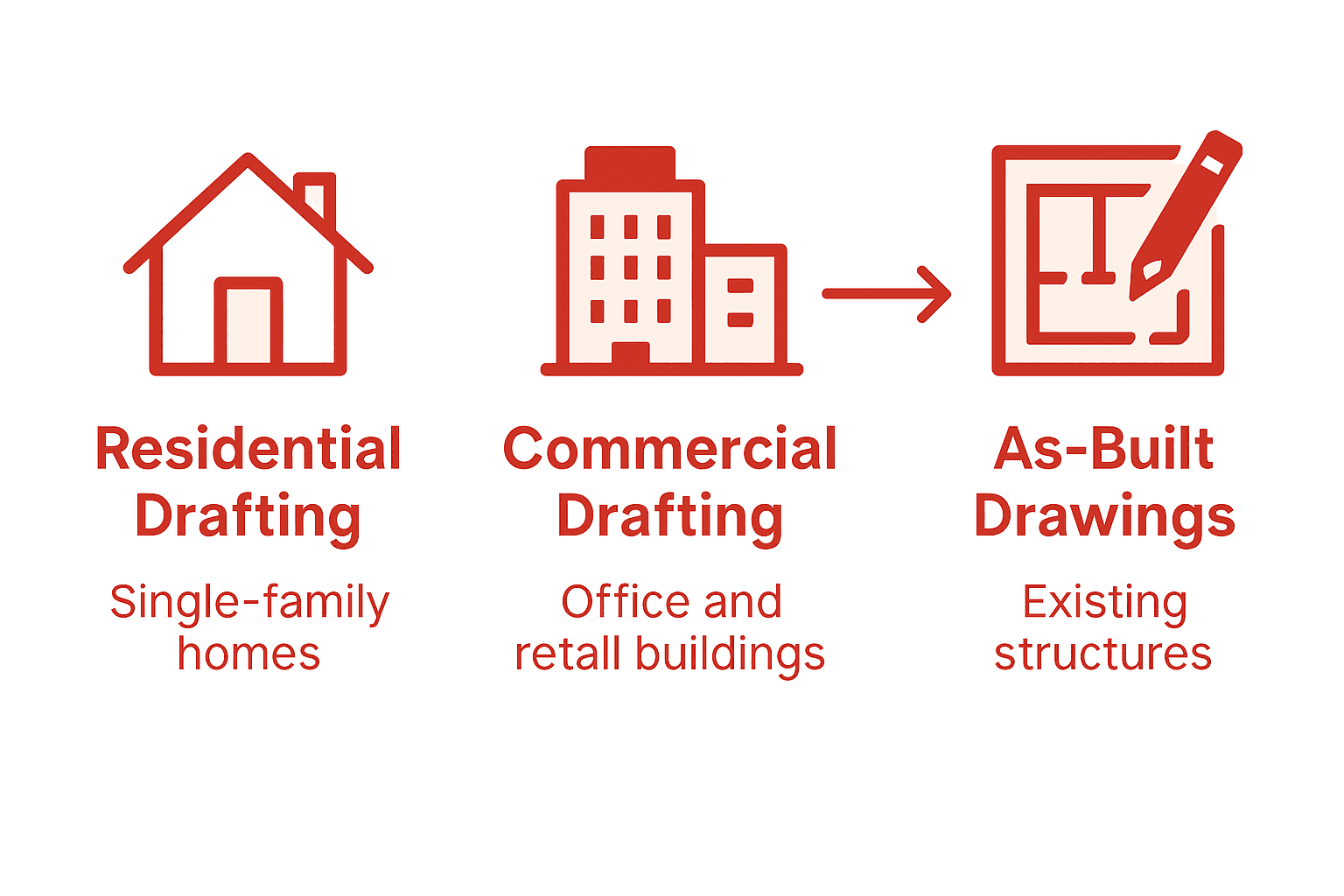
The primary types of architectural drafting services include residential drafting, commercial drafting, as-built drawings, renovation documentation, and technical construction plans. Residential drafting focuses on creating detailed plans for single-family homes, multi-unit dwellings, and housing developments, emphasizing spatial efficiency and functional design. Commercial drafting involves more complex drawings for office buildings, retail spaces, industrial facilities, and institutional structures, requiring intricate systems integration and compliance with specific regulatory standards.
Additional specialized drafting services include renovation documentation, which captures existing structural conditions and proposed modifications, and technical construction plans that provide granular details about materials, structural components, electrical systems, plumbing layouts, and mechanical infrastructure. These comprehensive drawings serve as critical communication tools that translate abstract design concepts into actionable blueprints for contractors, engineers, and construction professionals.
Pro Tip: Strategic Documentation Approach: Always request multiple drawing types and formats from your architectural drafting service to ensure comprehensive project coverage and minimize potential miscommunication during the construction process.
How Drafting Impacts Project Design and Approval
Architectural drafting plays a critical role in transforming conceptual designs into actionable project blueprints, serving as the essential bridge between creative vision and practical implementation. Comprehensive project documentation directly influences design approval processes by providing clear, precise visual representations that communicate complex architectural concepts to stakeholders, regulatory agencies, and construction teams.

The impact of drafting on project design begins with its ability to translate abstract ideas into systematic, measurable representations. Detailed drawings enable architects and engineers to evaluate spatial relationships, structural integrity, and functional requirements before actual construction begins. These technical documents serve multiple crucial purposes: they facilitate precise communication, ensure regulatory compliance, identify potential design challenges, and provide a comprehensive roadmap for project execution. Government agencies, municipal planning departments, and building authorities rely heavily on these meticulously prepared drawings to assess project feasibility, safety standards, and zoning requirements.
Throughout the design and approval process, architectural drafting acts as a critical validation tool. Drawings must demonstrate compliance with local building codes, zoning regulations, safety standards, and environmental requirements. Each line, measurement, and annotation becomes a legally binding representation of the proposed structure, subject to intense scrutiny by professional reviewers. By providing comprehensive visual documentation, drafting services help streamline approval processes, reduce potential misunderstandings, and minimize the likelihood of costly design revisions or project delays.
Pro Tip: Approval Strategy: Invest in high-quality, detailed architectural drafting that anticipates potential regulatory questions and comprehensively addresses potential review concerns before submission to expedite the approval process.
Legal and Regulatory Standards for Drafting
Architectural drafting operates within a complex framework of legal and regulatory standards that govern every aspect of design documentation. Comprehensive industry standards and compliance requirements form the critical foundation for creating legally acceptable architectural drawings that meet stringent professional and governmental regulations.
The legal landscape of architectural drafting encompasses multiple layers of regulatory oversight, including local building codes, zoning regulations, safety standards, and environmental protection requirements. Each jurisdiction maintains specific technical specifications that drafting professionals must meticulously follow. These standards dictate everything from minimum spatial requirements and structural integrity to accessibility guidelines, fire safety protocols, and environmental impact considerations. Professional architects and drafters must demonstrate precise compliance through detailed drawings that explicitly show how proposed structures meet or exceed these comprehensive regulatory frameworks.
Drafting documentation serves as a legally binding representation of architectural intent, requiring extraordinary attention to detail and accuracy. Professional licensing boards, municipal planning departments, and building authorities scrutinize every line, annotation, and measurement to ensure full compliance with established standards. Drawings must not only communicate design concepts but also prove adherence to complex regulatory requirements that protect public safety, ensure structural soundness, and maintain community planning standards. Failure to meet these rigorous standards can result in project delays, financial penalties, mandatory redesigns, or even complete project rejection.
Pro Tip: Compliance Strategy: Develop a systematic checklist of local and state regulatory requirements specific to your project type and jurisdiction, and cross-reference your drafting documentation against these standards before submission to minimize potential compliance challenges.
Common Pitfalls and Costly Drafting Mistakes
Architectural drafting demands extraordinary precision, as even minor errors can cascade into substantial financial and structural complications. Critical drafting accuracy challenges reveal numerous potential pitfalls that can dramatically undermine project success and professional credibility.
The most significant drafting mistakes typically emerge from scale inaccuracies, dimensional inconsistencies, and miscommunication between design elements. Professional drafters frequently encounter challenges such as incorrect measurements, improper scale representations, inadequate detail documentation, and incomplete system integrations. These errors can result in substantial construction delays, unexpected budget overruns, structural integrity problems, and potential legal disputes. Critical areas of potential mistakes include structural load calculations, mechanical system alignments, electrical infrastructure planning, and spatial relationship representations that fail to account for real-world construction constraints.
Technical drafting errors often stem from software limitations, human oversight, and insufficient interdisciplinary communication. Common mistakes include misaligned architectural and engineering specifications, incomplete building code compliance documentation, inconsistent material specifications, and inadequate annotation of critical design components. Complex projects require seamless coordination between multiple professional disciplines, and any miscommunication can lead to significant implementation challenges. Drafting professionals must maintain rigorous attention to detail, utilize advanced verification techniques, and implement comprehensive cross-referencing protocols to mitigate potential errors.
To help understand major project risks, here is a summary of frequent drafting errors and their consequences:
| Error Type | Typical Cause | Potential Impact |
|---|---|---|
| Scale Inaccuracy | Manual entry mistakes | Structural misfits, delays |
| Dimensional Inconsistency | Poor cross-checking | Cost overruns, design changes |
| Misaligned Specifications | Lack of team coordination | On-site rework, compliance issues |
| Code Compliance Omission | Regulatory oversight | Permit denials, redesign costs |
Pro Tip: Error Prevention Strategy: Implement a systematic multi-stage review process that includes independent technical verification, cross-disciplinary collaboration, and comprehensive digital model validation to identify and rectify potential drafting inconsistencies before final submission.
Ensure Your Project’s Success with Expert Architectural Drafting and Engineering Services
Architectural drafting is crucial for precise communication and flawless execution, yet even the smallest mistakes can lead to costly delays and compliance issues. If you want to avoid common pitfalls like scale inaccuracies and misaligned specifications while confidently navigating complex legal standards, partnering with experienced professionals is essential. Our extensive range of services, including detailed architectural, structural, mechanical, electrical, and plumbing plans, addresses these challenges head-on to keep your project on track.

Take control of your project’s future today by leveraging our comprehensive engineering expertise that spans residential and commercial projects, inspections, permitting expediter services, and forensic investigations. Visit Florida Licensed Engineers to discover how accurate drafting and thorough project documentation can streamline your approval process and protect your investment. Dive deeper into specialized solutions with our Structural Engineering Plans and Commercial Project Services. Act now to ensure your building project shapes success from blueprint to completion.
Frequently Asked Questions
What is architectural drafting?
Architectural drafting is the technical process of creating detailed graphic representations of building designs, translating conceptual ideas into precise blueprints that communicate spatial relationships and construction specifications.
How do drafting services impact project approvals?
Drafting services provide clear visual representations that facilitate communication among stakeholders and regulatory agencies. Accurate documentation ensures compliance with local codes and helps streamline the approval process, reducing the likelihood of misunderstandings or delays.
What are the main types of architectural drawings used in drafting?
The primary types of architectural drawings include floor plans, elevation drawings, cross-sections, and construction documents. Each type serves a different purpose, such as showcasing space layouts or providing detailed technical specifications.
What common mistakes should be avoided in architectural drafting?
Common mistakes in architectural drafting include scale inaccuracies, dimensional inconsistencies, and misalignment of specifications. These errors can lead to significant project delays, cost overruns, and legal issues. Proper attention to detail and thorough review processes can help prevent such mistakes.
Recommended
- How to Create Architectural Drawings for Your Project – FloridaLicensedEngineers.com
- Role of Architectural Plans in Construction Success – FloridaLicensedEngineers.com
- Architectural Plans Explained: Complete Guide for 2025 – FloridaLicensedEngineers.com
- Architectural Plans vs Structural Plans Explained – FloridaLicensedEngineers.com
