
Why Mechanical Design Matters for Florida Projects
Mechanical design is the backbone of every successful American construction project, yet nearly 45 percent of system failures can be traced to ignored environmental factors during the design phase. In Florida, contractors and architects face humidity, salt-air corrosion, and hurricane challenges that demand precise, code-driven engineering. This article delivers practical insight for maximizing project safety and efficiency through smarter mechanical design choices tailored for Florida’s residential and commercial construction standards.
Table of Contents
- Defining Mechanical Design In Construction
- Major Types And Core Components Explained
- How Mechanical Design Supports Code Compliance
- Key Benefits For Project Efficiency And Safety
- Common Pitfalls And How To Avoid Them
Key Takeaways
| Point | Details |
|---|---|
| Importance of Mechanical Design | Mechanical design is crucial for creating functional systems that adhere to project-specific requirements, especially in challenging environments like Florida. |
| Environmental Considerations | Engineers must account for local conditions, such as humidity and wind, to ensure durability and reliability in mechanical systems. |
| Code Compliance Necessity | A structured mechanical design process is essential for meeting regulatory standards and ensuring construction safety and longevity. |
| Advanced Techniques for Risk Mitigation | Utilizing advanced simulations and stress analysis can significantly reduce potential failures, enhancing project outcomes. |
Defining Mechanical Design in Construction
Mechanical design represents the systematic process of applying scientific principles and engineering techniques to create functional mechanical systems in construction projects. At its core, mechanical design involves selecting appropriate materials, designing components, and ensuring reliable performance through rigorous analysis and simulation. Applying physical principles to mechanical systems allows engineers to develop solutions that meet precise functional requirements while maintaining structural integrity.
The mechanical design process follows a structured five-phase engineering approach that integrates complex computational and analytical techniques. This includes comprehensive steps like conceptualization, detailed design development, material selection, stress analysis, and performance validation. Modern mechanical design leverages advanced simulation methods such as Finite Element Analysis (FEA) to predict component behavior under various loading conditions. These techniques enable engineers to anticipate potential structural weaknesses, optimize design parameters, and create more resilient mechanical systems before physical prototype construction.
In Florida construction projects, mechanical design plays a critical role in addressing unique environmental challenges. Engineers must consider factors like high humidity, potential hurricane-force winds, and salt-air corrosion when designing mechanical systems. This requires selecting materials with superior durability, implementing robust design strategies, and utilizing computational modeling to ensure long-term performance and safety. Complex mechanical design integrates multiple disciplines, including thermodynamics, material science, and structural engineering, to develop holistic solutions that meet both functional and regulatory requirements.
Pro Tip: Always conduct comprehensive computational simulations and stress tests before finalizing mechanical design blueprints to identify potential performance limitations and optimize system reliability.
Major Types and Core Components Explained
Mechanical design encompasses a diverse array of critical components that form the structural backbone of complex engineering systems. Machine elements like bearings, bolts, and gears represent fundamental building blocks that enable precise motion, power transmission, and mechanical functionality. These core components are meticulously engineered to meet specific performance requirements, integrating principles of physics and mechanical engineering to create robust and reliable mechanical systems.
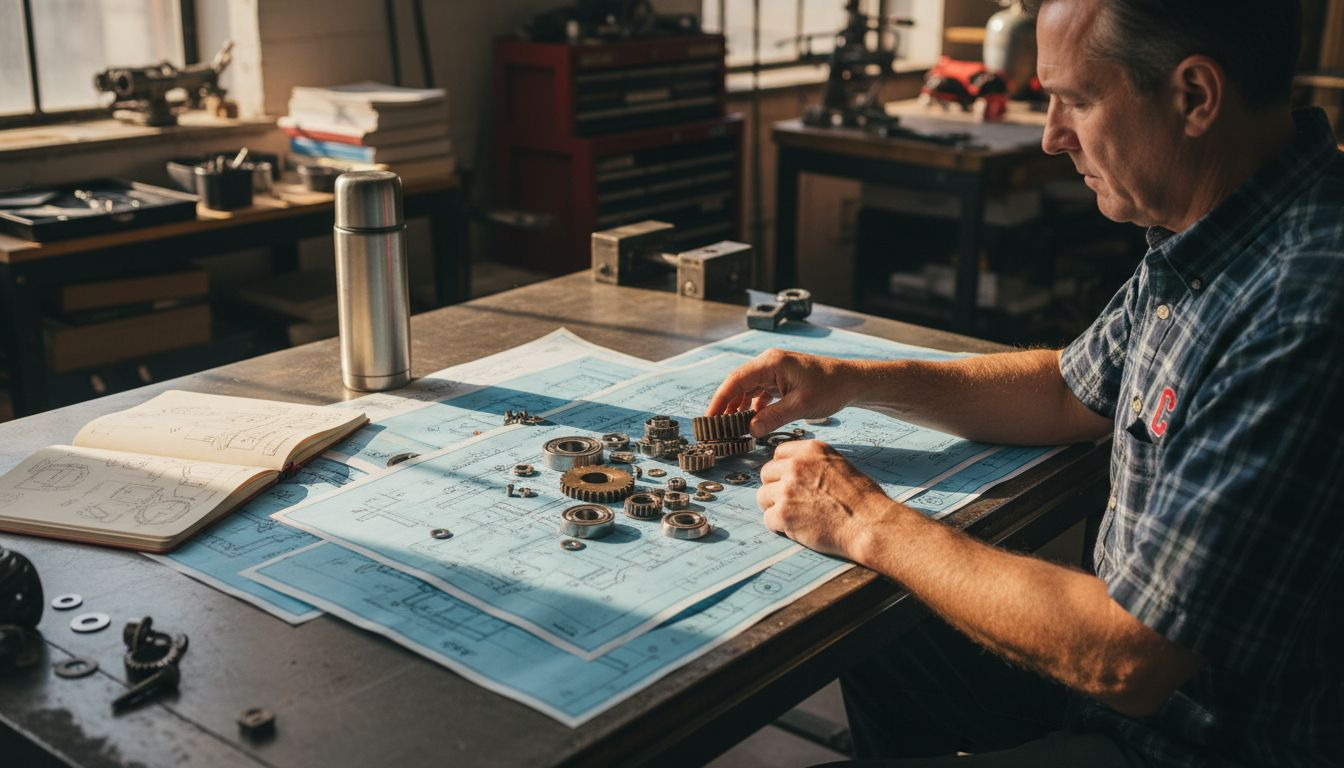
The primary mechanical components can be categorized into several key groups that serve distinct engineering purposes. Fundamental mechanical components include gears, bearings, shafts, springs, and fasteners that work synergistically to transmit motion, reduce friction, and provide critical structural support. Gears, for instance, enable precise power transfer between rotating elements, while bearings minimize friction and support rotational movement. Springs store and release mechanical energy, and fasteners like bolts and nuts ensure secure connections between different mechanical elements.
In Florida construction projects, understanding the nuanced interactions between these mechanical components becomes especially crucial. Engineers must select components that can withstand extreme environmental conditions such as high humidity, temperature fluctuations, and potential hurricane-force winds. This requires in-depth knowledge of material properties, stress tolerances, and computational modeling techniques to predict long-term performance and reliability. Advanced mechanical design integrates sophisticated simulation methods to validate component interactions, ensuring that each element performs optimally within the broader mechanical system.
Here’s a side-by-side look at how the major mechanical components function and their key impacts on Florida construction projects:
| Component | Primary Function | Florida Design Benefit |
|---|---|---|
| Gears | Power transmission | Maintains precision under wind |
| Bearings | Reduces friction | Supports rotation in humidity |
| Springs | Stores mechanical energy | Absorbs temperature changes |
| Fasteners | Secures connections | Withstands salt-air corrosion |
Pro Tip: Conduct comprehensive material compatibility and stress analysis when selecting mechanical components to ensure optimal performance under anticipated environmental and operational conditions.
How Mechanical Design Supports Code Compliance
Mechanical design plays a critical role in ensuring regulatory compliance for construction projects throughout Florida, serving as a fundamental mechanism for meeting stringent building codes and safety standards. Structural plan reviews are essential for verifying code-compliant building systems, with mechanical design providing the technical framework that demonstrates adherence to local, state, and federal regulations. Engineers must meticulously document and validate each mechanical system component to ensure it meets the precise performance and safety requirements established by regulatory bodies.
The complexity of code compliance in Florida demands a comprehensive approach to mechanical design that addresses multiple regulatory dimensions. This includes meeting Florida Building Code specifications for wind resistance, thermal performance, energy efficiency, and structural integrity. Mechanical design documentation must demonstrate how proposed systems will withstand extreme environmental conditions, such as hurricane-force winds, high humidity, and potential salt-air corrosion. Architectural plan essentials guide engineers in developing code-compliant mechanical systems that not only meet technical specifications but also ensure the long-term safety and reliability of construction projects.
In practice, mechanical design supports code compliance through detailed computational modeling, stress analysis, and comprehensive documentation that provides verifiable evidence of regulatory adherence. Engineers must conduct rigorous simulations and performance tests that validate each mechanical system’s ability to meet or exceed prescribed building code requirements. This involves creating detailed blueprints, conducting material compatibility assessments, and developing comprehensive performance reports that demonstrate how mechanical systems will function safely and efficiently under various environmental and operational conditions.
Pro Tip: Maintain meticulous documentation and conduct comprehensive computational simulations to proactively demonstrate regulatory compliance throughout the mechanical design process.
Key Benefits for Project Efficiency and Safety
Mechanical design delivers transformative advantages that significantly enhance both project efficiency and safety in Florida construction projects. Advanced technological approaches in construction design reduce project errors and improve overall system performance, enabling engineers to create more precise, reliable, and resilient mechanical systems. By leveraging sophisticated computational tools like Computer-Aided Design (CAD) and advanced simulation techniques, mechanical design provides a strategic framework for identifying potential vulnerabilities and optimizing system performance before physical implementation.
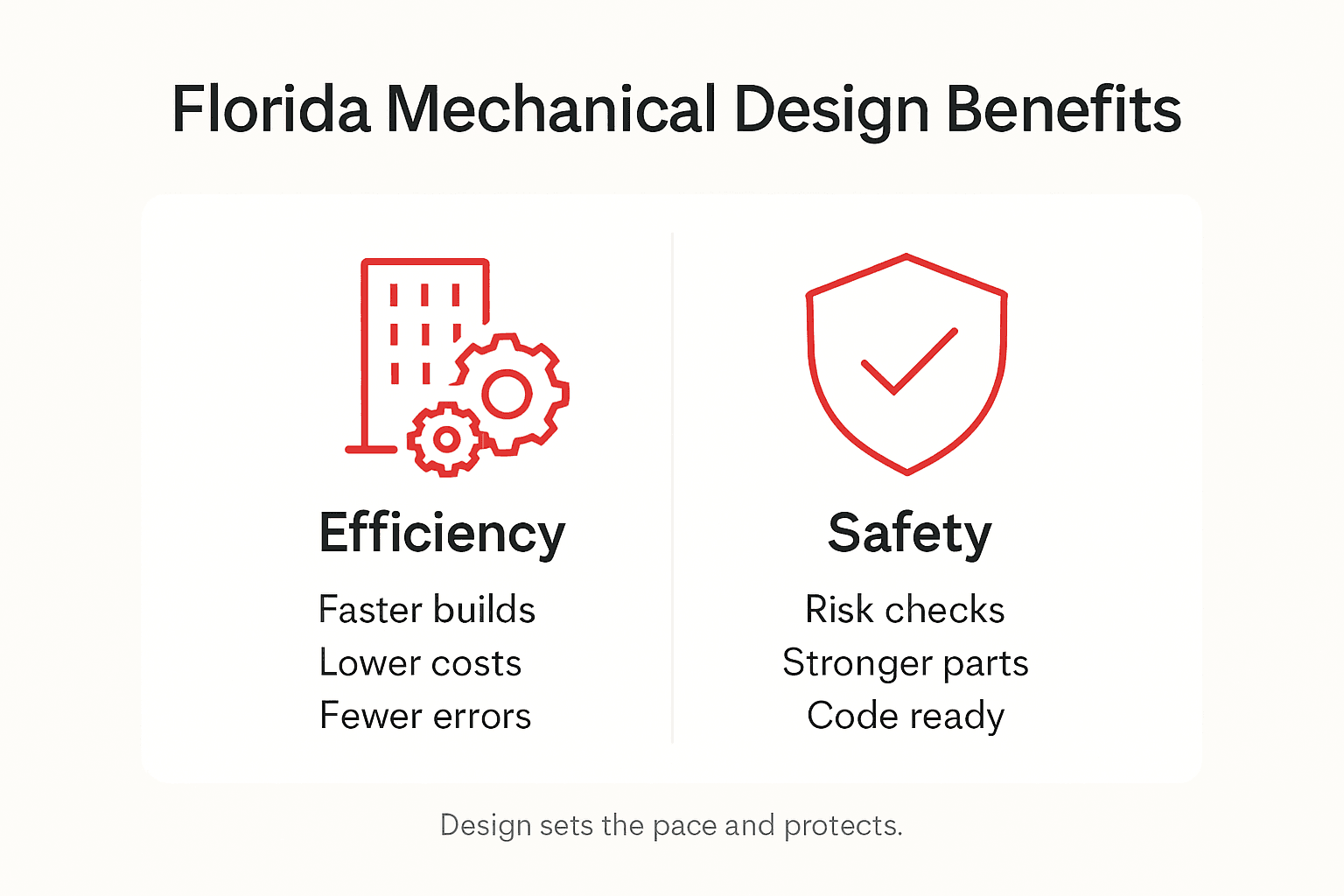
The critical benefits of mechanical design extend beyond technical precision, directly impacting project economics and operational sustainability. Mechanical engineering supports complex construction systems by designing integrated solutions for HVAC, plumbing, and fire protection, ensuring optimal energy consumption and long-term system reliability. These comprehensive design approaches enable engineers to develop mechanical systems that not only meet immediate project requirements but also anticipate future performance challenges, particularly in Florida’s demanding environmental conditions characterized by extreme humidity, temperature variations, and potential severe weather events.
At the core of mechanical design’s value proposition are its capabilities in risk mitigation and performance optimization. Advanced computational modeling allows engineers to conduct extensive stress tests, material compatibility assessments, and simulation scenarios that predict potential system failures before actual construction begins. This proactive approach dramatically reduces unexpected complications, minimizes potential rework expenses, and ensures that mechanical systems are engineered to withstand the unique challenges presented by Florida’s complex construction landscape. By systematically analyzing potential points of failure and designing robust, adaptable mechanical solutions, engineers can create more resilient, efficient, and cost-effective project outcomes.
Pro Tip: Integrate comprehensive computational simulations and stress analysis early in the mechanical design process to identify and mitigate potential performance risks before project implementation.
Common Pitfalls and How to Avoid Them
Mechanical design in Florida construction projects presents numerous potential challenges that can significantly compromise project outcomes if not carefully managed. Structural plan reviews help identify potential engineering risks early in the design process, with the most critical pitfalls emerging from inadequate environmental consideration, material selection, and computational modeling. Common mistakes include underestimating the impact of extreme humidity, failing to account for wind load variations, and neglecting material compatibility with Florida’s unique climatic conditions.
Engineers must be particularly vigilant about several key design vulnerabilities specific to Florida’s challenging construction environment. Insufficient thermal stress analysis can lead to premature system failures, especially in mechanical components exposed to rapid temperature fluctuations and high humidity. Material selection becomes paramount, with engineers needing to choose corrosion-resistant materials that can withstand salt-air exposure and potential hurricane-force winds. Comprehensive engineering inspections play a crucial role in identifying potential design weaknesses before they become critical structural or functional problems that could compromise project safety and longevity.
Preventing mechanical design failures requires a multifaceted approach that combines advanced computational modeling, rigorous material testing, and comprehensive environmental analysis. Critical strategies include conducting extensive stress simulations, performing detailed material compatibility assessments, and developing comprehensive contingency models that anticipate potential failure points. Engineers must create robust design frameworks that integrate advanced predictive technologies, allowing for real-time performance monitoring and proactive risk mitigation. This approach demands a holistic understanding of Florida’s unique environmental challenges, combining technical expertise with strategic foresight to develop mechanical systems that can reliably perform under extreme conditions.
Below is a summary of common mechanical design pitfalls and proactive mitigation strategies for Florida’s environment:
| Pitfall | Impact on Project | Mitigation Strategy |
|---|---|---|
| Underestimating humidity stress | Early material failure | Use corrosion-resistant alloys |
| Neglecting wind load variations | Structural system damage | Integrate wind-tolerant frameworks |
| Poor thermal stress analysis | Reduced system life span | Conduct advanced temperature modeling |
Pro Tip: Implement a comprehensive risk assessment protocol that includes multi-stage computational simulations and environmental stress testing to identify and mitigate potential mechanical design vulnerabilities before project implementation.
Elevate Your Florida Project with Expert Mechanical Design Support
Understanding the critical role mechanical design plays in tackling Florida’s unique environmental challenges is essential for safe and compliant construction. From combating humidity stress to ensuring code compliance and optimizing system performance, you need reliable engineering solutions tailored for this complex landscape. If you want to avoid common pitfalls and ensure your project withstands hurricane-force winds and salt-air corrosion, professional guidance is indispensable.

Partner with experienced engineers who specialize in mechanical planning, inspections, and code compliance documentation. Visit https://floridalicensedengineers.com to access comprehensive services including blueprint development, forensic investigations, and permitting support. Discover how our team addresses every mechanical design detail with precision by exploring our Uncategorized Archives and secure your project’s success with proven expertise today.
Frequently Asked Questions
What is mechanical design in construction?
Mechanical design in construction is the process of applying scientific principles and engineering techniques to create functional mechanical systems. It involves selecting materials, designing components, and ensuring performance through analysis and simulation.
Why is mechanical design important for projects in Florida?
Mechanical design is crucial for Florida projects due to the state’s unique environmental challenges, such as high humidity and hurricane-force winds. Proper design ensures systems are durable, reliable, and compliant with local building codes.
What are some common mechanical components used in design?
Common mechanical components include gears, bearings, shafts, springs, and fasteners. These elements work together to facilitate motion, reduce friction, and provide structural support in mechanical systems.
How does mechanical design help with code compliance?
Mechanical design supports code compliance by ensuring that mechanical systems meet local, state, and federal building regulations. This includes demonstrating adherence to specifications for wind resistance, energy efficiency, and structural integrity.
Recommended
- Architectural Plan Essentials: Ensuring Code Compliance – FloridaLicensedEngineers.com
- Civil vs Structural Plans: Key Differences Explained – FloridaLicensedEngineers.com
- 7 Key Structural Plan Requirements for Your Next Project – FloridaLicensedEngineers.com
- Engineering Documentation Explained: Building Confidence – FloridaLicensedEngineers.com
