
Sustainable Engineering: Florida Impact on Energy, Safety
Planning a new build or renovation in Florida often means sorting through dozens of choices, each with long-term consequences for comfort, cost, and lasting value. Sustainable engineering has become a cornerstone of smart property design, shaping projects that use resources efficiently, align with local building codes, and withstand Florida’s climate challenges. By focusing on energy-efficient solutions and materials that perform over time, Florida property owners gain a building that pays off in lower bills, higher resilience, and stronger compliance with state regulations.
Table of Contents
- Defining Sustainable Engineering Principles
- Major Types in Residential and Commercial Projects
- Core Features: Energy Efficiency, Materials, Lifecycle
- Legal Standards and Florida Building Codes
- Risks, Costs, and Common Mistakes to Avoid
Key Takeaways
| Point | Details |
|---|---|
| Sustainable Engineering Principles | Focus on environmental stewardship, social responsibility, and economic feasibility when planning projects to enhance efficiency and safety in Florida’s climate. |
| Engagement of Engineers | Involve structural, mechanical, and civil engineers early in the planning phase to integrate sustainability and compliance from design through execution. |
| Lifecycle Thinking | Consider the long-term costs and durability of materials and systems rather than just upfront expenses for better value over time. |
| Code Compliance | Ensure all designs meet Florida Building Code requirements to avoid costly delays and legal issues during permitting and construction. |
Defining Sustainable Engineering Principles
When you’re planning a residential renovation or new commercial construction in Florida, sustainable engineering isn’t just a buzzword thrown around at planning meetings. It’s a practical framework that directly impacts your energy bills, property value, and long-term safety. At its core, sustainable engineering means designing and building systems that meet your current needs without compromising the ability of future generations to meet theirs. For property owners in Florida specifically, this translates into structures that work efficiently with our climate, use resources wisely, and maintain their integrity through decades of exposure to humidity, salt air, and occasional severe weather.
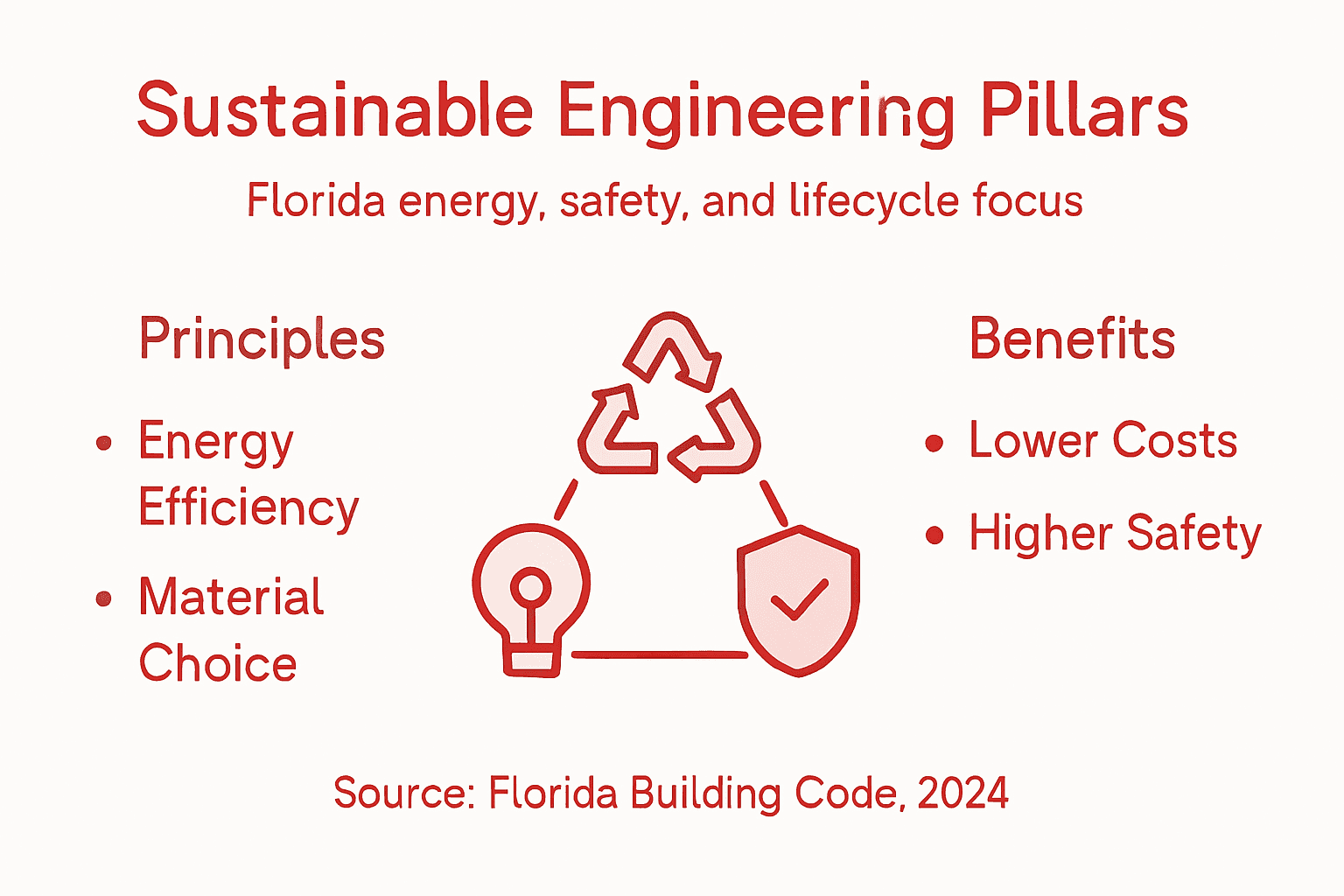
The principles of sustainable engineering rest on three interconnected pillars that work together like a load-bearing wall structure. The first pillar is environmental stewardship, which focuses on minimizing ecological impact throughout a project’s life cycle. This means considering everything from the materials you source for your building to how those materials perform over 30, 40, or even 50 years. The second pillar is social responsibility, ensuring that engineering decisions benefit the community and maintain safety standards that protect residents and workers. The third is economic feasibility, which acknowledges that sustainable solutions must make financial sense for property owners. These three elements aren’t separate considerations you tackle one at a time. Instead, they overlap and reinforce each other. A solar-integrated roof system, for example, reduces your monthly energy costs (economic benefit), decreases grid demand (environmental benefit), and improves your home’s resilience during power outages (social benefit through enhanced safety). Research on sustainable engineering principles shows that the most successful projects integrate all three dimensions from the initial design phase rather than treating them as afterthoughts.
For Florida property owners, applying these principles means working with engineers who understand local conditions and regulations. This includes strategies like incorporating flood-resistant design elements, optimizing mechanical and electrical systems for our hot, humid climate, and selecting materials that resist moisture damage and salt corrosion. Your structural engineer, for instance, might recommend elevated foundations not just to comply with flood zone requirements, but because the elevated design reduces moisture problems and extends the life of your property’s foundation. Your electrical and plumbing plans can be designed with efficiency in mind from day one rather than retrofitting systems later. When you engage with civil engineering fundamentals and site planning early in your project, you’re already building sustainability into the blueprint. The life cycle approach matters enormously here. A material choice that saves money upfront but requires frequent replacement in Florida’s aggressive environment actually costs more money and wastes more resources over time. Sustainable engineering asks the harder question: what choice serves all three pillars over the entire life of the building?
The practical implementation of these principles requires collaboration between you, your architect, and specialized engineers across multiple disciplines. Your structural engineer evaluates how building systems interact with Florida’s environmental challenges. Your mechanical and electrical engineers design systems that operate efficiently in our specific climate. Your civil engineer assesses drainage, grading, and flood mitigation to protect your investment. This coordinated approach prevents the common scenario where one professional solves their part of the puzzle without considering how it affects the overall system. When these professionals design your blueprints with sustainability principles embedded from the start, you’re not paying more for a better building. You’re paying for a building that performs better, costs less to operate, and holds its value longer.
Pro tip: When interviewing engineers for your project, ask specifically how they’ll apply the three pillars of sustainable engineering (environmental, social, and economic) to your design, not just whether they’re familiar with the term.
Major Types in Residential and Commercial Projects
Sustainable engineering takes different shapes depending on whether you’re building a single-family home, a multi-unit apartment complex, or a commercial office space. The core principles remain consistent, but the application, scale, and regulatory requirements shift significantly between residential and commercial projects. Understanding these differences helps you plan more effectively and work with the right engineers from the beginning. Your residential project in a Florida subdivision has entirely different site constraints, building codes, and sustainability opportunities than a downtown mixed-use development or a warehouse renovation.
Residential sustainable engineering typically focuses on individual home performance and family-level resource use. Your home’s energy consumption, water efficiency, indoor air quality, and resilience during weather events are the primary concerns. This is where strategies like optimized mechanical systems for Florida’s heat and humidity, energy-efficient windows that reduce cooling loads, solar-ready roof designs, and smart water management systems make the biggest impact on your monthly bills and long-term property value. Solar panel technology represents one of the most tangible residential applications, directly reducing your electricity costs while providing backup power during grid outages. But residential sustainability goes beyond energy generation. Your home’s structural design can incorporate passive cooling through strategic window placement and ventilation, your plumbing can be designed for water conservation, and your foundation can be elevated to manage flood risk while reducing moisture problems that plague many older Florida homes. When you work with engineers on residential engineering requirements, they’re evaluating how every component of your home contributes to overall efficiency and safety. Material selection matters immensely in residential projects. Composite decking instead of pressure-treated wood, concrete blocks that resist salt air damage, and moisture-resistant insulation all cost more upfront but eliminate expensive replacements and repairs over the life of your home.
Commercial sustainable engineering operates at a different scale with different priorities, though the underlying principles overlap with residential work. A commercial building must optimize energy use across hundreds or thousands of square feet, manage water systems serving dozens or hundreds of people daily, and often incorporate waste management systems that residential properties never need. The financial calculation changes too. A commercial property owner cares about operating costs spread across many tenants or employees, energy code compliance for entire municipalities, and maintaining occupancy rates that depend on building performance and tenant satisfaction. Energy-efficient windows and sustainable materials in commercial applications serve both environmental and economic purposes by reducing HVAC strain and operational expenses. Commercial projects frequently integrate systems that residential applications rarely require: advanced HVAC zoning, sophisticated water recycling systems, daylight harvesting with smart lighting controls, and rooftop systems designed for both function and visual appeal. A commercial building’s mechanical and electrical systems are far more complex, requiring detailed coordination between multiple engineering disciplines. Your structural engineer must design for the specific loads and uses, your civil engineer manages stormwater and site drainage for a much larger footprint, and your mechanical and electrical engineers design systems with built-in redundancy and efficiency that serve dozens or hundreds of occupants continuously.
The sustainable engineering approach differs in one more critical way: residential projects typically pursue efficiency to reduce personal operating costs and environmental impact, while commercial projects must balance efficiency with regulatory compliance, code requirements, and occupant comfort. A residential renovation might choose solar panels for long-term savings; a commercial building might implement solar to meet energy code targets while also achieving long-term financial benefits. Both approaches are valid. Both require professional engineering from the start. When comparing residential versus commercial sustainable engineering, think of it this way: residential projects optimize for the individual property and family, while commercial projects optimize for the building system, multiple stakeholders, and often entire neighborhoods or communities. Your project type determines which engineers you need to engage, which sustainable technologies make the most sense, and how quickly your investment returns through operational savings and increased property value.
Here’s a quick comparison of sustainable engineering priorities in residential vs. commercial Florida projects:
| Project Type | Top Sustainability Priorities | Unique Local Challenges | Key Engineering Disciplines |
|---|---|---|---|
| Residential | Energy efficiency, indoor air quality, flood resilience | Hurricanes, high humidity, salt air | Structural, mechanical, civil |
| Commercial | Operational efficiency, regulatory compliance, waste management | Occupant load, code complexity, water management | Structural, mechanical, electrical, civil |
Pro tip: Before hiring engineers for your project, clearly identify whether your property type aligns more with residential or commercial project standards, as this determines which specialized expertise and sustainable technologies will deliver the best return on investment.
Core Features: Energy Efficiency, Materials, Lifecycle
Energy efficiency, material selection, and lifecycle thinking form the foundation of any sustainable engineering project in Florida. These three features work together to reduce your long-term costs while improving your property’s performance and environmental footprint. Energy efficiency means your home or commercial building uses less power to maintain comfort and function. Material selection determines whether your structure holds up to Florida’s harsh climate or deteriorates rapidly, requiring expensive replacements. Lifecycle thinking asks the harder question: what happens to your building over 30, 50, or 75 years? When you integrate all three into your design from day one, you’re creating a building that performs better, costs less to operate, and maintains its structural integrity far longer than conventional construction.
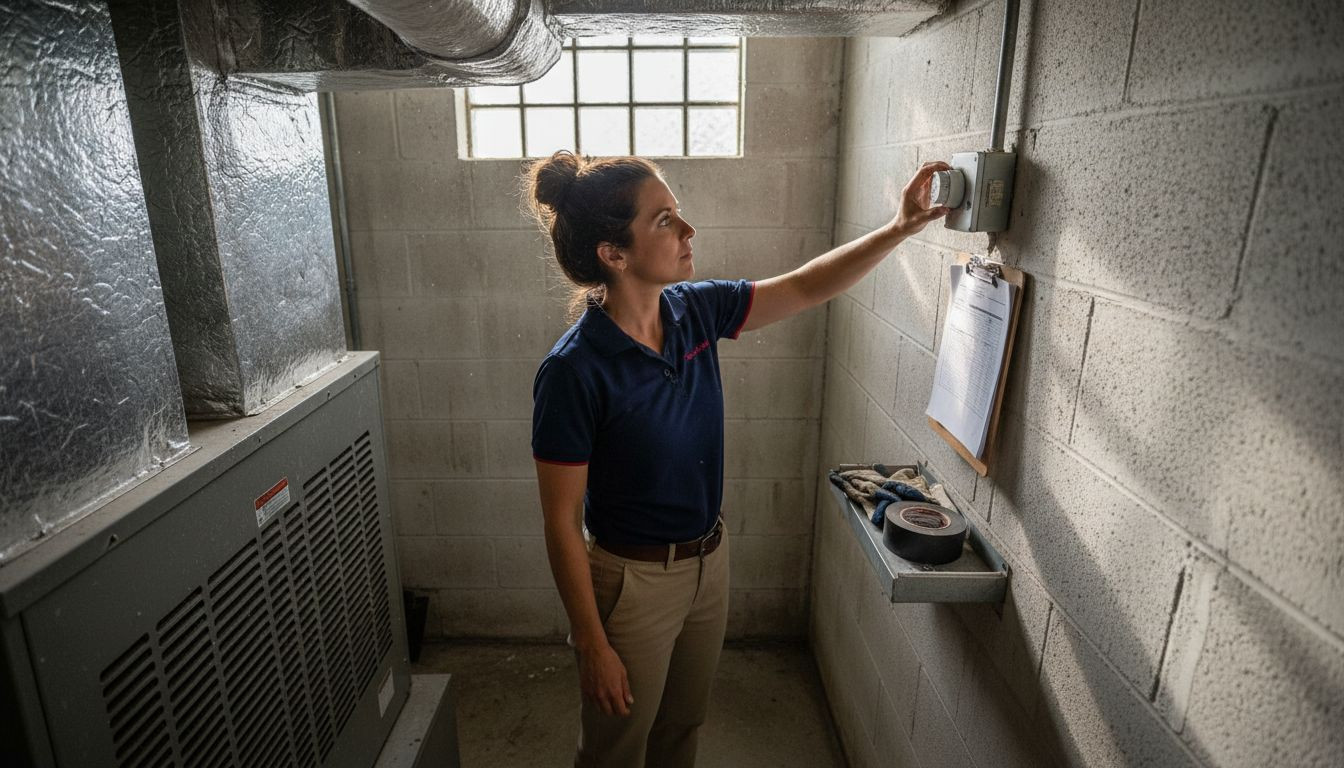
Energy efficiency in Florida sustainable engineering addresses the region’s primary operational challenge: cooling costs dominate property budgets. Your mechanical engineer designs systems that move air efficiently through your space without wasting energy pushing cool air through leaky ducts or outdated equipment. Your electrical engineer specifies lighting and appliance systems that consume minimal power. Your structural engineer can influence energy performance through window placement, wall orientation, and building shape. High-performance windows with low solar heat gain coefficients reduce cooling loads during our intense summer months. Proper insulation in attics and walls prevents heat transfer that forces your air conditioning to work harder. Smart thermostats and zoning systems ensure you’re not cooling empty rooms or areas that don’t need conditioning. Advanced building materials with thermal regulation properties like phase change materials and aerogels represent the next generation of efficiency. These materials absorb heat when temperatures rise and release it when temperatures fall, creating passive temperature control that reduces mechanical system runtime. For a commercial property owner, these efficiency improvements translate directly into lower utility bills. For a residential owner, they mean lower monthly cooling costs and better comfort during power outages or extreme heat events.
Material selection in Florida requires thinking beyond initial cost to total lifecycle expense. Pressure-treated lumber might cost less than composite decking, but it deteriorates in our humidity and eventually requires replacement. Standard concrete develops efflorescence and deterioration from salt air and moisture exposure; reinforced concrete with proper coatings lasts decades longer. Traditional drywall absorbs moisture and supports mold growth; moisture-resistant materials prevent these problems entirely. Recycled and bio-based materials like reclaimed wood, recycled concrete aggregates, and bamboo reduce environmental impact while often performing better than virgin materials in our climate. Bamboo, for example, offers strength comparable to hardwood while growing quickly and regenerating naturally. Recycled concrete crushed for aggregate eliminates disposal waste while providing proven performance. Geopolymer cement produces concrete with lower emissions than traditional Portland cement and often demonstrates superior durability in coastal Florida environments. Your structural engineer evaluates these options not just for strength but for how they’ll perform 20 years from now when salt air, humidity, and intense sun have aged them extensively. The material that costs 15 percent more initially but lasts 40 years instead of 20 becomes dramatically cheaper over the building’s life.
Lifecycle assessment guides the entire sustainable engineering process by considering every impact from material extraction through eventual disposal or reuse. When your engineers perform lifecycle analysis, they’re quantifying the energy consumed to manufacture materials, transport them to your site, install them in your building, maintain them over decades, and eventually recycle or dispose of them. A solar panel system has upfront energy costs to manufacture and install, but over 25 years of operation it generates far more energy than it consumed to create. A traditional roof might seem cheaper initially, but replacing it three times over 60 years costs more in total dollars and environmental impact than installing a durable metal or high-end composite roof once. Your mechanical and electrical systems follow the same logic: a higher efficiency HVAC system costs more upfront but uses less energy every single day for 15 or 20 years. Lifecycle thinking transforms the conversation from “How much does this cost?” to “What’s the true cost over time?” For Florida property owners, this matters enormously because our climate accelerates material degradation. A building material that lasts 15 years in temperate climates might only survive 10 years in our aggressive coastal environment, fundamentally changing the lifecycle economics. Your engineers factor this into their material recommendations, selecting options that deliver value across the entire building life.
Below are core sustainable engineering features and their business impact for Florida property owners:
| Feature | What It Improves | Typical Business Impact |
|---|---|---|
| Energy Efficiency | Lowers power consumption | Reduces monthly operating costs |
| Durable Materials | Withstands climate stresses | Minimizes repair and replacement expenses |
| Lifecycle Assessment | Optimizes long-term value | Supports higher property resale and lower total costs |
Pro tip: During your initial engineering consultation, ask for lifecycle cost analysis on major building systems and materials, not just upfront pricing, so you can make decisions based on total 20 to 30 year costs rather than just first-year expenses.
Legal Standards and Florida Building Codes
Florida’s building code framework isn’t optional guidance. It’s the legal foundation that determines whether your project gets approved, financed, and insured. Every residential renovation and commercial development must comply with the Florida Building Code, which incorporates energy efficiency standards, safety requirements, and provisions specific to our climate. Understanding these legal standards matters because non-compliance creates serious problems: permits get denied, lenders refuse to fund projects, insurance companies decline coverage, and eventually you face costly corrections or legal liability. Your engineers don’t just design your project to work well. They design it to meet every legal requirement that governs construction in your jurisdiction.
The Florida Building Code establishes minimum standards across multiple dimensions that directly affect your project. The code specifies structural requirements for wind resistance, flood protection, and earthquake considerations. It mandates energy efficiency through detailed provisions for insulation R-values, HVAC system performance, air sealing standards, and fenestration specifications. The 2023 edition emphasizes Florida’s climate-specific energy conservation standards by setting strict requirements for cooling system efficiency, window performance, and air barrier integrity that address our region’s heat and humidity challenges. These aren’t theoretical requirements. Your mechanical engineer designs your HVAC system to meet minimum SEER ratings specified in the code. Your structural engineer sizes beams and columns according to code-mandated wind loads that exceed most other states’ requirements. Your electrical engineer ensures your wiring, panels, and systems comply with code voltage and safety standards. Your civil engineer designs drainage and grading that meets flood mitigation requirements for your specific flood zone. The building code also addresses materials, fire safety, accessibility, and plumbing. Property owners often underestimate the scope of what the building code actually governs. It’s not just about structural integrity. It covers every system in your building and requires that these systems work together safely and efficiently.
Florid’s regulatory environment requires navigating multiple code jurisdictions and their specific interpretations. The state adopts the International Building Code as its foundation, then modifies it through the Florida Building Code to address state-specific conditions like hurricanes, flooding, and salt air exposure. Individual municipalities then adopt the state code while adding their own amendments for local conditions. This means your Miami project might have different specific requirements than a Jacksonville project, even though both must comply with the Florida Building Code. Some counties add stricter wind resistance requirements. Some municipalities require specific flood mitigation strategies. Coastal areas often mandate higher elevation standards. Your engineers must understand not just the state code but your specific local requirements. This is why role of engineers in building codes compliance matters so critically. An engineer licensed to practice in Florida possesses the knowledge to navigate these requirements and ensure your design complies with every applicable standard. When you hire engineers through a professional firm, they maintain current knowledge of code updates, local amendments, and how local building departments interpret requirements. Your structural engineer might recommend foundation elevations exceeding minimum code requirements based on their experience with what the local building department actually enforces during inspection. Your mechanical engineer knows which HVAC equipment meets code in theory but proves problematic in practice with local inspectors. This experience prevents costly redesigns during the permit review process.
Compliance with building codes directly impacts your project timeline and budget. Projects that incorporate code requirements from the design phase move smoothly through permitting. Projects where engineers retrofit code compliance into existing designs face delays, rejections, and expensive revisions. Building code compliance also affects your long-term liability. If your building causes property damage or personal injury due to code violations, you face legal liability and insurance may deny claims. A properly designed sustainable engineering project achieves code compliance naturally because many code requirements align with sustainable principles. Energy efficiency standards reduce your operating costs. Flood mitigation requirements protect your investment. Structural safety standards ensure your building stands safely for decades. Your engineers perform comprehensive reviews to ensure every design element complies with applicable codes before construction begins. This prevents problems that surface during inspection when corrections become exponentially more expensive. The permitting process requires detailed documentation that proves compliance. Your structural engineer stamps drawings certifying they meet code. Your mechanical engineer provides equipment specifications proving SEER ratings meet code minimums. Your civil engineer submits flood mitigation analysis proving your design manages water appropriately. This documentation becomes part of the permanent project record.
Pro tip: Ask your engineers early in the design phase which specific building code requirements apply to your project and whether they recommend exceeding minimum standards in any areas based on local conditions, long-term durability, or your specific needs.
Risks, Costs, and Common Mistakes to Avoid
Sustainable engineering projects in Florida face unique challenges that can derail timelines, inflate budgets, and compromise your long-term goals if you don’t anticipate them. The most expensive mistakes aren’t the ones you can see during construction. They’re the ones made during planning because nobody asked the right questions or considered how Florida’s specific conditions affect your project. Understanding these risks upfront lets you make informed decisions and work with experienced engineers who’ve navigated these problems before. Cost overruns, permit delays, material failures, and safety issues often stem from preventable mistakes rooted in inadequate planning and poor communication between project team members.
One of the most common mistakes is underestimating Florida-specific risks in your budget and timeline. Coastal properties face salt air corrosion that accelerates material degradation, flood risks that require expensive mitigation strategies, and wind loads that demand heavier structural design than inland areas. If your budget assumes standard construction costs based on national averages, you’re already behind. Your mechanical and electrical systems must work harder in our climate, requiring more robust design and premium equipment. Supply chain disruptions compound this problem. Specialized materials ordered for sustainable design might face shipping delays or availability issues that weren’t factors five years ago. Project management risks including supply chain disruptions and cost overruns can derail even well-planned projects if not managed proactively. Your engineers should build contingency into material specifications, identifying acceptable alternatives if preferred sustainable materials become unavailable. A project that specifies only one option for a critical component can grind to a halt if that material’s production facility closes or experiences delays. Another widespread error is failing to engage engineers early in the planning process. Property owners who finalize site plans, architectural designs, and budgets before consulting structural, mechanical, and civil engineers often discover that their vision conflicts with code requirements or site conditions. This results in expensive redesigns, permit rejections, and construction delays. When engineers are involved from day one, they identify potential problems during planning when corrections cost nothing, rather than during construction when they cost everything.
Regulatory compliance represents another major risk area that Florida property owners frequently underestimate. The state combines strict building codes with local amendments and flood zone regulations that vary dramatically across the state. Mistakes here are particularly expensive because they invite lawsuits, insurance denials, and forced corrections. One critical error involves inadequate flood mitigation planning. A property owner who doesn’t properly assess flood zone designation, elevation requirements, or drainage needs might build a structure that violates code, cannot be insured, and requires expensive modifications. Your civil engineer must analyze your specific lot’s flood exposure, determine applicable elevation requirements, and design drainage and grading that complies with all requirements. This isn’t optional. Another compliance mistake involves ignoring energy efficiency mandates. The Florida Building Code requires specific HVAC efficiency, window performance, and insulation standards. A mechanical or electrical engineer who designs systems without confirming they meet code creates problems during inspection. The building department can reject systems, force expensive replacements, and delay occupancy. These aren’t theoretical concerns. They happen regularly when less experienced engineers don’t maintain current code knowledge. Common mistakes including inadequate planning and ignoring energy efficiency mandates have created costly project failures. Property owners who hire experienced Florida engineers avoid most of these problems because seasoned professionals know where the pitfalls exist.
Permitting represents a process where small mistakes create massive delays and costs. An incomplete permit application gets rejected, creating a 2 to 4 week delay while you resubmit. Missing documentation, incorrect calculations, or designs that don’t clearly demonstrate code compliance all invite rejections. Your engineers must understand exactly what your local building department requires and provide documentation that proves compliance without ambiguity. Structural drawings must clearly show that wind loads, flood loads, and all other code requirements are satisfied. Mechanical plans must specify equipment that meets code minimums with manufacturer documentation to prove it. Civil drawings must demonstrate drainage and grading solutions that work. Incomplete or unclear submittals frustrate building department reviewers and extend timelines unnecessarily. Budget mistakes also create serious problems. Some property owners estimate sustainable engineering costs by looking at standard construction projects, then get shocked when they see actual pricing for specialized sustainable design, premium energy-efficient equipment, or elevated construction required for flood mitigation. Building sustainable projects costs more than building standard projects, but the additional expense must be incorporated into your budget from day one. If you underestimate costs, you either cut sustainable features to fit budget or run out of money mid-project. Neither option ends well. The projects that succeed are those where owners work with engineers to establish realistic budgets that account for sustainable design, Florida-specific requirements, and proper contingencies. This transparency prevents financial surprises and ensures you get the sustainable property you intended to build.
Pro tip: Before finalizing your project budget or timeline, have your structural, mechanical, and civil engineers review your plans and provide written estimates of all costs, timelines, and potential risks specific to your project and location so you can plan realistically.
Unlock True Sustainability with Expert Florida Engineering Support
The article highlights the critical impact of sustainable engineering on energy efficiency, safety, and long-term value for Florida properties. Many property owners struggle with navigating Florida’s strict building codes, flood mitigation requirements, and the complex balance of environmental, social, and economic pillars. At Florida Licensed Engineers, we understand these unique challenges and provide comprehensive engineering solutions tailored to both residential and commercial projects. From precise structural designs and energy-efficient mechanical systems to expert civil services in drainage and flood analysis, our team ensures your project not only meets but exceeds sustainability and legal standards.
Take the first step toward building safer, smarter, and more durable properties. Explore our detailed expertise on engineering and inspection services and empower your project with certified professionals who bring Florida-specific code knowledge and sustainable engineering principles right from the start. Contact us today at Florida Licensed Engineers to schedule a consultation and secure your property’s future with confidence.
Frequently Asked Questions
What are the core principles of sustainable engineering?
The core principles of sustainable engineering rest on three interconnected pillars: environmental stewardship, social responsibility, and economic feasibility. These pillars work together to ensure that engineering decisions are beneficial for the environment, the community, and financially viable.
How does Florida’s climate affect sustainable engineering practices?
Florida’s climate presents unique challenges such as high humidity, salt air, and hurricane risks. Sustainable engineering in Florida involves designing structures that resist moisture damage, mitigate flood risks, and optimize systems for energy efficiency to cope with the heat and humidity.
Why is material selection important in sustainable engineering projects?
Material selection is crucial because the right materials can enhance durability and energy efficiency while reducing maintenance costs. In Florida’s aggressive climate, durable and moisture-resistant materials can significantly extend the lifespan of a building, saving money in the long run.
What legal standards must sustainable engineering projects in Florida comply with?
Sustainable engineering projects in Florida must comply with the Florida Building Code. This includes regulations for structural integrity, energy efficiency, and specific provisions tailored to the state’s climate, ensuring safety and environmental protection.
Recommended
- 7 Essential Homeowner Engineering Tips for Florida Homes – FloridaLicensedEngineers.com
- 7 Essential Homeowner Engineering Tips for Florida Homes – Florida Licensed Engineers
- 7 Essential Civil Engineering Tips for 2025 Success – FloridaLicensedEngineers.com
- Engineering Due Diligence: Protecting Florida Projects – Florida Licensed Engineers
