
Stamped Drawings: Securing Florida Building Permits

Securing building permits in Florida can feel like a tedious process, especially when every document must stand up to strict local codes. For contractors and property developers, stamped drawings are not just technical paperwork but the official proof that a licensed engineer or architect has reviewed and approved your plans. This introduction breaks down why stamped drawings carry legal weight, what common misconceptions surround their use, and how they simplify compliance with city and county regulations.
Table of Contents
- Stamped Drawings Defined And Common Misconceptions
- Types Of Stamped Drawings For Projects
- How Stamped Drawings Facilitate Permitting
- Legal Requirements For Stamped Drawings In Florida
- Risks And Consequences Of Unstamped Plans
Key Takeaways
| Point | Details |
|---|---|
| Understanding Stamped Drawings | Stamped drawings are legally binding documents that validate engineering and architectural plans, ensuring compliance with local and state regulations. |
| Common Misconceptions | The professional stamp signifies technical competence, not an unconditional guarantee of project success or limited liability. |
| Types of Stamped Drawings | Different types of stamped drawings, such as construction and permit set drawings, serve distinct purposes in the project lifecycle. |
| Risks of Unstamped Plans | Submitting unstamped plans can lead to permit application rejection and expose contractors to legal and financial risks. |
Stamped Drawings Defined And Common Misconceptions
In Florida’s complex construction landscape, stamped drawings represent far more than simple architectural sketches. These professionally certified documents are critical legal instruments that validate engineering and architectural plans before construction begins. A stamped drawing specifically refers to technical plans that have been signed and sealed by licensed professionals.
Stamped drawings serve multiple crucial purposes in the construction process:
- Verify the technical accuracy of proposed designs
- Demonstrate professional accountability
- Ensure compliance with local and state building regulations
- Provide legal documentation of professional review
Contrary to widespread belief, a professional stamp is not a guarantee of absolute perfection but rather an attestation that the plans meet established professional standards. Professional engineers and architects take significant responsibility when applying their seal, signifying their professional competence and commitment to quality.
Several common misconceptions persist about stamped drawings that can mislead property developers and contractors. The most prevalent misunderstandings include:
- Believing the stamp creates unlimited legal liability
- Assuming any professional can stamp any type of drawing
- Thinking the stamp automatically ensures project approval
- Misunderstanding the stamp’s actual legal implications
A professional stamp symbolizes technical competence and adherence to professional standards, not an unconditional guarantee of project success.
Pro tip: Always verify that the professional stamping your drawings holds the appropriate license and specialized expertise relevant to your specific project type.
Types Of Stamped Drawings For Projects
In the construction and engineering world, stamped drawings come in several critical variations, each serving a unique purpose in the project lifecycle. Specific drawing types play pivotal roles in design, permitting, and construction documentation.
The primary types of stamped drawings include:
- Estimate Drawings: Used for initial cost projections and budget planning
- Construction Drawings: Final design documents used as primary blueprints
- Permit Set Drawings: Specific drawings submitted to obtain building permits
- As-Built Drawings: Field-marked documents reflecting actual construction changes
- Record Drawings: Comprehensive final documentation of completed project
- Design Revision Drawings: Official documents communicating mid-project modifications
Each drawing type requires careful professional review and carries specific legal and technical implications. Working drawings represent another critical category, encompassing specialized documents like layout drawings, detail drawings, and assembly drawings that provide intricate technical specifications.
Professional engineers and architects must meticulously prepare these documents, understanding that each stamp represents a legal commitment to technical accuracy and professional standards. The stamp signifies that the drawings meet local building codes, safety regulations, and professional engineering requirements.
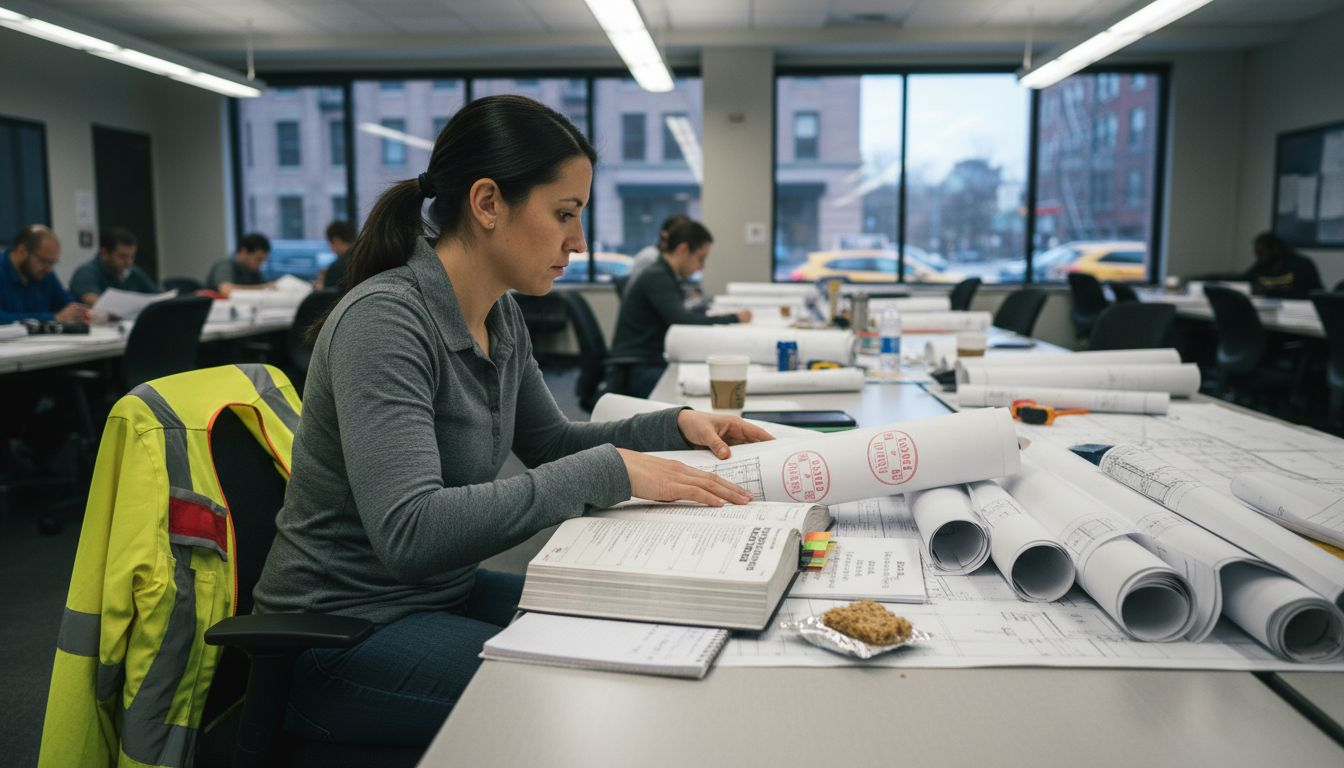
Here’s a quick comparison of stamped drawing types and their typical project impact:
| Drawing Type | Typical Use Case | Impact on Project |
|---|---|---|
| Estimate Drawings | Early budget evaluations | Informs financial planning |
| Construction Drawings | Final construction phase | Guides builders and contractors |
| Permit Set Drawings | Regulatory submission | Enables securing permits |
| As-Built Drawings | Post-construction updates | Validates completed work |
| Record Drawings | Project closeout | Provides historical record |
| Design Revision Drawings | Mid-project modifications | Documents changes and compliance |
Not all stamped drawings are created equal – each type serves a distinct purpose in the complex construction documentation process.
Pro tip: Always confirm which specific type of stamped drawing your project requires, as different municipal jurisdictions may have unique documentation standards.
How Stamped Drawings Facilitate Permitting
In Florida’s complex construction landscape, stamped drawings are the critical bridge between project design and official approval. Permitting processes rely heavily on these professionally certified documents that demonstrate compliance with local building codes and regulatory standards.
Stamped drawings facilitate permitting through several key mechanisms:
- Verify technical accuracy of proposed construction plans
- Provide official documentation of professional review
- Establish clear accountability for design specifications
- Demonstrate compliance with safety and building regulations
- Create a transparent record for municipal review
The permitting process involves multiple layers of scrutiny, where building permit offices carefully examine every detail of submitted plans. Professional engineers and architects must meticulously prepare these documents, understanding that each stamp represents a legal commitment to technical accuracy and professional standards.
Municipal authorities use stamped drawings as a primary mechanism to enforce safety standards and ensure that proposed construction meets all necessary regulatory requirements. The stamp serves as an official certification that the plans have been thoroughly reviewed by a licensed professional who takes direct responsibility for their accuracy and compliance.
A stamped drawing is more than just a document – it’s a legal guarantee of professional competence and regulatory compliance.
Pro tip: Work closely with licensed professionals who understand local permitting requirements to ensure your stamped drawings will smoothly navigate municipal review processes.
Legal Requirements For Stamped Drawings In Florida
Florida’s regulatory landscape imposes stringent legal requirements for professional engineering documents, establishing clear guidelines for stamped drawings across various construction and design projects. These requirements are designed to ensure public safety, professional accountability, and technical integrity.
Specific legal mandates for stamped drawings in Florida include:
- Must be prepared or directed by a licensed engineer
- Require professional seal and signature on each document sheet
- Include engineer’s printed name, license number, and address
- Comply with Chapter 471, Florida Statutes
- Demonstrate compliance with applicable building codes
- Cover specialized systems like plumbing, electrical, and mechanical engineering
Construction permit applicants must submit stamped documents that meet precise technical and legal standards. These documents serve as official records verifying that proposed construction plans adhere to professional engineering principles and local regulatory requirements.
Professional engineers bear significant legal responsibility when stamping documents. The stamp represents more than a mere formality – it is a legally binding declaration of professional competence, accuracy, and compliance with Florida’s comprehensive engineering regulations.
A professional stamp in Florida is a legal commitment, not just a bureaucratic requirement.
Pro tip: Consult with a licensed Florida engineer who understands local permitting nuances to ensure your stamped drawings meet all regulatory requirements.
Risks And Consequences Of Unstamped Plans
In Florida’s regulated construction environment, submitting unstamped plans can trigger a cascade of serious professional and legal complications. Unstamped documents create significant risks that can derail entire construction projects and expose contractors to substantial financial and legal liabilities.
The specific risks of using unstamped plans include:
- Immediate permit application rejection
- Potential legal exposure for contractors
- Increased scrutiny during project inspections
- Extended project delays and timeline disruptions
- Possible financial penalties and fines
- Potential suspension of professional licenses
- Voided insurance coverage for construction work
Building inspectors require comprehensive documentation to verify compliance and safety standards. Unstamped plans undermine this verification process, creating uncertainty about the technical validity and professional accountability of proposed construction work.
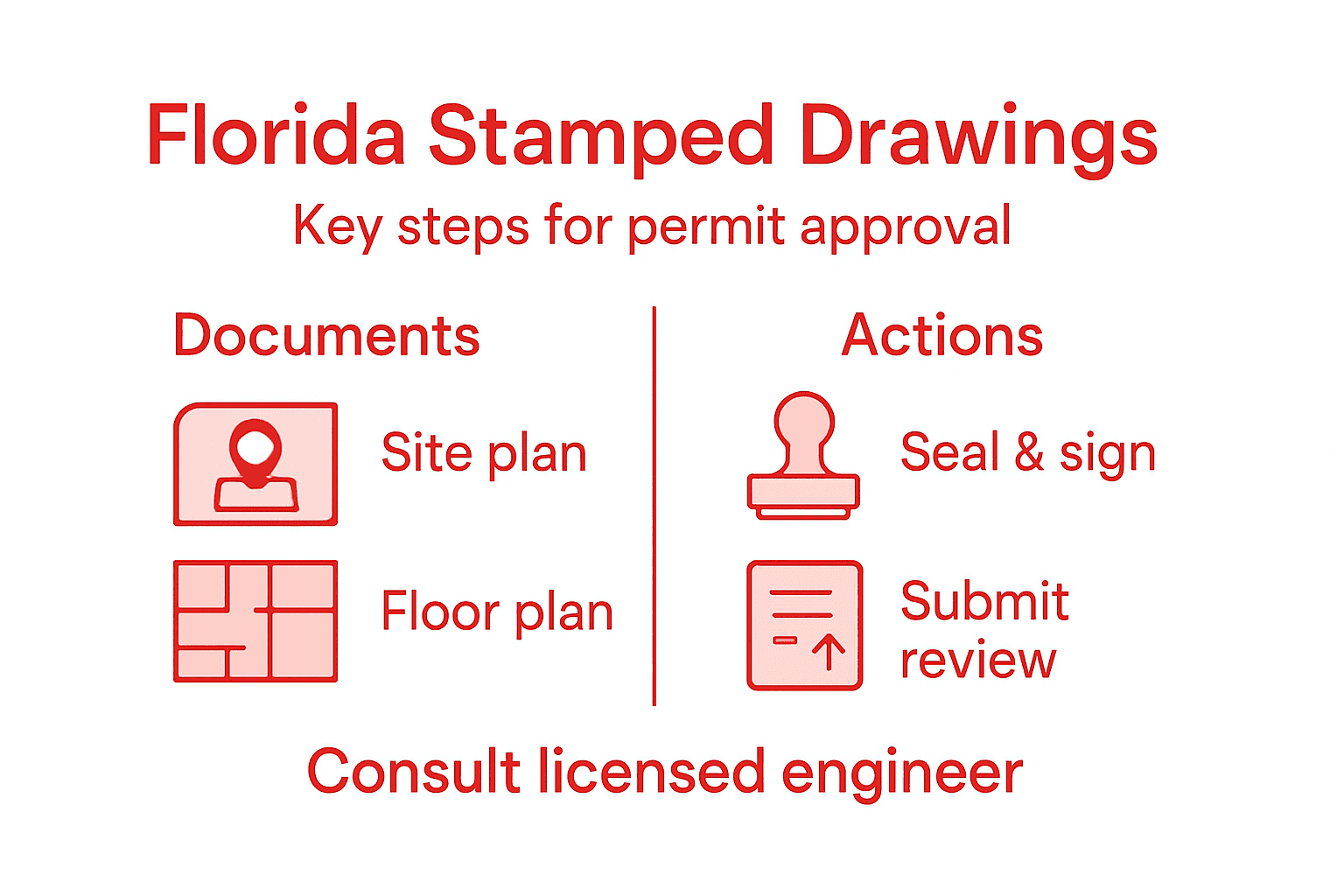
Beyond immediate project implications, unstamped plans can trigger long-term professional consequences. Contractors and engineers who repeatedly submit non-compliant documentation risk damaging their professional reputation, facing potential disciplinary actions from regulatory bodies, and losing critical business opportunities.
Here’s a summary of consequences for unstamped plans vs. properly stamped drawings:
| Document Type | Risk Exposure | Approval Likelihood |
|---|---|---|
| Stamped Drawings | Minimal legal risk | High, if compliant |
| Unstamped Plans | High legal and financial risk | Very low, often rejected |
Unstamped plans are more than administrative oversights – they represent serious professional and legal vulnerabilities.
Pro tip: Always work with licensed professionals who understand local permitting requirements and can provide properly stamped, compliant documentation.
Simplify Your Florida Building Permit Journey with Expert Stamped Drawings
Navigating Florida’s stringent legal requirements for stamped drawings can be overwhelming. You face challenges like ensuring professional seals, meeting local building codes, and avoiding costly permit delays or rejections. If you want to eliminate the risks of unstamped plans and secure your project approval with confidence, professional support is essential. Understanding the difference between construction drawings, permit set drawings, and design revision drawings is critical. That is where our comprehensive engineering services step in to help you meet every technical and legal standard.

Partner with Florida Licensed Engineers to benefit from our expertise in preparing all necessary stamped documents including architectural, structural, mechanical, electrical, and plumbing plans. We provide precise blueprints and permitting expediter services tailored to your unique project needs. Our experienced team also covers civil engineering tasks such as drainage, grading, flood mitigation, and obtaining no rise certificates so your plans smoothly pass municipal review. Take control of your project today by working with licensed professionals who understand Florida’s complex permitting landscape. Visit Florida Licensed Engineers to get started and secure your building permit without unnecessary delays.
Frequently Asked Questions
What are stamped drawings?
Stamped drawings are technical plans that have been signed and sealed by licensed professionals, validating the accuracy of engineering and architectural plans before construction begins.
Why are stamped drawings important for securing building permits?
Stamped drawings verify compliance with local building codes and safety standards, making them essential for obtaining building permits during the construction process.
What are the legal requirements for stamped drawings in Florida?
Stamped drawings must be prepared or directed by a licensed engineer, include a professional seal and signature, comply with applicable building codes, and follow Chapter 471 of Florida Statutes.
What are the risks of using unstamped plans?
Using unstamped plans can lead to permit application rejections, increased scrutiny during inspections, possible financial penalties, extended project delays, and legal exposure for contractors.
Recommended
- How to Draft Site Plans for Accurate Permitting – Florida Licensed Engineers
- Electrical Drawings Step by Step for Contractors – FloridaLicensedEngineers.com
- How to Create Architectural Drawings for Your Project – Florida Licensed Engineers
- Electrical Drawings Step by Step for Contractors – Florida Licensed Engineers
