
Forensic Reports: Critical Evidence for Florida Claims

Replacing a damaged roof or rebuilding after a storm in Florida can leave property owners and contractors with urgent questions about insurance and compliance. The stakes are high when the right documentation is needed to validate claims or meet building codes. A forensic report investigation brings scientific analysis and impartial findings to the table, giving Florida homeowners and builders the authoritative support required for insurance approval and legal peace of mind.
Table of Contents
- Defining Forensic Report Investigations
- Types Of Forensic Reports For Property Damage
- Forensic Report Process And Key Standards
- Legal Requirements And Insurance Claim Role
- Risks, Pitfalls, And Cost Considerations
Key Takeaways
| Point | Details |
|---|---|
| Forensic Report Importance | Forensic reports are essential for assessing property damage and supporting insurance claims, providing scientifically validated evidence for legal proceedings. |
| Structured Investigation Process | A rigorous forensic investigation process involves evidence collection, scientific analysis, and objective report generation to ensure credibility. |
| Types of Forensic Reports | Different forensic report types, such as Structural Integrity Reports and Insurance Claim Investigation Reports, cater to varied applications in property assessments. |
| Legal and Compliance Standards | Forensic reports must meet stringent legal requirements and state regulations, particularly in Florida, to be effective in claim resolutions and disputes. |
Defining forensic report investigations
Forensic report investigations represent systematic, scientific methodologies used to examine evidence, analyze claims, and provide objective insights for legal and administrative decision-making. These specialized investigations combine rigorous technical analysis with meticulous documentation to uncover critical details about property damage, construction defects, or potential liability issues.
A forensic investigation typically follows a structured approach that includes multiple critical components:
- Comprehensive evidence collection
- Detailed visual documentation
- Scientific analysis and testing
- Objective interpretation of findings
- Professional report generation
The process requires expert investigators who understand complex investigation protocols and can translate technical observations into clear, legally admissible documentation. Forensic engineers must maintain strict objectivity, ensuring that their reports provide unbiased, scientifically grounded assessments that can withstand intense legal scrutiny.
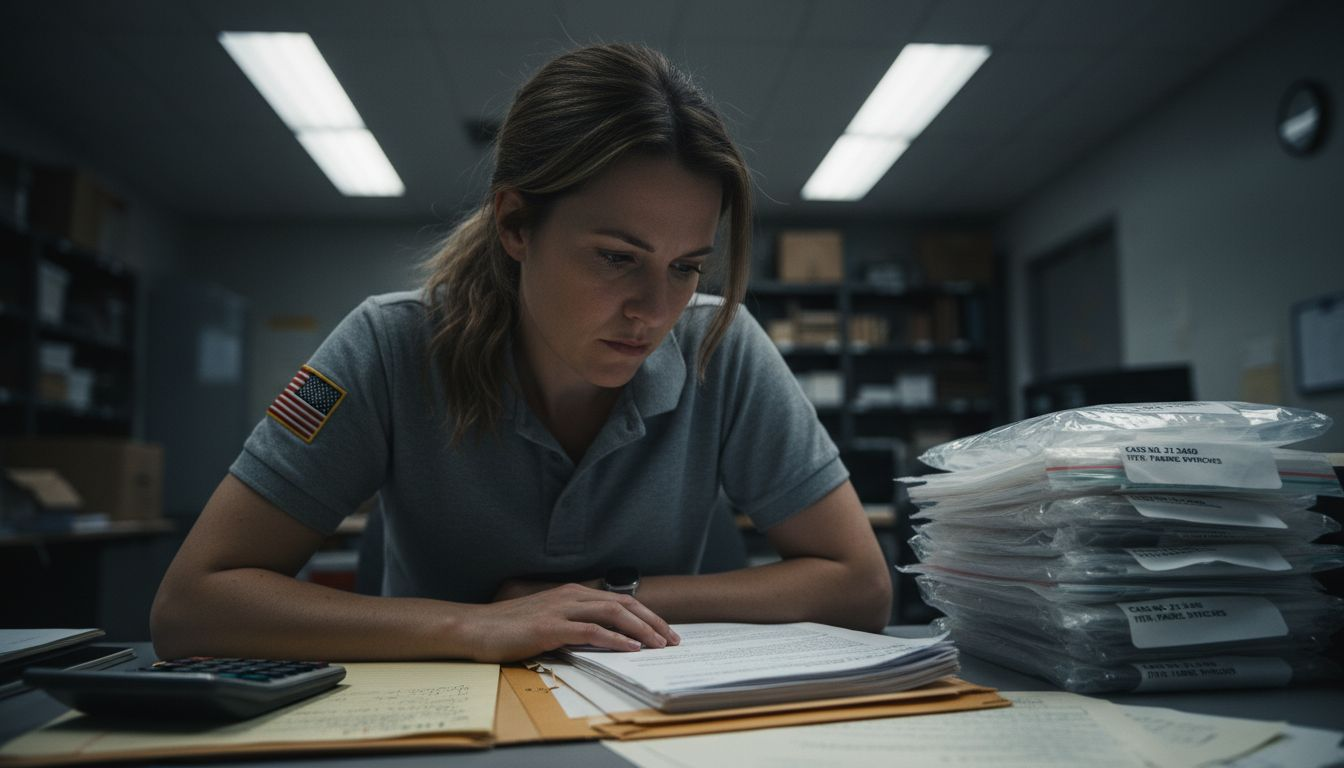
In Florida, forensic report investigations are particularly crucial for property owners and insurance claims. These reports serve as authoritative documentation that can validate damage claims, identify root causes of structural issues, and provide expert testimony if legal proceedings become necessary. Investigators must adhere to stringent professional standards, documenting every observation with precision and clarity.
Pro tip: Always request a comprehensive forensic report that includes detailed photographic evidence, scientific analysis, and clear conclusions to strengthen your property damage or insurance claim.
Types of forensic reports for property damage
Forensic reports for property damage represent specialized technical documents that provide comprehensive analysis of structural, environmental, and mechanical issues affecting real estate and infrastructure. These critical documents serve multiple purposes, ranging from insurance claims to legal proceedings and regulatory compliance.
The primary types of forensic reports include:
- Preliminary Damage Assessment Reports: Detailed disaster damage evaluations documenting extent and cause of property damage
- Structural Integrity Reports: Comprehensive analyses of building foundations, framing, and potential structural weaknesses
- Construction Defect Reports: Investigations identifying design, material, or workmanship problems
- Insurance Claim Investigation Reports: Objective assessments supporting or challenging insurance claim submissions
- Catastrophic Damage Reports: Forensic analyses of extensive property damage from natural disasters or significant incidents
Each forensic report follows a rigorous methodology that includes scientific documentation, visual evidence, and expert interpretation. Forensic engineering investigations require meticulous attention to detail, combining technical expertise with systematic research to produce authoritative documentation that can withstand intense legal and professional scrutiny.
In Florida, these reports are particularly crucial due to the state’s unique environmental challenges, including hurricane risks, flooding, and extreme weather conditions. Property owners, insurance companies, and legal professionals rely on these forensic reports to understand root causes of damage, determine liability, and make informed decisions about repairs, claims, and potential legal actions.
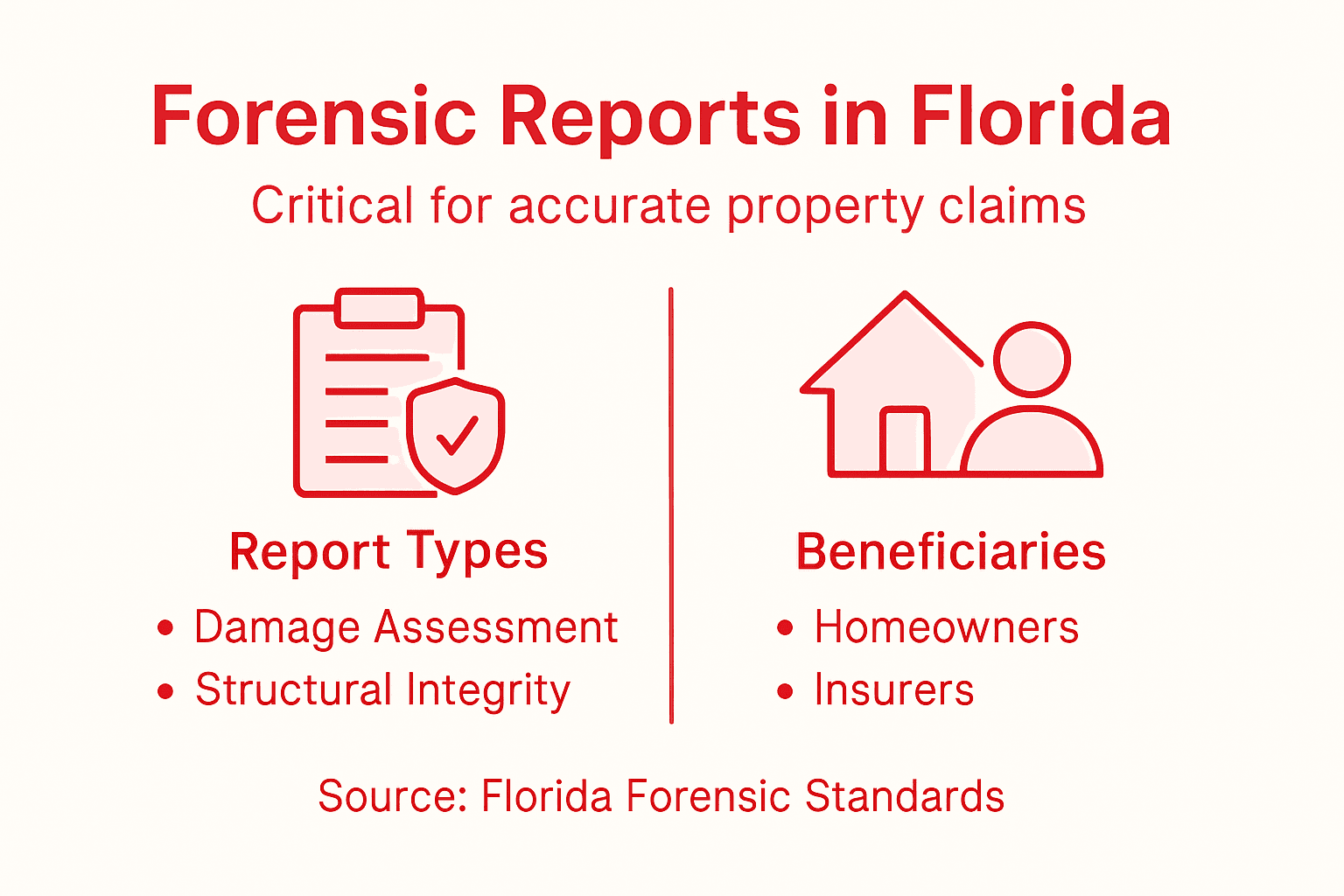
Here’s a quick reference for key types of forensic property damage reports and their typical applications:
| Report Type | Typical Use Case | Primary Beneficiaries |
|---|---|---|
| Structural Integrity | Assess building stability | Property owners, engineers |
| Construction Defect | Identify design or material issues | Contractors, legal teams |
| Insurance Claim | Support or challenge claims | Insurers, claimants |
| Catastrophic Damage | Analyze aftermath of disasters | Local authorities, insurers |
Pro tip: Request forensic reports that include high-resolution photographs, detailed technical measurements, and clear professional conclusions to maximize the credibility of your property damage assessment.
Forensic report process and key standards
Forensic report processes are meticulously structured scientific investigations designed to produce reliable, legally admissible documentation of property damage, structural issues, and potential liability concerns. These investigations follow rigorous methodological frameworks that ensure comprehensive, objective analysis of complex technical challenges.
Key stages in the forensic report process typically include:
- Initial Site Assessment: Comprehensive visual and instrumental examination of the property
- Evidence Collection: Systematic gathering of physical, photographic, and measurement-based evidence
- Technical Analysis: Detailed scientific evaluation of collected materials and structural components
- Root Cause Determination: Identifying underlying factors contributing to damage or failure
- Documentation and Reporting: Preparing standardized forensic investigation protocols with precise technical findings
Professional forensic reports must adhere to strict scientific standards and best practices established by respected organizations like the American Academy of Forensic Sciences. These standards emphasize objectivity, methodological rigor, and comprehensive documentation to ensure the credibility and legal admissibility of forensic investigations.
In Florida, forensic report standards are particularly critical due to the state’s unique environmental challenges, including hurricane risks, flooding, and complex property damage scenarios. Insurance companies, legal professionals, and property owners rely on these meticulously crafted reports to make informed decisions about repairs, claims, and potential legal actions.
To better understand Florida-specific factors impacting forensic reports, see this summary:
| Florida Challenge | Impact on Forensic Reports | Who Is Affected |
|---|---|---|
| Hurricane risk | Requires advanced evidence protocols | Homeowners, insurers |
| Flooding | Demands rapid assessment methods | Property owners, adjusters |
| Extreme weather | Increases investigation complexity | Engineers, legal counsel |
Pro tip: Always request a forensic report that includes detailed photographic evidence, precise measurements, and clear scientific methodology to maximize its credibility and effectiveness.
Legal requirements and insurance claim role
Forensic reports play a critical role in navigating the complex landscape of insurance claims, serving as authoritative documentation that bridges the gap between property damage and legal resolution. These comprehensive documents provide insurers with objective, scientifically validated evidence necessary for fair claim assessment and potential dispute resolution.
Key legal requirements for insurance claim forensic reports include:
- Comprehensive Documentation: Detailed written and photographic evidence of damage
- Objective Analysis: Unbiased professional assessment of property condition
- Timely Submission: Adherence to claim filing deadlines and reporting protocols
- Expert Verification: Professional engineer or specialist signatures
- Compliance Standards: Meeting state and federal regulatory requirements
Insurance contracts impose strict legal obligations that require precise claim documentation and liability assessment. In Florida, where environmental challenges like hurricanes and flooding are prevalent, forensic reports become especially crucial in determining the validity and extent of property damage claims. These reports must meticulously document every aspect of damage, providing insurers with the technical evidence needed to make informed decisions.
The forensic report serves multiple legal functions, acting not just as documentation but as a critical piece of evidence that can substantiate or challenge insurance claims. Property owners and insurance companies rely on these reports to establish clear, scientifically grounded narratives about the origin, extent, and implications of property damage.
Pro tip: Always maintain a comprehensive file of all documentation, including the forensic report, to strengthen your insurance claim and expedite the resolution process.
Risks, pitfalls, and cost considerations
Forensic report investigations involve complex financial and procedural challenges that property owners and insurance professionals must carefully navigate. Understanding the potential risks and economic implications is crucial for making informed decisions about property damage assessments and claims management.
Key risks and potential pitfalls include:
- Fraud Vulnerability: Increased potential for manipulated evidence
- High Investigation Costs: Significant expenses for comprehensive forensic analysis
- Technical Complexity: Sophisticated technologies introducing investigative challenges
- Legal Uncertainty: Potential disputes over report interpretations
- Time-Intensive Processes: Extended investigation timelines affecting claim resolution
Insurance crime and investigation trends reveal escalating challenges in forensic reporting, including sophisticated fraud schemes that can undermine the reliability of damage assessments. These emerging risks necessitate robust verification processes and advanced technological interventions to maintain investigative integrity.
Cost considerations in forensic reporting are particularly critical, with investigation expenses and resource allocation presenting significant challenges for property owners and insurance companies. Professional forensic investigations can range from several hundred to thousands of dollars, depending on the complexity of the property damage and the depth of analysis required. Factors influencing costs include site complexity, required specialized equipment, expert time, and potential legal consultation needs.
Pro tip: Always obtain multiple forensic investigation quotes and verify the investigator’s credentials to balance comprehensive reporting with cost-effectiveness.
Secure Your Florida Property Claims with Expert Forensic Engineering Services
Navigating Florida’s complex property damage claims demands accurate forensic investigations and scientifically grounded reports. If you face challenges like hurricane damage, flooding, or structural defects, it is vital to rely on thorough evidence collection and objective analysis to support your claim. Our team at Florida Licensed Engineers specializes in comprehensive forensic reports that include detailed photographic evidence, precise measurements, and clear explanations tailored specifically for Florida’s unique environmental conditions.
Don’t leave your insurance claim or legal case to chance. Benefit from our multidisciplinary engineering services, including architectural, structural, mechanical, electrical, plumbing, and civil engineering plans. Whether you need flood mitigation analysis, no rise certificates, or expert forensic investigations, we provide trusted documentation that stands up to scrutiny. Act now to protect your property investment and strengthen your claim with professional support from Florida Licensed Engineers. Visit us today to request a consultation and ensure your property damage is accurately assessed and expertly documented.
Frequently Asked Questions
What is a forensic report investigation?
A forensic report investigation is a systematic, scientific method used to examine evidence, analyze claims, and provide objective insights for legal and administrative decision-making, particularly in cases of property damage and liability issues.
Why are forensic reports important for insurance claims?
Forensic reports provide authoritative documentation that validates damage claims, identifies root causes of structural issues, and can support or challenge insurance submissions, ultimately influencing the outcome of claims processes.
What types of forensic reports are typically used for property damage?
Common types of forensic reports include Preliminary Damage Assessment Reports, Structural Integrity Reports, Construction Defect Reports, Insurance Claim Investigation Reports, and Catastrophic Damage Reports.
What are the key components of a forensic report process?
The key components of a forensic report process include initial site assessment, evidence collection, technical analysis, root cause determination, and comprehensive documentation and reporting.
Recommended
- Complete Guide to the Role of Forensic Engineering – FloridaLicensedEngineers.com
- Complete Guide to the Role of Forensic Engineering – Florida Licensed Engineers
- Forensic Engineering Investigation Guide for Accurate Results – Florida Licensed Engineers
- Forensic Engineering Investigation Guide for Accurate Results – FloridaLicensedEngineers.com
- Forensic Report Explained: Vital Role in Litigation
