
Design and Permitting: Florida Construction Success
Starting a construction project in Florida often means sorting through a maze of rules, forms, and complex requirements before any ground is broken. With the Florida Building Code as the foundation, every residential or commercial project must meet strict standards built around safety, hurricane resilience, and legal compliance. Understanding the permitting workflow gives property owners, contractors, and architects a clear path to organizing plans, preventing costly mistakes, and keeping building schedules on track.
Table of Contents
- Design And Permitting Fundamentals In Florida
- Key Design Disciplines And Plan Types
- Step-By-Step Permitting Process Breakdown
- Legal Codes, Approvals, And Compliance Roles
- Common Pitfalls, Costs, And Project Risks
Key Takeaways
| Point | Details |
|---|---|
| Comprehensive Permitting Process | The Florida construction permitting process is multi-step, involving plan reviews, inspections, and compliance with local and state regulations. Careful attention to documentation is essential for smooth progression. |
| Collaboration Among Design Disciplines | Successful projects require integration of various engineering specialties to meet regulatory standards and overall safety. Engaging multidisciplinary professionals early can optimize design and prevent issues. |
| Proactive Compliance Management | Understanding and communicating with local building authorities is vital to navigating the regulatory landscape and avoiding delays. Maintaining thorough documentation can streamline compliance processes. |
| Financial Risk Awareness | Anticipate costs associated with permits, impacts, and compliance to prevent budget overruns. Allocating a contingency budget is advisable to manage unexpected financial challenges. |
Design and Permitting Fundamentals in Florida
Florida’s construction landscape is governed by a comprehensive regulatory framework designed to ensure safety, resilience, and compliance. The Florida Building Code serves as the cornerstone of design and permitting requirements, establishing rigorous standards that address the state’s unique environmental challenges.
The permitting process in Florida involves multiple critical steps that property owners and contractors must navigate carefully. Key components include:
- Comprehensive plan review by local jurisdictions
- Verification of structural integrity requirements
- Compliance with hurricane-resistant building standards
- Detailed documentation of proposed construction activities
- Inspection protocols at multiple project stages
Understanding the permitting workflow requires recognizing that each municipality may have additional administrative rules beyond state guidelines. Local building departments typically require detailed submissions including architectural plans, structural drawings, mechanical specifications, and proof of compliance with energy efficiency standards.
Navigating Florida’s permitting landscape demands meticulous attention to detail. Construction professionals must demonstrate thorough understanding of the latest building code provisions, which are updated triennially to reflect evolving safety technologies and environmental resilience strategies.
Pro tip: Always consult with a licensed engineer or local building official early in your project to understand specific permitting requirements for your specific location and construction type.
Key Design Disciplines and Plan Types
The Florida construction industry relies on a comprehensive set of design disciplines that ensure structural integrity, safety, and regulatory compliance. Architectural and engineering plans form the critical foundation for successful construction projects, encompassing multiple specialized domains that work together to create robust building solutions.
Key design disciplines involved in Florida construction include:
- Structural Engineering: Focuses on building load-bearing systems and resilience
- Mechanical Engineering: Addresses HVAC, ventilation, and climate control systems
- Electrical Engineering: Designs power distribution and lighting infrastructure
- Plumbing Engineering: Manages water supply, drainage, and sanitation systems
- Civil Engineering: Handles site development, grading, and utility connections
Each design discipline requires meticulous attention to detail and compliance with the Florida Building Code, which establishes rigorous standards for different plan types. These plan types range from comprehensive construction drawings to specialized documentation addressing hurricane resistance, energy efficiency, and accessibility requirements.
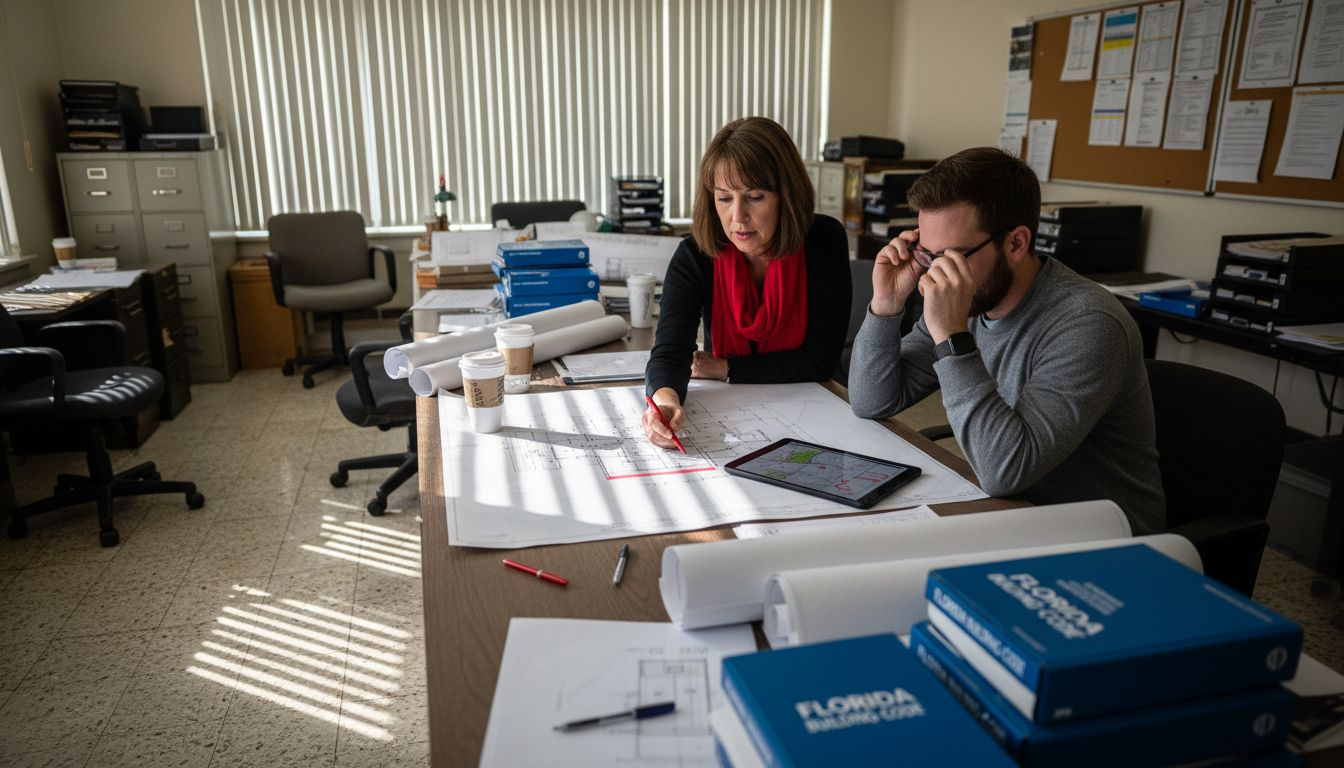
Successful project execution demands seamless integration across these design disciplines. Construction professionals must coordinate architectural, structural, mechanical, electrical, and plumbing plans to create a holistic approach that meets both regulatory standards and project-specific objectives. This collaborative process ensures that every aspect of the building meets safety, functionality, and performance expectations.
Pro tip: Always engage multidisciplinary engineering professionals early in your project to identify potential integration challenges and optimize design coordination.
Step-by-Step Permitting Process Breakdown
Navigating the Florida construction permitting process requires a systematic approach that ensures compliance and efficiency. Digital permitting systems have transformed the traditional paperwork-intensive workflow, offering streamlined solutions for property owners and contractors across the state.
The comprehensive permitting process typically involves the following key stages:
- Pre-Application Preparation
- Gather all required documentation
- Verify property zoning requirements
- Develop detailed project plans
- Online Application Submission
- Complete digital application forms
- Upload supporting documents
- Pay initial review fees
- Plan Review and Assessment
- Building department reviews submitted plans
- Checks for code compliance
- Requests additional information if needed
- Permit Approval
- Receive official permit documentation
- Pay final permit fees
- Obtain inspection schedules
- Ongoing Project Inspections
- Schedule required inspections
- Pass mandatory construction checkpoints
- Obtain final project certification
Successful navigation of the building permit application demands meticulous attention to detail and proactive communication with local building authorities. Each jurisdiction may have unique requirements, so understanding the specific protocols of your local building department is crucial for smooth project progression.
Modern permitting processes emphasize digital transparency and efficiency, allowing applicants to track their permit status, submit electronic documentation, and receive real-time updates. This technological approach reduces processing times and provides clearer communication channels between project stakeholders and regulatory bodies.
Pro tip: Maintain a comprehensive digital folder with all project documentation and communicate proactively with your local building department to expedite the permitting process.
Legal Codes, Approvals, and Compliance Roles
Florida’s construction regulatory framework is a complex system of legal codes and compliance mechanisms designed to ensure public safety and professional standards. Permit acquisition processes represent a critical intersection of legal requirements and professional accountability across multiple regulatory domains.
Key compliance roles in Florida’s construction ecosystem include:
- Building Officials: Oversee permit enforcement and code adherence
- Regulatory Inspectors: Conduct mandatory site and project evaluations
- License Review Boards: Manage contractor licensing and professional standards
- County Permitting Departments: Enforce local and state regulatory requirements
- State-Level Regulatory Agencies: Establish and maintain comprehensive building standards
The legal framework governing construction in Florida encompasses multiple levels of regulatory oversight. County building departments play a crucial role in enforcing state statutes, local ordinances, and maintaining rigorous compliance standards. This multi-tiered approach ensures that construction projects meet stringent safety, structural, and environmental requirements.
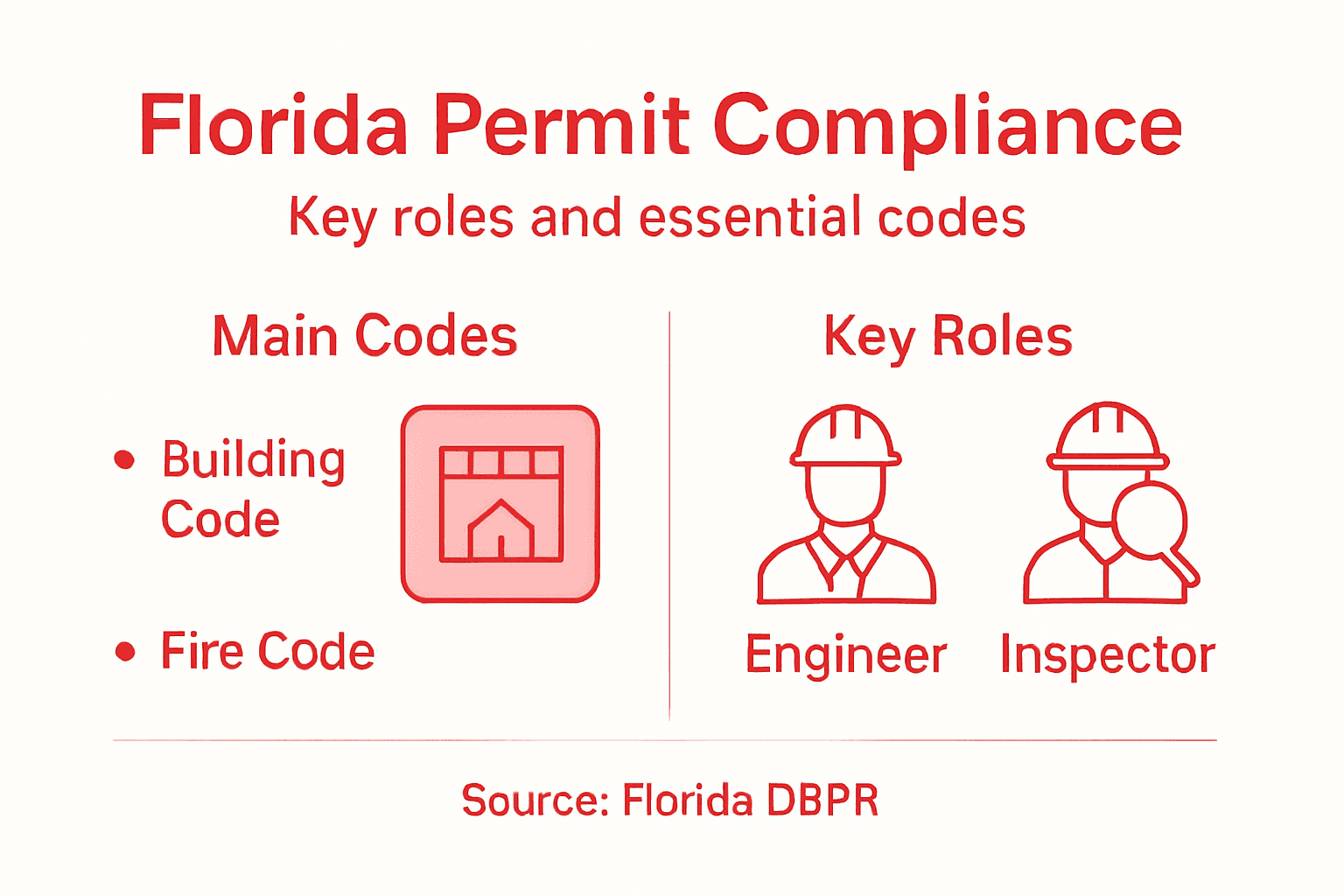
Compliance is not merely a bureaucratic exercise but a comprehensive system of checks and balances. Each regulatory body plays a specific role in verifying technical specifications, professional credentials, safety protocols, and adherence to established building codes. Violations can result in significant penalties, project delays, and potential legal consequences for contractors and property owners.
Here’s a quick comparison of key responsibilities for construction compliance roles in Florida:
| Role | Primary Responsibility | Typical Interaction Frequency |
|---|---|---|
| Building Official | Enforces code and permit standards | At plan review and inspections |
| Regulatory Inspector | Conducts mandatory project checks | At scheduled construction milestones |
| License Review Board | Oversees contractor qualifications | Before and during project start |
| County Permitting Department | Reviews local regulatory compliance | Throughout permit application process |
| State-Level Agency | Sets statewide building standards | During code updates and enforcement |
Pro tip: Maintain meticulous documentation and proactively communicate with local regulatory bodies to streamline your compliance process and avoid potential legal complications.
Common Pitfalls, Costs, and Project Risks
Florida construction projects involve numerous potential challenges that can significantly impact project timelines and budgets. Permit acquisition complexities represent a critical area where unexpected obstacles can derail even well-planned construction initiatives.
Common pitfalls in Florida construction projects include:
- Incomplete Documentation
- Missing required permit applications
- Insufficient architectural drawings
- Incomplete technical specifications
- Regulatory Compliance Issues
- Outdated building code understanding
- Failure to secure proper inspections
- Overlooking local jurisdictional requirements
- Financial Risks
- Unexpected permit fee escalations
- Impact fee miscalculations
- Hidden compliance cost overruns
Project risk management demands a proactive approach to understanding potential cost implications. Contractors and property owners must anticipate potential financial challenges, including mobility fees, impact assessments, and potential legal complications arising from regulatory noncompliance.
Successful navigation of Florida’s complex construction landscape requires meticulous planning, comprehensive documentation, and a deep understanding of local and state regulatory requirements. Each project presents unique challenges that demand careful consideration of technical, financial, and legal parameters.
The following table highlights common costs and their impact on Florida construction projects:
| Cost Factor | Typical Range | Potential Project Impact |
|---|---|---|
| Permit Fees | $1,500 – $10,000 | Can affect initial budgeting |
| Impact/Mobility Fees | $2,000 – $25,000 | May increase total project costs |
| Compliance Delays | Varies by project | Results in timeline disruptions |
| Legal Penalties | $500 – $5,000+ | Financial and reputational damage |
| Documentation Costs | $1,000 – $5,000 | Essential for approval and records |
Pro tip: Allocate a minimum 15% contingency budget for unexpected regulatory compliance costs and maintain open communication channels with local permitting authorities.
Ensure Your Florida Construction Project Succeeds with Expert Engineering Support
Navigating Florida’s design and permitting requirements can feel overwhelming. From managing detailed architectural and engineering plans to meeting stringent building codes and handling complex permitting workflows your project needs trusted expertise to avoid costly delays and compliance issues. The challenges of coordinating structural, mechanical, electrical, plumbing, and civil engineering disciplines demand professional guidance that aligns with state and local regulations.
Our team at Florida Licensed Engineers specializes in providing comprehensive engineering and permitting expediting services tailored for Florida residential and commercial projects. Whether you need thorough inspections, detailed blueprints, or flood mitigation analyses including no rise and elevation certificates, we simplify the process so you can focus on building with confidence. Explore our Engineering and Inspection Archives – Florida Licensed Engineers for insights and connect with us today to ensure your project complies with every code and moves forward without costly disruptions. Take the first step now and visit our homepage to get started.
Frequently Asked Questions
What are the key steps in the Florida construction permitting process?
The Florida construction permitting process typically involves pre-application preparation, online application submission, plan review and assessment, permit approval, and ongoing project inspections.
How often is the Florida Building Code updated?
The Florida Building Code is updated triennially to reflect the latest safety technologies and environmental resilience strategies.
What are common pitfalls to avoid during the permitting process?
Common pitfalls include incomplete documentation, regulatory compliance issues, and financial risks such as unexpected permit fee escalations and hidden compliance costs.
How can I streamline communication with local permitting authorities?
You can streamline communication by maintaining a comprehensive digital folder with all project documentation and proactively reaching out to local building departments throughout the permitting process.
Recommended
- Home Builder Permit Guide for Fast Florida Approvals – Florida Licensed Engineers
- Role of Engineers in Permitting – Streamlining Florida Projects – Florida Licensed Engineers
- 7 Key Tips for Successful New Construction Projects – Florida Licensed Engineers
- Mechanical Design Process for Construction Projects – Florida Licensed Engineers
- Réussir la programmation immobilière pour optimiser vos projets


