
How to Conduct Forensic Investigations for Property Disputes
Property disputes in Florida can quickly escalate when documentation is missing or evidence is mishandled. For both homeowners and contractors, the outcome often depends on the quality and accuracy of what is collected and preserved—not just the facts themselves. By following a systematic collection and preservation of evidence approach from the start, you put yourself in the strongest position to resolve disputes and support your case with credible, admissible proof.
Table of Contents
- Step 1: Gather Essential Documentation and Evidence
- Step 2: Inspect Physical Site Conditions Thoroughly
- Step 3: Analyze Structural and System Failures
- Step 4: Verify Compliance and Prepare Expert Report
Quick Summary
| Essential Insight | Detailed Explanation |
|---|---|
| 1. Systematic Evidence Collection is Crucial | Collect original contracts, permits, and photos to ensure evidence is legally admissible and maintains integrity throughout your dispute process. |
| 2. Thorough Site Inspection is Necessary | Conduct a detailed on-site examination and document all findings, matching current conditions with original expectations to identify discrepancies. |
| 3. Analyze Failures Objectively | Review all collected evidence to identify patterns of failure, distinguishing between design defects and construction errors to establish cause and responsibility. |
| 4. Expert Reports Must be Comprehensive | Create clear, concise expert reports that outline findings, evidence, and recommendations while ensuring compliance with legal standards for court admissibility. |
| 5. Maintain Evidence Chain of Custody | Keep a detailed inventory log of all documents and evidence to prevent loss and validate the integrity of your case, especially if it escalates to legal proceedings. |
Step 1: Gather Essential Documentation and Evidence
You’re about to collect the materials that will make or break your property dispute case. The strength of your forensic investigation depends entirely on what evidence you gather now and how you handle it from the start.
Systematic collection and preservation of evidence ensures that your documentation remains legally admissible and maintains its integrity throughout the dispute process. Start by identifying all relevant documents related to your property issue.
Here’s what you need to prioritize:
- Original contracts and agreements including purchase agreements, construction contracts, and any amendments or change orders
- Building permits and inspection reports from the county or city, showing what was approved versus what was actually built
- Photographs and videos taken at different dates, showing the property condition and any damage or defects
- Professional reports such as structural assessments, engineering evaluations, or pest inspection reports
- Correspondence including emails, letters, and text messages between you and contractors, builders, or previous owners
- Payment records and invoices documenting when money was spent and what work was supposed to be completed
- Permits, certificates, and licenses verifying that contractors held proper credentials
Create a chronological timeline as you organize these documents. This helps you and your forensic engineer understand the sequence of events and identify when issues likely occurred.
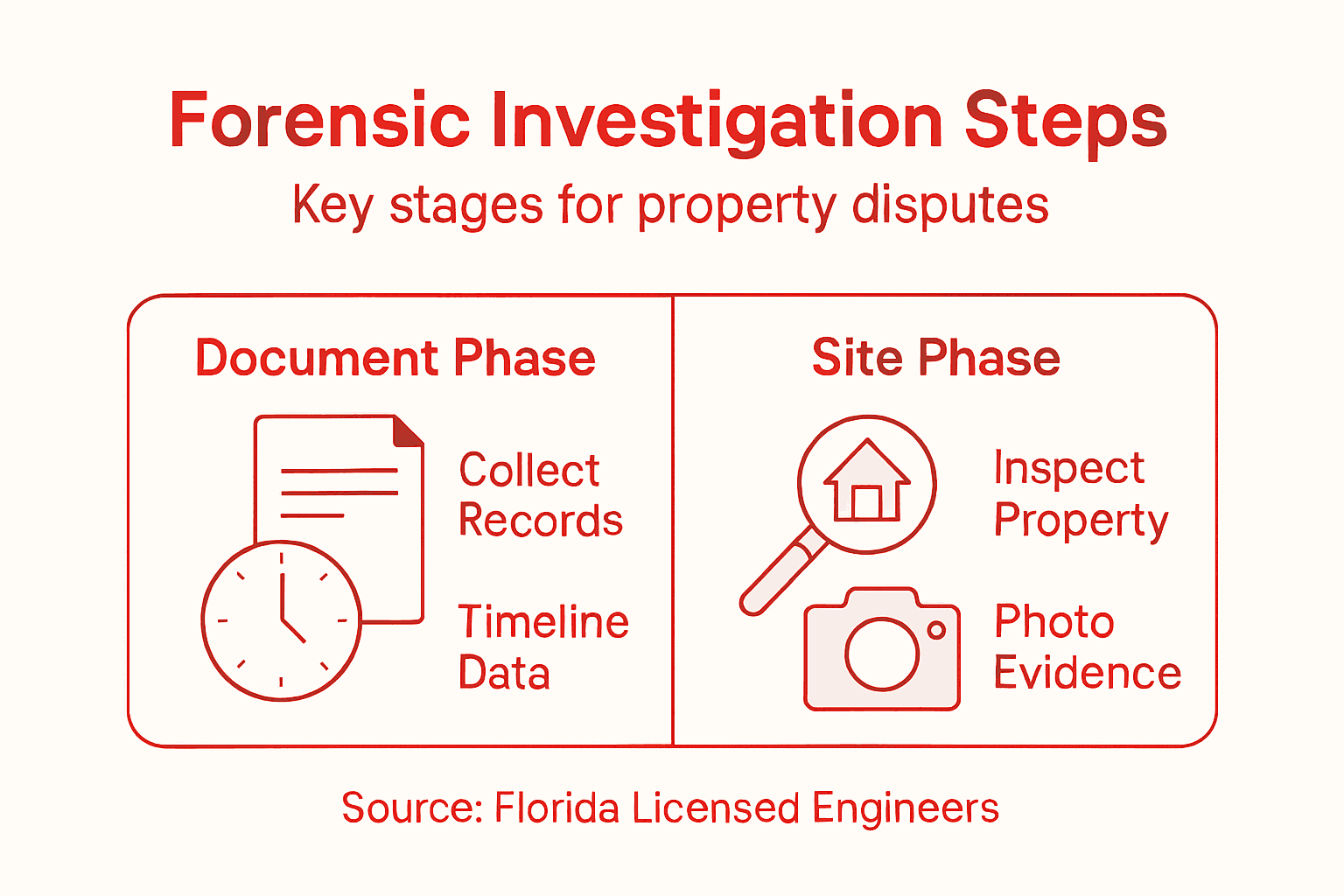
When handling physical evidence like photographs, ensure you apply scientific methods to preserve evidence accuracy by documenting when, where, and how each photo was taken. Include reference objects for scale, like a ruler or coin placed next to visible damage. Avoid editing or altering any images.
Start a document inventory log noting what you have, where it’s stored, and any missing items. This prevents evidence from getting lost and shows that you’ve maintained proper chain of custody, which matters significantly if your dispute escalates.
Keep original documents in a safe, temperature-controlled location. Never alter, annotate, or mark original evidence—use copies for notes and reference instead.
Pro tip: Store digital copies of all documents in a secure cloud storage system with automatic backups, and keep one complete physical copy in a fireproof safe or safety deposit box—this protects your evidence against loss or damage before your forensic investigation even begins.
Step 2: Inspect Physical Site Conditions Thoroughly
Now it’s time to examine the actual property and document exactly what you see. This on-site inspection is where your investigation becomes concrete, transforming general observations into specific evidence that supports your case.
Bring the documentation you gathered earlier and compare what was promised against what currently exists. Walk through the entire property methodically, taking notes on every area relevant to your dispute.
Focus your inspection on these critical areas:
- Structural elements including walls, ceilings, floors, and foundations for cracks, settling, or visible damage
- Water damage and moisture showing discoloration, mold, or soft materials that indicate infiltration problems
- Roof condition checking for missing shingles, improper installation, or deterioration
- Mechanical systems like HVAC units, plumbing fixtures, and electrical panels for proper installation and current condition
- Finishes and workmanship examining paint quality, trim alignment, tile work, and installation precision
- Drainage and grading verifying whether water flows away from the foundation as intended
Document everything with photographs and videos from multiple angles and distances. Include reference objects for scale so any defect’s size is clear. Take close-up shots showing details and wide shots showing context.
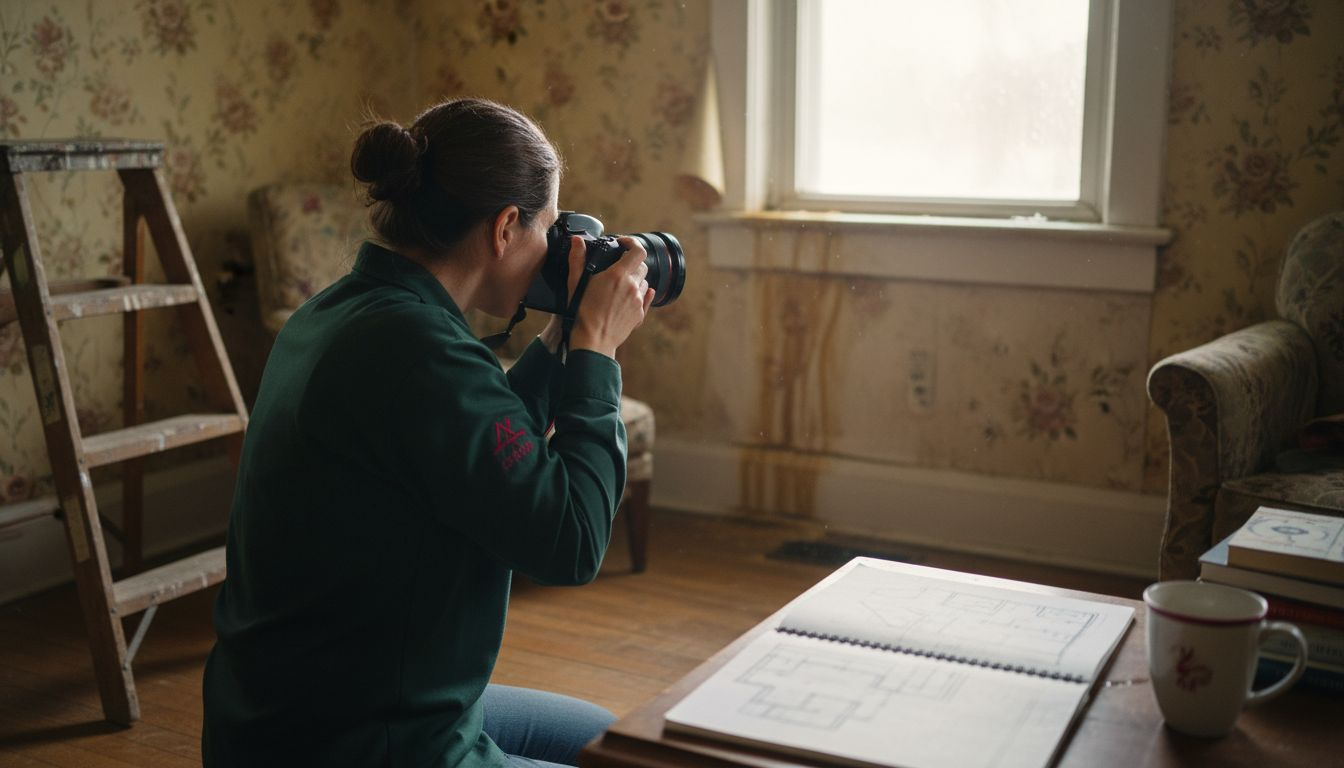
Apply systematic data collection techniques by recording dates, times, and specific locations for each observation. Note environmental conditions like weather, lighting, and moisture levels that affect what you observe.
While conducting your inspection, evaluate environmental conditions and changes to understand how the property’s circumstances may have contributed to the issues you’re documenting. This context strengthens your investigation’s credibility.
Create detailed written notes alongside your photos. Describe what you see objectively, avoiding opinions. Instead of writing “poor quality,” write “grout lines are uneven, varying from 1/4 inch to 1/2 inch wide.”
Inspect during daylight hours when possible and note any areas that require closer examination or professional testing with specialized equipment.
Pro tip: Use a measuring tape, moisture meter, and level during your inspection to gather quantifiable data, then photograph these measurements next to the defects so your forensic engineer has precise information for their analysis.
Step 3: Analyze Structural and System Failures
This step separates casual observation from professional analysis. You’re now connecting the dots between what you documented and what actually caused the problems your property is experiencing.
Start by reviewing all your photos, notes, and documentation alongside the original building plans and specifications. Look for patterns in where issues cluster and when they likely began to develop.
Consider these failure categories:
- Design defects where plans didn’t account for Florida’s climate, soil conditions, or building codes
- Construction errors including improper installation, inadequate materials, or skipped steps
- Material failures where products didn’t perform as specified or deteriorated prematurely
- Maintenance issues stemming from lack of upkeep rather than original defects
- Environmental factors like excessive moisture, settling, or exposure that accelerated wear
Forensic engineers conduct detailed examination and unbiased analysis to determine whether failures resulted from design problems, construction mistakes, material defects, or a combination. This impartiality is crucial because your findings must hold up in legal proceedings.
Develop hypotheses about what caused each failure. For example, if you’re seeing mold and water damage, ask whether the roof fails to shed water properly, the grade slopes toward instead of away from the foundation, or interior humidity isn’t being controlled. Each scenario points to different responsible parties.
Use visual inspections combined with non-destructive testing methods when possible. These techniques let you gather evidence without causing additional damage, preserving the property while building your case.
Document your analysis by creating a timeline showing when each defect likely occurred and what evidence supports that timing. Cross-reference this with construction records, warranty periods, and any prior repair attempts.
Avoid jumping to conclusions. The most obvious cause isn’t always the correct one. Thorough analysis considers multiple scenarios before settling on root causes.
Pro tip: Create a matrix listing each defect, potential causes, supporting evidence, and when you need professional testing to confirm, so your forensic engineer knows exactly which issues require laboratory analysis versus field inspection.
Step 4: Verify Compliance and Prepare Expert Report
You’ve gathered evidence, documented conditions, and analyzed failures. Now you’ll compile everything into a professional report that holds up in court and communicates your findings clearly to judges, attorneys, and insurance adjusters who may not have engineering backgrounds.
Start by verifying that work performed complies with Florida building codes, permit requirements, and industry standards. Check whether the original construction met code requirements at the time it was built and whether subsequent repairs or modifications violated current standards.
Your expert report should include these essential components:
Use this table to ensure your expert report includes all vital sections:
| Report Section | Purpose | Best Practice Tip |
|---|---|---|
| Executive Summary | Summarize findings for non-experts | Use clear, easy-to-read language |
| Methodology | Describe investigative approach | Reference relevant codes and standards |
| Photographic Evidence | Support claims with visuals | Organize by date and location |
| Findings | Detail observed conditions | Include measurements and dates |
| Expert Opinion | Link evidence to likely causes | Remain objective and impartial |
| Recommendations | Suggest solutions for defects | Provide cost estimates when possible |
| Credentials | Prove qualifications for testimony | Attach licenses and certifications |
- Executive summary that presents your key findings and conclusions in plain language
- Detailed methodology explaining exactly how you investigated and what standards you applied
- Photographic evidence organized chronologically and by location with descriptive captions
- Findings section describing what you observed, measured, and tested
- Expert opinion connecting evidence to root causes and responsibility
- Remediation recommendations addressing how to fix identified problems
- Professional credentials establishing your qualifications and independence
Expert reports must be accurate, objective, clear, and comprehensive while following legal requirements for admissibility in court proceedings. Your independence and impartiality are critical because opposing parties will scrutinize whether bias influenced your conclusions.
Write your report for a non-technical audience. Replace jargon with explanations. Instead of “differential settlement,” write “one part of the foundation sank deeper than another, causing walls to crack.”
Include specific measurements, dates, and references to supporting documentation. Courts want facts, not generalities. Rather than stating “extensive water damage,” describe “discoloration covering 60 percent of the basement wall, extending from floor level to 3 feet high, with soft drywall along the bottom edge.”
Have another qualified engineer review your report before submission. This catches errors, confirms your logic, and strengthens credibility.
Your report should tell a clear story connecting evidence to conclusions, making it easy for decision-makers to understand what happened and who bears responsibility.
Pro tip: Include a detailed cost estimate for repairs based on your findings, backed by current Florida pricing and contractor quotes, so your report provides concrete information for settlement negotiations or court judgments.
Strengthen Your Property Dispute Case with Expert Forensic Engineering
If you are facing challenges gathering and analyzing evidence for your property dispute as outlined in the article “How to Conduct Forensic Investigations for Property Disputes” you understand how crucial accurate documentation, detailed inspections, and clear expert analysis are to proving your case. Common pain points like preserving the chain of custody, identifying root causes of defects, and preparing a professional expert report require specialized knowledge and experience in forensic investigations.
At Florida Licensed Engineers, we specialize in providing comprehensive forensic investigation services tailored to both residential and commercial property disputes. Our experts assist with methodical onsite inspections, precision data collection, and preparation of impartial reports that comply with Florida building codes and legal standards. We also offer architectural, structural, mechanical, electrical, and plumbing plans along with civil engineering services such as drainage, grading, flood mitigation, and elevation certificates to support your case further.

Don’t let complexities in building evidence and expert reporting delay your property dispute resolution. Contact us today to secure reliable forensic engineering services and detailed expert reports that make your case clear and convincing. Visit Florida Licensed Engineers to learn how we can guide you through every step from investigation to expert testimony and help you gain confidence in pursuing your property claim.
Frequently Asked Questions
What essential documentation should I gather for a property dispute forensic investigation?
To prepare for a property dispute, gather original contracts, building permits, photographs, and payment records. Ensure all documents are organized in a chronological timeline to help illustrate the sequence of events.
How do I conduct a thorough physical site inspection for my property dispute?
Perform a detailed inspection by documenting the structural elements, water damage, and general conditions of the property. Take photographs from multiple angles to provide clear evidence of any defects or issues that may support your case.
What common structural and system failures should I look for during my investigation?
Look for design defects, construction errors, material failures, maintenance issues, and environmental factors that may have contributed to the property’s problems. Document the relationship between these failures and any evidence you have collected.
How can I verify compliance with building codes during my forensic investigation?
Review your investigation findings against local building codes, permits, and industry standards applicable to your property. Document any discrepancies to reinforce your case and potentially identify responsible parties for repairs.
What should I include in my expert report for a property dispute?
Your expert report should contain an executive summary, detailed methodology, photographic evidence, observed conditions, expert opinions, recommendations for remediation, and your professional credentials. Ensure the report is clear and thoroughly supports your findings with concrete evidence.
How can I make my findings understandable for non-technical audiences?
Use plain language to explain technical terms and include specific measurements and dates to support your claims. Avoid jargon; for example, instead of saying “differential settlement,” describe it as “one part of the foundation sank deeper than another, causing walls to crack.”
Recommended
- Forensic Reports: Critical Evidence for Florida Claims – Florida Licensed Engineers
- Forensic Investigation in Construction: Complete Guide – Florida Licensed Engineers
- Forensic Investigation in Construction: Complete Guide – Florida Licensed Engineers
- Forensic Investigation in Construction – Ensuring Safety and Compliance – Florida Licensed Engineers
