
Mechanical plans in Florida: essential guide for 2026
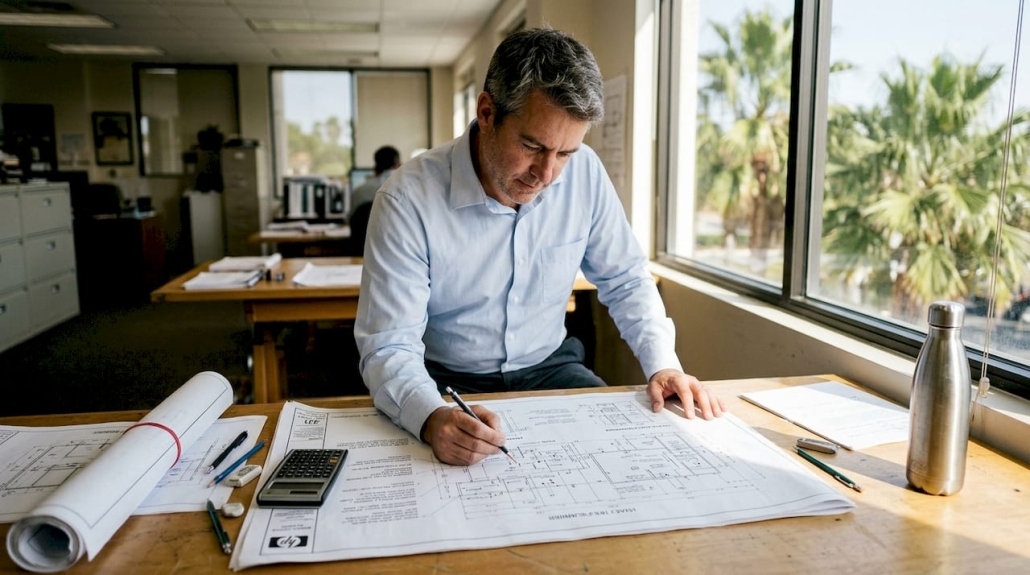
Most homeowners and contractors assume mechanical plans are just a rough sketch of where the air handler goes. In Florida, that assumption can cost you thousands. Mechanical plans are detailed technical documents that govern how your HVAC, ventilation, exhaust, and related systems are designed, sized, and installed. Florida’s Building Code is among the strictest in the country, shaped by decades of hurricane damage, extreme humidity, and energy demands. Get your mechanical plans wrong, and you’re looking at permit rejections, failed inspections, and expensive rework before a single wall goes up.
Table of Contents
- What are mechanical plans and why do they matter?
- Key elements included in Florida mechanical plans
- How mechanical plans drive compliance and permit success in Florida
- Florida’s climate challenges: Designing for comfort, efficiency, and safety
- Best practices for homeowners and project teams in Florida
- Work with Florida’s mechanical planning experts
- Frequently asked questions
Key Takeaways
| Point | Details |
|---|---|
| Foundation for project success | Mechanical plans are essential for safety, comfort, and avoiding regulatory setbacks in Florida construction. |
| Code compliance and energy savings | Detailed plans ensure you meet Florida Building Code and achieve cost-effective, efficient building systems. |
| Faster permitting, fewer surprises | Well-prepared mechanical plans reduce revision cycles, permit delays, and costly last-minute fixes. |
| Critical for Florida’s climate | Proper planning addresses humidity, storm resilience, and air quality unique to the state. |
| Expert guidance recommended | Working with licensed professionals ensures every aspect of your plan adds value and avoids mistakes. |
What are mechanical plans and why do they matter?
Mechanical plans are not just diagrams. They are the technical backbone of any construction or renovation project that involves heating, cooling, ventilation, or exhaust systems. Understanding mechanical plan fundamentals early in your project can save you from expensive surprises down the road.
According to MEP system breakdown, HVAC and ventilation layouts detail equipment placement, ductwork, and specifications for building functionality, safety, and efficiency. In other words, these plans tell every trade exactly what goes where, how it connects, and what it needs to perform.
Here is what a complete mechanical plan typically covers:
- HVAC system layout: Location of air handlers, condensers, and heat pumps
- Ductwork routes: Sizing, materials, and paths through the structure
- Exhaust systems: Kitchen hoods, bathroom fans, and dryer vents
- Equipment specifications: Brand, model, capacity, and energy ratings
- Compliance notes: References to Florida Building Code (FBC) and ASHRAE standards
“When mechanical plans are properly coordinated with electrical and plumbing systems, costly field conflicts drop dramatically and projects stay on schedule.” This is why the mechanical plan impact on your overall project timeline is far greater than most people realize.
Think of mechanical plans as the instruction manual for your building’s lungs. Without them, every trade is guessing.
Key elements included in Florida mechanical plans
Florida has specific requirements that go well beyond what other states demand. The heat, humidity, and storm risk here mean that a generic mechanical plan simply will not pass review. Your plans must reflect energy-efficient HVAC design principles tailored to Florida’s climate.
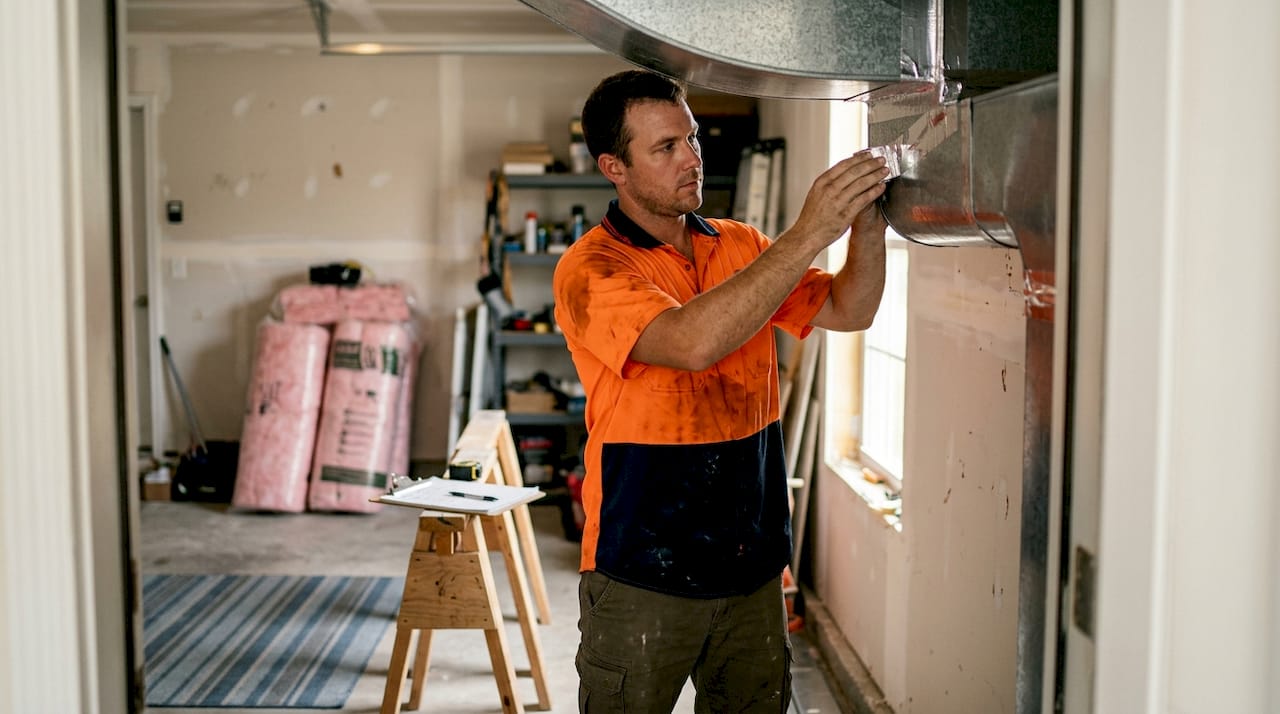
The Florida HVAC requirements are clear: plans must demonstrate compliance with FBC requirements including SEER2 ratings and duct leakage limits of no more than 4 CFM25 per 100 square feet of conditioned floor area, load calculations using ACCA Manual J, ventilation per ASHRAE 62.2, and structural integrity for wind loads.
Here is a breakdown of the core elements your Florida mechanical plan must include:
- Load calculations: ACCA Manual J residential calculations to right-size equipment
- Duct leakage limits: Maximum 4 CFM25 per 100 sq ft of conditioned space
- SEER2 minimums: Current DOE-mandated efficiency ratings for new equipment
- Ventilation rates: ASHRAE 62.2 compliance for indoor air quality
- Wind-load details: Post-Hurricane Andrew structural requirements for equipment mounting
- Equipment schedules: Detailed specs for every mechanical component
| Plan element | Florida requirement | Why it matters |
|---|---|---|
| Duct leakage | Max 4 CFM25/100 sq ft | Prevents energy waste and humidity issues |
| SEER2 rating | DOE minimum per climate zone | Reduces operating costs |
| Load calculation | ACCA Manual J | Ensures right-sized equipment |
| Ventilation | ASHRAE 62.2 | Protects indoor air quality |
| Wind load | FBC structural standards | Keeps equipment secure in storms |
Pro Tip: Never let a contractor size your HVAC system by “rule of thumb” square footage estimates. Florida’s humidity and solar gain require a proper Manual J calculation. Oversized units short-cycle, leaving moisture in the air and driving up your energy bills.
Reviewing your code compliance strategies before submitting plans is one of the smartest moves you can make on any Florida project.
How mechanical plans drive compliance and permit success in Florida
Permit approval in Florida is not a formality. Reviewers check mechanical plans carefully, and incomplete or non-compliant submissions get rejected fast. Here is how a well-prepared mechanical plan moves your project forward:
- Submit complete, code-compliant plans with all required calculations and equipment specs included from day one.
- Expect faster review cycles because reviewers can verify compliance without sending correction notices.
- Schedule duct leakage testing early so results are documented before the final inspection.
- Coordinate MEP systems (mechanical, electrical, plumbing) in the plan stage to eliminate field conflicts.
- Get engineer certification on the plans before submission to confirm professional accountability.
The numbers back this up. Proper upfront compliance in your plans directly reduces permit revisions and delays. And avoiding permit delays through pre-coordinated MEP plans can prevent energy losses of 20 to 30 percent caused by duct leakage alone.
Stat to know: Duct systems that exceed Florida’s leakage limits waste between 20 and 30 percent of conditioned air before it ever reaches the living space. That is money leaving your home every month.
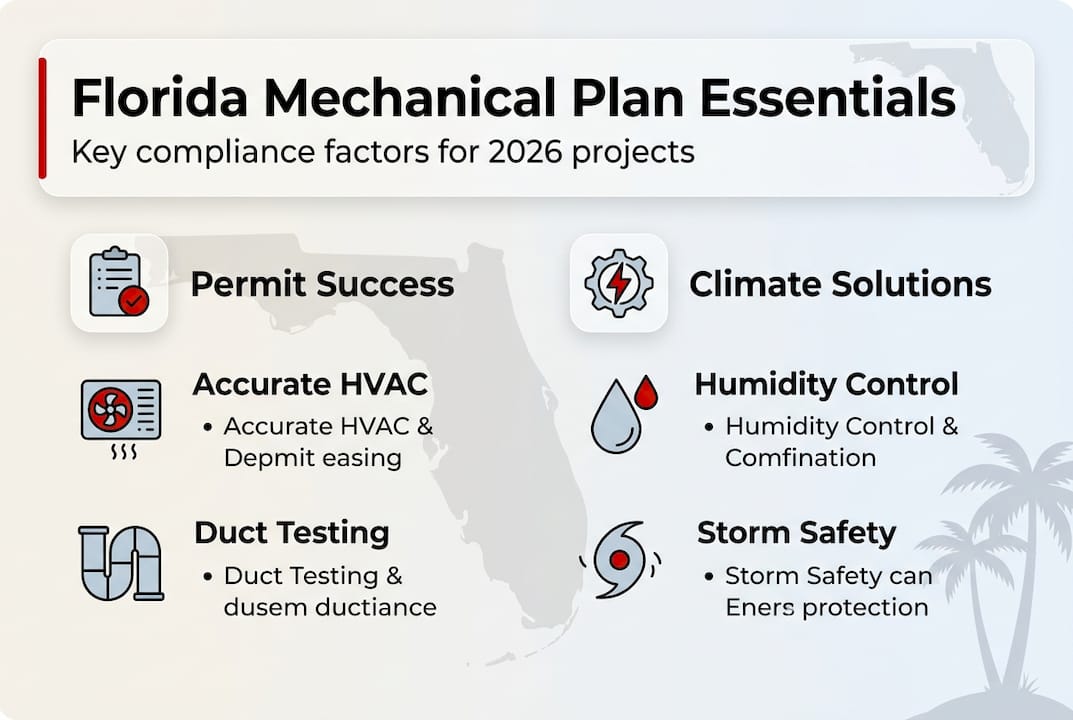
Pro Tip: Spending an extra few hundred dollars on thorough mechanical plan preparation can save you thousands in post-permit change orders, contractor downtime, and failed inspections. Use the MEP permitting checklist to make sure nothing gets missed before you submit.
Florida’s climate challenges: Designing for comfort, efficiency, and safety
Florida is not like the rest of the country. Average summer humidity levels regularly exceed 80 percent, and cooling loads run for nine or more months of the year. A mechanical plan designed for a home in Ohio will fail a Florida project in multiple ways.
Poor mechanical planning in Florida leads to real, measurable problems:
- Mold growth from undersized dehumidification capacity
- High energy bills from oversized or leaky duct systems
- Comfort complaints from uneven cooling and humidity spikes
- Permit failures from missing FBC-specific compliance documentation
- Storm damage from improperly anchored outdoor equipment
Here is a side-by-side look at what happens with and without properly designed mechanical plans:
| Factor | With proper mechanical plans | Without proper mechanical plans |
|---|---|---|
| Energy costs | Optimized, code-compliant | 20-30% higher from duct losses |
| Indoor humidity | Controlled, comfortable | Elevated, mold risk increases |
| Permit timeline | Faster, fewer revisions | Delays, resubmissions likely |
| Storm resilience | Equipment properly anchored | Risk of damage or displacement |
| Long-term costs | Lower maintenance, fewer repairs | Higher repair and rework costs |
“Seamless MEP coordination is critical for functionality in Florida’s humid climate, where poor HVAC design leads directly to humidity and indoor air quality issues that affect occupant health and building integrity.”
One area many homeowners overlook is the connection between mechanical systems and waterproofing. Integrating architectural and mechanical plans ensures that penetrations, condensate lines, and exhaust paths are properly sealed. Poor coordination here is a direct path to building waterproofing failures and moisture intrusion.
Best practices for homeowners and project teams in Florida
Knowing what mechanical plans should include is useful. Knowing how to review and manage them is what actually protects your project. Follow these steps to stay in control:
- Request the full plan set before construction starts, not just the permit drawings.
- Verify Manual J calculations are included and match the equipment being installed.
- Confirm duct leakage limits are specified and that testing is scheduled before final inspection.
- Check equipment schedules to ensure SEER2 ratings meet current FBC minimums.
- Ask for engineer sign-off on the mechanical plans before submission to the building department.
When working with engineers and contractors, keep this checklist handy:
- Confirm the engineer is licensed in Florida
- Request a copy of the duct leakage test report after rough-in
- Verify that exhaust fans and ventilation rates meet ASHRAE 62.2
- Make sure outdoor equipment mounting details address FBC wind-load standards
- Review the mechanical design steps with your engineer before finalizing plans
Post-Hurricane Andrew, Florida strengthened its building code significantly, and duct testing requirements were a direct result of documented energy losses found in post-storm inspections. These are not bureaucratic hurdles. They are lessons learned the hard way.
Pro Tip: Always demand written duct testing documentation and a licensed engineer’s certification on your mechanical plans. If a contractor tells you it is not necessary, that is a red flag worth taking seriously.
Work with Florida’s mechanical planning experts
Understanding mechanical plans is the first step. Getting them done right is what moves your project forward without delays, failed inspections, or budget surprises. Our team of licensed engineers specializes in mechanical plan creation, review, and permitting for both residential and commercial projects across Florida.

We handle everything from HVAC design and duct layout to full engineering services overview including structural, electrical, plumbing, and civil plans. If you are new to the process, our blueprint guide is a great place to build your foundation. When you are ready to move forward, start your project with Florida Licensed Engineers and get expert guidance from day one. We make compliance straightforward so you can focus on building.
Frequently asked questions
Who needs mechanical plans for Florida building permits?
Both residential and commercial projects in Florida require mechanical plans for permits when they involve HVAC, ventilation, or exhaust system changes. Even a simple system replacement may trigger FBC compliance documentation requirements.
How detailed do mechanical plans need to be?
Mechanical plans must show equipment layout, duct sizing, energy calculations, and compliance notes for FBC and ASHRAE standards. HVAC and ventilation specs must be detailed enough for a reviewer to verify code compliance without requesting additional information.
What are the consequences of missing or poor mechanical plans?
Missing or incomplete plans lead to permit delays, failed inspections, energy losses, and costly rework after construction begins. Upfront compliance in your plans is always cheaper than fixing problems after the fact.
How do mechanical plans relate to energy efficiency in Florida?
They document compliance with minimum SEER2 ratings and duct leakage testing, ensuring your HVAC system performs efficiently from day one. Duct leakage limits of 4 CFM25 per 100 sq ft are a direct energy-saving requirement built into every compliant Florida mechanical plan.
Recommended
- What are architectural plans? Your 2026 Florida guide – Florida Licensed Engineers
- Role of blueprints in construction: Florida guide 2026 – Florida Licensed Engineers
- Mechanical Plans Explained: Impact on Florida Projects – Florida Licensed Engineers
- Role of Mechanical Plans in Project Success – Florida Licensed Engineers
- Drafting & Design Tools: Professional Architectural Instruments
- Workflow for Preventive Maintenance: Cut Costs by 30% in 2026

