
Florida building codes explained: safe, compliant projects

TL;DR:
- Florida’s building code emphasizes hurricane resistance, flood protection, and energy efficiency specific to the state.
- Securing proper permits and understanding code requirements prevent costly delays and safety issues.
- Early engagement with engineers and local officials ensures smooth compliance and avoids common pitfalls.
Most homeowners and contractors treat the Florida Building Code like a speed bump, something to get past before the real work begins. That mindset is exactly what causes costly delays, failed inspections, and expensive corrections. Florida’s code exists because the state faces risks that most of the country never deals with: hurricane-force winds, storm surge, and flood zones that can swallow a poorly built home overnight. Understanding these rules isn’t just about staying legal. It’s about protecting your family, your investment, and your timeline. This guide breaks down what the Florida Building Code actually covers, how permits work, and how to avoid the mistakes that trip up even experienced contractors.
Table of Contents
- What is a building code?
- Key requirements in the Florida Building Code
- Permit processes for residential construction
- Common pitfalls and expert tips for compliance
- Expert perspective: Why understanding the code saves you money and headaches
- Navigate Florida building codes with expert guidance
- Frequently asked questions
Key Takeaways
| Point | Details |
|---|---|
| Florida-specific code | Florida’s building codes are stricter than most other states due to hurricane and flood risks. |
| Permits are required | Most home construction and renovation projects in Florida require city or county permits. |
| Timelines matter | Special rules can speed up residential permit decisions if you follow the process and supply full documents. |
| Compliance prevents costly errors | Meeting code from the start saves you time, money, and protects your home’s safety and value. |
What is a building code?
A building code is a set of legally enforceable rules that govern how structures must be designed, built, and maintained. These aren’t suggestions. They define minimum standards for structural integrity, fire safety, electrical systems, plumbing, and more. Every permitted project in Florida must meet these standards before a certificate of occupancy is issued.
Florida’s version stands apart from most states. The Florida Building Code FAQ confirms that the Florida Building Code is based on the International Building Code with state-specific amendments for hurricane resistance, flood protection, and energy efficiency. That means Florida didn’t just adopt a national template. It rewrote significant portions to address local realities.
The code is updated on a three-year cycle, which keeps it current with new construction technology, updated wind load research, and lessons learned from major storms. Local jurisdictions can adopt amendments, but they cannot weaken the statewide minimums. This layered system means what’s required in Pensacola may differ slightly from what’s required in Miami, but both must meet the state floor.
Building codes apply far beyond new construction. If you’re adding a room, finishing a garage, replacing your roof, or upgrading your HVAC system, the code applies. Many homeowners assume a small renovation flies under the radar. It doesn’t, and skipping the process creates title issues, insurance gaps, and resale headaches.
Here’s what building codes actually govern in a typical Florida residential project:
- Structural systems: Load-bearing walls, roof framing, and foundation design
- Mechanical, electrical, and plumbing: Installation standards and safety clearances
- Fire and life safety: Egress routes, smoke detectors, and emergency access
- Energy efficiency: Insulation, window ratings, and HVAC sizing
- Flood and wind resistance: Elevated foundations, hurricane straps, and impact glazing
“The Florida Building Code is not just a legal formality. It’s an engineering framework designed specifically for a state where a single storm season can test every fastener, every window, and every foundation.”
Understanding blueprints in Florida projects is one of the first practical steps toward making sense of how these code requirements translate into actual construction documents.
Key requirements in the Florida Building Code
With the basics of building codes clear, you’ll want to know which core standards you must get right in Florida’s residential projects. The code covers dozens of categories, but a handful of requirements catch people off guard most often.
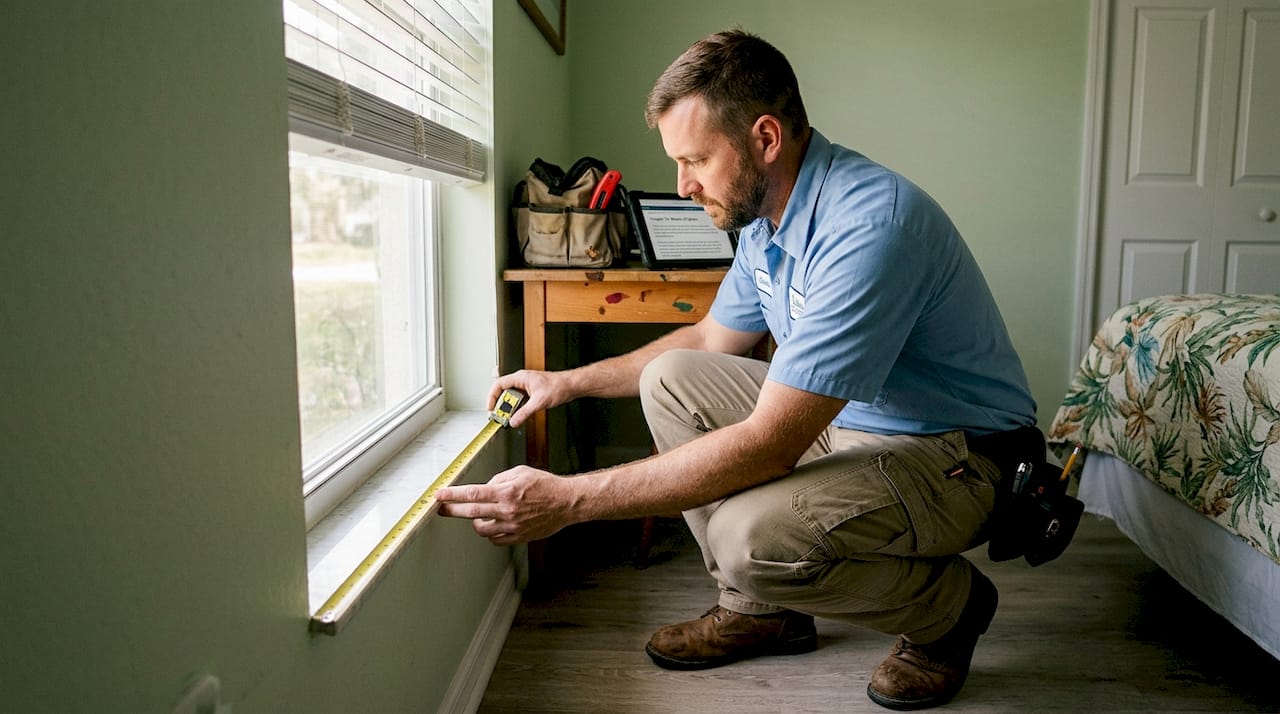
Residential standards include minimum ceiling height, room size, emergency egress rules, insulation, flood, and hurricane resistance. Here’s a quick reference for the most commonly checked items:
| Requirement | Minimum standard | Notes |
|---|---|---|
| Ceiling height | 7 ft in habitable rooms | Bathrooms and hallways may differ |
| Bedroom size | 70 sq ft minimum | At least 7 ft in any direction |
| Egress windows | Min. 5.7 sq ft opening | Required in all sleeping rooms |
| Smoke alarms | Every floor and bedroom | Interconnected in new construction |
| Hurricane fasteners | Required statewide | Clips or straps at every rafter |
| Flood elevation | Per FEMA flood zone map | Finished floor must meet BFE |
Florida’s hurricane requirements are among the most demanding in the country. Every roof-to-wall connection must use approved hurricane clips or straps. Foundations in coastal and flood-prone areas must be engineered to resist both uplift and lateral loads. Windows and doors in many zones must be impact-rated or protected by approved shutters.
Energy efficiency is another area where Florida goes beyond the national baseline. The state is divided into climate zones, and insulation R-values, window U-factors, and HVAC efficiency ratings vary by zone. You can review the full energy efficiency requirements to understand what applies to your specific location.
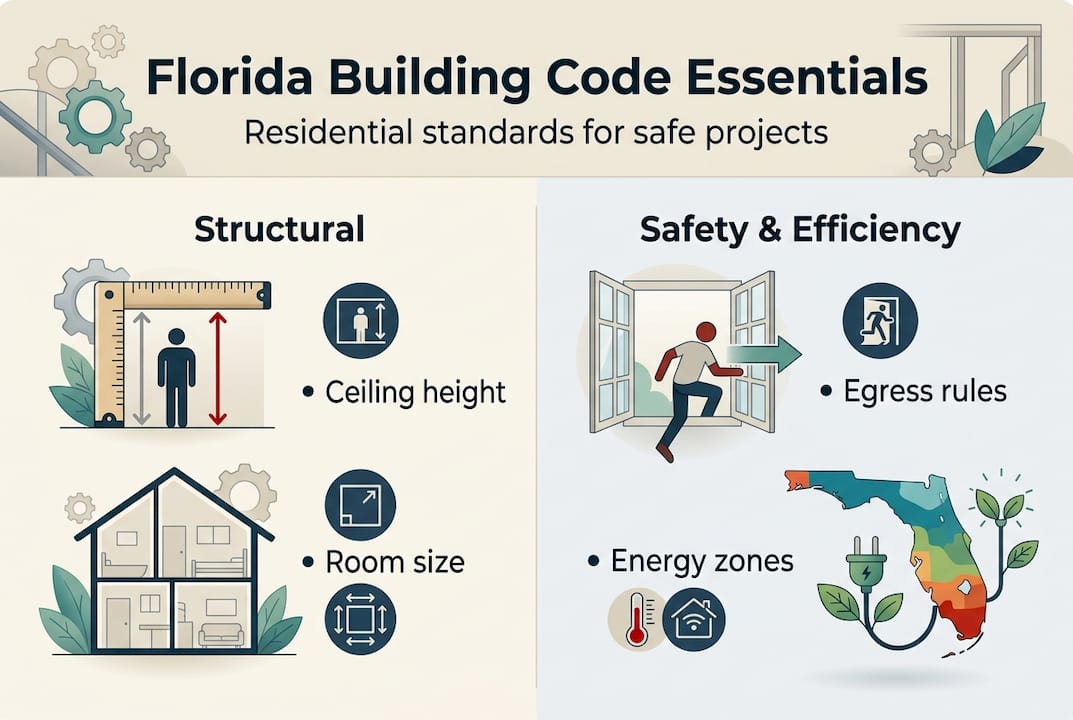
Flood protection rules depend on your property’s FEMA flood zone designation. Homes in Special Flood Hazard Areas must have their lowest finished floor elevated to or above the Base Flood Elevation. Some counties require additional freeboard, meaning the floor must sit even higher than the FEMA minimum. Proper foundation compliance is critical in these zones.
Pro Tip: Egress windows and stair handrails are two of the most frequently cited items during inspections. Double-check opening dimensions and handrail height before scheduling your rough-in inspection. These small details delay approvals more often than major structural issues.
Using a design checklist for code compliance before submitting plans can catch these issues before they become inspection failures.
Permit processes for residential construction
Knowing what code demands isn’t enough. You also need to secure the right permits before you build or remodel. Skipping this step doesn’t just risk a fine. It can trigger a stop-work order, require demolition of completed work, and create serious problems when you sell the property.
Here’s how the residential permit process typically works in Florida:
- Determine what triggers a permit. Structural changes, new electrical circuits, plumbing alterations, HVAC replacements, roof work, and additions all require permits. Cosmetic updates like painting or flooring generally do not.
- Prepare your construction documents. Most jurisdictions require signed and sealed plans from a licensed engineer or architect for structural work.
- Submit your application. Applications go to the local building department. Many counties now accept digital submissions.
- Plan review. The building department reviews your documents for code compliance. Reviewers may issue comments requiring revisions.
- Permit issuance. Once approved, the permit is issued and posted at the job site.
- Inspections. Inspectors visit at key milestones: foundation, framing, rough-in systems, and final.
- Certificate of occupancy. After passing all inspections, the final certificate is issued.
A major update under HB 267 permit rules changed the timeline game for homeowners. Single-family permits under 7,500 sq ft must be approved or denied within 30 business days. That’s a significant protection against permit offices sitting on applications indefinitely.
| Factor | Miami-Dade and Broward (HVHZ) | Rest of Florida |
|---|---|---|
| Product approvals | Miami-Dade NOA required | Florida statewide approval |
| Wind speed design | 175+ mph | 130 to 160 mph (varies by zone) |
| Plan review scrutiny | Higher, more detailed | Standard review |
| Permit timeline | Follows HB 267 minimums | Follows HB 267 minimums |
Pro Tip: Having engineered plans ready before you submit dramatically reduces back-and-forth with reviewers. Incomplete submittals are the single biggest cause of permit delays. Review the permit guide for builders and the step-by-step construction permit guide to prepare a complete package the first time.
Understanding the types of building permits available in Florida also helps you submit the right application from the start.
Common pitfalls and expert tips for compliance
Even with clear code knowledge and permit steps, many projects stumble over the same compliance issues or special local rules. Knowing where others fail is one of the fastest ways to protect your own project.
The High Velocity Hurricane Zone, covering Miami-Dade and Broward counties, operates under stricter rules than the rest of Florida. HVHZ requirements differ from the rest of Florida, specifically around Miami-Dade approved materials versus state-approved products. A window that’s legal everywhere else in Florida may not pass inspection in Miami-Dade without a Miami-Dade Notice of Acceptance. Always verify product approvals before purchasing materials for HVHZ projects.
Here are the most common compliance pitfalls we see across Florida residential projects:
- Missing egress requirements: Bedroom windows that are too small or too high off the floor
- Non-compliant insulation: Wrong R-value for the climate zone or improperly installed vapor barriers
- Unapproved materials: Products not listed on the Florida Product Approval database
- Unpermitted work: Prior owner additions that were never permitted, discovered during renovation
- Incomplete structural details: Missing connection schedules or load path documentation in submitted plans
One edge case worth knowing: structures that are moved to a new location may qualify for certain exemptions from major remodeling requirements if the structure is found to be sound. This doesn’t mean code requirements disappear, but the path to compliance can differ from a ground-up build. Always confirm with your local building department.
Pro Tip: Contact your local building department before finalizing your design. A pre-application meeting costs nothing and can surface local amendments or interpretations that aren’t obvious from reading the code alone. Pair that with design and permitting tips to build a submission strategy that holds up under review.
Engineered drawings with complete details, connection schedules, and code references give reviewers everything they need to approve your permit quickly. Understanding why permit compliance matters goes beyond avoiding fines. It protects your project’s value from day one.
Expert perspective: Why understanding the code saves you money and headaches
After working on hundreds of Florida residential projects, one pattern stands out clearly. The most expensive problems don’t come from contractors trying to cut corners. They come from people who genuinely didn’t know what the code required until an inspector told them to tear something out.
Florida’s storm requirements, in particular, catch people off guard. Hurricane straps, impact glazing, and flood elevation rules aren’t optional upgrades. They’re baseline requirements, and retrofitting them after framing is complete costs three to five times more than building them in from the start.
Most guides focus on the permit checklist and stop there. What they miss is the strategic value of engaging with the code and with local officials early. The engineers’ role in permits isn’t just to stamp drawings. It’s to anticipate what reviewers will flag, resolve those issues on paper before they become field problems, and keep your project moving.
Understanding the code is a competitive advantage. Contractors who know it win bids by promising realistic timelines. Homeowners who know it make smarter decisions about materials, layouts, and contractors. The code isn’t the obstacle. Misunderstanding it is.
Navigate Florida building codes with expert guidance
Ready to take the next step toward smooth, code-compliant building in Florida? Navigating the Florida Building Code is far easier when you have licensed engineers in your corner from the start.

At Florida Licensed Engineers, we handle the full picture: architectural, structural, mechanical, electrical, and plumbing plans, plus permitting expediter services that keep your project on schedule. Whether you need a complete set of construction documents or help resolving a plan review comment, our team knows Florida’s code inside and out. Explore our engineering services overview or learn how the Florida blueprint process works so you can move forward with confidence.
Frequently asked questions
What is the Florida Building Code and why is it different from other states?
The Florida Building Code is built on national models with local amendments for extreme weather and energy standards, making it stricter than most state codes due to Florida’s hurricane and flood exposure.
Do I need a permit to remodel my home in Florida?
Yes, most remodeling projects require permits. Permits are required for alterations to regulated systems including structural, electrical, plumbing, and mechanical work.
How long does it take to get a residential building permit?
Under HB 267, if your home is under 7,500 square feet, the local building department must approve or deny your permit within 30 business days of a complete application.
What happens if I don’t follow the building code?
You risk fines, failed inspections, stop-work orders, and potential safety or insurance issues. Unpermitted work can also complicate property sales and title transfers significantly.
What are HVHZ rules and do they apply to my project?
HVHZ rules require extra hurricane-proofing and Miami-Dade approved materials in Miami-Dade and Broward counties, going beyond standard Florida statewide product approvals.

