
Civil Engineering Basics: Everything You Need to Know
Most american cities rely on civil engineering to keep everyday life running smoothly, yet few people realize how much expertise goes into every bridge or highway. In fact, civil engineers handle projects that directly impact public safety, urban comfort, and environmental sustainability. With over 325 million residents depending on sound infrastructure, understanding the core concepts of civil engineering matters more than ever. This guide untangles the essentials that every american should know about the discipline shaping our world.
Table of Contents
- Defining Civil Engineering and Its Core Concepts
- Major Civil Engineering Disciplines and Services
- Key Processes: Planning, Design, and Permitting
- Legal Requirements and Regulatory Compliance
- Common Challenges and Critical Mistakes to Avoid
Key Takeaways
| Point | Details |
|---|---|
| Civil Engineering Definition | Civil engineering involves designing, constructing, and maintaining infrastructure and environments, crucial for modern urban development. |
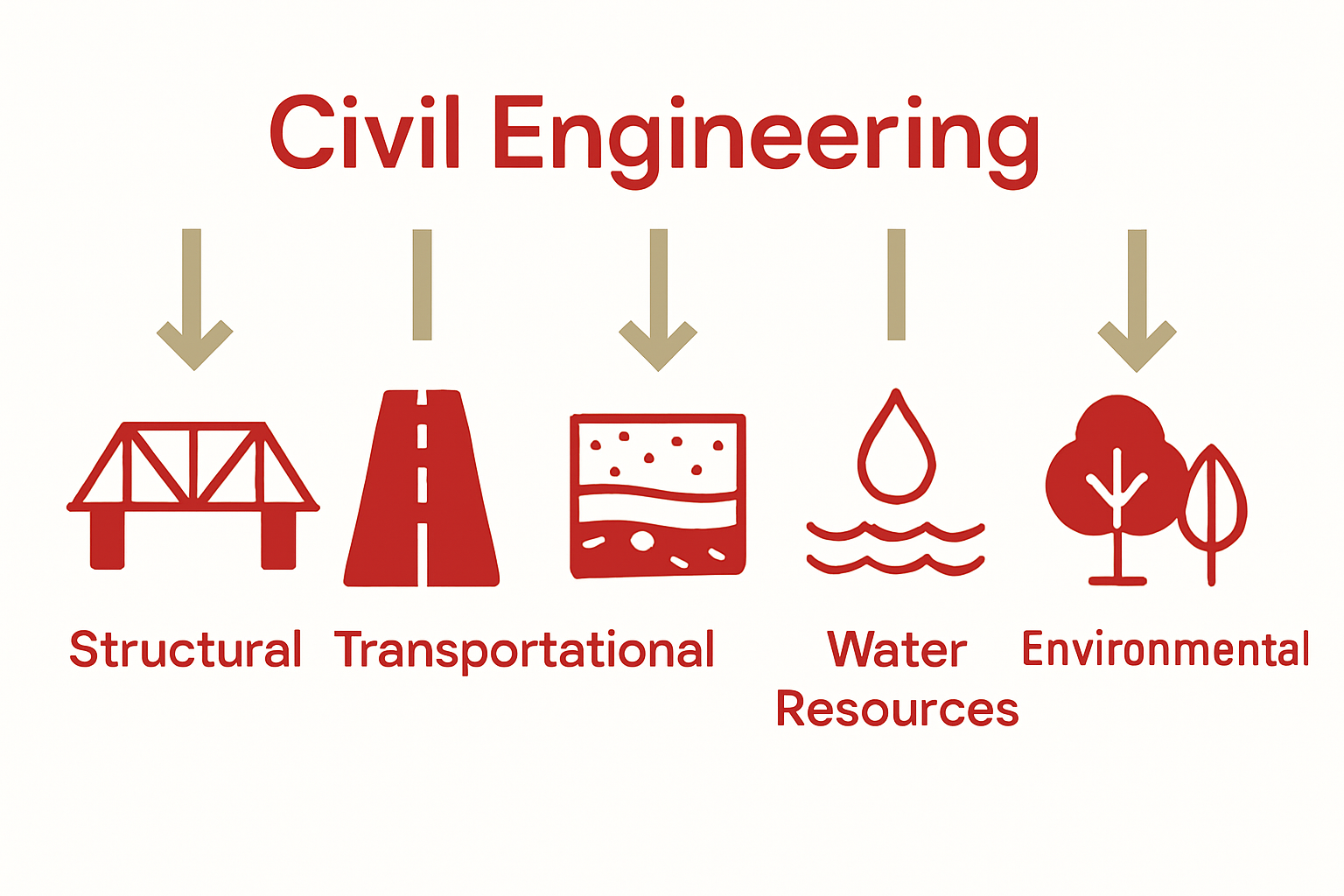
| Core Disciplines | Key areas include structural, transportation, geotechnical, water resources, and environmental engineering, addressing diverse infrastructure needs. |
| Planning and Permitting | Effective civil engineering entails methodical planning, design processes, and regulatory compliance to ensure project feasibility and safety. |
| Challenges and Solutions | Engineers face complexities like computational challenges and site investigations, requiring proactive risk management and advanced modeling techniques. |
Defining Civil Engineering and Its Core Concepts
Civil engineering is a dynamic professional engineering discipline that forms the backbone of modern infrastructure and urban development. According to Wikipedia, this field encompasses the design, construction, and maintenance of our physical and naturally built environment, spanning critical infrastructure like roads, bridges, canals, dams, airports, sewage systems, pipelines, and structural components of buildings.
Civil engineers are problem solvers who transform complex technical challenges into functional, sustainable solutions that shape our world. They operate across multiple specialized domains, including transportation, water resources, environmental systems, and structural design. The core mission involves creating infrastructure that is not just functional, but safe, efficient, and resilient against environmental and human-made challenges.
At its foundation, civil engineering integrates principles from mathematics, physics, geology, and environmental science to develop innovative infrastructure solutions. University of Southampton highlights that modern civil engineering increasingly emphasizes environmental sustainability, geomechanics, and advanced construction techniques. Key focus areas include:
- Structural design and analysis
- Transportation infrastructure planning
- Water resource management
- Environmental protection and sustainability
- Geotechnical engineering
- Urban and regional development
Professional civil engineers must blend technical expertise with creative problem solving, understanding that every project impacts communities and ecosystems. Their work requires precision, strategic thinking, and a holistic approach to designing solutions that balance human needs with environmental considerations.
 When you see a bridge, highway, water treatment facility, or resilient building, you’re witnessing the tangible results of skilled civil engineering expertise.
Major Civil Engineering Disciplines and Services
Civil engineering encompasses a wide range of specialized disciplines that address complex infrastructure and environmental challenges. Wikipedia highlights that municipal or urban engineering represents a critical subdiscipline that applies scientific and engineering principles to urban environments, focusing on essential infrastructure like streets, sidewalks, water supply networks, sewers, street lighting, and public parks.
The primary disciplines within civil engineering include structural engineering, transportation engineering, geotechnical engineering, water resources engineering, and environmental engineering. Each specialization plays a crucial role in designing, developing, and maintaining the built environment.
Professional civil engineers work across these domains to solve complex technical challenges, ensuring infrastructure is safe, sustainable, and meets community needs.
Wikipedia notes that building services engineering represents another critical subdiscipline, which focuses on creating safe and comfortable indoor environments while minimizing environmental impact. This specialty involves intricate mechanical, electrical, and plumbing (MEP) systems integration. Key services within civil engineering include:
- Architectural plan development
- Structural design and analysis
- Site planning and grading
- Drainage and utility infrastructure design
- Flood mitigation and analysis
- Permitting and regulatory compliance
- Forensic engineering investigations
Professional civil engineers must continuously adapt to evolving technological and environmental challenges. Their work requires a comprehensive understanding of engineering principles, local regulations, and sustainable design practices. By integrating advanced technical knowledge with creative problem solving, civil engineers develop innovative solutions that shape our built environment and improve quality of life for communities.
Key Processes: Planning, Design, and Permitting
Civil engineering projects follow a structured, methodical approach that transforms conceptual ideas into tangible infrastructure solutions. Research indicates that these processes typically require a comprehensive four-year degree and professional licensure, highlighting the complex technical expertise needed to navigate planning, design, and permitting stages.
The planning phase represents the critical initial stage where engineers conduct extensive research, site assessments, and feasibility studies. This involves comprehensive data collection, environmental impact evaluations, geological surveys, and stakeholder consultations. Engineers must carefully analyze project constraints, potential challenges, and community requirements to develop a strategic project framework that balances technical specifications with practical and regulatory considerations.
University of Southampton emphasizes that civil engineering fundamentals require a holistic approach to design processes. The design stage transforms initial plans into detailed technical specifications, including:
- Comprehensive architectural and engineering drawings
- Structural calculations and analysis
- Material selection and specification
- Risk assessment and mitigation strategies
- Cost estimation and budget planning
- Compliance with local and national building codes
The permitting process is a complex legal and regulatory navigation that ensures projects meet all required standards and regulations. Civil engineers must collaborate with local government agencies, submit detailed documentation, and obtain necessary approvals before construction can commence. This stage involves rigorous review of technical plans, environmental impact assessments, safety protocols, and compliance with zoning regulations. Successful permitting requires meticulous attention to detail, strong communication skills, and a comprehensive understanding of local and state regulatory frameworks.
Legal Requirements and Regulatory Compliance
Civil engineering is fundamentally anchored in a complex framework of legal requirements and regulatory standards that ensure public safety, environmental protection, and infrastructure reliability. Research highlights that civil engineering programs extensively prepare graduates to navigate these intricate legal landscapes in both public and private sector environments, emphasizing the critical importance of regulatory knowledge.
Regulatory compliance encompasses a multifaceted approach to meeting local, state, and federal standards across various engineering domains. Civil engineers must demonstrate comprehensive understanding of building codes, zoning regulations, environmental protection laws, and safety requirements. This involves developing meticulous documentation, conducting rigorous technical assessments, and ensuring that every aspect of infrastructure design meets or exceeds established legal standards.
Wikipedia confirms that civil engineering projects inherently require strict adherence to legal frameworks that guarantee infrastructure safety and functionality. Key regulatory considerations include:
- Building and construction code compliance
- Environmental impact assessments
- Zoning and land use regulations
- Safety and accessibility standards
- Structural integrity requirements
- Permitting and inspection protocols
- Historic preservation guidelines
- Flood zone and coastal development regulations
Successful navigation of legal requirements demands more than technical expertise. Civil engineers must cultivate strong communication skills, maintain detailed documentation, and develop collaborative relationships with regulatory agencies. Proactive engagement with legal standards helps prevent costly delays, potential litigation, and ensures that infrastructure projects not only meet technical specifications but also align with broader community and environmental protection goals.
Common Challenges and Critical Mistakes to Avoid
Computational complexity represents a significant challenge in modern civil engineering, requiring sophisticated problem-solving approaches. ArXiv Research reveals that advanced computational models including Artificial Neural Networks (ANNs), Fuzzy Logic, Genetic Algorithms, and Probabilistic Reasoning have emerged as critical tools for addressing complex engineering challenges such as slope stability analysis, bearing capacity assessments, and water quality evaluations.
Civil engineers frequently encounter multifaceted challenges that demand precision, foresight, and comprehensive risk management. Common critical mistakes often stem from inadequate site investigation, incomplete geological assessments, poor communication with stakeholders, and insufficient understanding of local environmental conditions. These errors can result in structural instabilities, project delays, budget overruns, and potential safety hazards that compromise the entire infrastructure development process.
ArXiv Research highlights emerging technological solutions while cautioning about potential computational limitations. Key challenges and mistakes to avoid include:
- Overlooking comprehensive site geological surveys
- Inadequate environmental impact assessments
- Insufficient risk management strategies
- Poor communication with regulatory agencies
- Neglecting advanced computational modeling techniques
- Underestimating local environmental constraints
- Failing to integrate interdisciplinary engineering perspectives
- Ignoring long-term infrastructure sustainability considerations
Successful civil engineering demands a proactive approach that anticipates potential complications. Engineers must continuously update their technical knowledge, leverage advanced computational tools, and maintain a holistic perspective that balances technical precision with practical feasibility. Developing robust risk mitigation strategies, maintaining open communication channels, and embracing technological innovations are essential for navigating the complex landscape of modern civil engineering challenges.
Bring Your Civil Engineering Projects to Life with Expert Support
Understanding the complexities of civil engineering basics, from site planning and grading to flood mitigation and regulatory compliance, can feel overwhelming. Whether you are managing the intricate permitting process or need precise elevation certificates for your project, the risks of costly delays and errors are very real. Your goal is clear: reliable, compliant, and sustainable infrastructure solutions that protect your investment and community.
At Florida Licensed Engineers, we specialize in delivering comprehensive civil engineering services tailored to your needs. Our expertise spans drainage design, utility planning, flood analysis, and providing critical documentation like no rise certificates. We also offer architectural, structural, mechanical, electrical, and plumbing plans alongside forensic investigations to help you avoid common engineering pitfalls and navigate legal requirements confidently.
Explore how professional guidance can simplify your journey. Learn more through the Uncategorized Archives – Connecticut Licensed Engineers or reviews shared in the Uncategorized Archives – Pennsylvania Licensed Engineers.

Don’t wait until complications arise. Partner with experts who understand the demands highlighted in “Civil Engineering Basics: Everything You Need to Know”. Visit Florida Licensed Engineers today to secure your project’s success from planning through permitting and beyond.
Frequently Asked Questions
What is civil engineering?
Civil engineering is a professional engineering discipline that involves the design, construction, and maintenance of infrastructure such as roads, bridges, dams, and sewage systems. It integrates principles from mathematics, physics, geology, and environmental science to create safe and sustainable structures.
What are the main disciplines within civil engineering?
The main disciplines of civil engineering include structural engineering, transportation engineering, geotechnical engineering, water resources engineering, and environmental engineering. Each discipline addresses specific aspects of infrastructure and environmental challenges.
What is the importance of the planning phase in civil engineering projects?
The planning phase is critical as it involves extensive research, site assessments, and feasibility studies. Engineers analyze project constraints and community needs to develop a strategic framework that balances technical specifications with regulatory considerations.
How do civil engineers ensure regulatory compliance?
Civil engineers ensure regulatory compliance by developing detailed documentation, conducting assessments, and maintaining a thorough understanding of building codes, zoning regulations, and environmental protection laws that apply to their projects.
Recommended
- Civil Engineering Plans Guide for Successful Projects – FloridaLicensedEngineers.com
- Role of Civil Engineer in Construction Explained – FloridaLicensedEngineers.com
- Master Civil Engineering Workflow for Smooth Project Delivery – FloridaLicensedEngineers.com
- Residential Engineering Requirements: Complete Guide – FloridaLicensedEngineers.com
