
Civil Engineering Terms – What Every Project Needs
Most American construction projects encounter communication gaps caused by confusing engineering terminology. For anyone working in development or infrastructure, knowing these civil engineering terms is vital to avoid mistakes and misunderstandings. From clear explanations of technical terms to insights on preventing costly pitfalls, this guide offers practical knowledge that can help you navigate the detailed world of American civil engineering more confidently.
Table of Contents
- Defining Civil Engineering Terms Clearly
- Types of Civil Engineering Services Explained
- Key Features of Drainage and Site Plans
- Essential Certifications and Legal Requirements
- Common Pitfalls and Cost Implications
Key Takeaways
| Point | Details |
|---|---|
| Understanding Terminology is Essential | Familiarizing yourself with civil engineering terms is crucial for effective communication in construction and infrastructure projects. |
| Diverse Engineering Services Exist | Recognizing the range of civil engineering specializations helps in making informed decisions about project development and management. |
| Certifications Ensure Professional Standards | Compliance with professional licensing and legal requirements is vital for maintaining safety and regulatory adherence in engineering projects. |
| Proactive Risk Management is Key | Addressing potential pitfalls through thorough planning and continuous oversight minimizes unexpected costs and operational issues in projects. |
Defining Civil Engineering Terms Clearly
Civil engineering encompasses a complex world of specialized terminology that can seem overwhelming to newcomers. Understanding these critical terms is essential for anyone involved in construction, infrastructure development, or project planning. Civil engineering basics provide the foundational knowledge needed to navigate this technical landscape effectively.
The field of civil engineering is characterized by precise language that describes structural components, design principles, and technical processes. Key terms range from fundamental concepts like load bearing, stress analysis, and structural integrity to more specialized terminology such as geotechnical investigation, hydrology, and topographical mapping. These terms are not just academic jargon but practical descriptors that communicate critical technical information about design, safety, and functionality.
To help professionals and project stakeholders communicate effectively, we’ve compiled a comprehensive overview of essential civil engineering terms. Understanding these definitions will help you interpret blueprints, communicate with engineering teams, and make informed decisions about infrastructure and construction projects. Whether you’re a contractor, architect, or property developer, mastering these terms will enhance your ability to collaborate and execute complex technical initiatives with confidence.
From project planning to final implementation, civil engineering terminology serves as a universal language that bridges technical knowledge and practical application. By familiarizing yourself with these terms, you’ll gain insights into the intricate processes that transform architectural visions into robust, functional structures that shape our built environment.
Types of Civil Engineering Services Explained
Civil engineering is a multifaceted discipline with diverse specializations that address complex infrastructure and environmental challenges. Engineering services overview reveals the intricate range of professional expertise required to transform architectural concepts into functional realities. Modern civil engineering encompasses several critical service areas that ensure safe, sustainable, and efficient infrastructure development.
The primary types of civil engineering services include structural engineering, transportation engineering, geotechnical engineering, water resources engineering, and environmental engineering. These specialized domains address unique challenges across different project types. For instance, structural engineers focus on designing buildings and infrastructure that can withstand various environmental stresses, while transportation engineers develop sophisticated road, bridge, and transit systems that facilitate efficient mobility.
Each engineering service plays a crucial role in project development and public safety. Geotechnical engineers analyze soil conditions and ground characteristics to ensure stable foundations, whereas water resources engineers design systems for water management, flood control, and sustainable water supply. Environmental engineering services are particularly critical, addressing ecological impacts, pollution control, and sustainable development strategies that minimize environmental disruption.
Understanding these diverse civil engineering services helps project stakeholders make informed decisions about infrastructure development. Whether planning residential construction, municipal infrastructure, or large-scale commercial projects, selecting the right engineering expertise ensures structural integrity, safety, and long-term sustainability. The collaborative nature of these specialized services demonstrates how complex technical knowledge transforms abstract designs into tangible, functional environments that support community growth and development.
Key Features of Drainage and Site Plans
Drainage and site plans are critical components of civil engineering that ensure proper land development, environmental protection, and infrastructure functionality. Civil engineering plans guide reveals the intricate details required for comprehensive project planning and execution. These technical documents serve as comprehensive blueprints that outline the spatial relationships, topographical considerations, and critical infrastructure elements of a proposed development.
Site plans typically include several essential features that provide a holistic view of a project’s physical environment. These key elements encompass topographical mapping, utility locations, property boundaries, building footprints, and access points. Site plans also detail critical drainage infrastructure, including stormwater management systems, water flow patterns, and potential erosion control measures. Precise documentation of these features helps engineers and developers understand the complex interactions between built structures and the natural landscape.

Drainage considerations are particularly crucial in site planning, especially in regions prone to flooding or with challenging geological conditions. Drainage plans must account for water runoff, ground absorption rates, and potential environmental impacts. Engineers analyze slope gradients, soil composition, and existing water channels to design effective drainage systems that prevent water accumulation, minimize erosion, and protect surrounding infrastructure. These plans often include detailed calculations of water flow rates, retention basin capacities, and strategic placement of drainage channels and underground piping systems.
Successful site and drainage plans require a comprehensive understanding of local environmental conditions, regulatory requirements, and engineering principles. By integrating detailed topographical data, hydraulic modeling, and sustainable design strategies, civil engineers create plans that not only meet technical specifications but also address broader environmental and community needs. These plans serve as critical roadmaps that transform abstract design concepts into functional, resilient infrastructure that can withstand environmental challenges and support long-term community development.
Essential Certifications and Legal Requirements
Civil engineering projects demand rigorous professional certifications and adherence to complex legal frameworks that ensure public safety, technical competence, and regulatory compliance. Residential engineering requirements provide critical insights into the professional standards that govern infrastructure development and construction projects.
Professional licensing represents the foundational legal requirement for civil engineers. Most jurisdictions mandate that engineers obtain state-specific Professional Engineering (PE) licenses, which require extensive educational credentials, comprehensive examinations, and documented professional experience. These certifications validate an engineer’s technical expertise, ethical standards, and ability to design systems that meet stringent safety and performance criteria. Additional specialized certifications might include geotechnical endorsements, structural engineering credentials, and environmental engineering qualifications.
Legal requirements extend beyond individual certifications to encompass comprehensive regulatory compliance. Engineers must navigate complex local, state, and federal regulations that govern construction standards, environmental protection, accessibility requirements, and structural safety. This includes obtaining necessary permits, conducting required environmental impact assessments, ensuring compliance with building codes, and maintaining detailed documentation that demonstrates adherence to established engineering standards. Failure to meet these legal requirements can result in significant financial penalties, project delays, and potential legal liability.
The certification process is dynamic, requiring continuous professional development and periodic license renewals. Engineers must consistently update their knowledge through approved continuing education programs, stay current with evolving technological standards, and maintain rigorous documentation of their professional credentials. These ongoing requirements ensure that civil engineering professionals remain at the forefront of technical innovation, safety protocols, and regulatory compliance, ultimately protecting public interests and maintaining the highest standards of professional practice.
Common Pitfalls and Cost Implications
Civil engineering projects are complex undertakings with numerous potential financial and operational risks that can significantly impact project outcomes. Engineering inspections play a crucial role in identifying and mitigating these potential challenges before they escalate into costly complications.
The most prevalent cost pitfalls in civil engineering projects stem from inadequate planning, unexpected site conditions, and insufficient risk assessment. Design errors can lead to substantial rework expenses, with some projects experiencing cost overruns of 20% to 50% due to miscalculations or incomplete initial assessments. Common technical challenges include soil instability, unexpected groundwater levels, material compatibility issues, and structural design miscalculations. These complications can dramatically increase project timelines and budgets, potentially rendering entire project proposals financially unviable.
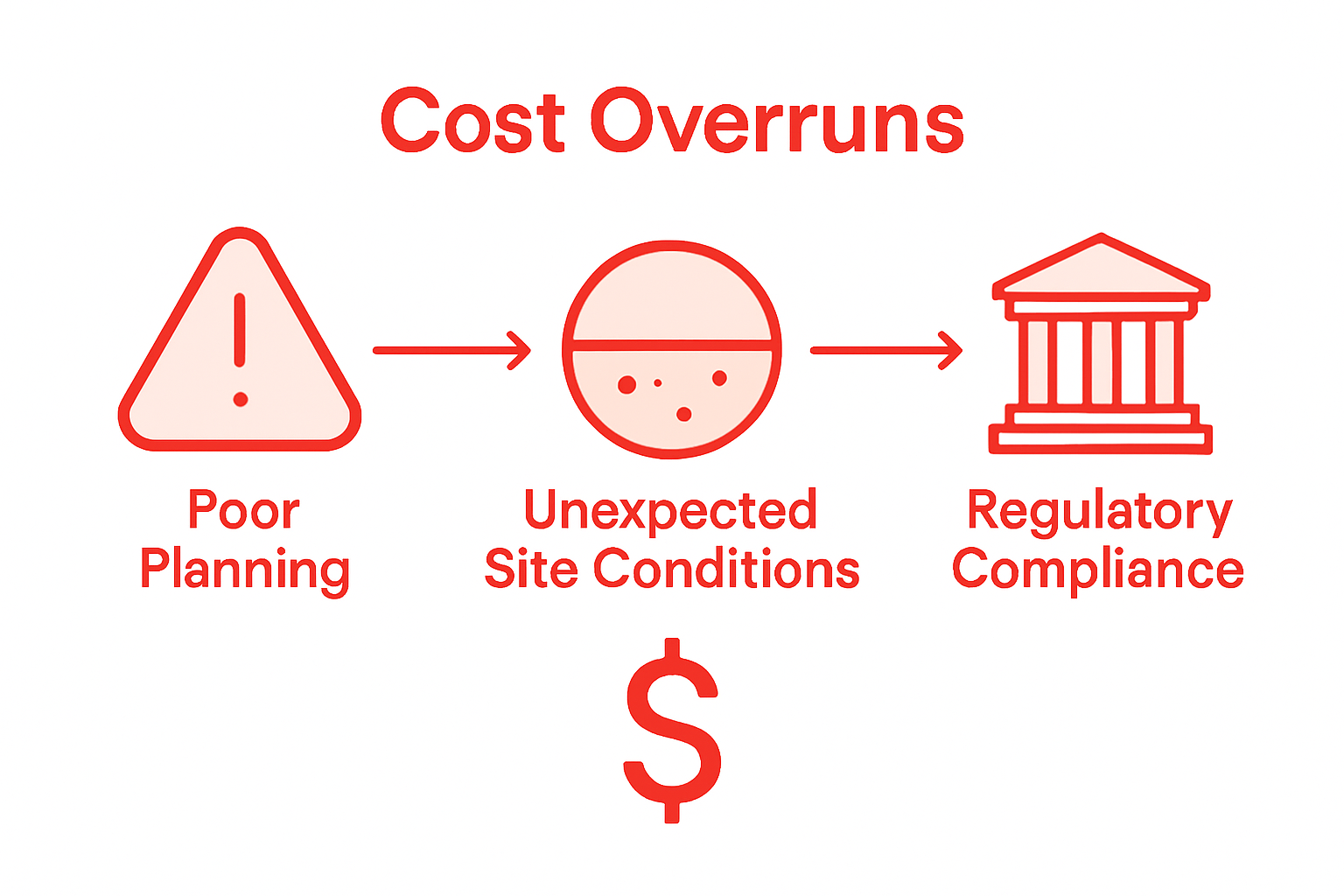
Regulatory compliance represents another critical area of potential financial risk. Failure to meet local, state, and federal engineering standards can result in significant penalties, project shutdowns, and legal liabilities. Engineers must navigate complex permitting processes, environmental regulations, and safety requirements that can impose substantial financial burdens. Unexpected regulatory challenges can force project redesigns, require expensive mitigation strategies, or even completely halt development efforts, resulting in substantial economic losses for stakeholders.
Proactive risk management is the most effective strategy for minimizing these potential pitfalls. This approach involves comprehensive site investigations, detailed preliminary assessments, robust contingency planning, and continuous monitoring throughout the project lifecycle. Engaging experienced engineering professionals who understand local regulatory landscapes and can anticipate potential challenges is crucial. By investing in thorough initial planning and maintaining flexibility in project design, engineers can significantly reduce the likelihood of unexpected costs and operational disruptions that could compromise project success.
Master Civil Engineering Terms to Elevate Your Project Success
Understanding vital civil engineering terms like drainage, site plans, and structural integrity is key to overcoming common project challenges. Many projects falter due to unclear communication or inadequate planning around these crucial concepts. If you are seeking precise expertise on grading, utility mapping, flood mitigation, or permitting processes, we provide comprehensive civil engineering services tailored to your residential or commercial needs.

Unlock the full potential of your project with proven engineering solutions. Visit Uncategorized Archives – Pennsylvania Licensed Engineers to explore relevant insights. Ready to navigate complex civil engineering demands confidently? Connect with our experts today at Florida Licensed Engineers and ensure your next project meets every technical and regulatory requirement without delay.
Frequently Asked Questions
What are essential civil engineering terms?
Essential civil engineering terms include concepts like load bearing, stress analysis, structural integrity, geotechnical investigation, hydrology, and topographical mapping. Understanding these terms is crucial for effective communication in construction and infrastructure projects.
What types of civil engineering services are available?
Key civil engineering services include structural engineering, transportation engineering, geotechnical engineering, water resources engineering, and environmental engineering. Each specialization addresses specific challenges related to infrastructure and environmental needs.
Why are drainage and site plans important in civil engineering?
Drainage and site plans are critical for proper land development. They help ensure effective water management, prevent flooding, and protect natural environments by detailing topographical features, utility locations, and drainage systems.
What certifications are necessary for civil engineers?
Civil engineers typically need a Professional Engineering (PE) license, along with any specialized certifications relevant to their field, such as geotechnical or structural engineering credentials. These ensure compliance with professional standards and regulations.
Recommended
- Civil Engineering Basics: Everything You Need to Know – FloridaLicensedEngineers.com
- Master Civil Engineering Workflow for Smooth Project Delivery – FloridaLicensedEngineers.com
- Civil Engineering Plans Guide for Successful Projects – FloridaLicensedEngineers.com
- Role of Civil Engineer in Construction Explained – FloridaLicensedEngineers.com
