
Why Structural Reports Matter for Property Owners
Most American property owners believe a typical home inspection is enough to guarantee safety, but up to 60 percent of major structural failures are first discovered during specialized structural reports, not routine checks. Protecting your investment goes far beyond surface-level reviews or cosmetic fixes. Understanding what a structural report truly offers—and clearing up the common myths—can help you spot potential hazards, make smarter choices, and avoid the hidden pitfalls that put your property at risk.
Table of Contents
- Structural Reports Defined and Common Myths
- Types of Structural Reports Explained
- Key Elements and How Reports Are Conducted
- Safety, Liability, and Regulatory Compliance
- Costs, Value, and Avoiding Costly Mistakes
Key Takeaways
| Point | Details |
|---|---|
| Understanding Structural Reports | Structural reports are specialized assessments conducted by licensed professionals to evaluate the integrity and safety of a building’s load-bearing components. |
| Myths vs. Reality | Common myths include the belief that only older buildings need assessments and that standard home inspections substitute for structural reports, which is not true. |
| Types of Structural Reports | There are various report types, such as preliminary assessments and forensic investigations, each tailored to specific evaluation needs. |
| Investment in Safety | Investing in a structural report is crucial for risk management, helping to avoid expensive repairs and ensuring compliance with safety regulations. |
Structural Reports Defined and Common Myths
A structural report is a comprehensive professional assessment that examines the physical condition, integrity, and safety of a building’s primary load-bearing components. Structural engineers conduct specialized evaluations focusing on critical elements like foundations, walls, roofs, and supporting structures to determine potential risks or areas requiring intervention.
Contrary to common misconceptions, structural reports are not generic property inspections. They represent highly technical documents created by licensed professionals who methodically analyze structural systems. These reports go beyond surface-level observations, diving deep into potential weaknesses that might compromise a building’s stability. Quality assurance processes alone cannot guarantee structural safety/issue-3/the-myth-of-quality-assurance/), which is why these detailed assessments are crucial for property owners.
Some prevalent myths surrounding structural reports include:
- Myth: Only older buildings require structural assessments
- Reality: Buildings of all ages can develop structural issues
- Myth: A standard home inspection replaces a structural report
- Reality: Home inspections are surface-level; structural reports provide in-depth technical analysis
- Myth: Structural reports are unnecessary expenses
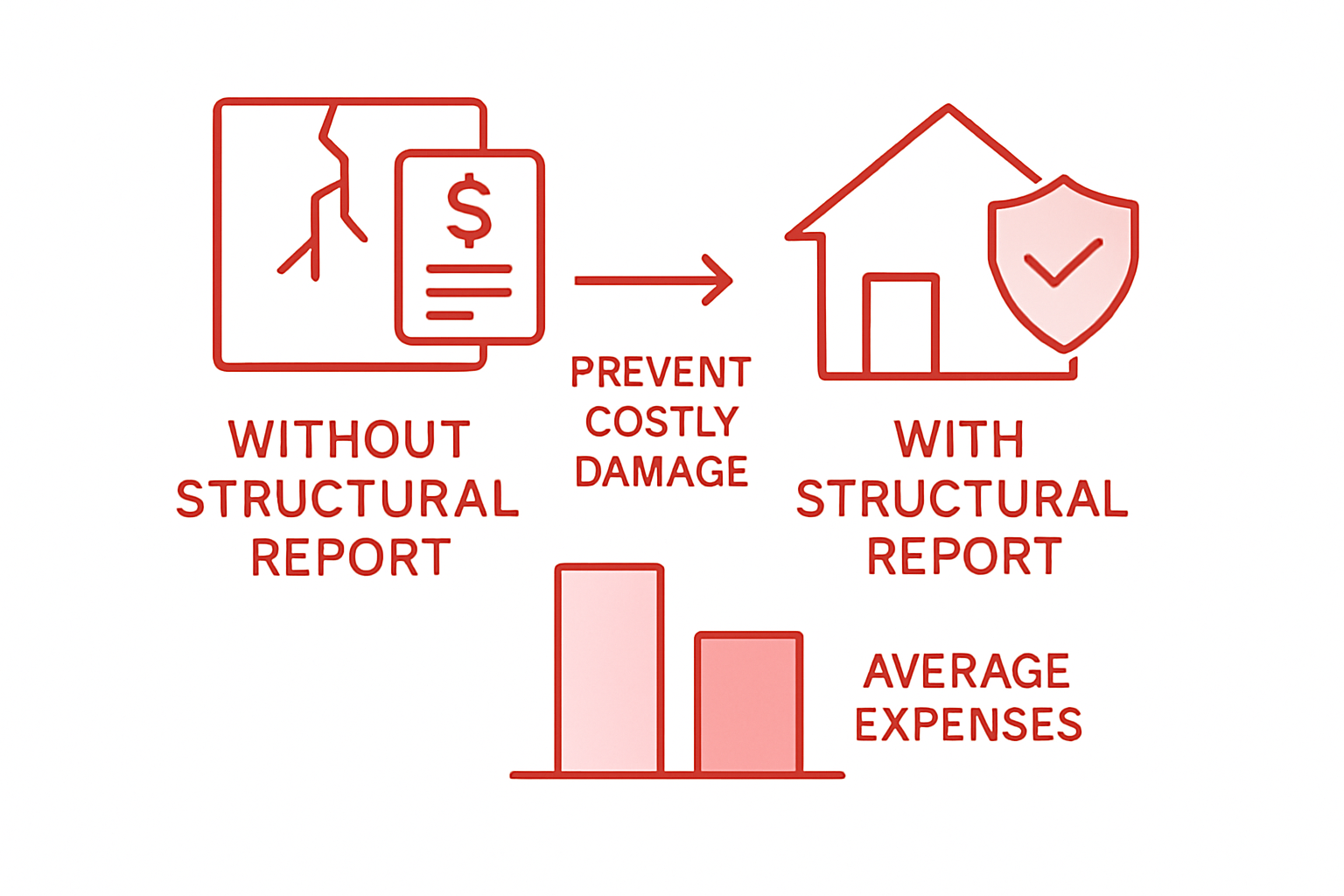
- Reality: These reports can prevent costly future repairs and potential safety hazards
Ultimately, structural reports serve as critical diagnostic tools that provide property owners with comprehensive insights into their building’s physical condition, potential risks, and recommended maintenance strategies. By understanding their true value, property owners can make informed decisions about their most significant investment.
Types of Structural Reports Explained
Structural engineering encompasses several distinct report types, each serving a unique purpose in evaluating building integrity. Different report formats can provide varying levels of technical analysis, ranging from preliminary assessments to comprehensive diagnostic evaluations. Property owners and professionals should understand these nuanced approaches to select the most appropriate structural investigation for their specific needs.
The primary types of structural reports include:
- Preliminary Structural Assessment: A high-level overview identifying potential structural concerns
- Comprehensive Structural Evaluation: Detailed analysis of building systems, load-bearing components, and potential structural weaknesses
- Forensic Structural Investigation: Specialized report examining specific damage, failure points, or historical structural issues
- Renovation Impact Assessment: Evaluation of proposed modifications and their potential structural implications
- Compliance and Safety Report: Verification of structural elements meeting current building codes and safety standards
Preliminary Structural Assessments typically involve visual inspections and basic measurements, providing property owners with an initial understanding of potential structural conditions. These reports offer a broad overview without extensive invasive testing, making them cost-effective initial diagnostic tools.

More complex investigations like Comprehensive Structural Evaluations involve advanced techniques such as non-destructive testing, detailed measurements, material analysis, and sophisticated computational modeling. These reports provide in-depth insights into a building’s structural health, potential vulnerabilities, and recommended interventions. By understanding the specific type of structural report needed, property owners can make informed decisions about maintenance, renovation, and long-term property management.
Key Elements and How Reports Are Conducted
Structural reports follow a rigorous methodology designed to provide comprehensive insights into a building’s structural condition. Systematic report structuring involves carefully organized sections that ensure thorough and methodical documentation of findings. These reports typically include critical components that help property owners and professionals understand the complete structural assessment.
The key elements of a comprehensive structural report generally encompass:
- Executive Summary: Brief overview of primary findings
- Scope of Investigation: Detailed explanation of areas examined
- Methodology: Specific techniques and equipment used during assessment
- Detailed Findings: Comprehensive analysis of structural components
- Photographic Documentation: Visual evidence of observed conditions
- Recommendations: Proposed interventions or maintenance strategies
- Professional Certification: Engineer’s official assessment and signature
Formal analytical reports require precise problem identification and systematic information presentation, which structural engineers meticulously follow. The investigation process involves multiple sophisticated techniques, including visual inspections, non-destructive testing methods like ultrasonic scanning, ground-penetrating radar, thermal imaging, and advanced computational modeling.
The actual report conduction involves a step-by-step approach where structural engineers systematically examine building components. They begin with preliminary research, review existing documentation, conduct on-site inspections, perform various tests, analyze collected data, and ultimately synthesize their findings into a comprehensive, actionable report. This meticulous process ensures that property owners receive a thorough, professional assessment of their structure’s condition, potential risks, and recommended maintenance strategies.
Safety, Liability, and Regulatory Compliance
Structural reports play a critical role in protecting property owners from potential legal and financial risks associated with building safety. Quality assurance processes alone cannot guarantee structural integrity/issue-3/the-myth-of-quality-assurance/), making comprehensive structural assessments essential for identifying and mitigating potential hazards before they escalate into significant problems.
The primary safety and compliance considerations in structural reporting include:
- Legal Protection: Documented evidence of structural condition
- Risk Mitigation: Early identification of potential structural weaknesses
- Insurance Requirements: Compliance with insurance policy guidelines
- Building Code Adherence: Verification of structural standards
- Liability Reduction: Professional documentation of structural assessments
- Public Safety: Ensuring structures meet minimum safety standards
Regulatory compliance involves a complex landscape of local, state, and federal building regulations that property owners must navigate. Structural reports serve as critical documentation demonstrating that buildings meet necessary safety standards. These reports not only protect property owners from potential legal challenges but also provide a comprehensive overview of a structure’s condition, potential risks, and recommended interventions.
Beyond legal documentation, structural reports represent a proactive approach to property management. They offer property owners, insurance companies, and regulatory bodies a transparent assessment of a building’s structural health. By identifying potential issues early, these reports help prevent catastrophic failures, reduce long-term maintenance costs, and ensure the safety of occupants and surrounding communities. The investment in a professional structural report is ultimately an investment in safety, risk management, and responsible property ownership.
Costs, Value, and Avoiding Costly Mistakes
Understanding the financial implications of structural reports is crucial for property owners seeking to protect their investments. Different types of structural reports vary in cost and complexity, with prices ranging from basic inspections to comprehensive diagnostic assessments that can prevent significant future expenses.
The potential cost considerations include:
- Initial Report Expenses: Ranging from $300 to $1,500 depending on property size and complexity
- Potential Repair Cost Avoidance: Identifying issues before they become major structural problems
- Insurance Premium Reductions: Documented structural integrity can lower insurance rates
- Property Value Preservation: Proactive maintenance documented through professional reports
- Legal Protection: Preventing potential litigation from unaddressed structural issues
Relying solely on basic quality assurance processes can lead to overlooked structural vulnerabilities/issue-3/the-myth-of-quality-assurance/), which may result in exponentially higher repair costs. A seemingly minor structural issue left unaddressed can quickly escalate into a major problem requiring tens of thousands of dollars in repairs. Professional structural reports serve as an early warning system, identifying potential weaknesses before they become catastrophic and financially devastating.
Property owners should view structural reports as a strategic investment rather than an unnecessary expense. The upfront cost of a comprehensive structural assessment is minimal compared to the potential financial risks of undetected structural damage. By investing in professional structural reporting, property owners can make informed decisions, prevent costly repairs, maintain property value, and ensure the long-term safety and integrity of their buildings.
Protect Your Property with Expert Structural Reports and Engineering Solutions
The challenge highlighted in the article is clear: property owners need thorough, professional structural reports to avoid costly repairs, liability risks, and safety hazards. You want detailed insights about your building’s integrity from qualified engineers who go beyond surface-level inspections. The goal is to uncover hidden risks, ensure compliance with building codes, and safeguard your investment with precise recommendations tailored to your structure.
At Florida Licensed Engineers, we understand the critical importance of these assessments. Our services include comprehensive inspections, forensic investigations, and full engineering plans for residential and commercial projects. Whether you need a detailed structural report or specialized civil engineering like flood mitigation and site plans, we provide professional, timely solutions that address your specific concerns.

Choose safety and confidence now to avoid expensive surprises later. Visit Florida Licensed Engineers to connect with expert engineers ready to deliver thorough structural evaluations and engineering services tailored to your needs. Learn more about our wide-ranging expertise on the TLE Archives – Texas Licensed Engineers | Residential & Commercial page and start securing the future of your property today.
Frequently Asked Questions
What is a structural report?
A structural report is a professional assessment conducted by licensed engineers to evaluate the physical condition, integrity, and safety of a building’s primary load-bearing components, such as foundations, walls, and roofs.
Why are structural reports important for property owners?
Structural reports are crucial for identifying potential structural weaknesses, ensuring compliance with building codes, and preventing costly repairs or safety hazards before they escalate.
How often should property owners obtain a structural report?
Property owners should consider obtaining a structural report during major renovations, when purchasing a property, or regularly for older buildings to monitor structural integrity over time.
What are the main types of structural reports?
The main types of structural reports include preliminary structural assessments, comprehensive structural evaluations, forensic investigations, renovation impact assessments, and compliance and safety reports.
Recommended
- Structural Reports: Everything You Need to Know – FloridaLicensedEngineers.com
- Structural Report Breakdown: Complete Guide for 2025 – FloridaLicensedEngineers.com
- Structural Inspections: Everything You Need to Know – FloridaLicensedEngineers.com
- What Is Structural Assessment? Complete Overview – FloridaLicensedEngineers.com
- Property Inspection Process Guide for New Build Buyers UK
