
How to Read an Engineering Report for Clear Results
Every American engineer knows that tackling a technical report can seem overwhelming at first glance. With engineering documents often exceeding 50 pages, missing key details becomes a real risk if you dive in unprepared. Learning how to systematically break down complex language and analyze findings helps you gain the clarity needed to make smart decisions. This article uncovers practical steps for mastering even the most challenging reports, so you can turn technical insights into real project results.
Table of Contents
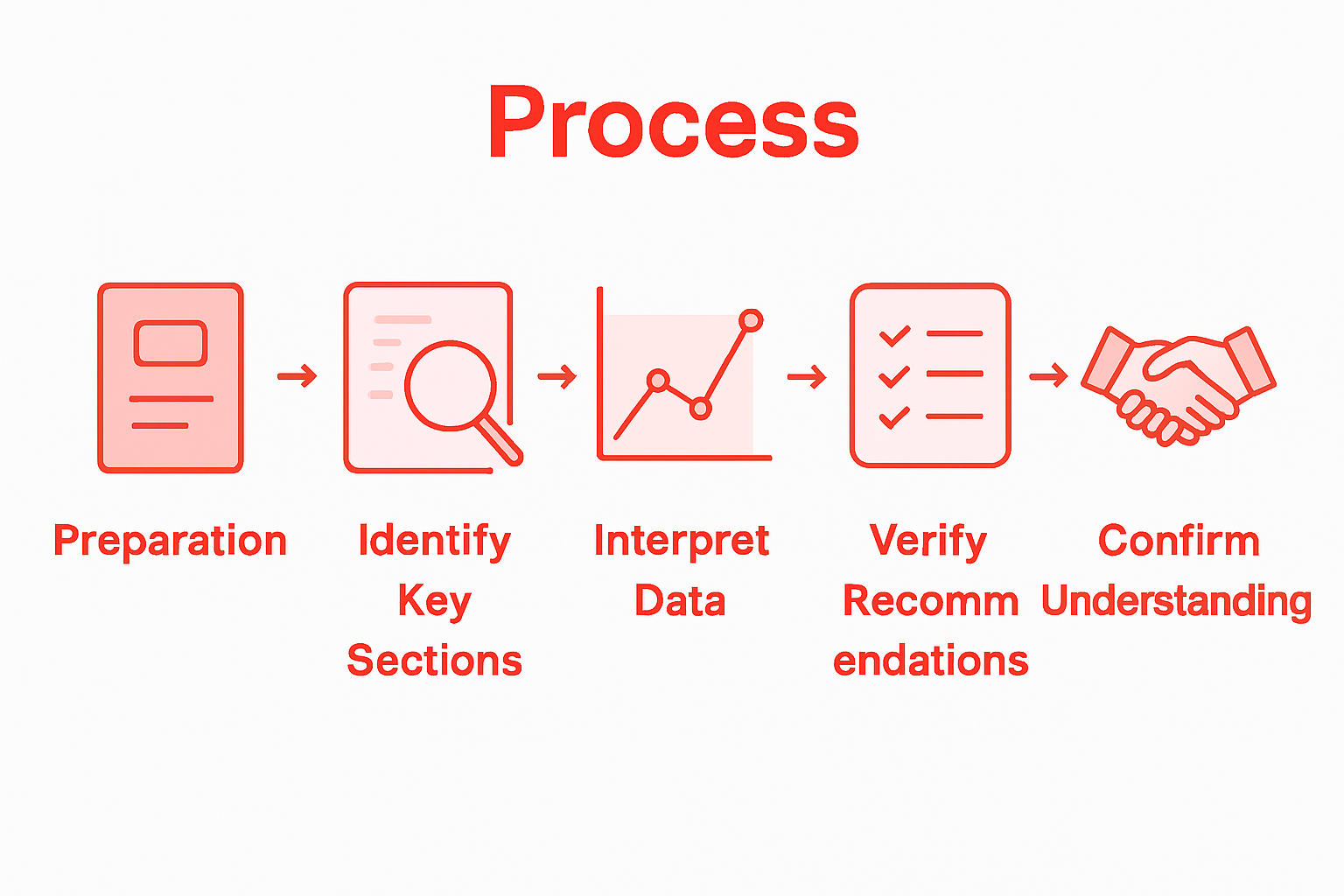
- Step 1: Prepare for Reading with Essential Background
- Step 2: Identify Key Sections and Terms in the Report
- Step 3: Interpret Findings and Technical Data Accurately
- Step 4: Verify Recommendations for Your Project Needs
- Step 5: Confirm Understanding with Follow-Up Actions
Quick Summary
| Key Point | Explanation |
|---|---|
| 1. Develop a strategic preparation plan | Gather background information and context related to the engineering discipline to enhance understanding before reading. |
| 2. Systematically identify key sections | Create a visual roadmap through the document – understanding sections like executive summaries and methodology is crucial for comprehension. |
| 3. Analyze technical findings critically | Transform raw data into insights by examining trends and validating information to ensure accurate interpretation of technical data. |
| 4. Rigorously verify recommendations | Evaluate engineering solutions against project needs, ensuring they are technically feasible and economically viable for implementation. |
| 5. Confirm understanding with proactive follow-ups | Schedule discussions with experts, prepare clarifying questions, and create summaries to validate comprehension and facilitate practical application. |
Step 1: Prepare for Reading with Essential Background
Preparing to read an engineering report requires strategic preparation and a structured approach. Your goal is to develop a comprehensive understanding of the document before diving into its technical details.
Start by gathering context about the specific engineering discipline and report type. Engineering report structures typically include key components like introductions, methodology sections, and analysis that provide a roadmap for understanding the technical narrative. Review the table of contents and executive summary first to orient yourself to the report’s overall purpose and scope.
Before reading, ensure you have supporting references nearby such as technical glossaries, previous related reports, or industry standards that might help clarify complex terminology. Have a notebook ready to capture questions, highlight key insights, and track technical concepts that require further investigation. Pro tip: Read with a critical eye and always cross reference technical claims with your existing knowledge base or additional research sources.
As you transition into detailed review, prepare mentally to parse technical language systematically. Break down complex sections into digestible segments and resist the urge to rush through challenging technical descriptions. Your methodical approach will transform a potentially overwhelming document into a clear and comprehensible technical communication.
Step 2: Identify Key Sections and Terms in the Report
Navigating an engineering report requires a systematic approach to understanding its structure and specialized language. Your primary goal is to quickly map out the document’s core components and recognize critical technical terminology that will inform your comprehension.

Engineering reports are strategically designed to address different reader needs, from executive summaries to detailed technical analyses. Begin by creating a visual roadmap of the report. Typically, you will encounter key sections such as the executive summary, introduction, methodology, results, discussion, and conclusion. Carefully scan each section header and make mental notes about its potential significance and the type of information it might contain.
As you explore the document, create a personal glossary of unfamiliar technical terms. Circle or highlight specialized vocabulary that requires further explanation. Pay special attention to acronyms, industry specific jargon, and quantitative terminology that might impact your understanding. Pro tip: Keep a technical dictionary or online resource nearby to help decode complex terminology quickly and accurately.
Your systematic approach will transform an initially intimidating document into a clear and comprehensible technical communication. By understanding the report’s structure and key terms, you will be well positioned to extract meaningful insights and technical details with confidence.
Step 3: Interpret Findings and Technical Data Accurately
Interpreting technical findings requires a systematic and analytical approach that goes beyond simple data reading. Your goal is to transform raw numbers and complex graphs into meaningful insights that tell a coherent technical story.
Presenting results objectively involves carefully summarizing findings with appropriate figures and contextual analysis, focusing on extracting substantive meaning from the data. Start by examining graphs, charts, and statistical representations systematically. Look for trends, anomalies, and significant patterns that reveal underlying technical relationships. Pay close attention to scale, units of measurement, and comparative data points that provide context for your interpretation.
When analyzing technical data, develop a critical mindset that questions and validates information. Cross reference numerical findings with textual explanations, checking for consistency and logical connections. Create margin notes that highlight key observations, potential implications, and questions that emerge from your analysis. Pro tip: Always consider the broader context of the data. What broader engineering principles or practical applications might these findings suggest?
By approaching technical data with methodical curiosity, you transform complex information into actionable insights. Your ability to accurately interpret and contextualize technical findings will distinguish you as a thoughtful and precise technical reader.
Step 4: Verify Recommendations for Your Project Needs
Verifying recommendations within an engineering report requires a strategic and critical approach that goes beyond surface level acceptance. Your primary goal is to ensure that proposed solutions align precisely with your specific project requirements and technical constraints.
Engineering recommendations must be evaluated through comprehensive analysis, ensuring they meet project specific standards and technical requirements. Begin by comparing each recommendation against your project scope, budget, timeline, and existing technical infrastructure. Scrutinize the proposed solutions by asking critical questions. Do the recommendations address the core challenges identified in the report? Are the suggested approaches technically feasible and economically viable for your specific context?
Develop a systematic verification process that includes technical feasibility assessment, cost benefit analysis, and potential implementation challenges. Create a detailed comparison matrix that maps each recommendation against your project requirements. Note potential gaps, additional resources needed, and potential risks associated with implementation. Pro tip: Do not hesitate to request clarification or additional documentation from the report authors if certain recommendations seem ambiguous or require further explanation.
By approaching recommendations with a rigorous and analytical mindset, you transform technical suggestions into actionable strategies tailored to your unique project needs. Your careful verification process will ensure that the engineering recommendations serve as a precise roadmap for successful project execution.
Step 5: Confirm Understanding with Follow-Up Actions
Confirming your comprehensive understanding of an engineering report goes beyond passive reading. Your objective is to transform theoretical knowledge into practical next steps that validate and extend your comprehension of the technical material.
Technical audiences expect clear purpose and context, requiring strategic approaches to understanding complex research documentation. Begin by scheduling a follow-up discussion with the report authors or subject matter experts. Prepare a detailed list of clarifying questions that address specific technical nuances, methodological approaches, and potential implementation challenges you identified during your initial review.
Develop a structured approach to confirming your understanding. Create a personal summary document that captures key findings, recommendations, and potential implications for your specific project context. Break down complex technical concepts into digestible components, and cross reference your interpretations with additional technical resources. Pro tip: Utilize visual mapping techniques to connect different sections of the report, helping you synthesize information more effectively and identify potential knowledge gaps.
By taking proactive follow-up actions, you demonstrate professional diligence and transform a static document into a dynamic tool for technical understanding. Your systematic verification process will ensure that you not only comprehend the report but can effectively apply its insights to real world engineering challenges.
Gain Confidence in Every Engineering Report You Encounter
Understanding complex engineering reports can feel overwhelming when facing specialized terms and detailed data. This article shared clear steps to prepare, identify key sections, interpret findings, and verify recommendations, so you can confidently transform technical documents into actionable knowledge. If you are managing residential or commercial projects and need reliable assistance with inspections, blueprint preparation, or forensic reports, our expert team is ready to help.

Take control of your project’s success today by partnering with professionals who understand the importance of precise technical communication. Explore our wide-ranging engineering services including architectural, structural, mechanical, and plumbing plans, as well as civil engineering solutions like drainage and flood mitigation at Florida Licensed Engineers. Discover insights from our peers for additional guidance at Uncategorized Archives – Pennsylvania Licensed Engineers and stay informed with valuable resources from TLE Archives – Texas Licensed Engineers | Residential & Commercial.
Don’t wait to clarify your technical needs and streamline your project approval process. Visit us now and ensure your engineering reports lead to clear and confident decisions.
Frequently Asked Questions
How should I prepare before reading an engineering report?
To prepare for reading an engineering report, gather context about the specific engineering discipline and report type. Review the table of contents and executive summary first to orient yourself to the report’s overall purpose and scope.
What key sections should I focus on when navigating an engineering report?
When navigating an engineering report, focus on key sections such as the executive summary, introduction, methodology, results, discussion, and conclusion. Create a visual roadmap of the document to better understand its structure and significance.
How do I interpret complex findings and technical data in an engineering report?
To interpret complex findings, systematically analyze graphs and statistical representations for trends and patterns. Pay attention to scales and measurements and make margin notes to highlight key observations for further reflection.
What steps should I take to verify recommendations in the report?
To verify recommendations, assess each one against your project scope, budget, and technical constraints. Create a comparison matrix to map recommendations against your requirements, noting any potential gaps or risks before moving forward.
How can I confirm my understanding of the engineering report after reading it?
To confirm your understanding, schedule a follow-up discussion with the report authors or experts. Prepare a list of clarifying questions and create a summary document that captures key insights and potential implications for your project.
Recommended
- Master the Civil Engineering Reporting Process Step-by-Step – FloridaLicensedEngineers.com
- Engineering Reports: Everything You Need to Know – FloridaLicensedEngineers.com
- Structural Report Breakdown: Complete Guide for 2025 – FloridaLicensedEngineers.com
- Forensic Engineering Investigation Guide for Accurate Results – FloridaLicensedEngineers.com
