
Engineering Due Diligence: Protecting Florida Projects
Most American property deals in Florida carry hidden risks that can cost owners and contractors millions. Engineering due diligence is a critical tool for anyone looking to protect real estate investments and avoid untimely surprises. With Florida’s complex regulations and frequent environmental challenges, thorough assessments help property owners uncover issues that standard inspections miss. This guide breaks down what engineering due diligence really means and shows you how smart strategies can safeguard your property and financial future.
Table of Contents
- Defining Engineering Due Diligence For Property Owners
- Major Types Of Engineering Due Diligence Services
- Step-By-Step Process For Thorough Assessments
- Florida’s Legal And Regulatory Requirements
- Risks, Liabilities, And Costly Pitfalls To Avoid
- Best Practices For Contractors And Property Owners
Key Takeaways
| Point | Details |
|---|---|
| Comprehensive Assessments | Engineering due diligence involves in-depth property evaluations to identify potential risks affecting safety and investment value. |
| Specialized Services | Key services include structural analysis, environmental evaluations, and compliance checks to ensure thorough examination of property conditions. |
| Risk Mitigation | Proactive identification of hidden issues can prevent costly repairs and legal liabilities for property owners. |
| Legal Compliance | Understanding Florida’s specific regulatory requirements is crucial for effective property management and risk avoidance. |
Defining engineering due diligence for property owners
Engineering due diligence represents a critical investigative process for property owners seeking comprehensive insights into their real estate investments. This systematic approach goes far beyond simple property inspections, providing an in-depth analysis of structural, legal, and functional property characteristics. Comprehensive property evaluations help property owners understand potential risks and opportunities before making significant financial commitments.
The core objective of engineering due diligence involves identifying potential complications that might impact property value, safety, and functionality. This process typically includes detailed examinations of structural integrity, mechanical systems, electrical infrastructure, zoning compliance, permit status, and environmental considerations. By conducting a thorough investigation, property owners can uncover hidden issues that could lead to expensive repairs or legal challenges. Real estate risk assessment allows investors and property owners to make informed decisions based on comprehensive data.
Key components of engineering due diligence for Florida property owners include:
- Structural condition evaluation
- Mechanical and electrical system inspections
- Zoning and permit compliance verification
- Environmental risk assessment
- Code adherence verification
- Potential renovation or maintenance requirement identification
Pro tip: Always engage a licensed professional engineer familiar with local Florida building codes and regulations to perform your engineering due diligence for the most accurate and comprehensive assessment.
Major types of engineering due diligence services
Engineering due diligence encompasses a comprehensive range of specialized services designed to provide property owners and investors with critical insights into the technical and environmental aspects of real estate investments. Technical inspection services play a crucial role in evaluating the overall condition, potential risks, and future maintenance requirements of a property. These services go beyond simple visual assessments, delivering in-depth analysis that can significantly impact investment decisions.
The primary types of engineering due diligence services include several key areas of investigation. Structural analysis examines the fundamental integrity of buildings, identifying potential structural weaknesses or damage that could compromise safety or require expensive repairs. Mechanical and electrical system assessments evaluate the condition and efficiency of critical infrastructure, including HVAC systems, electrical networks, and other essential building systems. Environmental risk evaluations provide crucial insights into potential environmental hazards, compliance issues, and sustainability considerations that might affect property value and usability.
Additional specialized engineering due diligence services cover a wide range of critical assessments:
- Legal and administrative status verification
- Cost estimation for potential repairs and upgrades
- Energy efficiency analysis
- Zoning and regulatory compliance checks
- Seismic and geological risk assessments
- Building code adherence evaluation
- Detailed documentation and comprehensive reporting
Pro tip: Request a comprehensive due diligence report that includes multiple service types to gain a holistic understanding of your property’s current condition and potential future challenges.
Here is a summary of how major engineering due diligence service types contribute to property investment decisions:
| Due Diligence Service Type | Primary Focus | Value to Owners |
|---|---|---|
| Structural Analysis | Building integrity | Prevents costly repairs |
| Mechanical/Electrical Assessment | System efficiency | Reduces energy costs, identifies risks |
| Environmental Evaluation | Hazard identification | Avoids remediation expenses |
| Regulatory Review | Code compliance | Minimizes legal risk |
| Cost Estimation | Upgrade/replacement costs | Informs budgeting and negotiations |
Step-by-step process for thorough assessments
Engineering due diligence requires a systematic and comprehensive approach to ensure property owners receive the most accurate and valuable insights. Comprehensive documentation review serves as the critical first step in the assessment process, establishing a solid foundation for subsequent investigations. This initial phase involves gathering and carefully examining all relevant property records, including historical permits, previous inspection reports, architectural plans, and any existing maintenance documentation.

The second phase focuses on detailed physical site inspections, which involve multiple layers of technical evaluation. Structural engineers conduct in-depth assessments of the building’s fundamental integrity, examining load-bearing elements, foundation conditions, and potential structural weaknesses. Technical property evaluation extends beyond visual inspections to include sophisticated diagnostic techniques such as non-destructive testing, thermal imaging, and specialized equipment assessments of mechanical and electrical systems.
A comprehensive due diligence process typically involves the following structured steps:
- Initial document and record collection
- Preliminary site reconnaissance
- Detailed structural assessment
- Mechanical and electrical system evaluation
- Environmental risk analysis
- Code and regulatory compliance verification
- Comprehensive reporting and risk categorization
- Recommendations for remediation or further investigation
Pro tip: Request a detailed written report with clear risk categorizations and estimated intervention costs to support informed decision making for your property investment.
Florida’s legal and regulatory requirements
Navigating the complex landscape of Florida’s engineering regulations requires a deep understanding of state-specific legal frameworks that govern construction and property development. Building construction standards are meticulously defined to ensure public safety, structural integrity, and environmental protection. These comprehensive regulations establish strict guidelines for engineering due diligence, placing significant responsibilities on property owners, contractors, and engineers to maintain high standards of professional practice.
Florida’s regulatory environment is characterized by multiple layers of compliance requirements that extend beyond basic building codes. State statutes mandate rigorous documentation, detailed inspections, and adherence to specific technical standards across residential, commercial, and infrastructure projects. Professional engineers must demonstrate comprehensive knowledge of local building codes, zoning restrictions, environmental regulations, and structural safety requirements. Each project undergoes careful scrutiny to verify alignment with state and municipal guidelines, ensuring that potential risks are identified and mitigated before construction or property transactions proceed.
Key regulatory compliance areas include:
- Structural engineering standards
- Seismic and wind resistance requirements
- Environmental impact assessments
- Accessibility compliance
- Electrical and mechanical system regulations
- Flood zone construction guidelines
- Permitting and documentation protocols
- Professional licensing and certification standards
Pro tip: Engage a licensed Florida professional engineer who specializes in local regulatory compliance to navigate the intricate legal requirements and minimize potential project risks.
Risks, liabilities, and costly pitfalls to avoid
Engineering due diligence presents numerous potential risks that can significantly impact property investments if not carefully managed. Structural inspection challenges can lead to substantial financial and legal complications when critical defects are overlooked or improperly assessed. Property owners face complex liability scenarios that extend far beyond simple repair costs, potentially exposing them to significant legal and financial vulnerabilities.
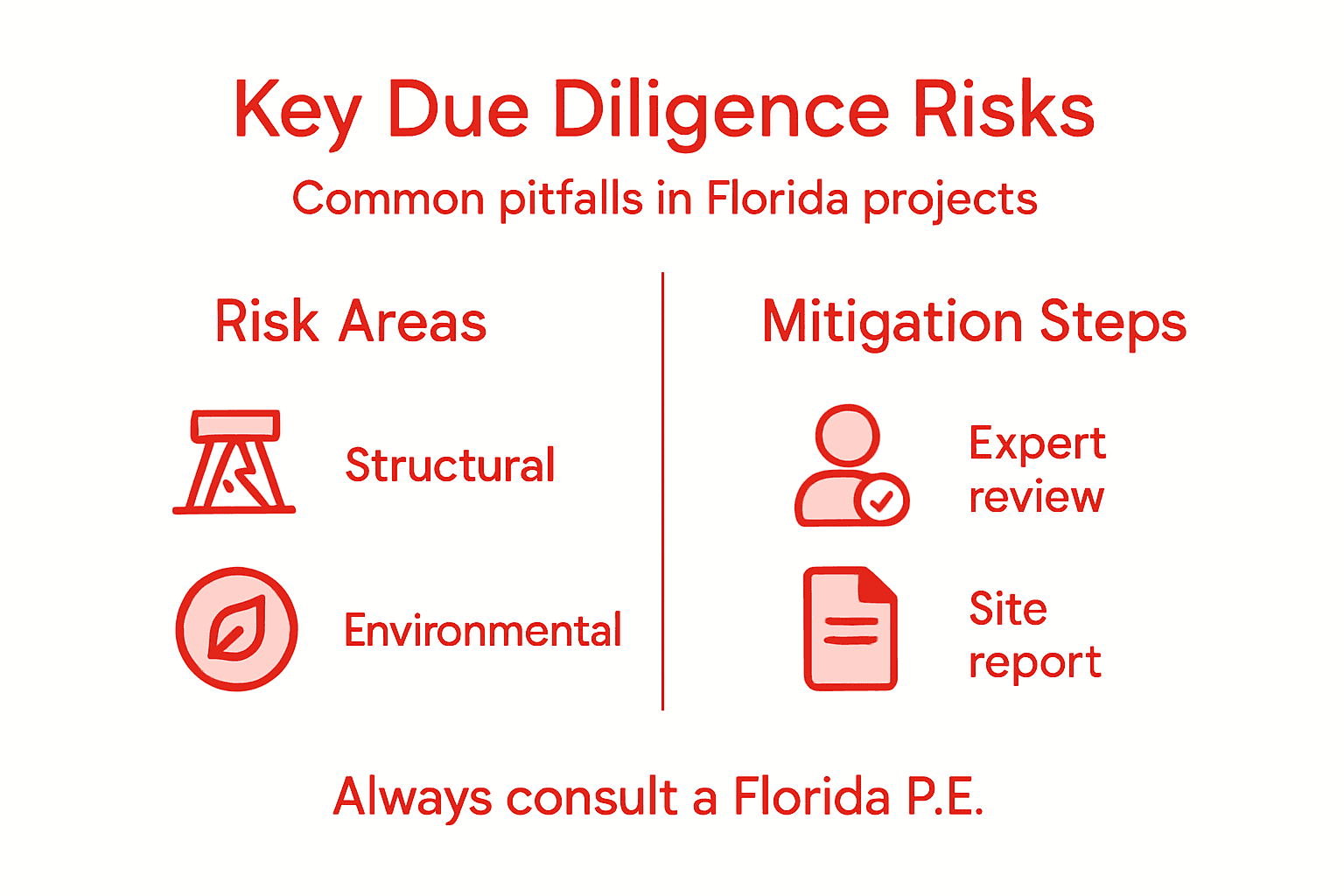
Environmental risks represent another critical area of concern for Florida property owners. Property transaction risks often involve hidden environmental contamination that can result in extraordinary remediation expenses and long-term legal challenges. These risks are particularly acute in Florida, where unique geological conditions, flood zones, and environmental sensitivities create additional layers of potential liability that require sophisticated professional assessment.
Key risks and potential pitfalls include:
- Unidentified structural deficiencies
- Hidden environmental contamination
- Incomplete or inadequate inspection documentation
- Zoning and regulatory compliance gaps
- Underestimated repair and remediation costs
- Potential legal exposure from overlooked issues
- Insurance and financing complications
- Long-term property value reduction
Pro tip: Invest in comprehensive professional engineering assessments that include detailed environmental site evaluations and thorough structural analyses to mitigate potential hidden risks and protect your property investment.
Compare key risks and mitigation strategies for Florida property owners conducting engineering due diligence:
| Risk Area | Example Impact | Mitigation Strategy |
|---|---|---|
| Structural Deficiency | Safety risks, value drop | Hire certified structural engineer |
| Environmental Contamination | Remediation costs, legal liability | Conduct site environmental survey |
| Compliance Gaps | Fines, halted projects | Partner with local code expert |
| Documentation Errors | Disputed ownership, insurance issues | Maintain accurate records and reports |
Best practices for contractors and property owners
Successful engineering due diligence requires a strategic and collaborative approach that prioritizes comprehensive risk management and clear communication. Multidisciplinary team strategies are essential for conducting thorough property assessments that protect both contractors and property owners from potential legal and financial complications. By establishing clear expectations and implementing rigorous evaluation protocols, stakeholders can mitigate risks and ensure project success.
Technology and documentation play pivotal roles in modern engineering due diligence practices. Innovative survey techniques such as Building Information Modeling (BIM) enable more precise and comprehensive property evaluations. Contractors and property owners should prioritize transparent communication, maintain meticulous records, and leverage advanced technological tools to create a comprehensive understanding of property conditions, potential risks, and necessary interventions.
Key best practices for contractors and property owners include:
- Clearly define the scope of due diligence
- Engage multidisciplinary professional teams
- Use advanced technological assessment tools
- Maintain comprehensive documentation
- Establish transparent communication channels
- Proactively address potential maintenance issues
- Secure necessary permits and approvals
- Implement robust risk management protocols
- Conduct periodic reassessments
Pro tip: Develop a standardized checklist and documentation process that ensures consistent and thorough engineering due diligence across all property assessment projects.
Ensure Your Florida Property Investment Stands Strong with Expert Engineering Due Diligence
Navigating the complex challenges of engineering due diligence in Florida requires trusted expertise to uncover hidden risks like structural deficiencies, environmental hazards, and regulatory compliance gaps. If you want to protect your investment and avoid costly pitfalls, professional support with thorough inspections, detailed mechanical and electrical assessments, and precise permitting services is essential. Our services go beyond basic evaluations to deliver the clarity and confidence every property owner needs.
Discover how our comprehensive engineering solutions for residential and commercial projects can safeguard your Florida property. From architectural and structural plans to forensic investigations and flood mitigation including elevation certificates, our team ensures you meet all local requirements while identifying critical risks early. Don’t leave your project to chance. Visit https://floridalicensedengineers.com to learn more about our offerings and explore expert insights in the Uncategorized Archives – Georgial Licensed Engineers. Take the first step today toward a safer, stronger investment.
Frequently Asked Questions
What is engineering due diligence?
Engineering due diligence is a systematic investigative process that provides property owners with comprehensive insights into the structural, legal, and functional characteristics of their real estate investments. It goes beyond simple property inspections to identify potential risks and complications that could impact property value and safety.
Why is engineering due diligence important for property owners?
Engineering due diligence helps property owners uncover hidden issues that may lead to expensive repairs or legal challenges. By conducting thorough evaluations, owners can make informed decisions, minimize risks, and ensure the long-term safety and functionality of their properties.
What are the key components of engineering due diligence?
Key components include structural condition evaluation, mechanical and electrical system inspections, zoning and permit compliance verification, environmental risk assessments, and recommendations for renovations or maintenance requirements.
How can property owners mitigate risks during the due diligence process?
Property owners can mitigate risks by engaging a licensed professional engineer familiar with local regulations, using advanced technologies for inspections, maintaining thorough documentation, and establishing clear communication channels throughout the assessment process.
Recommended
- Engineering Project Workflow: Florida Compliance and Success – FloridaLicensedEngineers.com
- Comprehensive Inspection Procedures: Ensuring Florida Compliance – FloridaLicensedEngineers.com
- Why Mechanical Design Matters for Florida Projects – FloridaLicensedEngineers.com
- 7 Essentials for a Complete Construction Documentation List – FloridaLicensedEngineers.com
