
Role of Engineers in Building Codes Compliance
Over ninety percent of American property owners face costly setbacks due to simple misunderstandings about building codes. In Florida, strict compliance rules protect both safety and investment, yet confusion about what building codes really mean can interrupt even well-planned projects. Separating fact from fiction about building regulations helps Florida contractors and property owners manage risk, save money, and keep every job on track from start to finish.
Table of Contents
- Building Codes Defined And Common Misconceptions
- Types Of Engineers In Code Compliance
- Critical Steps In The Permitting Process
- Engineers’ Responsibilities In Code Enforcement
- Risks And Consequences Of Non-Compliance
Key Takeaways
| Point | Details |
|---|---|
| Understanding Building Codes | Building codes are essential regulations ensuring safety and structural integrity in construction. They evolve over time to address new technologies and safety concerns. |
| Role of Engineers | Multiple engineering disciplines play vital roles in code compliance, each focusing on specific aspects of construction safety and regulatory adherence. Collaboration among these professionals is crucial for project success. |
| Permitting Process Importance | The permitting process requires thorough documentation and compliance with local codes, and initial assessments must be conducted meticulously to avoid delays. Effective communication with local authorities can streamline this process. |
| Risks of Non-Compliance | Failing to adhere to building codes can lead to severe financial, legal, and safety repercussions for stakeholders. Engaging licensed engineers early helps mitigate these risks. |
Building Codes Defined And Common Misconceptions
Building codes represent systematic regulations that establish minimum safety, health, and performance standards for construction projects across residential, commercial, and industrial sectors. These comprehensive guidelines are not arbitrary rules but carefully designed protocols developed to protect public welfare and ensure structural integrity. Building code regulations serve as critical blueprints that engineers, architects, and contractors must follow during design and construction processes.
At their core, building codes function as detailed rulebooks specifying precise requirements for materials, structural design, electrical systems, plumbing, mechanical installations, and overall building performance. They are typically developed by professional standards organizations like the International Code Council and adapted by state and local jurisdictions to address regional environmental challenges. Common misconceptions about building codes often stem from misunderstanding their purpose and scope, with many people incorrectly believing these standards are optional or unnecessarily restrictive.
One significant misunderstanding is that building codes remain static; in reality, they evolve continuously to incorporate technological advancements, address emerging safety concerns, and respond to changing environmental conditions. Code adoption processes vary across different jurisdictions, which means compliance requirements can differ significantly between cities, counties, and states. This variability underscores the importance of working with local engineering professionals who understand specific regional building code nuances.
Pro tip: Always consult local building authorities and licensed engineers to verify current code requirements before commencing any construction or renovation project, as regulations can change rapidly and vary by location.
Types Of Engineers In Code Compliance
Building codes compliance involves multiple specialized engineering disciplines, each playing a critical role in ensuring structural safety, performance, and regulatory adherence. Structural engineers serve as primary gatekeepers in code compliance, responsible for analyzing and designing building frameworks that meet stringent safety standards. These professionals critically evaluate load-bearing capacities, material strengths, and structural integrity to guarantee buildings can withstand environmental stresses and potential hazards.
Civil engineers contribute significantly to code compliance, particularly in site planning, infrastructure development, and engineering inspection processes. They assess ground conditions, drainage systems, foundation requirements, and ensure that proposed construction projects align with local zoning regulations and environmental protection standards. Mechanical engineers focus on building systems like HVAC, ensuring that heating, cooling, and ventilation installations meet energy efficiency and safety codes, while electrical engineers verify that power distribution, lighting, and electrical system designs comply with national and local electrical standards.
Architectural and mechanical engineers work collaboratively to address complex code requirements, particularly in projects involving intricate system integrations. Specialized disciplines like fire protection engineers play a crucial role by developing comprehensive safety protocols that meet strict building code requirements for emergency exits, fire suppression systems, and material fire resistance. Their expertise ensures that buildings not only meet aesthetic and functional standards but also provide maximum occupant safety during potential emergency scenarios.
Pro tip: When planning a construction project, engage multiple engineering disciplines early in the design process to identify potential code compliance challenges and develop proactive solutions.
To help clarify how different engineering disciplines contribute to code compliance, see the following summary table:
| Engineering Discipline | Main Focus Area | Typical Code Compliance Responsibility |
|---|---|---|
| Structural Engineering | Building frameworks and supports | Analyzing load and material safety for buildings |
| Civil Engineering | Site and infrastructure design | Ensuring compliance with zoning and land use codes |
| Mechanical Engineering | HVAC and mechanical systems | Meeting energy efficiency and system integration codes |
| Electrical Engineering | Power and lighting systems | Ensuring electrical layouts follow safety standards |
| Fire Protection Engineering | Emergency and fire safety | Designing exits, suppression, and fire-resistant systems |
Critical Steps In The Permitting Process
The permitting process represents a complex, multifaceted journey that requires meticulous attention to detail and comprehensive documentation. Initial project assessment is the critical first step, where engineers and property owners must comprehensively evaluate their proposed construction or renovation project against local building codes and zoning regulations. This initial phase involves gathering all necessary documentation, including detailed architectural plans, site surveys, structural calculations, and environmental impact assessments.
Submitting a complete permit application demands precision and thoroughness. Residential permitting requirements typically involve preparing multiple sets of professional blueprints, detailed engineering drawings, and comprehensive project specifications. Local building departments scrutinize these documents to ensure compliance with structural safety standards, zoning restrictions, electrical and mechanical system regulations, and environmental protection guidelines. Engineers must anticipate potential review challenges by conducting thorough pre-submission reviews and addressing potential code interpretation issues proactively.
The review and approval process involves multiple stages of technical evaluation by different municipal departments. Structural engineers, electrical inspectors, mechanical system reviewers, and zoning officials collaborate to assess every aspect of the proposed project. They examine load-bearing calculations, system integration plans, material specifications, and potential environmental impacts. During this phase, applicants may receive requests for additional information or modifications, requiring engineers to be flexible and responsive to regulatory feedback and potential design adjustments.
Pro tip: Maintain open communication channels with local building authorities and retain experienced engineers who understand regional permitting nuances to streamline your application process and minimize potential delays.
Engineers’ Responsibilities In Code Enforcement
Engineers play a pivotal role in code enforcement, serving as critical guardians of public safety and structural integrity. Code compliance involves far more than simple rule following; it requires a comprehensive understanding of technical standards, local regulations, and potential environmental risks. Professional engineers must conduct thorough analyses that go beyond surface-level assessments, digging deep into structural calculations, material specifications, and potential long-term performance implications of building designs.

The enforcement process demands rigorous technical evaluation and documentation. Building inspection protocols require engineers to meticulously examine every aspect of construction, from foundation integrity to electrical and mechanical system installations. This includes performing detailed site inspections, reviewing construction documents, verifying material compliance, and ensuring that all elements meet or exceed prescribed safety and performance standards. Engineers must be prepared to identify potential violations, recommend corrective actions, and provide expert guidance to bring projects into full regulatory alignment.
Beyond immediate technical assessments, engineers bear significant legal and ethical responsibilities in code enforcement. They must maintain professional objectivity while protecting public welfare, which often involves making difficult decisions about project modifications or potential shutdowns. This requires a delicate balance between supporting construction progress and maintaining uncompromising safety standards. Engineers must document their findings comprehensively, provide clear recommendations, and be prepared to defend their professional assessments through detailed technical evidence and expert testimony if required.
Pro tip: Develop a systematic documentation process that captures every technical detail and potential compliance issue during inspections, creating a comprehensive record that protects both the project and public safety.
Risks And Consequences Of Non-Compliance
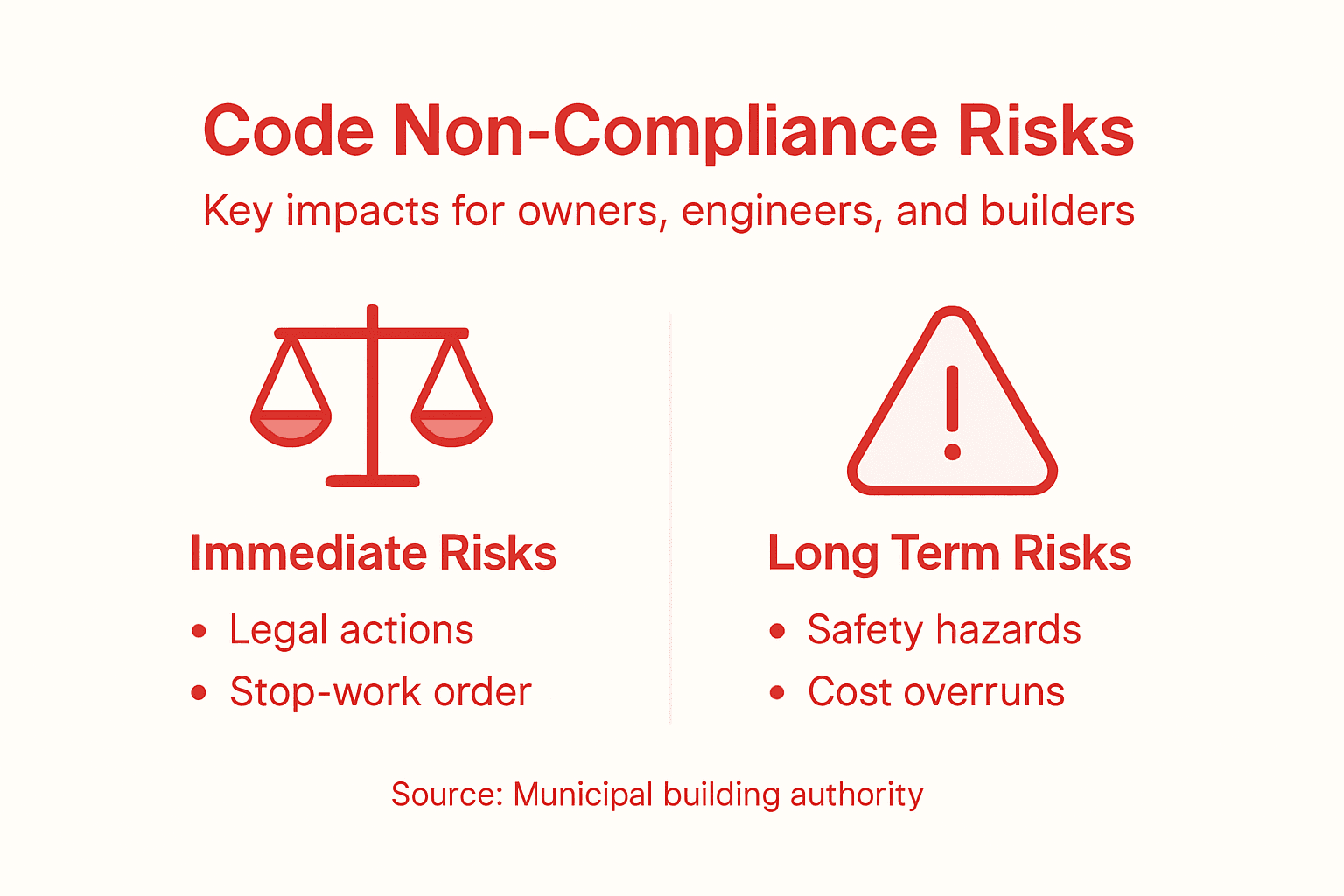
Non-compliance with building codes represents a significant legal and safety minefield that can result in catastrophic consequences for property owners, contractors, and engineers. Regulatory violations extend far beyond simple administrative penalties, potentially exposing stakeholders to substantial financial liabilities, legal challenges, and profound safety risks. These consequences can range from immediate project shutdowns to long-term structural vulnerabilities that compromise entire building infrastructures and endanger human life.
Financial repercussions of code non-compliance are particularly severe. Residential permitting requirements mandate strict adherence to established standards, with violations potentially triggering massive monetary penalties. Property owners might face mandatory retroactive modifications, complete demolition of non-compliant structures, voided insurance coverage, and significant legal expenses. Municipal authorities can levy substantial fines, suspend construction permits, and even pursue criminal charges against repeat or egregious offenders who knowingly circumvent established building safety regulations.
Beyond immediate financial impacts, non-compliance creates profound long-term risks that extend well beyond monetary considerations. Structures built without proper engineering oversight may experience catastrophic failures, potentially causing injury or loss of life. Insurance companies frequently deny claims for damages resulting from code violations, leaving property owners financially exposed. Moreover, non-compliant buildings can experience accelerated structural degradation, reduced property values, and complications during future sales or refinancing processes. These systemic risks underscore the critical importance of maintaining rigorous adherence to established building code standards throughout all phases of design, construction, and maintenance.
Here is a concise comparison of potential risks faced by stakeholders when building code compliance is not maintained:
| Stakeholder | Risk Type | Potential Consequence |
|---|---|---|
| Property Owners | Financial & Legal | Fines, repair costs, denied insurance claims |
| Contractors | Legal & Operational | Permit suspensions, lawsuits, project shutdowns |
| Engineers | Legal & Ethical | Liability issues, loss of license, professional sanctions |
| Occupants | Safety | Increased danger from accidents or structural failure |
| Insurers | Financial | Policy voiding, denied damage claims |
Pro tip: Engage licensed engineers for comprehensive pre-construction and ongoing compliance assessments to identify and mitigate potential regulatory risks before they escalate into significant legal or safety challenges.
Ensure Building Code Compliance With Trusted Engineering Expertise
Navigating the complex role of engineers in building codes compliance demands precise planning and trusted expertise. The article highlights critical challenges like meeting stringent structural safety standards, coordinating multi-disciplinary engineering efforts, and managing thorough inspections and permitting processes. These pain points can easily overwhelm residential and commercial project owners trying to ensure flawless adherence to evolving requirements.
At Texas Licensed Engineers | Residential & Commercial, we understand the urgency of bridging design innovation with uncompromising regulatory compliance. Our comprehensive engineering services include architectural, structural, mechanical, electrical, and plumbing plans, along with thorough inspections and permitting expediter assistance tailored to your project’s specific needs. We also provide civil engineering solutions such as drainage, grading, utility site planning, and flood mitigation including no-rise and elevation certificates, ensuring your project meets every local code variation effectively.

Do not risk costly delays or safety issues by ignoring critical compliance steps. Visit our main site at Florida Licensed Engineers today to connect with licensed professionals who prioritize your project’s safety and legal standing. Let us help you confidently navigate complex regulations with tailored solutions that save time, reduce risk, and secure your investment. For additional insights, check out the Uncategorized Archives – New Jersey Licensed Engineers to explore engineering topics that align with your compliance goals.
Frequently Asked Questions
What is the role of structural engineers in building codes compliance?
Structural engineers analyze and design building frameworks to ensure they meet safety standards and can withstand environmental stresses. They evaluate load-bearing capacities and material strengths as part of the compliance process.
How do mechanical engineers contribute to building codes compliance?
Mechanical engineers ensure that HVAC systems and other mechanical installations comply with energy efficiency and safety codes. They focus on the integration of mechanical systems within buildings to meet regulatory requirements.
Why is the permitting process important in building code compliance?
The permitting process is crucial as it involves a detailed review of project plans against local building codes and zoning regulations. It ensures that all aspects of construction comply with safety standards before work begins, preventing costly delays or violations.
What are the consequences of non-compliance with building codes?
Non-compliance can lead to severe financial repercussions such as fines, repair costs, and legal challenges. It can also pose significant safety risks, potentially resulting in injuries, structural failures, or insurance claim denials.
Recommended
- How to Pass Building Inspection: A Step-by-Step Guide – FloridaLicensedEngineers.com
- Role of Engineers in Texas Projects: Ensuring Safety and Compliance – Texas Licensed Engineers | Residential & Commercial
- Step-by-Step Guide to Building Inspections Success – FloridaLicensedEngineers.com
- Role of Engineering Inspections | Florida Licensed Engineers ✅
- Meeting Compliance Requirements: Complete Guide for Organisations|CS
