
Mechanical Plans Explained: Impact on Florida Projects
Every Florida property owner and contractor knows that building projects often come to a halt when mechanical plans lack clarity. Understanding the visual language of mechanical plans is vital for passing inspections and meeting permitting standards. This article breaks down blueprint fundamentals, explains key components, and reveals how detailed drawings help ensure your project complies with the Florida Building Code.
Table of Contents
- Mechanical Plans: Technical Blueprint Fundamentals
- Types of Mechanical Plans and Key Components
- How Mechanical Plans Integrate With Other Disciplines
- Florida Code Requirements and Legal Standards
- Common Pitfalls and Financial Implications
Key Takeaways
| Point | Details |
|---|---|
| Precision is Key | Mechanical plans must use standardized symbols and precise measurements to ensure clear communication in engineering designs. |
| Interdisciplinary Collaboration | Successful integration of mechanical plans with other engineering disciplines enhances project efficiency and addresses complex requirements. |
| Regulatory Compliance | Awareness of Florida’s building codes and local regulations is essential for engineers to ensure safety and avoid costly penalties. |
| Risk Management Strategies | Implementing thorough review processes and proactive planning can mitigate financial risks associated with common design pitfalls. |
Mechanical Plans: Technical Blueprint Fundamentals
Mechanical plans serve as the critical visual language of engineering design, communicating intricate technical details that transform conceptual ideas into tangible mechanical components. These graphical representations of mechanical components provide engineers, manufacturers, and technicians with precise instructions for creating complex mechanical systems.
The fundamental anatomy of mechanical blueprints involves several key elements that ensure accurate communication and implementation:
- Title block containing project identification and basic metadata
- Standardized dimensioning techniques that specify exact measurements
- Specialized view perspectives including:
- Orthographic projections
- Isometric drawings
- Sectional and auxiliary views
Professional mechanical plans utilize specific technical drawing conventions that enable precise manufacturing. These include intricate symbols, detailed tolerances, material specifications, and comprehensive assembly instructions. Each drawing must communicate design intent with absolute clarity, leaving no room for misinterpretation.
Here’s a comparison of drawing perspectives commonly used in mechanical plans:
| Perspective Type | Visualization Approach | Typical Application |
|---|---|---|
| Orthographic | Flat, multi-view | Assembly and manufacturing |
| Isometric | 3D angled representation | Component visualization |
| Sectional | Internal feature exposure | Inspection and part detailing |
| Auxiliary | Unusual angles | Complex surface analysis |
Professional engineers rely on these technical blueprints to translate complex design concepts into executable manufacturing plans. The precision of mechanical plans determines the quality, functionality, and reliability of mechanical systems across industries.

Pro tip: Always review mechanical plans with a critical eye, checking dimensional accuracy and ensuring all specified tolerances align with project requirements.
Types of Mechanical Plans and Key Components
Mechanical plans are crucial technical documents that translate engineering concepts into actionable design instructions for complex systems. MEP drawings encompass critical mechanical planning details, providing comprehensive insights into system design and implementation across various project types.
The primary types of mechanical plans include:
- HVAC System Plans
- Duct layout diagrams
- Equipment location specifications
- Ventilation and airflow schematics
- Piping Layout Plans
- Material specifications
- Pipe routing details
- Connection point annotations
- Equipment Installation Drawings
- Dimensional specifications
- Mounting and alignment instructions
- Load-bearing requirements
Each mechanical plan type serves a unique purpose in the engineering and construction workflow. These technical documents communicate precise details about system components, ensuring accurate fabrication, installation, and maintenance across different mechanical engineering disciplines.
Professional mechanical plans require extraordinary attention to detail, incorporating standardized symbols, exact measurements, and comprehensive annotations that guide manufacturing and construction teams. The complexity of these plans demands interdisciplinary collaboration and rigorous technical communication.
Pro tip: Always cross-reference multiple mechanical plan views to ensure complete understanding of system design and potential implementation challenges.
How Mechanical Plans Integrate With Other Disciplines
Engineering projects demand intricate collaboration across multiple disciplines, with mechanical plans serving as a critical communication nexus. Cross-disciplinary collaboration bridges complex technical challenges through sophisticated integration strategies that connect mechanical, electrical, and systems engineering perspectives.
Key integration points between mechanical plans and other disciplines include:
- Architectural Coordination
- Spatial requirements and constraints
- Building systems compatibility
- Structural load considerations
- Electrical System Interfaces
- Power requirements for mechanical equipment
- Control system integration
- Electrical load calculations
- Plumbing and HVAC Interactions
- Shared infrastructure pathways
- Temperature and pressure system requirements
- Thermal management protocols
Successful interdisciplinary integration requires engineers to develop comprehensive systems thinking approaches that transcend traditional disciplinary boundaries. This holistic perspective enables teams to create more efficient, innovative, and responsive engineering solutions that address complex project requirements.
Professional engineers must cultivate robust communication skills and collaborative frameworks to effectively translate technical specifications across different engineering domains. The ability to synthesize diverse technical perspectives into unified, functional systems represents the pinnacle of advanced engineering design.
Below is a summary of how cross-disciplinary integration benefits mechanical plan development:
| Discipline Involved | Integration Contribution | Project Benefit |
|---|---|---|
| Architectural | Spatial and structural alignment | Ensures fit and compatibility |
| Electrical Systems | Power and controls interfacing | Enhances automation options |
| Plumbing/HVAC | Shared systems and infrastructure | Improves resource efficiency |
Pro tip: Schedule regular cross-disciplinary design review meetings to ensure seamless integration and early identification of potential system conflicts.
Florida Code Requirements and Legal Standards
Mechanical engineering projects in Florida are governed by stringent building code regulations that ensure safety and compliance, creating a comprehensive framework for mechanical system design and implementation. These regulations are specifically tailored to address the unique environmental challenges of the state, particularly focusing on hurricane resilience and energy efficiency.
Key components of Florida’s mechanical code requirements include:
- Licensing and Professional Standards
- Mandatory professional engineer certification
- Rigorous examination and continuing education requirements
- Annual license renewal and compliance checks
- Technical Performance Standards
- Specific HVAC system design specifications
- Energy efficiency performance metrics
- Structural integrity and load-bearing requirements
- Environmental Adaptation Provisions
- Hurricane-resistant mechanical system design
- Corrosion-resistant material specifications
- Elevated installation requirements for coastal regions
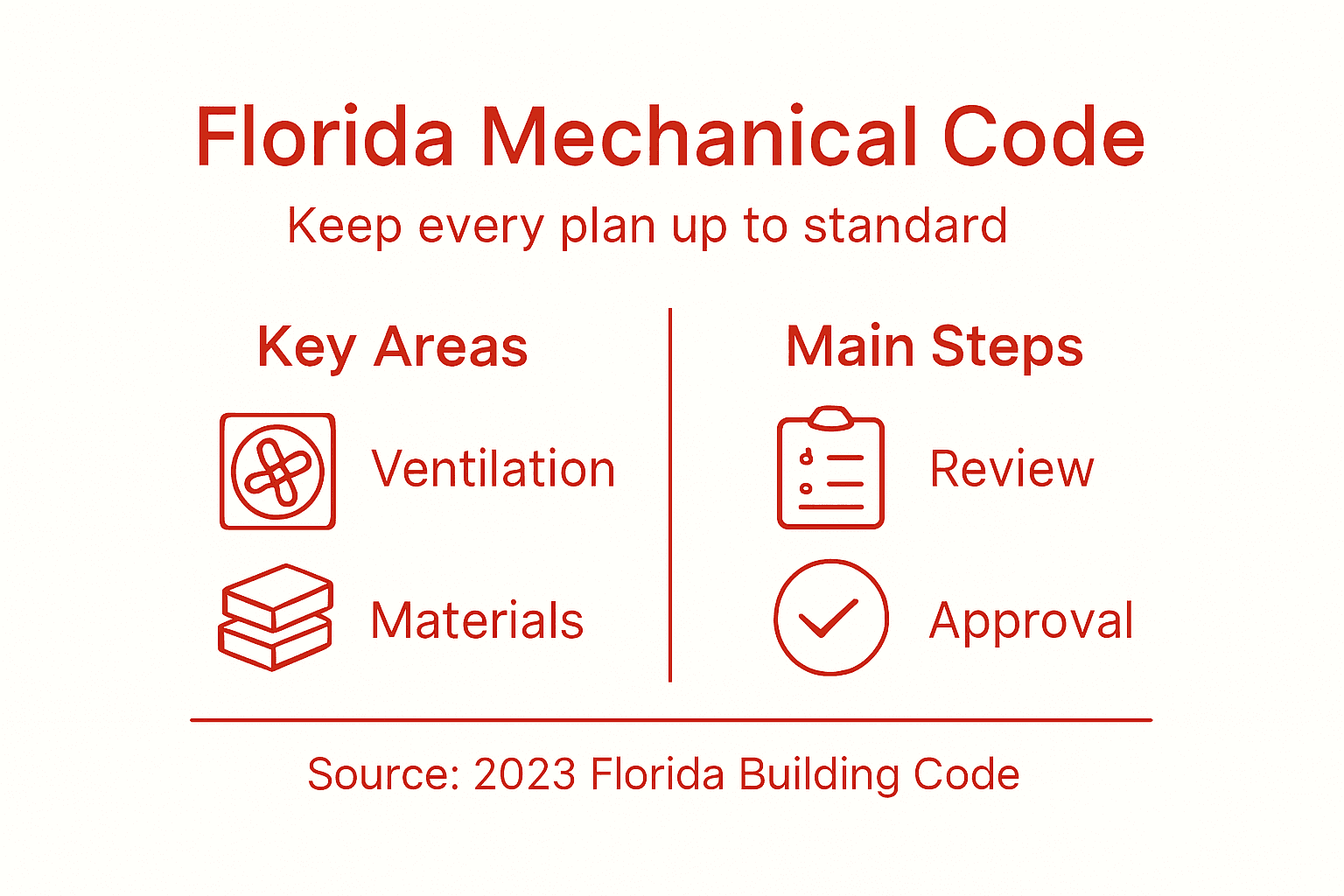
The 2023 Florida Building Code – Mechanical, 8th Edition provides a comprehensive legal framework that engineers must navigate carefully. This edition incorporates national model codes with Florida-specific amendments, addressing unique challenges like extreme weather conditions and environmental sensitivity.
Professional engineers must demonstrate meticulous attention to detail, ensuring that every mechanical plan not only meets but exceeds the complex regulatory requirements. Compliance involves understanding intricate technical specifications, local jurisdictional variations, and the broader implications of building safety standards.
Pro tip: Maintain a current reference library of Florida Building Code editions and attend regular professional development seminars to stay updated on the latest regulatory changes.
Common Pitfalls and Financial Implications
Mechanical engineering projects frequently encounter complex design challenges with substantial financial risks, requiring proactive strategies to mitigate potential costly errors. Understanding these common pitfalls is crucial for Florida-based engineers and project managers seeking to maintain project efficiency and budget integrity.
Primary mechanical design pitfalls include:
- Technical Specification Errors
- Inadequate requirements definition
- Misaligned interdisciplinary specifications
- Incomplete system performance parameters
- Design Verification Failures
- Insufficient prototype testing
- Poor simulation and modeling practices
- Overlooking environmental adaptation requirements
- Implementation Complications
- Unexpected manufacturing delays
- Cost overruns due to design revisions
- Compromised system functionality
Financial implications of these pitfalls can be devastating, potentially increasing project costs by 30-50% through redesign expenses, extended timelines, and potential regulatory non-compliance penalties. The most significant financial risks emerge from systemic design failures that require comprehensive rework or complete system redesign.
Professional engineers must develop robust risk management strategies that prioritize comprehensive planning, interdisciplinary collaboration, and rigorous design verification processes. Proactive problem identification and mitigation represent the most effective approach to controlling potential financial and technical risks.
Pro tip: Implement a mandatory peer review process for all mechanical design plans, ensuring multiple expert perspectives validate critical design parameters before final submission.
Ensure Your Florida Mechanical Plans Meet Every Standard
Navigating the complex requirements of mechanical plans in Florida projects can feel overwhelming. The article highlights critical challenges such as strict Florida building codes, interdisciplinary coordination, and costly design pitfalls that demand precise engineering solutions. If you want to avoid unexpected delays and costly revisions, understanding these technical details and legal mandates is essential.
Our team at Florida Licensed Engineers specializes in delivering thorough engineering services tailored to your project needs. From detailed blueprints and inspections to permitting expediter services, we provide expert mechanical plan development that aligns with Florida regulations and cross-disciplinary demands. Explore how our expert guidance from the Engineering and Inspection Archives – Florida Licensed Engineers can help you create compliant, accurate mechanical plans that reduce risk and enhance project success.

Take the first step toward securing flawless mechanical plans on your next Florida project. Visit Florida Licensed Engineers now to discover how our comprehensive services can save you time and money while ensuring compliance and quality.
Frequently Asked Questions
What are mechanical plans?
Mechanical plans are technical blueprints that visually communicate the details necessary for designing and manufacturing mechanical systems, including elements like dimensioning techniques, view perspectives, and specific technical drawing conventions.
How do mechanical plans impact construction projects?
Mechanical plans ensure that all engineering components are accurately represented and constructed, facilitating collaboration among architects, electrical engineers, and HVAC specialists, ultimately improving project efficiency and safety.
What types of mechanical plans are commonly used in engineering?
Common types of mechanical plans include HVAC system plans, piping layout plans, and equipment installation drawings, each serving specific roles in the design and implementation of mechanical systems in construction projects.
Why is it essential to comply with Florida’s mechanical code requirements?
Compliance with Florida’s mechanical code requirements is crucial as it ensures the safety, energy efficiency, and environmental suitability of mechanical systems, particularly in addressing challenges like hurricane resilience and structural integrity.
Recommended
- Role of Mechanical Plans in Project Success – Florida Licensed Engineers
- Why Mechanical Design Matters for Florida Projects – FloridaLicensedEngineers.com
- Why Mechanical Design Matters for Florida Projects – Florida Licensed Engineers
- Mechanical Design Process for Construction Projects – Florida Licensed Engineers

