
Florida plan review process 2026: Cut approval time by 50%
Think a flawless engineering plan means zero comments? In Florida, review comments are actually a sign that the regulatory process is working as intended. Most residential and commercial projects receive feedback during plan review, and this is completely normal. Understanding the Florida plan review process helps you navigate approvals efficiently, reduce delays, and leverage strategies like private providers to expedite permitting. This guide walks you through regulations, timelines, required documentation, and proven tactics to streamline your home builder permit guide for Florida approvals journey.
Table of Contents
- Introduction To The Florida Plan Review Process
- Understanding The Regulatory Framework And Florida Building Code Updates
- Required Documentation And Key Submission Details For Plans
- Common Misconceptions And Realities About Plan Review In Florida
- Typical Plan Review Timelines And Factors Influencing Review Speed
- Leveraging Private Provider Reviews To Expedite Approvals
- Practical Tips For Preparing Plans And Navigating The Process
- Summary And Next Steps For Florida Property Owners
- Frequently Asked Questions About Florida Plan Review Process
Key takeaways
| Point | Details |
|---|---|
| Review timelines | Residential projects require up to 30 business days, commercial up to 60 days for initial review |
| Private providers | Reduce fees by at least 50% and accelerate approvals through parallel reviews |
| Complete documentation | Comprehensive, code-compliant submissions minimize review cycles and delays |
| Local variation | Florida’s 389 jurisdictions enforce different policies affecting approval speed |
| Review comments | Feedback reflects a functioning system, not necessarily plan deficiencies |
Introduction to the Florida plan review process
Plan review is the official evaluation of construction plans to verify safety and regulatory compliance before permitting. This critical step protects property owners and occupants by ensuring structural integrity and adherence to established codes. Every Florida construction project, whether residential or commercial, undergoes this scrutiny before breaking ground.
The Florida Building Commission oversees statewide code adoption and amendments, while local building departments enforce these standards alongside jurisdiction-specific requirements. The Florida Building Code establishes baseline safety and construction standards, but local amendments often add layers of requirements based on regional risks like hurricanes, flooding, and soil conditions. Compliance with both state and local codes is mandatory for legal construction and occupant safety.
The home builder permit guide outlines the submission to approval workflow. Primary plan review functions include:
- Verifying code compliance across structural, electrical, plumbing, and mechanical systems
- Confirming safety measures meet minimum standards for occupancy and use
- Coordinating with external agencies for flood zone compliance, environmental permits, and utility connections
- Ensuring accessibility standards for commercial projects
- Validating site-specific requirements like setbacks, easements, and drainage
Understanding this framework sets realistic expectations for timelines and documentation requirements.
Understanding the regulatory framework and Florida Building Code updates
The Florida Building Commission follows a structured procedure for amending codes, involving Technical Advisory Committees composed of industry experts, engineers, and public safety officials. The commission reviews and approves amendments through public comment periods lasting at least 45 days, ensuring transparency and stakeholder input before finalizing changes.
The 2026 Florida Building Code updates introduced significant revisions focused on climate resilience. Enhanced wind resistance standards now mandate stronger connections and upgraded roofing materials in high-wind zones, directly impacting plan review criteria. These changes respond to increasing hurricane frequency and intensity, requiring engineers and designers to demonstrate compliance with stricter load calculations and material specifications.
These updates influence plan review expectations at every local building department. Key regulatory changes include:
- Elevated wind design standards for residential and commercial structures
- Revised roofing attachment requirements to prevent uplift failures
- Expanded flood mitigation documentation for properties in Special Flood Hazard Areas
- Updated energy efficiency requirements for mechanical and electrical systems
Staying current with regulatory changes ensures your plans meet evolving compliance standards. The Florida Building Commission code amendment process operates on a three-year cycle, meaning continuous updates require ongoing attention from design professionals and property owners.
Required documentation and key submission details for plans
Complete documentation prevents delays and reduces review cycles. Residential plan submissions require a comprehensive package including floor plans with room dimensions and uses, site plans showing property boundaries with setbacks and flood zones, foundation plans detailing footings and reinforcement, framing plans demonstrating structural load paths, and exterior elevations showing roof pitch and window placements.
Structural requirements include wind design calculations per Florida Building Code Residential Section R301.2.1.1, typically addressing wind speeds up to 140 mph in most Florida zones. Coastal areas require even higher design thresholds. All plans must clearly demonstrate how structural elements resist wind uplift, lateral loads, and flood forces where applicable.

Commercial projects demand additional complexity. Fire protection plans detailing sprinkler systems and egress routes, occupancy load calculations for public spaces, accessibility details meeting ADA standards, and mechanical, electrical, and plumbing system layouts are mandatory. Energy code compliance documentation and specialized systems like elevators or fire alarms require separate engineering certifications.
Key documentation differences between project types:
- Residential focuses on life safety and structural integrity
- Commercial adds fire protection, accessibility, and occupancy considerations
- Site-specific factors like septic systems, wells, or coastal construction require supplemental engineering reports
- Flood hazard areas demand elevation certificates and flood mitigation plans
Commonly missed documents causing delays include engineering calculations for beam sizing, truss certification from manufacturers, energy compliance forms, and detailed foundation specifications. Working with professionals familiar with comprehensive inspection procedures ensures complete submissions. Reviewing Florida plan review documentation requirements before submission saves time and revision cycles.
Common misconceptions and realities about plan review in Florida
Many property owners believe zero review comments indicate perfect plans. In reality, multidisciplinary reviews typically generate feedback even on well-prepared submissions because different reviewers examine plans from structural, fire safety, electrical, plumbing, and zoning perspectives. Comments often request clarifications or minor adjustments rather than identifying major deficiencies.
Timelines vary dramatically based on local jurisdiction staffing levels, review sequencing policies, and current workload. Some departments review disciplines sequentially, extending total time, while others conduct parallel reviews for faster turnaround. Delays frequently reflect normal procedural steps like coordinating with utility providers or awaiting engineering calculations, not necessarily plan errors.
Pro Tip: Respond to review comments completely and promptly. Partial responses trigger additional review cycles, multiplying delays and extending your project timeline unnecessarily.
Another misconception suggests private providers increase costs and complexity. Florida legislation actually incentivizes private provider use through mandated fee reductions and streamlined processes. Understanding the role of engineers in Florida permitting clarifies how professionals navigate these options. The reality of design and permitting realities demonstrates that strategic provider selection accelerates approvals.
Common misconceptions corrected:
- Review comments do not equal plan failure or incompetence
- Longer timelines often reflect jurisdiction capacity, not your project quality
- Private providers reduce costs and expedite reviews legally under Florida law
- Multiple review cycles are standard for complex projects
- Local amendments create legitimate variation in requirements across jurisdictions
Typical plan review timelines and factors influencing review speed
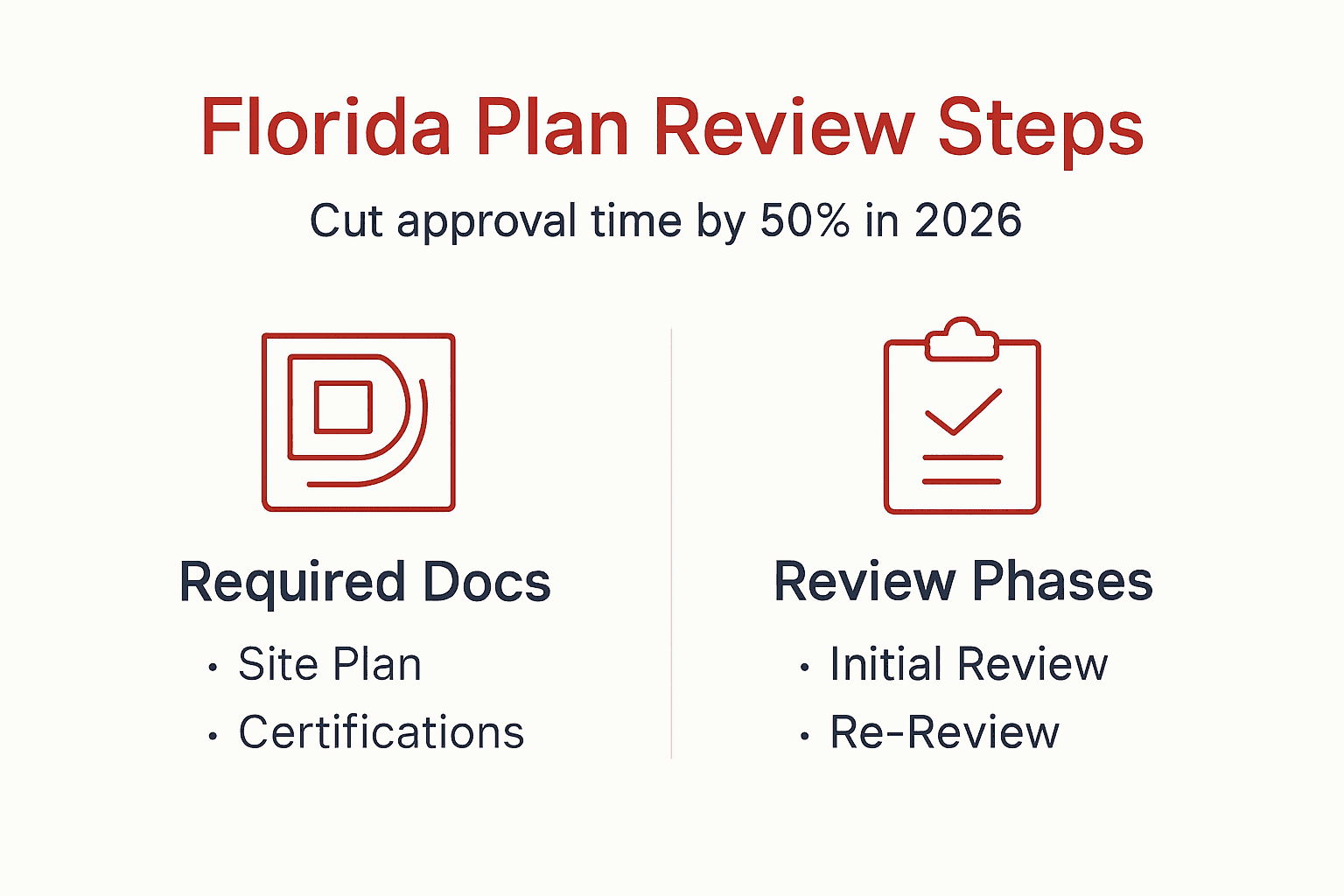
Local building departments operate under statutory timelines: 30 business days for initial residential reviews and 60 days for commercial projects, with 15 business days allocated for re-reviews after corrections. Actual timelines often exceed these standards due to workload, staffing constraints, and review complexity.
| Project Type | Initial Review | Re-Review | Total Potential |
|---|---|---|---|
| Residential | 30 business days | 15 business days | 45+ days |
| Commercial | 60 business days | 15 business days | 75+ days |
| Complex Commercial | 60+ business days | 15-30 days | 90+ days |
Wide variation exists across Florida’s 389 separate jurisdictions due to different staffing levels, procedural policies, and technology adoption. Metropolitan areas with dedicated plan review teams often process applications faster than smaller jurisdictions sharing staff across multiple functions.
Factors influencing review speed:
- Jurisdiction staffing levels and reviewer workload
- Sequential versus parallel review workflows
- Plan complexity and number of required disciplines
- Completeness of initial submission documentation
- Backlog levels during peak construction seasons
- Use of digital submission systems versus paper processes
Proactive communication with building departments helps track your review status. Requesting status updates every two weeks maintains visibility without overwhelming staff. Understanding your jurisdiction’s typical processing times allows realistic project scheduling. Exploring residential permitting solutions provides options to navigate timeline challenges effectively.
Leveraging private provider reviews to expedite approvals
Florida Statute 553.791 and recent SB 526 legislation enable property owners to engage licensed private providers for plan reviews, bypassing traditional building department queues. Private providers must reduce permit fees by at least 50% for commercial projects under SB 526, delivering substantial cost savings alongside faster timelines.
Private providers conduct specialized, parallel reviews that eliminate sequential bottlenecks. Instead of waiting weeks for building department availability, licensed engineers review plans immediately upon engagement. Local building departments must respond within 20 business days after receiving private provider approvals, significantly compressing total approval timelines.
This alternative workflow benefits complex commercial projects most dramatically. Private providers often specialize in specific disciplines like structural or mechanical systems, bringing deep expertise that accelerates technical reviews. Their focus on client projects, rather than juggling multiple jurisdiction responsibilities, enables faster turnaround.
Pro Tip: Engage private providers during the design phase for complex commercial projects. Early involvement identifies code issues before formal submission, preventing costly redesigns and minimizing review cycles.
Practical considerations for private provider selection:
- Verify provider licensing and good standing with the Florida Department of Business and Professional Regulation
- Confirm expertise in your project type and applicable codes
- Request references from similar projects in your jurisdiction
- Clarify coordination procedures with local building departments
- Understand fee structures and compare savings against traditional routes
- Ensure provider availability aligns with your project timeline
Understanding the role of engineers in permitting clarifies how these professionals integrate into the approval process. The best residential permitting solutions often incorporate private provider strategies for time-sensitive projects. Review the Florida Senate SB 526 private provider law and GreenLite case study on private provider review for detailed implementation guidance.
Practical tips for preparing plans and navigating the process
Strategic preparation minimizes delays and improves approval odds. Follow this systematic approach:
- Conduct a comprehensive code compliance audit before finalizing design documents, verifying adherence to both state and local requirements
- Complete documentation checklists specific to your jurisdiction, confirming every required drawing, calculation, and certification is included
- Arrange pre-submission consultations with building department staff to identify potential issues early
- Engage licensed engineers for structural calculations and specialty system designs requiring professional certification
- Organize submission packages logically with clear labeling and cross-references between drawings
- Submit digitally when possible to accelerate processing and enable faster resubmissions
Building strong communication channels with your design team, engineers, and reviewers prevents misunderstandings. Designate a single point of contact to manage reviewer questions and coordinate responses. This streamlines communication and ensures consistent information flow.
Pro Tip: Double-check all site-specific requirements like flood zone determinations, setback measurements, and utility easements before submission. These common omissions trigger immediate rejections and restart review timelines.
Permit expediters and consultants familiar with local jurisdictions provide valuable guidance, especially for property owners managing their first Florida construction project. These professionals understand jurisdiction-specific preferences, common reviewer concerns, and efficient resubmission strategies. Their expertise navigating residential permitting solutions in Florida often justifies their fees through avoided delays.
Tracking review cycles systematically helps identify bottlenecks. Maintain a timeline documenting submission dates, reviewer requests, response submissions, and approval milestones. This record provides accountability and helps diagnose delays requiring intervention. The role of engineers in permitting includes managing these administrative details for clients.
Summary and next steps for Florida property owners
Navigating Florida’s plan review process successfully requires understanding regulatory context, especially 2026 code updates affecting wind resistance and roofing standards. Complete, code-compliant documentation forms the foundation for efficient approvals. Private providers and permit expediters offer legal pathways to reduce both timelines and fees significantly.
Your action plan:
- Assemble complete documentation using jurisdiction-specific checklists
- Evaluate private provider options for commercial projects or tight timelines
- Establish communication protocols with reviewers and design professionals
- Monitor review progress systematically with documented follow-ups
- Respond to comments thoroughly and promptly to avoid additional cycles
Continued learning through resources like permitting solutions guides keeps you informed about regulatory changes and best practices. Professional engineering support navigates complex requirements and accelerates approvals through expertise and established relationships with reviewing authorities.
Discover expert engineering services to streamline your Florida plan review
Navigating Florida’s complex plan review process becomes significantly easier with professional engineering support. Our comprehensive services include plan preparation meeting current code requirements, private provider reviews for expedited approvals, inspection coordination, and permit expediting across all Florida jurisdictions.
Client benefits include:
- Faster approvals through expert code compliance and complete documentation
- Reduced permit fees using private provider review options
- Minimized review cycles with thorough initial submissions
- Expert guidance through jurisdiction-specific requirements
Whether you’re planning a residential addition or a complex commercial development, Florida Licensed Engineers provides the expertise to ensure smooth approvals. Our team handles architectural, structural, mechanical, electrical, and plumbing plan preparation, plus civil engineering services including site plans, drainage design, and flood mitigation analysis. Contact us to discuss how our engineering services in Florida and engineering inspection and permit services support your project success. Review our home builder permit guide for additional insights.
Frequently asked questions about Florida plan review process
How long does plan review actually take in Florida?
Statutory timelines allow 30 business days for residential and 60 for commercial initial reviews, plus 15 days for re-reviews. Actual timelines vary widely based on jurisdiction staffing, project complexity, and submission completeness, often extending beyond statutory limits during peak construction seasons.
Can I really save money using private providers?
Yes, Florida law mandates at least 50% fee reductions for commercial projects using licensed private providers. Combined with faster approvals reducing carrying costs and project delays, private providers deliver substantial financial benefits alongside timeline improvements.
What happens if my plans receive multiple review comments?
Review comments are normal and expected, even on well-prepared plans. Address each comment thoroughly in your resubmission with clear explanations or revised drawings. Incomplete responses trigger additional review cycles, so comprehensive responses minimize total timeline impact.
Do all Florida jurisdictions follow the same review process?
No, Florida’s 389 local jurisdictions implement varied procedures despite following the same base Florida Building Code. Local amendments, staffing models, and review workflows differ significantly, making jurisdiction-specific knowledge valuable for efficient approvals.
Should I hire an engineer or handle plan review myself?
Complex projects benefit significantly from professional engineering involvement. Engineers ensure code compliance, prepare required calculations, and navigate reviewer expectations efficiently. Simple residential projects may proceed without full engineering services, but consultation prevents costly errors and delays.
How do I know if my project needs private provider review?
Commercial projects, tight timelines, and complex designs benefit most from private providers. Evaluate your jurisdiction’s typical processing times and compare against your project schedule. Private providers make sense when traditional timelines risk project delays or when fee savings offset provider costs.
Recommended
- Home Builder Permit Guide for Fast Florida Approvals – Florida Licensed Engineers
- Value Engineering: Cut Florida Project Costs 18% Smartly – Florida Licensed Engineers
- Civil Engineering Cuts Florida Flood Risk 50%: Key Benefits – Florida Licensed Engineers
- Role of Engineers in Permitting – Streamlining Florida Projects – Florida Licensed Engineers

