
How to prepare engineering reports for Florida projects

A Florida building permit gets denied, and suddenly your renovation timeline is pushed back by months. It happens more often than you’d think, and the cause is almost always the same: missing, incomplete, or incorrect engineering reports. Whether you’re a homeowner adding a second story or a business owner renovating a commercial space, the engineering report is the document that stands between your project and a green light from the permit office. This guide walks you through every stage, from understanding which report you need to submitting it correctly and following up for approval.
Table of Contents
- Understanding engineering reports: Types and when they’re required
- Essential tools, documents, and information you need before starting
- How to prepare and submit an engineering report: Step-by-step
- Ensuring compliance: Meeting state and local requirements
- Double-checking and next steps: What happens after submission
- How Florida Licensed Engineers can streamline your reporting and compliance process
- Frequently asked questions
Key Takeaways
| Point | Details |
|---|---|
| Know your report type | Florida law requires specific engineering reports for condos, threshold, and high-risk zones. |
| Preparation is key | Gather all documentation and select qualified professionals before starting the reporting process. |
| Step-by-step matters | Follow each report step in sequence to avoid delays or compliance problems. |
| Check local requirements | Additional reports or certificates may be needed for flood or hurricane zones. |
| Get expert help | Licensed engineers ensure your reports are thorough, accurate, and approval-ready. |
Understanding engineering reports: Types and when they’re required
An engineering report is a formal document prepared by a licensed engineer that evaluates a structure’s condition, safety, or compliance with building codes. For Florida property owners, these reports are not optional extras. They are often legally required before a permit is issued or a project can move forward.
The most common types you’ll encounter include:
- Structural reports: Assess load-bearing capacity, foundation integrity, and framing for renovations or additions.
- Milestone and SIRS inspections: Required for condominiums and multifamily buildings, focusing on structural safety and reserve funding.
- Threshold building inspections: Apply to large commercial structures where a special inspector monitors construction in real time.
- Forensic reports: Used when there’s visible damage, a dispute, or an insurance claim that requires documented investigation.
- Elevation certificates: Required for properties in flood zones to confirm finished floor height relative to base flood elevation.
Knowing which report applies to your project is the first step. You can review engineering report basics to get a clear picture before contacting an engineer.
| Report type | Typical trigger | Who it applies to |
|---|---|---|
| Structural | Addition, renovation, damage | Homeowners, commercial owners |
| Milestone/SIRS | Building age, condo law | Condo associations, multifamily |
| Threshold | Large commercial construction | Commercial developers |
| Forensic | Damage, dispute, insurance | Any property owner |
| Elevation certificate | Flood zone location | Coastal and flood-prone properties |
For condominiums and multifamily buildings, milestone inspections are mandatory under Florida law, while single-family homes typically only need reports when a specific project or code requirement triggers them. Understanding why engineering reports matter can help you avoid the costly mistake of assuming your project doesn’t need one.
Important: Skipping a required report doesn’t just delay your permit. It can result in stop-work orders, fines, and in some cases, forced demolition of unpermitted work.
Essential tools, documents, and information you need before starting
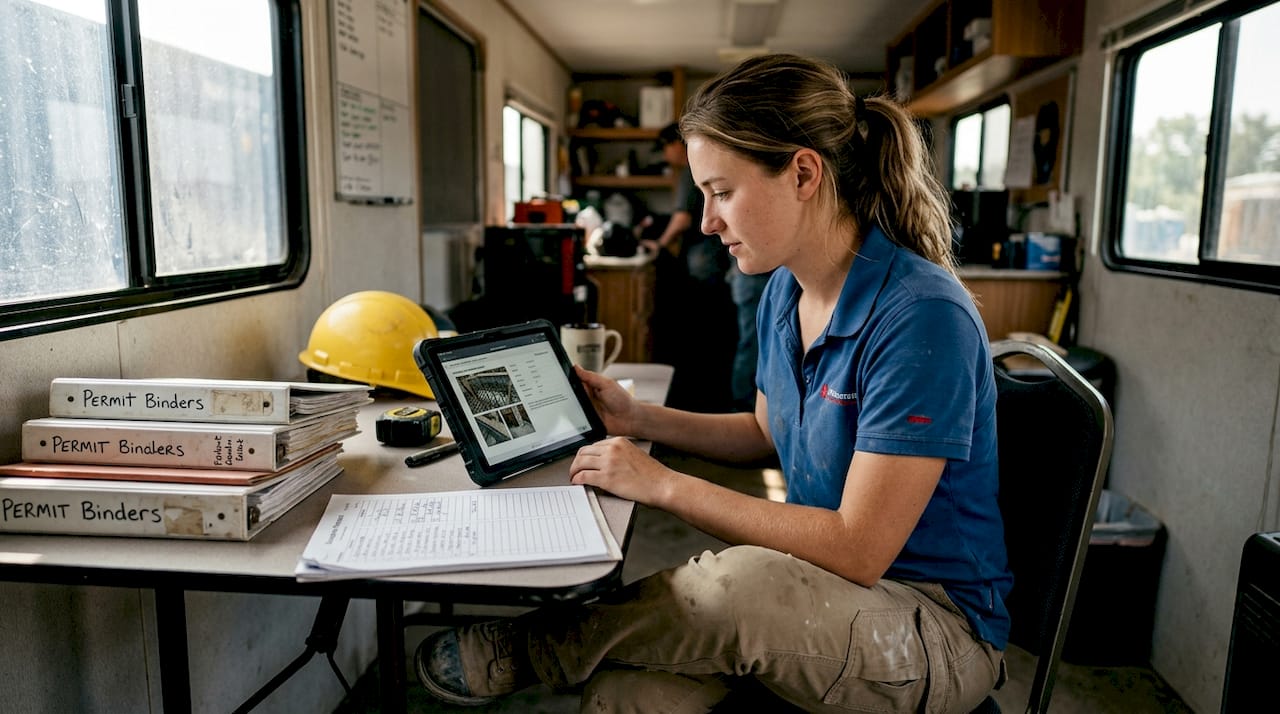
Getting your engineering report right starts well before the engineer shows up. The more organized you are, the faster and smoother the process goes. Gather these documents before making your first call.
Documents to collect:
- Property survey and legal description
- Existing architectural or structural drawings (if available)
- Previous inspection reports or permits
- Flood zone determination letter or FEMA flood map reference
- Zoning classification and local code references
- HOA or condo association records (for multifamily projects)
For digital tools, many engineers now use inspection software that generates photo-documented reports. Ask your engineer what format the permit office prefers, since some Florida counties still require paper submissions or specific digital formats.
| Situation | Documents needed | Extra requirements |
|---|---|---|
| Single-family renovation | Survey, existing plans, permit history | None unless in flood/HVHZ zone |
| Condo association | Building records, prior inspections, SIRS reserve study | Milestone Phase 1 or Phase 2 |
| Commercial threshold building | Full construction documents, inspector credentials | Special inspector qualification |
| Flood zone property | Elevation certificate, FEMA map reference | No-rise certificate if near floodway |
For coastal and flood zone properties, the documentation requirements go up significantly. Florida’s High Velocity Hurricane Zone (HVHZ), which covers Miami-Dade and Broward counties, has stricter review standards than the rest of the state. Inspection qualifications for threshold buildings and HVHZ projects are specific and non-negotiable.
Pro Tip: Pull up your property on FEMA’s flood map before your first meeting with an engineer. If you’re in a Special Flood Hazard Area (Zone A or AE), you’ll need an elevation certificate, and that can add time and cost to your project if you don’t plan for it upfront.
How to prepare and submit an engineering report: Step-by-step
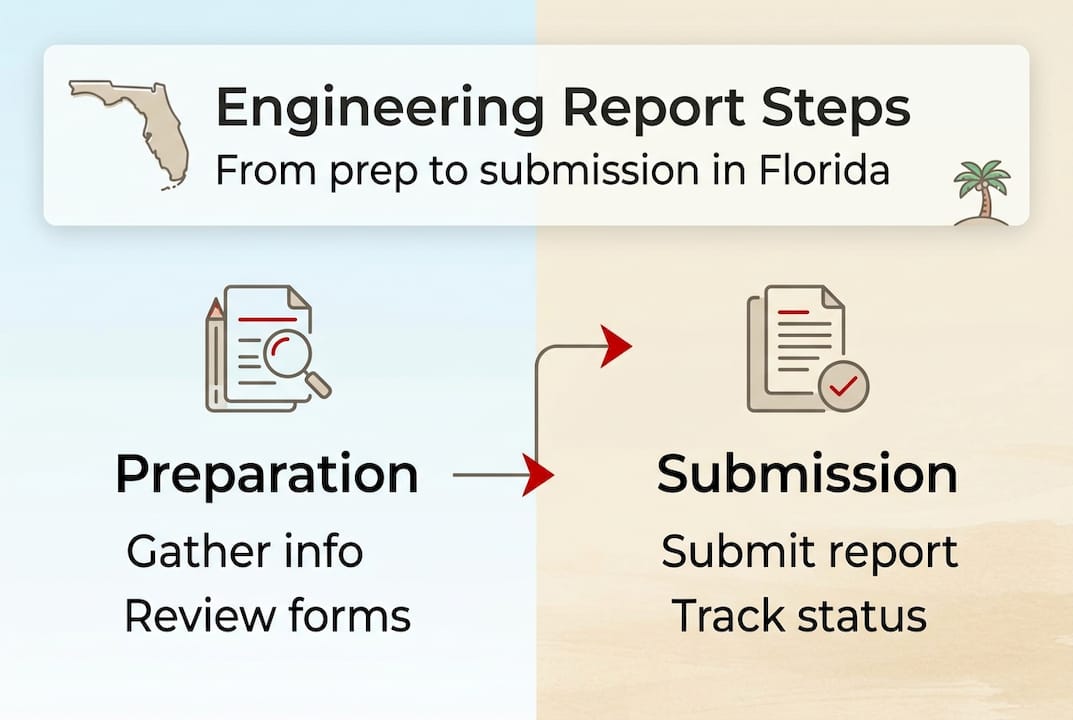
The engineering report process follows a clear sequence. Skipping steps or rushing through them is the most common reason projects stall at the permit office.
- Define your project scope. Know exactly what work is being done before contacting an engineer. Vague scopes lead to incomplete reports.
- Select a licensed Florida engineer. Verify their license through the Florida Department of Business and Professional Regulation. For threshold buildings, confirm they hold the required special inspector credentials.
- Gather all documents. Use the checklist from the previous section. Missing records slow everything down.
- Schedule the site inspection. The engineer visits the property, takes measurements, photographs, and collects data relevant to the report type.
- Draft and review the report. The engineer prepares the report. Review it carefully before submission. Ambiguous language or missing data will trigger a request for corrections.
- Submit to the permit office. Include all supporting documents. Some counties require digital submissions through their online portal; others still use paper.
- Follow up. Don’t assume silence means approval. Check the status within a week of submission.
For condominiums, the required inspection process follows a two-phase structure. Phase 1 is a visual inspection. If the engineer finds deterioration, Phase 2 is triggered, which involves more detailed testing and analysis. For civil engineering report steps on site-related work, the sequence is similar but includes drainage, grading, and utility documentation.
Statistic callout: Florida’s milestone inspection law, passed after the Surfside condominium collapse in 2021, now requires inspections for condos three stories or taller when they reach 30 years of age (or 25 years if within three miles of the coast). Mandatory condo inspections are not optional, and associations that miss deadlines face significant penalties.
Pro Tip: Submit your report at least 30 days before your planned construction start date. Many Florida permit offices are running 3 to 6 week review queues in 2026, and a single correction request can add another 2 to 3 weeks.
Once you receive your report, knowing how to read it clearly will help you catch issues before the permit office does.
Ensuring compliance: Meeting state and local requirements
A technically correct report can still fail compliance review if it doesn’t address the specific regulations that apply to your property. Florida has several layers of oversight, and each one adds requirements.
Check these factors for your property:
- HVHZ designation: Miami-Dade and Broward County properties fall under the High Velocity Hurricane Zone, which requires stricter wind load calculations and product approvals.
- Flood zone classification: Properties in FEMA Special Flood Hazard Areas need elevation certificates. If your project is near a floodway, you may also need a no-rise certificate.
- Threshold building status: Any building over 25,000 square feet or more than two stories with an occupancy over 50 qualifies as a threshold building and requires a special inspector throughout construction.
- Condo milestone requirements: Buildings three stories or taller must follow the Phase 1 and Phase 2 inspection sequence under Florida Statute 553.899.
For building inspection requirements specific to your project type, local building departments often publish their own checklists. Always check with your county’s building division in addition to state requirements, since local amendments can add extra steps.
State compliance guidance is updated regularly, especially following legislative changes. The 2022 and 2023 legislative sessions added significant new requirements for condo associations, and more updates are expected.
Warning: Florida building officials have broad authority to issue stop-work orders and impose fines for non-compliant construction. In some cases, work completed without the required engineering sign-off must be demolished and redone at the owner’s expense. Compliance is not a formality.
Double-checking and next steps: What happens after submission
Submitting your report is not the finish line. What happens next determines whether your project moves forward on schedule or gets stuck in a correction loop.
After submission, avoid these common mistakes:
- Assuming the report was received without confirmation
- Failing to respond to correction requests within the deadline
- Starting construction before written approval is issued
- Losing track of which version of the report was submitted
- Not keeping a copy of every document submitted with the report
Most Florida permit offices will assign a tracking number to your submission. Use it. Call or log in to the online portal within 5 to 7 business days to confirm receipt and check for any initial flags.
| Outcome | What it means | What to do |
|---|---|---|
| Approved | Report meets all requirements | Proceed with permit application |
| Pending review | Still in queue | Follow up after 7 business days |
| Needs more information | Missing data or clarification needed | Respond within the stated deadline |
| Rejected | Report does not meet requirements | Work with your engineer to revise and resubmit |
If your report is rejected, don’t panic. Most rejections are correctable. The report review process typically includes written comments explaining what’s missing or incorrect. Share those comments with your engineer immediately so revisions can be made quickly.
For threshold buildings or condo milestone reports, a rejection may trigger a Phase 2 inspection requirement. Understanding how to read your engineering report will help you interpret the reviewer’s comments and communicate them clearly to your engineer.
How Florida Licensed Engineers can streamline your reporting and compliance process
Engineering reports involve more moving parts than most property owners expect, and one missed detail can set your project back by weeks. Working with a team that handles reports, inspections, and permitting together eliminates the coordination gaps that cause delays.
At Florida Licensed Engineers, we handle structural, forensic, civil, and specialty reports for residential and commercial projects across the state. Our engineering services overview covers everything from elevation certificates and no-rise certificates to threshold building inspections and milestone reports. We also serve as permitting expediters, so we know exactly what each county’s permit office needs and how to get your submission through without unnecessary back-and-forth. Learn more about engineers’ role in permitting and reach out to Florida Licensed Engineers to schedule a consultation for your next project.
Frequently asked questions
What is the difference between a milestone inspection and a standard engineering report in Florida?
Milestone inspections are mandatory structural safety evaluations for condominiums three stories or taller, required by Florida law at specific building ages. Standard engineering reports are broader and can apply to any structure based on project needs, not just age or building type.
Who can prepare an engineering report for a Florida permitting application?
Only a licensed Florida engineer or a qualified special inspector with verified Florida credentials can prepare reports accepted for permitting. Threshold buildings have additional qualification requirements beyond a standard engineering license.
How long does the engineering report process usually take?
Most reports take one to three weeks from initial inspection to final submission, but complex projects or properties in flood and HVHZ zones can take longer. Permit office review queues in 2026 are adding another two to six weeks in many Florida counties.
What happens if my property is in a flood or hurricane zone?
You will need additional documentation, including an elevation certificate for flood zones and stricter wind load documentation for HVHZ properties. A no-rise certificate may also be required if your project is near a regulated floodway.
Are engineering reports required for every renovation in Florida?
Not for every renovation. Single-family projects typically only require reports when major structural changes, code triggers, or special zone designations apply. Condominiums, however, face mandatory milestone inspections regardless of whether a renovation is planned.


