
Architectural Plans vs Structural Plans Explained
Most construction setbacks can be traced to confusion between the roles of architectural and structural plans. Detailed plans not only guide the look of a building but also its safety and strength. For anyone planning a build or renovation, knowing the difference saves time, money, and frustration. This guide sheds light on the unique purposes of each plan, so you can approach your next project with clarity and confidence.
Table of Contents
- Defining Architectural and Structural Plans
- Key Elements in Architectural Drawings
- Core Components of Structural Plans
- Comparing Functions and Responsibilities
- Common Pitfalls and How to Avoid Them
Key Takeaways
| Point | Details |
|---|---|
| Distinction Between Plans | Architectural plans focus on aesthetic and functional design, while structural plans ensure safety and stability through detailed engineering specifications. |
| Key Components | Architectural drawings include room dimensions and design elements, whereas structural plans focus on load-bearing structures and material specifications. |
| Common Pitfalls | Miscommunication and inadequate specifications can lead to project delays and increased costs, necessitating careful planning and interdisciplinary collaboration. |
| Importance of Coordination | Successful building design requires both architectural creativity and structural integrity, emphasizing the need for aligned objectives across disciplines. |
Defining Architectural and Structural Plans
In the complex world of building design and construction, two critical types of plans serve distinct yet complementary purposes: architectural plans and structural plans. According to ijarsct, architectural plans are comprehensive drawings that illustrate how a project will be finished, encompassing detailed textual and graphic descriptions of a building’s architectural aspects such as drawings, sketches, and visual representations.
Structural plans, by contrast, focus exclusively on the critical load-bearing elements that form a building’s fundamental framework. These technical documents detail the precise structural components that support and stabilize the entire architectural design. As the research indicates, structural plans go beyond aesthetic considerations, concentrating on engineering principles that ensure a building’s safety, stability, and long-term structural integrity.
Key differences between architectural and structural plans include their primary objectives and level of detail. en.Wikipedia) defines plans as technical drawings used to communicate building instructions, highlighting their role in translating design concepts into actionable construction guidance. Architectural plans typically showcase:
- Room layouts and spatial relationships
- Interior and exterior design elements
- Aesthetic and functional design features
Structural plans, meanwhile, emphasize:
- Load-bearing wall specifications
- Foundation design and reinforcement
- Structural material requirements
- Stress distribution calculations
Understanding these nuanced differences is crucial for anyone involved in construction, renovation, or property development. For a deeper exploration of blueprint creation, check out our guide to blueprints for residential projects.
Key Elements in Architectural Drawings
Architectural drawings are complex visual blueprints that communicate a comprehensive vision for construction projects. According to en.Wikipedia, these technical documents typically include precise dimensions between walls, specifying exact room sizes and wall lengths. These detailed measurements serve as a critical foundation for understanding the spatial layout and proportions of a proposed building.
Beyond basic measurements, architectural drawings incorporate a rich array of technical and descriptive elements. ijarsct highlights that these plans often include elevation adjustments, comprehensive materials lists, and design notes that provide an in-depth overview of the project’s aesthetic and functional characteristics. This multifaceted approach ensures that every aspect of the design is meticulously documented and communicated.
The key elements typically found in architectural drawings include:
- Precise wall and room dimensions
- Fixture locations (sinks, water heaters, furnaces)
- Electrical and mechanical system symbols
- Material specifications
- Construction method annotations
- Finish details and surface treatments
- Elevation and height specifications
These drawings are more than just technical documents; they are visual storytelling tools that translate abstract design concepts into tangible, actionable instructions for builders and contractors.
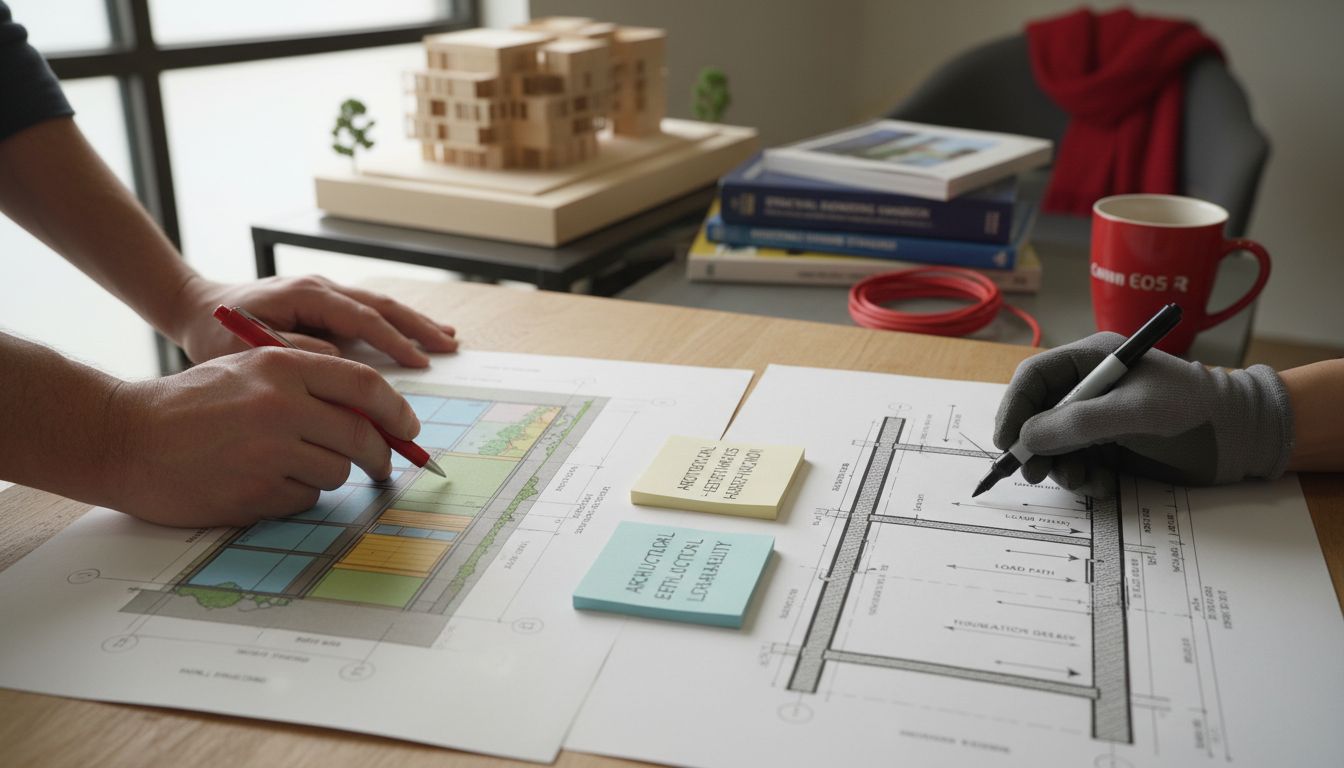 For a deeper understanding of how these drawings come together, explore our guide to as-built drawings, which provides additional insights into the documentation process.
The complexity and detail of architectural drawings reflect the intricate nature of modern construction, ensuring that every design element is precisely communicated and understood by all stakeholders involved in the building process.
Core Components of Structural Plans
Structural plans are the engineering backbone that ensures a building’s safety, stability, and long-term integrity. According to ijarsct, these technical documents focus intensely on load-bearing elements, detailing the framework that supports architectural design through meticulous specifications of materials and construction methods.
en.Wikipedia) explains that structural plans are comprehensive technical drawings that describe critical load-bearing components such as beams, columns, and foundations. These plans go far beyond simple sketches, serving as precise engineering blueprints that guarantee a structure’s compliance with rigorous safety and performance standards.
The core components typically found in structural plans include:
- Foundation design and specifications
- Structural material strength calculations
- Load-bearing wall and column details
- Beam and support system configurations
- Reinforcement steel placement diagrams
- Stress distribution and load transfer analyses
- Seismic and wind resistance calculations
Each element plays a crucial role in ensuring the building’s structural soundness. For professionals seeking a deeper understanding of structural engineering processes, our structural engineering checklist guide offers comprehensive insights into the intricate world of structural planning and design.
Understanding these core components is not just about technical compliance, but about creating safe, resilient structures that can withstand environmental challenges and serve their intended purpose for decades to come.
Comparing Functions and Responsibilities
Architectural and structural plans represent two distinct yet complementary approaches to building design, each with unique functions and critical responsibilities. According to ijarsct, architectural plans focus primarily on the design and aesthetic aspects of a building, meticulously detailing layout, material selections, and finish specifications, while structural plans concentrate on ensuring the building’s fundamental stability and safety through comprehensive load-bearing framework specifications.
en.Wikipedia) further elaborates that these plans differ significantly in their core objectives. Architectural plans are fundamentally concerned with the building’s functionality and visual presentation, whereas structural plans address the critical engineering challenges of withstanding various environmental loads and maintaining long-term structural integrity.
Key differences in their functions and responsibilities include:
Architectural Plan Responsibilities:
- Defining spatial relationships
- Creating aesthetic design concepts
- Specifying interior and exterior finishes
- Determining room layouts and traffic flow
- Selecting decorative materials and color schemes
Structural Plan Responsibilities:
- Calculating load-bearing capacities
- Ensuring structural stability
- Designing foundation and support systems
- Analyzing potential environmental stress points
- Specifying material strength requirements
These complementary documents work together to transform abstract design concepts into safe, functional, and visually appealing built environments. For professionals seeking deeper insights into residential engineering requirements, our residential engineering requirements guide offers comprehensive background information on navigating these complex design processes.
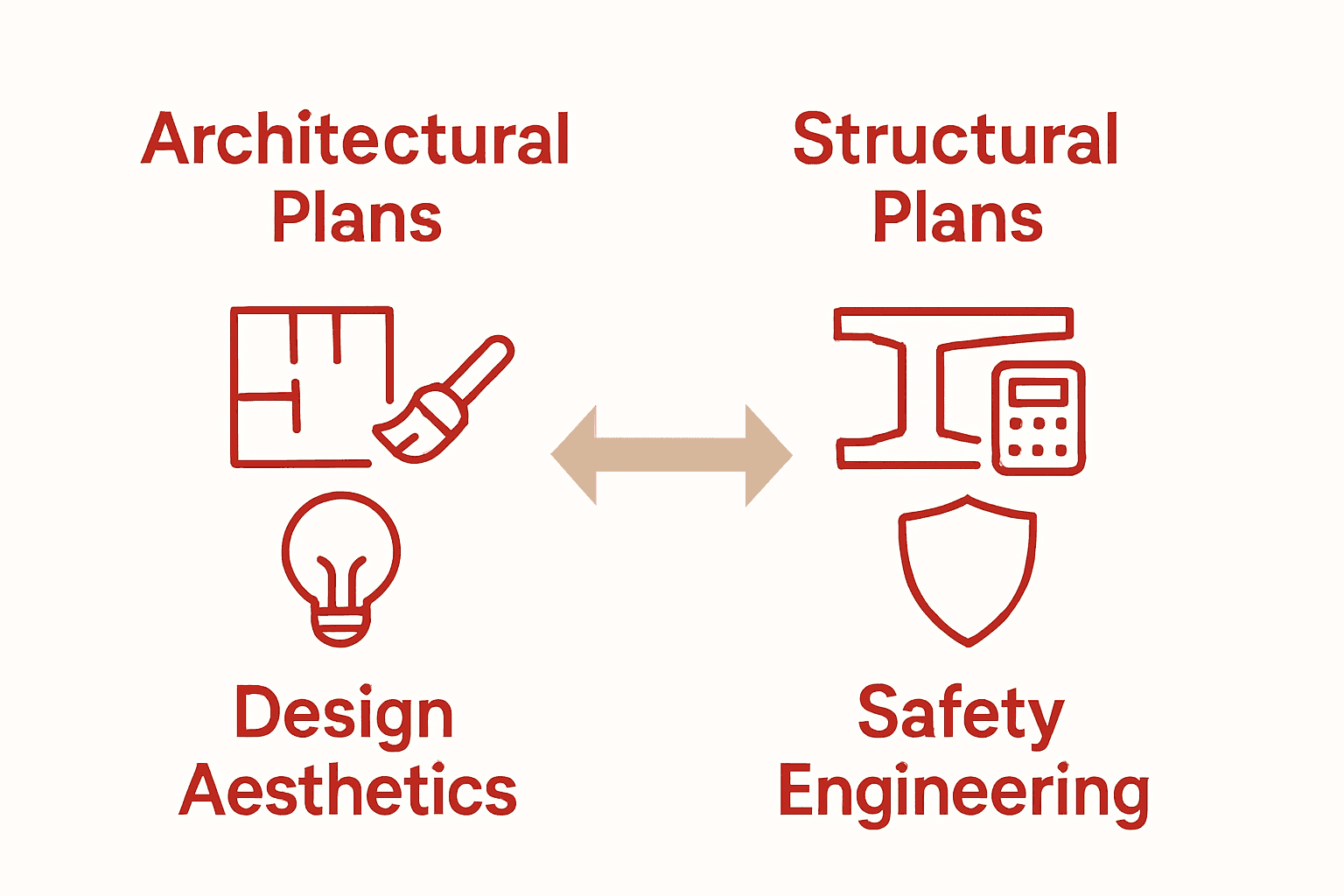
Ultimately, architectural and structural plans represent two sides of the same architectural coin – one focused on beauty and functionality, the other on safety and endurance.
Common Pitfalls and How to Avoid Them
Navigating the complex world of architectural and structural planning can be challenging, with numerous potential pitfalls that can derail even the most well-intentioned projects. Structural Report Breakdown Guide highlights the critical importance of understanding and anticipating potential issues before they become costly problems.
The most common pitfalls in architectural and structural planning typically emerge from miscommunication, inadequate detailed specifications, and a lack of comprehensive interdisciplinary collaboration. Misalignment between architectural vision and structural feasibility can create significant challenges, potentially leading to design modifications, project delays, and unexpected additional costs.
Key pitfalls to watch out for include:
Architectural Planning Pitfalls:
- Unrealistic design expectations
- Inadequate space utilization
- Overlooking local building code requirements
- Insufficient consideration of environmental conditions
- Ignoring potential future modifications
Structural Planning Pitfalls:
- Underestimating load-bearing requirements
- Inadequate material strength calculations
- Overlooking potential environmental stresses
- Poor foundation design
- Insufficient seismic or wind resistance planning
To mitigate these risks, professionals must prioritize comprehensive communication and detailed planning. For those seeking a systematic approach to avoiding these common mistakes, our structural engineering checklist guide provides a robust framework for identifying and addressing potential issues before they escalate.
Successful project planning requires a proactive approach, where potential challenges are anticipated and addressed early in the design process. By understanding these common pitfalls, architects, engineers, and project managers can create more resilient, efficient, and cost-effective building designs.
Get the Perfect Balance Between Architectural Vision and Structural Integrity
Understanding the distinct roles of architectural and structural plans is essential to avoid costly mistakes and ensure your project’s success. If you have ever worried about whether your building design is both beautiful and structurally sound, you are not alone. Many homeowners and developers face challenges such as miscommunication between design and engineering, unrealistic expectations, or incomplete load-bearing calculations.

Take control of your project with expert engineering services tailored to both architectural creativity and structural stability. At Florida Licensed Engineers, we provide comprehensive services including inspections, detailed blueprints for architectural, structural, mechanical, electrical, and plumbing plans, plus permitting expediter services to keep your timeline on track. Don’t wait until issues arise. Visit our residential engineering requirements guide and structural engineering checklist guide to start planning with confidence.
Create a safe, functional, and visually stunning building today by partnering with professionals who understand both sides of the building coin. Contact us now at Florida Licensed Engineers to discuss your project needs and avoid common pitfalls.
Frequently Asked Questions
What are architectural plans?
Architectural plans are comprehensive drawings that illustrate how a project will be finished, including detailed layouts, design elements, and visual representations of a building’s aesthetic aspects.
What is the purpose of structural plans?
Structural plans focus on the load-bearing elements of a building, detailing the framework that ensures stability, safety, and long-term structural integrity through precise engineering specifications.
How do architectural and structural plans differ?
Architectural plans emphasize design and aesthetics with details like room layouts and material selections, whereas structural plans concentrate on engineering principles like load capacities and foundation designs.
What are common mistakes in architectural and structural planning?
Common pitfalls include miscommunication between architects and engineers, unrealistic design expectations, inadequate load calculations, and insufficient consideration of local building codes or environmental factors.
Recommended
- Complete Guide to Blueprints for Residential Projects – FloridaLicensedEngineers.com
- What Is Structural Assessment? Complete Overview – FloridaLicensedEngineers.com
- Structural Inspections: Everything You Need to Know – FloridaLicensedEngineers.com
- Structural Report Breakdown: Complete Guide for 2025 – FloridaLicensedEngineers.com
