
Structural Plans Workflow: Step-by-Step Success Guide
One overlooked detail at the start can derail months of careful structural planning. Every year, delays and redesigns add up to millions in lost time and resources for construction projects. Gathering the right project information from the beginning is the foundation for smooth progress and successful outcomes. This step-by-step guide breaks down the structural planning process into clear, actionable phases, so you can avoid common pitfalls and move your project forward with confidence.
Table of Contents
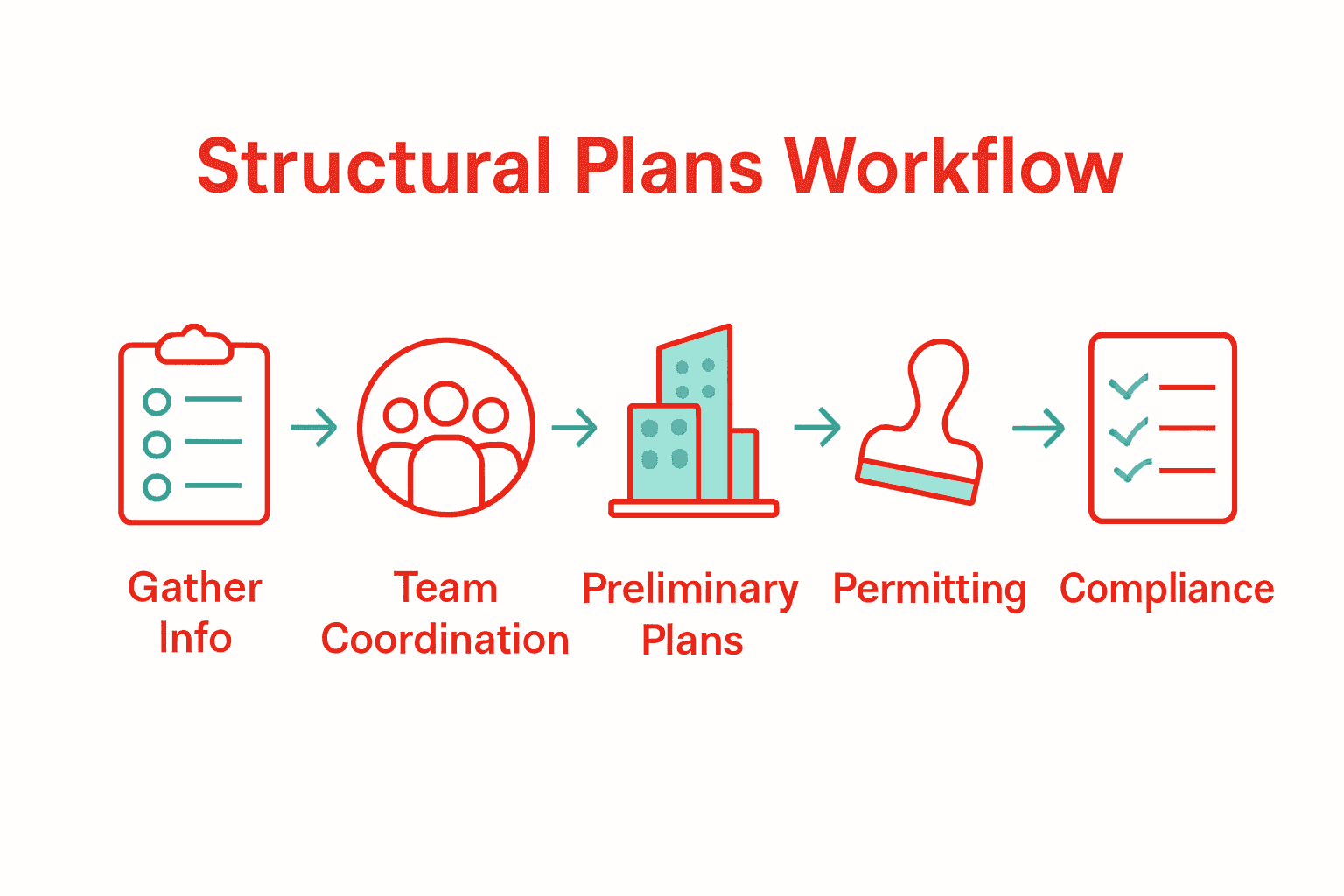
- Step 1: Gather Project Details And Requirements
- Step 2: Coordinate With Design And Engineering Teams
- Step 3: Develop And Review Preliminary Structural Plans
- Step 4: Submit Structural Plans For Permitting And Approval
- Step 5: Verify Plan Compliance And Facilitate Project Start
Quick Summary
| Key Point | Explanation |
|---|---|
| 1. Gather comprehensive project details | Collect all critical project information, including site-specific data and project requirements, to avoid redesigns later. |
| 2. Facilitate inter-team communication | Establish clear communication channels among design and engineering teams to align everyone on project goals and progress. |
| 3. Create multiple design alternatives | Develop preliminary structural designs that offer various options; this encourages informed decision-making among stakeholders. |
| 4. Ensure thorough submission for approvals | Prepare a complete submission package and anticipate queries to navigate the permitting phase efficiently. |
| 5. Conduct a compliance audit before construction | Verify that all plans align with regulations to prevent future disputes and ensure a smooth start to construction. |
Step 1: Gather project details and requirements
Successful structural planning starts with comprehensive information gathering. Your first mission is collecting every detail that will shape the entire project blueprint.
According to CivilPracticalKnowledge, the initial consultation involves meeting with clients to understand precise project requirements and review architectural plans. This means you will want to create a systematic approach to capturing all critical project information. Start by preparing a detailed questionnaire or checklist that covers essential aspects such as project scope, client objectives, budget constraints, and specific functional needs.
During your information gathering phase, pay special attention to collecting site specific data. This includes understanding soil conditions, potential environmental factors, local building codes, and any unique geographical challenges. Photograph the site if possible, and request any existing site surveys or topographical maps. Documenting these details upfront will save significant time and prevent potential redesigns later in the process.
Pro tip: Always schedule an in person site visit. Digital plans and client descriptions are helpful but cannot replace firsthand observation of the actual project location. Walking the site allows you to identify potential structural challenges or opportunities that might not be immediately apparent from drawings.
With your detailed information collected, you are now ready to move into the next phase of structural planning preparation.
Step 2: Coordinate with design and engineering teams
Successful structural projects demand seamless collaboration across multiple professional teams. Your goal in this step is to establish clear communication channels and align everyone toward a unified project vision.
According to research from Strathprints, design coordination is critical for enabling concurrent engineering. This means creating an environment where maximum design activities can happen simultaneously through effective communication and integration. Start by scheduling a comprehensive kickoff meeting with representatives from architectural design, structural engineering, mechanical systems, and electrical teams. During this meeting, outline project goals, share collected project details from the previous step, and establish a collaborative framework.
Civil Engineering Workflow Guide recommends creating a centralized communication platform where all team members can access real time project documents, share updates, and track progress. Use cloud based project management tools that allow simultaneous document editing, version tracking, and instant messaging. This approach ensures everyone has access to the most current information and can provide quick feedback.
Pro tip: Assign a dedicated project coordinator responsible for managing interdepartmental communication. This person will track action items, schedule regular check ins, and quickly resolve any potential conflicts or misunderstandings between different engineering and design teams.
With your teams aligned and communication channels established, you are now prepared to move into the detailed design and planning phase of your structural project.
Step 3: Develop and review preliminary structural plans
At this stage, your goal is to transform the gathered project requirements into initial design concepts that provide a clear structural framework for your project. This is where your project begins to take its first tangible shape.
According to CivilPracticalKnowledge, the preliminary design phase involves developing conceptual designs for the structural system, selecting suitable materials, and performing basic load calculations to assess viability. Start by creating initial sketches that outline the primary structural elements based on your project requirements. Focus on developing multiple design alternatives that balance architectural vision with structural integrity.
Modern design practices have been revolutionized by Building Information Modeling (BIM). As research from MDPI indicates, BIM methodology facilitates collaboration and integration among teams during structural plan development. Structural Engineering Checklist recommends using digital modeling tools that allow real time collaboration and quick iteration of design concepts.
Pro tip: Always create multiple preliminary design options. This approach allows stakeholders to compare different structural approaches and select the most efficient solution. Ensure each design meets local building codes, considers environmental factors, and aligns with the project budget.

With your preliminary structural plans developed and reviewed, you are now prepared to move forward with more detailed engineering and design refinement.
Step 4: Submit structural plans for permitting and approval
The permitting and approval phase is a critical checkpoint where your meticulously developed structural plans undergo official review and validation. Your objective is to successfully navigate the regulatory landscape and secure the necessary approvals to move forward with your project.
According to CivilPracticalKnowledge, after finalizing structural plans, they must be submitted to relevant authorities for permitting and approval, ensuring comprehensive compliance with building codes and regulations. Begin by organizing a comprehensive submission package that includes detailed architectural drawings, structural calculations, material specifications, and site plans. Architectural vs Structural Plans Guide recommends preparing multiple copies and digital versions to expedite the review process.
As documented in the Design Bid Build methodology, the design phase culminates with the submission of construction drawings and technical specifications. Prepare for potential requests for additional information by maintaining thorough documentation and being ready to provide quick clarifications. Ensure your submission includes comprehensive load calculations, material specifications, and detailed structural system explanations.
Pro tip: Schedule a pre submission consultation with local building officials if possible. This proactive approach can help identify potential issues early and streamline the approval process, potentially saving weeks of potential review delays.
With your plans submitted, you will now enter the waiting and review phase, where patience and preparedness are key to successful regulatory approval.
Step 5: Verify plan compliance and facilitate project start
With regulatory approvals secured, your next critical phase is ensuring absolute alignment between approved plans and project readiness. This stage transforms carefully crafted structural plans into actionable construction blueprints.
According to CivilPracticalKnowledge, before construction begins, verifying that structural plans comply with all regulations and standards is essential to facilitate a smooth project start. Conduct a comprehensive compliance audit by cross referencing your approved plans with local building codes, zoning requirements, and environmental regulations.
 How to Prepare for Engineering Inspection recommends creating a detailed compliance checklist that covers every aspect of your structural documentation.
In the design bid build process, as noted by Wikipedia, ensuring that approved plans meet all requirements is crucial before initiating the construction phase. Schedule a final review meeting with key stakeholders including architects, engineers, contractors, and project managers. During this meeting, walk through each critical plan element, confirming that all parties understand their responsibilities and the project specifications.
Pro tip: Create a digital and physical compliance verification folder containing all approved documents, inspection notes, and regulatory clearances. This comprehensive documentation will serve as your project blueprint and protect you against potential future disputes.
With compliance verified and all systems aligned, you are now prepared to transition from planning to actual project execution.
Streamline Your Structural Plans Workflow with Expert Engineering Support
Navigating a complex structural plans workflow requires precise coordination, compliance, and expertise at every step. From gathering detailed project requirements to submitting for permitting and ensuring full compliance, the challenges can be overwhelming. You need reliable engineering services that bridge the gap between design and construction, ensuring your project proceeds smoothly without costly delays or surprises.

Discover how Florida Licensed Engineers can help you master each phase of your structural project. Whether you need comprehensive blueprint creation, expert inspections, or permitting expediter services, our multidisciplinary team supports residential and commercial projects. We specialize in architectural, structural, mechanical, electrical, and plumbing plans, backed by civil engineering expertise like drainage and flood mitigation analysis. Don’t risk your project timeline or budget. Visit us now and take the next step toward worry-free structural plan approval and flawless execution at Florida Licensed Engineers.
Frequently Asked Questions
What are the first steps in the structural plans workflow?
The first step is to gather project details and requirements. Start by preparing a comprehensive checklist to capture essential information such as project scope, client objectives, budget constraints, and site-specific data.
How can I ensure effective coordination with design and engineering teams?
To ensure effective coordination, establish clear communication channels and schedule a kickoff meeting with all team representatives. Create a centralized platform for sharing real-time project documents to keep everyone aligned.
What should be included in preliminary structural plans?
Preliminary structural plans should include initial design concepts, suitable material selections, and basic load calculations. Create multiple design alternatives to compare options and ensure all proposals meet local building codes.
What steps should I take to submit structural plans for permitting?
When submitting structural plans for permitting, organize a comprehensive submission package that includes detailed drawings, calculations, and site plans. Prepare multiple copies of your submission to expedite the review process and anticipate any requests for additional information.
How do I verify plan compliance before starting construction?
To verify plan compliance, conduct a comprehensive audit by cross-referencing your approved plans with all relevant regulations. Create a compliance checklist, and schedule a final review meeting with key stakeholders to ensure everyone understands the project specifications.
What should I include in the compliance verification folder?
A compliance verification folder should contain all approved documents, inspection notes, and regulatory clearances. Assemble both digital and physical copies to protect against future disputes and facilitate easy access for all involved parties.
Recommended
- Architectural Plans vs Structural Plans Explained – FloridaLicensedEngineers.com
- Civil Engineering Plans Guide for Successful Projects – FloridaLicensedEngineers.com
- 7 Essential Steps for a Complete Structural Engineering Checklist – FloridaLicensedEngineers.com
- Structural Inspection Guide: Ensure Safe Buildings Easily – FloridaLicensedEngineers.com
