
Forensic Investigation in Construction: Complete Guide
Building failures on construction sites can lead to costly delays, legal disputes, and even safety hazards. Over 70 percent of structural collapses result from a mix of design and construction errors, putting both lives and financial investments at risk. Understanding forensic investigation in construction gives industry professionals the tools they need to uncover root causes, assign responsibility, and develop safer building practices for the future.
Table of Contents
- Defining Forensic Investigation In Construction
- Major Types Of Construction Forensic Investigations
- Core Processes And Investigation Methods
- Common Defects And Causes Identified
- Legal Responsibilities And Industry Standards
- Risks, Liabilities, And Cost Implications
Key Takeaways
| Point | Details |
|---|---|
| Forensic Investigation Importance | Forensic investigations analyze building failures and ensure better construction practices by identifying root causes and preventing future issues. |
| Types of Investigations | Common types include structural failure, building defects, and dispute investigations, each requiring specialized knowledge and methodologies. |
| Legal and Ethical Responsibilities | Forensic engineers must maintain objectivity and uphold industry standards, as their findings can significantly impact legal proceedings. |
| Risk Management | Understanding risks and liabilities from construction defects is crucial to mitigate financial exposure and ensure structural integrity. |
Defining Forensic Investigation in Construction
Forensic investigation in construction is a systematic, detailed process of analyzing building failures, structural issues, and potential defects to determine root causes and establish professional liability. Forensic engineering represents a specialized field where engineering principles are applied to investigate complex construction problems and provide expert analysis.
According to National Academy of Forensic Engineers, forensic investigations go far beyond simple visual inspections. They require comprehensive evaluations that consider multiple factors, including material performance, design specifications, construction techniques, and environmental conditions. Professional forensic engineers meticulously document their findings to help stakeholders understand exactly what went wrong and why.
The forensic investigation process typically involves several critical stages:
- Comprehensive site examination and documentation
- Collection and preservation of physical evidence
- Detailed material and structural analysis
- Interviewing key project participants
- Reconstructing potential failure scenarios
- Preparing comprehensive technical reports
Key objectives of a forensic investigation include determining the immediate cause of structural failures, identifying responsible parties, estimating potential repair costs, and providing expert testimony if legal proceedings become necessary. National Academy of Forensic Engineers highlights that these investigations are crucial for helping construction professionals understand deviations from contract documents and establish appropriate corrective actions.
Understanding forensic investigation is not just about finding fault. It’s about creating safer, more reliable built environments by learning from past challenges and implementing preventative strategies that protect both property owners and construction professionals.
Major Types of Construction Forensic Investigations
Forensic investigations in construction encompass several specialized types, each designed to address unique structural challenges and potential failures. These investigations are critical for understanding complex technical issues and establishing clear accountability in construction projects.
One primary type is structural failure investigation. Journal of Engineering Science and Technology highlights how forensic engineers meticulously analyze complex incidents like construction site collapses, examining factors such as material integrity, design specifications, and potential human error. These investigations often involve detailed reconstruction of failure scenarios to determine precise causation.
Other significant types of construction forensic investigations include:
- Building Defect Investigations: Identifying underlying structural, mechanical, or material deficiencies
- Construction Dispute Investigations: Resolving conflicts related to contract performance and project specifications
- Insurance Claim Investigations: Documenting damage causes for insurance assessment
- Design Error Investigations: Analyzing potential mistakes in architectural or engineering design
- Construction Method Investigations: Evaluating potential issues with construction techniques and implementation
According to research from Sri Lanka Engineering Journal, forensic investigations play a crucial role in understanding complex structural failures. By systematically examining multiple potential causative factors, these investigations help professionals identify root causes, assign appropriate responsibilities, and develop preventative strategies for future projects.
Each investigation type requires specialized knowledge, advanced technical skills, and a comprehensive approach to problem-solving. Professional forensic engineers must combine technical expertise, analytical thinking, and meticulous documentation to provide accurate, unbiased assessments that can withstand rigorous professional and legal scrutiny.
Core Processes and Investigation Methods
Forensic investigations in construction demand a systematic, multi-stage approach that combines technical expertise, meticulous documentation, and comprehensive analytical techniques. These processes are designed to uncover the root causes of structural failures, design issues, and potential liability concerns.
Institution of Civil Engineers emphasizes the critical importance of developing reliable investigation methodologies that can withstand professional and legal scrutiny. The core investigation process typically involves several interconnected stages that ensure thorough and objective analysis.
The fundamental stages of a forensic construction investigation include:
- Initial Evidence Collection
- Comprehensive site documentation
- Photographic and video evidence preservation
- Physical sample collection
- Preliminary damage assessment
- Detailed Technical Analysis
- Material testing and analysis
- Structural integrity evaluations
- Comparative design reviews
- Environmental factor assessments
- Root Cause Determination
- Failure mechanism identification
- Responsibility attribution
- Potential design or execution flaws
According to research from Directory of Open Access Journals, successful forensic investigations require comprehensive input data collection. This includes architectural plans, construction records, material specifications, maintenance logs, and environmental condition reports. Professional forensic engineers must meticulously gather and analyze these documents to construct an accurate narrative of structural failures.

Technical investigation methods range from non-destructive testing techniques like ultrasonic scanning and infrared thermography to advanced computational modeling and simulation. These sophisticated approaches allow forensic experts to recreate failure scenarios, identify subtle structural weaknesses, and provide scientifically rigorous insights that can inform future construction practices and prevent similar incidents.
Common Defects and Causes Identified
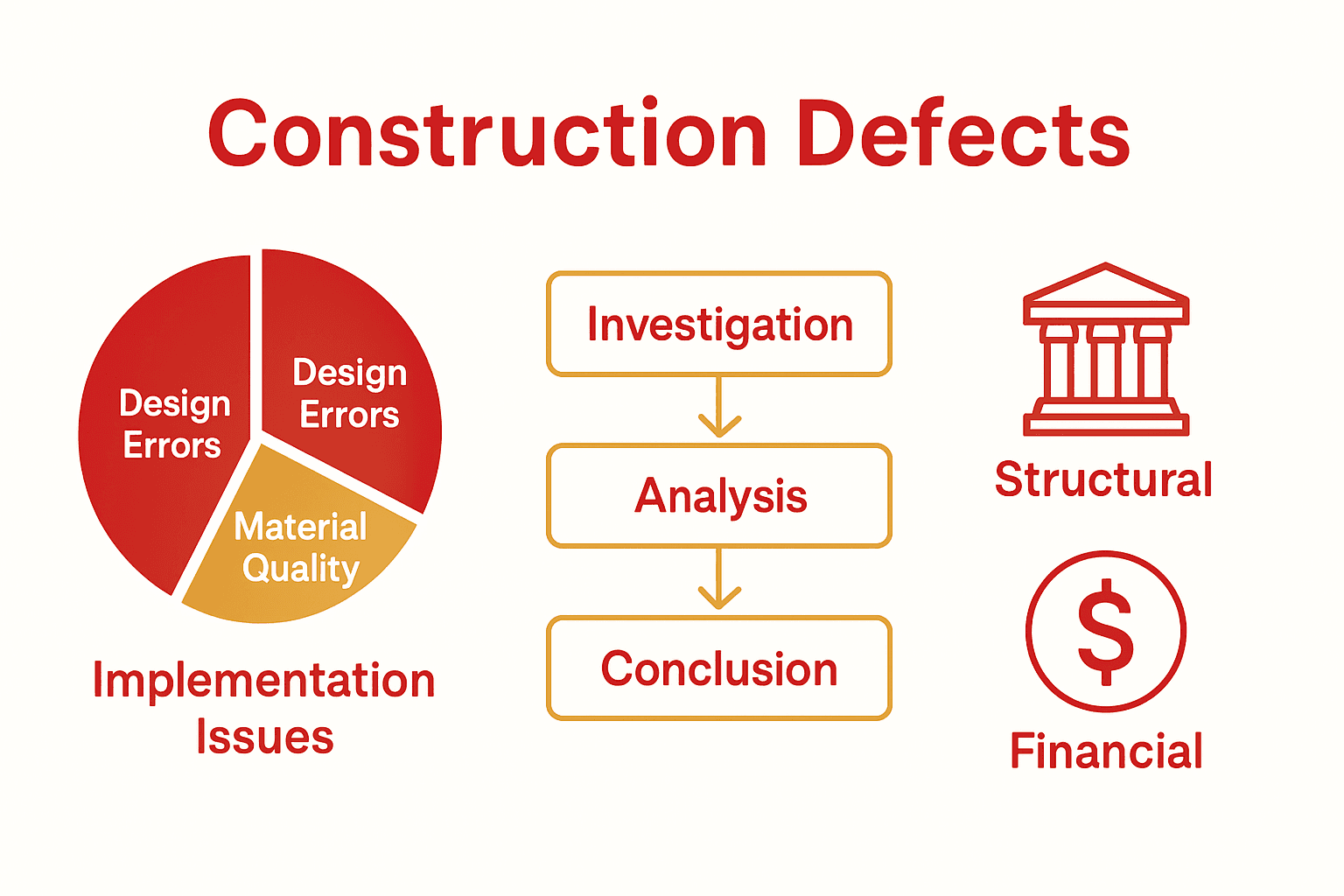
Construction forensic investigations reveal a complex landscape of potential defects and failure mechanisms that can compromise structural integrity, safety, and long-term performance. Understanding these common issues is crucial for preventing future construction challenges and mitigating potential risks.
National Academy of Forensic Engineers highlights that building performance failures stem from multiple interconnected factors. These typically include design complications, material inadequacies, implementation errors, and environmental stress conditions that collectively contribute to structural vulnerabilities.
The most prevalent defects and causes identified during forensic investigations include:
Structural Defect Categories:
-
Design Errors
-
Foundation instability
-
Inadequate load-bearing calculations
-
Improper structural reinforcement
-
Material Quality Issues
-
Substandard concrete mixtures
-
Compromised steel reinforcement
-
Inferior aggregate selection
-
Inconsistent material composition
-
Construction Implementation Problems
-
Improper installation techniques
-
Insufficient quality control
-
Deviation from architectural specifications
-
Inadequate worker training
Journal of Engineering Science and Technology emphasizes that falsework structure collapses frequently result from complex interactions between design specifications and installation procedures. Professional forensic engineers must meticulously analyze these intricate relationships to determine precise causative factors.
Environmental factors also play a significant role in construction defects. Extreme weather conditions, ground movement, unexpected load distributions, and long-term material degradation can progressively compromise structural elements. Forensic investigations help decode these subtle yet critical interactions, providing insights that prevent potential catastrophic failures and ensure safer, more resilient construction practices.
Legal Responsibilities and Industry Standards
Forensic investigations in construction represent a critical intersection between technical expertise and legal accountability, where professional engineers bear significant responsibilities for their findings, recommendations, and expert testimony. The stakes are high, with potential consequences extending far beyond immediate project concerns.
Institution of Civil Engineers emphasizes the profound legal implications of forensic engineering investigations. These professional assessments can become pivotal evidence in legal proceedings, requiring investigators to maintain exceptional standards of objectivity, precision, and technical rigor.
Key Legal Responsibilities for Forensic Engineers:
- Maintaining professional integrity and impartiality
- Providing scientifically accurate and verifiable findings
- Documenting investigation processes transparently
- Preparing comprehensive technical reports
- Serving as credible expert witnesses
- Adhering to industry ethical standards
- Protecting client confidentiality
According to research from the Sri Lanka Engineering Journal, forensic investigations play a crucial role in determining accountability for structural failures. Professional engineers must systematically trace the chain of responsibility, identifying specific parties potentially liable for design errors, construction deficiencies, or material failures.
Industry standards mandate rigorous protocols for forensic investigations, including detailed documentation, unbiased analysis, and adherence to professional engineering codes of conduct. These standards ensure that forensic reports can withstand intense legal and technical scrutiny, providing authoritative insights that help resolve complex construction disputes while maintaining the highest levels of professional integrity.
Risks, Liabilities, and Cost Implications
Forensic investigations in construction reveal complex financial and legal landscapes where seemingly minor defects can escalate into substantial economic burdens. Understanding the potential risks and associated liabilities is crucial for construction professionals, property owners, and stakeholders seeking to mitigate potential financial exposure.
National Academy of Forensic Engineers provides critical insights into how contract document deviations can trigger significant financial consequences. These investigations help categorize defects, allocate responsibilities, and develop precise strategies for addressing structural issues before they transform into catastrophic and expensive failures.
Primary Risk Categories:
-
Structural Integrity Risks
-
Potential building collapse
-
Compromised safety systems
-
Long-term performance degradation
-
Financial Exposure Risks
-
Repair and remediation costs
-
Legal dispute expenses
-
Potential project delays
-
Reputation damage
-
Liability Risk Factors
-
Design specification violations
-
Material quality failures
-
Installation procedural errors
-
Inadequate quality control
Journal of Engineering Science and Technology emphasizes that forensic investigations of structural failures like falsework collapses reveal the intricate relationship between technical failures and substantial financial implications. The cost of corrective actions can exponentially exceed initial construction expenses when comprehensive investigations are not conducted proactively.
Mitigating these risks requires a multifaceted approach that combines rigorous technical analysis, transparent documentation, and proactive risk management strategies. Professional forensic engineers play a critical role in helping stakeholders understand potential vulnerabilities, estimate potential financial exposures, and develop targeted intervention strategies that protect both structural integrity and financial investments.
Take Control of Construction Challenges with Expert Forensic Investigations
Construction failures and defects can lead to critical safety risks and costly remediation if not properly addressed. This article highlights pressing issues like structural failures, design errors, and material deficiencies that require thorough forensic investigation to uncover root causes and assign responsibility. If you are facing complex structural problems or need to understand liability clearly, it is vital to work with seasoned professionals who specialize in forensic engineering and comprehensive evaluations.
Explore how our expert team at Florida Licensed Engineers offers tailored forensic investigation services supported by precise technical analysis and detailed reporting. We bridge the gap between complicated construction challenges and practical solutions by delivering reliable assessments of structural defects and potential liabilities. For additional insights into forensic engineering, you can visit the Uncategorized Archives – Global Forensic Engineers to learn more about industry practices and trends.

Do not let unresolved construction defects escalate into costly failures or legal disputes. Act now by contacting Florida Licensed Engineers to receive expert forensic services that secure your property and investment. Visit our website at Florida Licensed Engineers and discover how our engineering expertise can provide the clarity and confidence you need to move forward.
Frequently Asked Questions
What is a forensic investigation in construction?
Forensic investigation in construction is a systematic process aimed at analyzing building failures and structural issues to determine root causes and professional liability using engineering principles.
What are the main types of forensic investigations in construction?
The primary types of forensic investigations include structural failure investigations, building defect investigations, construction dispute investigations, insurance claim investigations, design error investigations, and construction method investigations.
What are the core processes involved in forensic investigations?
The core processes in forensic investigations typically involve initial evidence collection, detailed technical analysis, and root cause determination to uncover the underlying issues behind structural failures.
What are the common defects identified in construction forensic investigations?
Common defects identified include design errors, material quality issues, and problems with construction implementation, which can all lead to compromised structural integrity and safety.
Recommended
- Forensic Engineering Investigation Guide for Accurate Results – FloridaLicensedEngineers.com
- Complete Guide to the Role of Forensic Engineering – FloridaLicensedEngineers.com
- Forensic Engineering Process: Step-by-Step Investigation Guide – FloridaLicensedEngineers.com
- Top Forensic Engineering Solutions – Expert Comparison 2025 – FloridaLicensedEngineers.com
