
Complete Guide to the Role of Inspections in Building
Over one-third of american homes face major repair issues that could have been prevented with proper building inspections. Skipping this crucial step can leave property owners exposed to costly surprises and real safety risks. Understanding what building inspections entail is the first step toward smart ownership and peace of mind. This guide helps you see why professional evaluations matter and how they safeguard your investment, family, and future.
Table of Contents
- What Building Inspections Are And Why They Matter
- Types Of Inspections In Construction Projects
- Inspection Process: From Scheduling To Reporting
- Legal Requirements And Regulatory Standards
- Risks, Liabilities, And Common Pitfalls
Key Takeaways
| Point | Details |
|---|---|
| Building inspections are essential | They provide safety checks that protect investments and human lives by identifying potential risks early. |
| Multiple inspections are required | Various specialized inspections ensure structural integrity and compliance throughout construction phases. |
| Advanced technology enhances inspections | Modern methods like digital documentation improve the efficiency and accuracy of the inspection process. |
| Non-compliance leads to serious risks | Skipping inspections can result in legal liabilities, financial losses, and safety hazards. |
What Building Inspections Are And Why They Matter
Building inspections are systematic evaluations conducted by certified professionals to ensure structures meet critical safety, performance, and regulatory standards. Building inspections represent a crucial checkpoint in construction and property management, protecting investments and human lives by identifying potential risks before they become serious problems.
According to Wikipedia, a building inspection is performed by a certified inspector to verify a structure’s compliance with established building codes and safety regulations. These comprehensive assessments cover multiple critical aspects of a building, including:
- Structural integrity of foundational elements
- Electrical system functionality and safety
- Plumbing network condition and performance
- Mechanical components and their operational status
- Compliance with local and state building codes
Why do building inspections matter? They serve as preventative measures that protect property owners, occupants, and investors from potentially catastrophic structural failures or safety hazards. By conducting thorough inspections with professional engineers, you can identify hidden problems, estimate repair costs, and make informed decisions about maintenance, renovation, or potential property purchases.
Think of a building inspection like a comprehensive health checkup for your property. Just as a medical exam can reveal underlying health issues before they become critical, a professional building inspection uncovers potential structural, electrical, or mechanical problems that might go unnoticed. These assessments are not just recommended – they’re essential for responsible property ownership and management.
Types Of Inspections In Construction Projects
Construction projects involve a complex series of specialized inspections designed to ensure safety, quality, and regulatory compliance throughout the building process. These inspections are critical checkpoints that validate each stage of construction, protecting both the property owners and the eventual occupants from potential structural or systemic failures.
According to cityofkingsville, construction projects typically require multiple comprehensive inspections across different project stages. These essential inspection types include:
- Footing inspections to verify foundational stability
- Foundation inspections ensuring structural integrity
- Framing inspections to check structural framework
- Masonry inspections for wall and structural component quality
- Insulation inspections to confirm thermal and safety standards
- Final building inspections to validate overall project completion
Beyond these primary inspections, specialized systems undergo rigorous evaluations. Detailed engineering inspections cover mechanical, electrical, plumbing, and fuel gas systems, each requiring precise examination at different construction phases. These targeted inspections ensure that every system meets strict safety standards and building code requirements.
Each inspection type serves a unique purpose in the construction process. Mechanical inspections verify HVAC systems, electrical inspections check wiring and power distribution, plumbing inspections confirm water and waste system integrity, and fuel gas inspections ensure safe gas line installations. Think of these inspections as critical health checkups for your building – catching potential issues early prevents costly repairs and significantly reduces safety risks.
Inspection Process: From Scheduling To Reporting
Building inspections follow a structured and systematic approach that transforms complex evaluation into a clear, actionable process. Inspection workflows are meticulously designed to provide comprehensive assessments that protect property owners, contractors, and future occupants from potential structural and safety risks.
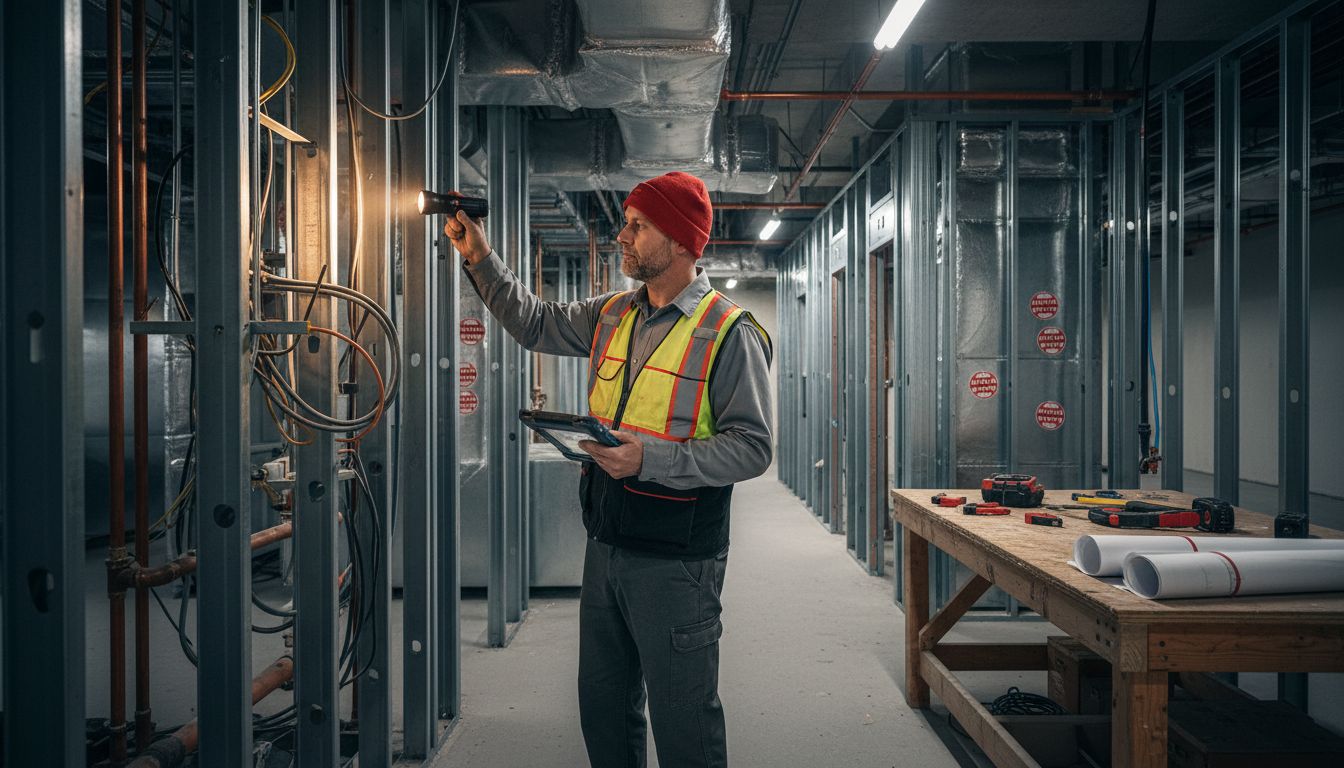
According to tiimelyhome, the building inspection process begins with scheduling an appointment with a certified inspector. These professionals conduct thorough examinations of properties, focusing on critical aspects such as structural movement, moisture intrusion, and compliance with established safety standards. The typical on-site inspection takes approximately 1-2 hours, during which inspectors methodically examine every critical component of the building.
Modern inspection processes leverage advanced technology to enhance efficiency and accuracy. How to Prepare for Engineering Inspection with Confidence highlights the importance of digital documentation and streamlined reporting. Inspectors now utilize mobile devices to:
- Capture high-resolution digital photographs
- Input real-time data directly into digital systems
- Use geolocation for precise documentation
- Generate immediate digital reports
- Track and monitor inspection progress
The final stage of the inspection process involves comprehensive reporting. After completing the on-site assessment, inspectors compile detailed documentation that outlines discovered issues, potential risks, and recommended corrective actions. This report serves as a critical tool for property owners, providing a comprehensive overview of the building’s condition and any necessary interventions to ensure safety and structural integrity.
Legal Requirements And Regulatory Standards
Building inspections are governed by a complex framework of legal requirements and regulatory standards designed to ensure public safety, structural integrity, and compliance with established building codes. These regulations create a comprehensive system that protects property owners, occupants, and the broader community from potential construction and structural risks.
Local, state, and federal governments establish intricate sets of building codes and inspection protocols that vary depending on the type of construction, geographical location, and specific project parameters. Residential Engineering Requirements Guide highlights the critical nature of understanding these multilayered regulatory landscapes, which typically address:
- Structural safety standards
- Minimum building performance requirements
- Electrical and mechanical system regulations
- Fire safety and prevention protocols
- Accessibility and disability accommodation standards
- Environmental impact and sustainability guidelines
Inspection requirements are not static but evolve continuously to address emerging technologies, construction methods, and safety considerations. Building professionals must stay current with these changing regulations, which often involve periodic updates to building codes, zoning laws, and technical standards. Failure to comply can result in significant legal and financial consequences, including stop-work orders, fines, mandatory reconstructions, and potential liability for safety incidents.
The enforcement of these standards occurs through a rigorous inspection process where certified professionals systematically verify compliance. These inspections serve as critical checkpoints, ensuring that every aspect of a construction project meets the prescribed legal and technical requirements. By maintaining these stringent regulatory frameworks, governments aim to protect public safety, preserve property values, and promote responsible construction practices across residential, commercial, and industrial sectors.

Risks, Liabilities, And Common Pitfalls
Building inspections are not merely bureaucratic procedures but critical safeguards against potentially catastrophic structural and financial risks. Property owners, contractors, and stakeholders who overlook or minimize the importance of comprehensive inspections expose themselves to a complex web of potential legal, safety, and economic challenges.
According to trampoline, skipping building inspections can lead to significant and far-reaching consequences. These risks include undetected structural defects, hidden safety hazards, and potential code violations that may not surface immediately but can create substantial problems over time. Common pitfalls in construction and property management include:
- Unidentified structural weaknesses
- Compromised electrical and mechanical systems
- Potential foundation instability
- Unsafe wiring configurations
- Environmental hazards
- Non-compliance with local building codes
7 Essential Items for a Building Inspection Checklist emphasizes that the potential liabilities extend beyond immediate repair costs. Property owners may face legal action, insurance complications, reduced property values, and even potential personal injury claims if undetected issues lead to structural failures.
The financial implications of overlooking thorough inspections can be devastating. What might seem like a minor cost-saving measure during initial construction or property acquisition can escalate into hundreds of thousands of dollars in retrospective repairs, legal fees, and potential reconstruction. Professional inspections serve as a critical preventative measure, identifying potential issues before they transform from manageable maintenance tasks into catastrophic structural failures that compromise both safety and financial investment.
Ensure Safety and Compliance with Expert Building Inspection Services
Understanding the critical role of inspections in building projects puts you one step ahead in protecting your investment. If you worry about hidden structural issues or compliance risks mentioned in the article, know that professional engineering inspections can reveal potential problems early and help you avoid costly repairs, legal troubles, or safety hazards. Key concepts like structural integrity, electrical and mechanical system evaluations, and regulatory compliance require expert assessment to give you peace of mind.
Explore reliable and thorough engineering inspection solutions tailored for residential and commercial projects at Uncategorized Archives – Texas Structural Inspectors.

Take control of your building’s safety and longevity by partnering with trusted experts who understand every detail of the inspection process and compliance requirements. Visit https://floridalicensedengineers.com now to schedule your comprehensive inspection, detailed reports, and professional guidance that help you make informed decisions and protect what matters most. Start with a clear understanding and expert support today.
Frequently Asked Questions
What is a building inspection?
A building inspection is a systematic evaluation conducted by certified professionals to assess a structure’s compliance with safety and regulatory standards, covering aspects like structural integrity, electrical systems, and plumbing conditions.
Why are building inspections important?
Building inspections are crucial as they identify potential risks and issues before they escalate into serious problems, protecting property owners and occupants from catastrophic failures and ensuring compliance with legal standards.
What types of inspections are performed during construction projects?
Typical inspections during construction projects include footing, foundation, framing, masonry, insulation, and final building inspections. Each type focuses on different aspects of safety and compliance throughout the construction process.
How does the building inspection process work?
The building inspection process involves scheduling an appointment with a certified inspector, conducting a thorough on-site evaluation that typically lasts 1-2 hours, and compiling a detailed report that outlines any issues and recommended corrective actions.
Recommended
- Complete Guide to Building Inspection Services – FloridaLicensedEngineers.com
- Role of Engineering Inspections | Florida Licensed Engineers ✅
- 7 Essential Items for a Building Inspection Checklist – FloridaLicensedEngineers.com
- 7 Key Examples of Architectural Inspections Explained – FloridaLicensedEngineers.com
- Complete Guide to the Role of Indoor Signage –
