
Architectural Plans Step by Step for Any Project
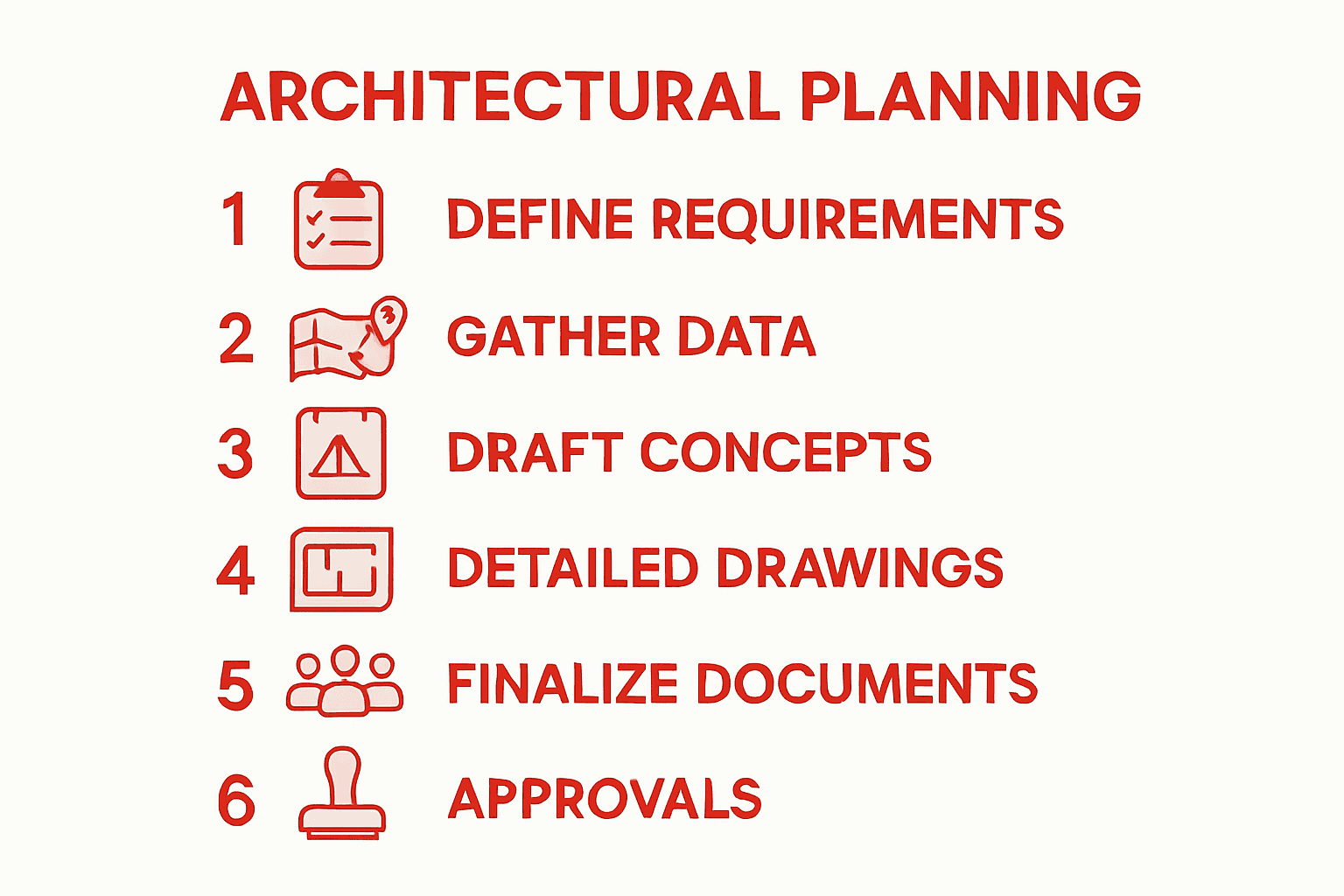
Over 60 percent of American building projects face avoidable delays simply because crucial planning steps were missed in the early stages. Careful architectural planning not only saves time and money but also protects your investment from unwanted surprises. By understanding each phase—from defining project goals to securing final approvals—you can confidently guide your American project to a smooth and successful finish.
Table of Contents
- Step 1: Define Project Requirements And Goals
- Step 2: Gather Site Data And Regulatory Information
- Step 3: Draft Initial Design Concepts
- Step 4: Develop Detailed Architectural Drawings
- Step 5: Collaborate To Finalize Construction Documents
- Step 6: Review And Secure Plan Approvals
Quick Summary
| Key Point | Explanation |
|---|---|
| 1. Define Requirements Clearly | Establish precise project goals to align expectations among stakeholders. This serves as the project’s foundation. |
| 2. Gather Comprehensive Data | Collect detailed site and regulatory information to inform design choices and ensure compliance with local laws. |
| 3. Create Initial Design Options | Develop multiple design concepts that translate project requirements into visual representations for evaluation. |
| 4. Develop Detailed Drawings | Create accurate architectural drawings that clearly outline all technical aspects necessary for construction. |
| 5. Secure Plan Approvals | Establish a systematic review process to obtain all necessary regulatory approvals before starting construction. |
Step 1: Define project requirements and goals
Defining clear project requirements and goals is the critical first step that sets the foundation for successful architectural planning. This process involves creating a comprehensive roadmap that outlines exactly what you want to achieve, how you want to achieve it, and what specific outcomes you expect.
Start by developing specific and measurable project objectives using the SMART framework. This means creating goals that are Specific (clearly defined), Measurable (quantifiable), Achievable (realistic), Relevant (aligned with broader project vision), and Time-bound (with definite timelines). For architectural projects, this might include precise details like square footage requirements, specific design aesthetic, budget constraints, and expected project completion date. Break down your overall vision into granular components that can be tracked and evaluated.
Your requirements should include technical specifications, functional needs, aesthetic preferences, budget limitations, and any unique constraints of your project. This documentation becomes your blueprint for communication with architects, contractors, and other stakeholders. Engage with all key participants to gather input and ensure alignment. Document everything meticulously to prevent misunderstandings and create a clear reference point throughout the project lifecycle.
Pro tip: Create a collaborative requirements document that allows stakeholders to review, comment, and sign off, ensuring everyone has a shared understanding of project expectations from the beginning.
Step 2: Gather site data and regulatory information
Gathering comprehensive site data and understanding regulatory requirements are crucial steps in architectural planning that will set the groundwork for your entire project. This phase involves collecting detailed information about the physical location, environmental conditions, legal restrictions, and potential challenges that could impact your design and construction.
Start by obtaining detailed geospatial data from open government sources that can provide insights into site characteristics. This includes surveying topographical maps, reviewing zoning regulations, checking local building codes, and understanding environmental constraints. You will want to collect information about property boundaries, existing utilities, soil conditions, flood zones, drainage patterns, and any specific municipal or county restrictions that might affect your architectural plans. Contact local building departments, request property records, and consider hiring a professional surveyor to create an accurate site map.
Carefully document all regulatory requirements specific to your project type and location. This might include setback regulations, height restrictions, maximum building coverage, parking requirements, and historic preservation guidelines. Pay special attention to environmental impact assessments, accessibility standards, and energy efficiency codes. Each piece of information you gather will help you create a more precise and compliant architectural design that minimizes potential legal or structural challenges down the line.
Pro tip: Create a comprehensive checklist of all required site data and regulatory documents before beginning your design process to ensure you have a complete understanding of your project constraints and opportunities.
Step 3: Draft initial design concepts
Drafting initial design concepts transforms your project requirements into visual representations that capture your architectural vision. This critical step bridges the gap between abstract ideas and tangible design possibilities, allowing you to explore creative solutions that meet your project’s specific needs.
Begin by leveraging generative design frameworks that automate architectural space layouts to spark your creative process. Sketch multiple preliminary design options that incorporate the site data and regulatory information you collected earlier. Use both traditional hand sketching and digital tools to explore different spatial arrangements, considering factors like natural light, traffic flow, functional requirements, and aesthetic preferences. Experiment with various conceptual approaches ranging from minimalist to complex designs that balance form and function.
Through these initial drafts, focus on creating flexible concept variations that demonstrate how your design will meet project goals. Consider creating multiple iterations that showcase different approaches to the same architectural challenge. Review each concept critically, analyzing how well it addresses the project requirements, meets regulatory constraints, and aligns with your original vision. Seek feedback from stakeholders or design colleagues to gain additional perspectives and identify potential improvements or innovative solutions.
Pro tip: Create a design concept comparison matrix that objectively evaluates each draft against your original project requirements, helping you systematically assess and refine your architectural concepts.
Step 4: Develop detailed architectural drawings
Developing detailed architectural drawings transforms your initial design concepts into precise technical representations that communicate every aspect of your project. This critical phase translates your creative vision into actionable blueprints that architects, contractors, and builders will use to bring your design to life.

Begin by referencing comprehensive spatial requirement guidelines and building design standards to ensure your drawings meet professional specifications. Use computer aided design (CAD) software or traditional drafting techniques to create multiple view drawings including floor plans, elevations, sections, and detailed perspectives. Incorporate precise measurements, material specifications, and structural details that demonstrate how your design will facilitate ease of construction and efficiency. Pay close attention to scale, proportion, and technical accuracy while maintaining the creative essence of your original design concepts.
Each drawing should tell a complete story about your architectural vision. Include annotations that explain specific design choices, material selections, and unique architectural features. Develop comprehensive drawings that cover every aspect of the project including electrical layouts, plumbing plans, structural details, and mechanical systems. Ensure your technical drawings are clear, consistent, and provide enough information for contractors to understand and execute your design precisely.
Pro tip: Create a comprehensive drawing review checklist that verifies technical accuracy, regulatory compliance, and design integrity before finalizing your architectural drawings.
Step 5: Collaborate to finalize construction documents
Finalizing construction documents is a critical collaborative process that transforms your detailed architectural drawings into comprehensive blueprints ready for actual construction. This stage requires seamless communication and coordination among multiple professionals to ensure every technical and functional aspect of the project is precisely documented.
Architectural information sharing and collaborative development become paramount during this phase. Organize a comprehensive review meeting with key stakeholders including architects, structural engineers, mechanical engineers, electrical specialists, and potentially the client. During these sessions, thoroughly examine non-functional requirements that impact overall project quality and performance. Carefully review technical specifications, material selections, structural integrity, mechanical systems, and electrical layouts to confirm all details align with original design concepts and meet regulatory standards.
Each team member should meticulously review their specific domain, providing expert insights and identifying potential conflicts or optimization opportunities. Cross reference drawings, verify dimensional accuracy, validate load calculations, and ensure all technical specifications are consistent across different discipline documents. Create a collaborative markup process where professionals can add comments, suggest modifications, and resolve potential interdisciplinary challenges before finalizing the construction documents.
Pro tip: Implement a digital document management system that allows real time collaboration, version tracking, and secure file sharing to streamline the construction document finalization process.
This table compares traditional and digital collaboration in finalizing construction documents:
| Collaboration Method | Communication Speed | Version Control | Error Detection |
|---|---|---|---|
| Traditional (Paper) | Slower, in-person | Manual updates | Errors can be missed |
| Digital (Software) | Real-time, remote access | Automated tracking | Easier conflict checks |
Step 6: Review and secure plan approvals
Reviewing and securing plan approvals represents the final critical gateway that transforms your architectural drawings into an executable construction project. This stage demands meticulous attention to detail and strategic navigation of regulatory requirements to ensure your project meets all necessary standards.
Apply a systematic Goals Breakdown Structure that links high level objectives to detailed approval criteria during your review process. Develop a comprehensive checklist that aligns with SMART criteria to systematically evaluate project goals ensuring they are Specific, Measurable, Achievable, Relevant, and Time bound. Schedule meetings with local building authorities, plan reviewers, and key stakeholders to methodically walk through each aspect of your architectural plans. Anticipate potential questions by preparing detailed documentation that demonstrates compliance with zoning regulations, building codes, safety standards, and environmental requirements.
Carefully document all feedback, revisions, and modifications throughout the approval process. Proactively address any concerns raised by reviewing authorities by providing clear explanations, supplemental drawings, or technical clarifications. Be prepared to make iterative adjustments to your plans while maintaining the core design integrity. Maintain open communication channels with all reviewing entities to expedite the approval process and demonstrate your commitment to meeting regulatory standards.
Pro tip: Create a dedicated approval tracking spreadsheet that logs every review comment, required modification, and approval milestone to maintain comprehensive documentation and transparency.
Here’s a concise summary of steps and key objectives in architectural planning:
| Step | Primary Goal | Main Outcome |
|---|---|---|
| Define requirements & goals | Establish clear project vision | Documented objectives & constraints |
| Gather site & regulatory data | Identify site-specific constraints | Comprehensive site analysis report |
| Draft initial design concepts | Transform ideas into workable sketches | Multiple concept design iterations |
| Develop detailed drawings | Specify all technical aspects | Complete set of construction plans |
| Finalize construction documents | Align all disciplines and professionals | Fully coordinated documents |
| Review & secure approvals | Obtain necessary regulatory permissions | Approved construction-ready plans |
Take Control of Your Architectural Planning with Expert Engineering Support
Navigating the detailed steps from defining clear project goals to securing plan approvals can be overwhelming. The article highlights challenges such as meeting regulatory requirements, developing precise architectural drawings, and coordinating multidisciplinary teams to finalize construction documents. If you want to ensure your residential or commercial project stays on track with compliant and technically accurate blueprints, expert guidance is essential.
Our engineering services cover everything from architectural, structural, mechanical, electrical, and plumbing plans to civil engineering including drainage, grading, and flood mitigation. We understand the importance of detailed site data, regulatory compliance, and collaborative design to bring your vision to life without costly delays. Explore our full range of solutions on Florida Licensed Engineers and see how we can help streamline your project.

Ready to turn your architectural plans into reality with confidence? Visit our TLE Archives – Texas Licensed Engineers | Residential & Commercial for inspiration and technical insight. Contact us today at Florida Licensed Engineers to get started on creating construction-ready plans that meet all your project goals and regulatory standards.
Frequently Asked Questions
What are the steps for creating architectural plans?
Creating architectural plans involves six key steps: defining project requirements and goals, gathering site data and regulatory information, drafting initial design concepts, developing detailed architectural drawings, finalizing construction documents, and reviewing and securing plan approvals. Follow these steps in order to build a solid foundation for your project.
How do I define project requirements and goals for architectural plans?
Define project requirements and goals by using the SMART framework to create specific, measurable, achievable, relevant, and time-bound objectives. Document these objectives to ensure everyone involved in the project has a clear understanding of the vision and expectations.
What types of site data and regulatory information should I gather?
Gather comprehensive site data including property boundaries, existing utilities, soil conditions, and any local zoning regulations. Additionally, ensure you document environmental constraints and relevant building codes to avoid potential issues later in the architectural process.
How can I effectively draft initial design concepts?
To draft initial design concepts, leverage generative design frameworks and sketch multiple preliminary options that reflect your project goals. Explore various arrangements, considering factors like aesthetics and functionality, to provide a strong foundation for your final design.
What key elements should be included in detailed architectural drawings?
Detailed architectural drawings should include floor plans, elevations, sections, and annotations that explain materials and specific design choices. Ensure that all measurements are precise to facilitate ease of construction and compliance with regulatory standards.
What should I do to ensure I secure plan approvals?
Create a comprehensive checklist that aligns project goals with regulatory requirements when seeking plan approvals. Schedule thorough review meetings with stakeholders and local authorities to address any feedback and make necessary adjustments to your plans.
Recommended
- Architectural Plans Explained: Complete Guide for 2025 – FloridaLicensedEngineers.com
- How to Create Architectural Drawings for Your Project – FloridaLicensedEngineers.com
- Role of Architectural Drafting: Shaping Projects’ Success – FloridaLicensedEngineers.com
- Structural Plans Workflow: Step-by-Step Success Guide – FloridaLicensedEngineers.com
