
Civil vs Structural Plans: Key Differences Explained
Most American construction projects rely on two sets of plans that shape everything from towering city buildings to suburban homes. Choosing the right civil and structural plans determines not only project safety but compliance with strict local codes. With more than 1.3 million engineers working across the United States, understanding these plans is critical for anyone building or renovating. Here you will discover how these documents influence every stage of the construction process and why clarity between them matters.
Table of Contents
- Defining Civil and Structural Plans
- Key Differences Between Civil and Structural
- Core Elements of Each Plan Type
- Practical Applications in Florida Projects
- Choosing the Right Plans for Your Needs
Key Takeaways
| Point | Details |
|---|---|
| Understanding Civil vs. Structural Plans | Civil plans focus on site conditions and infrastructure, while structural plans detail the internal framework and load-bearing elements of buildings. |
| Importance of Professional Expertise | Consulting licensed professionals ensures that civil and structural plans meet regulatory standards and address project-specific challenges. |
| Adaptation to Local Conditions | Tailoring plans to Florida’s unique environmental challenges, such as hurricane resistance and flooding, is essential for successful construction projects. |
| Project Scope Considerations | The scale of a project dictates whether comprehensive civil plans or detailed structural plans are necessary for effective development. |
Defining Civil and Structural Plans
In the world of engineering and construction, civil plans and structural plans represent two distinct yet interconnected approaches to project design and implementation. Civil drawings, also known as site drawings, are technical illustrations that provide comprehensive details about ground conditions, landscaping, grading, and overall site configuration. These plans serve as critical roadmaps for understanding the environmental and geographical context of a construction project.
By contrast, structural drawings focus specifically on the design and architectural integrity of a building’s core framework. These detailed technical illustrations map out the precise arrangement of load-bearing elements, ensuring that the structure can withstand anticipated environmental stresses and maintain long-term stability. Structural engineers meticulously develop these plans to calculate load distributions, material requirements, and potential structural challenges.
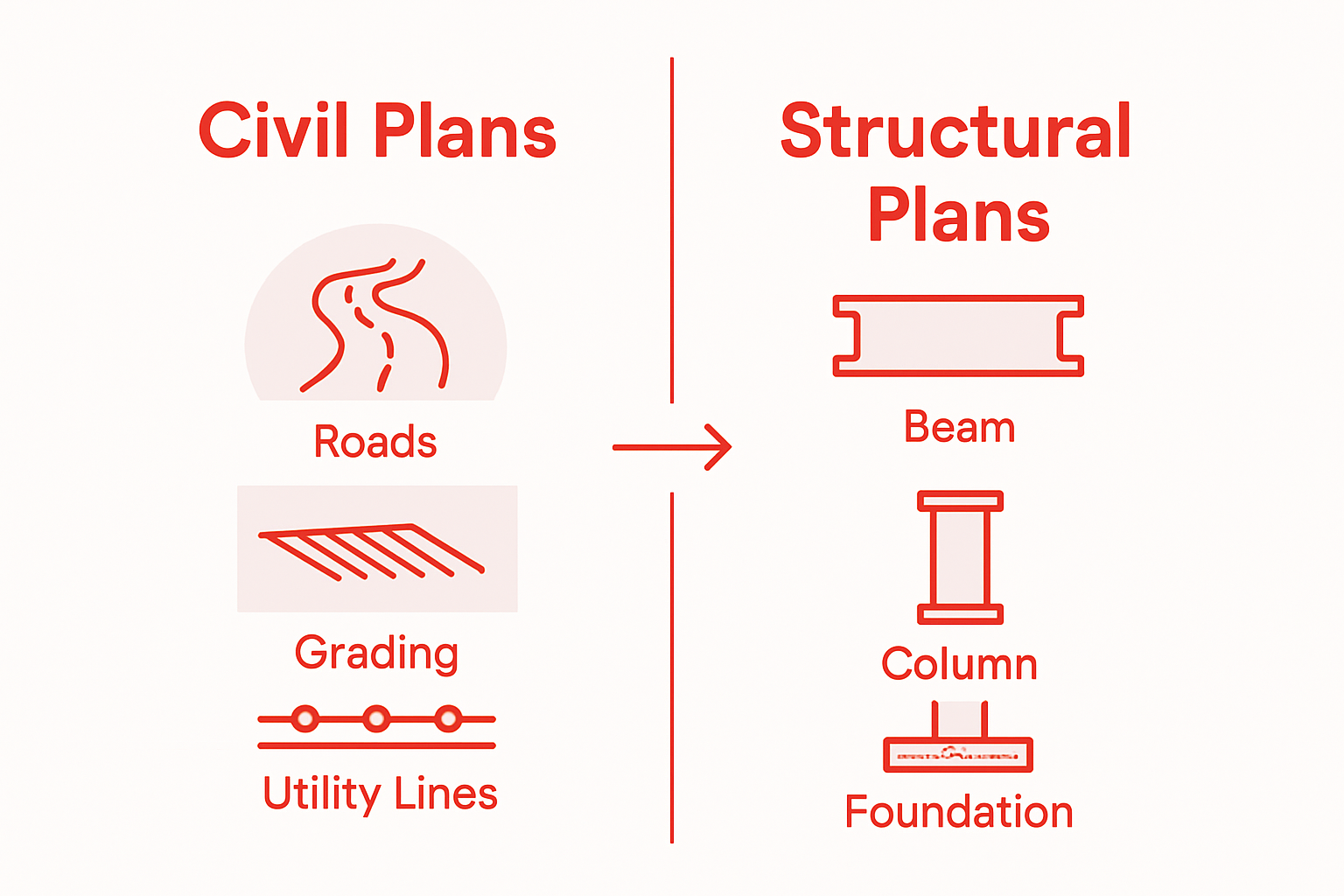
While civil plans establish the external site conditions and landscape interactions, structural plans delve into the internal mechanics of building construction. Civil engineers typically concentrate on site preparation, drainage systems, utility layouts, and overall land management. Structural engineers, however, concentrate on the building’s skeleton – designing beams, columns, foundations, and support systems that guarantee the structure’s safety and durability. Both plan types are essential, working in tandem to transform architectural concepts into functional, safe, and sustainable built environments.
Understanding the nuanced differences between civil and structural plans is crucial for professionals in construction, architecture, and engineering. These specialized blueprints represent more than just technical documents – they are sophisticated communication tools that translate complex design concepts into actionable, real-world construction strategies.
Key Differences Between Civil and Structural
Civil and structural engineering, while closely related, represent distinct professional disciplines with unique focus areas and responsibilities. Civil engineering encompasses a broad range of infrastructure projects, addressing complex challenges in public and private sector development. These professionals work on comprehensive project scopes that extend far beyond individual building designs, including transportation systems, water management infrastructure, and large-scale environmental planning.
Structural engineering emerges as a specialized subset within civil engineering, concentrating specifically on the design, analysis, and integrity of building frameworks. Structural engineers concentrate on ensuring the integrity and safety of specific structures, which often requires advanced technical expertise and precise mathematical calculations. Their primary responsibility involves creating robust design solutions that guarantee a structure’s stability, strength, and long-term performance under various environmental conditions.
The key differences between civil and structural engineering become evident in their project approaches and technical focus. Civil engineers typically manage broader project landscapes, addressing site preparation, utility systems, drainage, and overall infrastructure integration. Structural engineers, conversely, drill down into the microscopic details of building mechanics – calculating load distributions, material stress tolerances, and designing complex support systems that prevent potential structural failures.
Professionals in both disciplines play critical roles in transforming architectural visions into safe, functional realities. While civil engineers provide the strategic framework for large-scale developments, structural engineers ensure that individual buildings and infrastructure components can withstand anticipated physical challenges. Their collaborative efforts represent the sophisticated engineering expertise required to create sustainable, resilient built environments that serve communities effectively.
Core Elements of Each Plan Type
Civil engineering plans represent a comprehensive approach to land development and infrastructure design. Civil plans typically include site plans, grading plans, utility plans, and landscaping plans, focusing on the holistic management of land resources and ensuring compliance with local regulatory requirements. These plans serve as critical blueprints that map out the entire environmental context of a project, addressing critical aspects like terrain analysis, drainage systems, and potential environmental impacts.
In contrast, structural engineering plans dive deep into the intricate details of building design and construction. Structural plans encompass foundation plans, framing plans, and structural details, concentrating specifically on the internal framework and support systems that guarantee a structure’s long-term stability and safety. These technical documents provide precise specifications for load-bearing elements, material selections, and structural connections that determine a building’s overall performance and resilience.
The core elements of civil plans typically include comprehensive site surveys, topographical mapping, utility layout designs, and extensive environmental impact assessments. These plans address broad infrastructure challenges such as water management, transportation networks, and land use optimization. Structural plans, by comparison, focus on microscopic engineering details – specifying exact dimensions of support beams, calculating stress tolerances, designing foundational structures, and ensuring each building component can withstand anticipated environmental and mechanical stresses.

Understanding the nuanced differences between these plan types is crucial for successful project implementation. While civil plans establish the broader contextual framework for development, structural plans provide the precise technical blueprint that transforms architectural concepts into safe, functional built environments. Both plan types are essential, working in concert to create sustainable, resilient infrastructure that meets complex engineering standards and community needs.
Practical Applications in Florida Projects
Florida’s unique environmental landscape demands exceptional precision in civil and structural engineering planning. The Florida Building Code outlines rigorous requirements for civil and structural plans, ensuring that construction projects can withstand the state’s challenging environmental conditions, including hurricane-force winds, intense humidity, and potential flood zones. These comprehensive guidelines mandate specialized engineering approaches that go far beyond standard construction practices.
In coastal and flood-prone regions of Florida, civil engineering plans play a critical role in mitigating environmental risks. Engineers must develop intricate drainage systems, design elevated structures, and create comprehensive site plans that account for potential sea-level rise and storm surge scenarios. Structural engineers, meanwhile, focus on creating building frameworks that can resist extreme weather conditions, utilizing advanced materials and design techniques specifically tailored to Florida’s unique geological and meteorological challenges.
Practical applications of these specialized plans are particularly evident in Florida’s residential and commercial construction sectors. From Miami’s high-rise developments to small coastal communities, civil and structural plans must address complex challenges such as soil stability, water table fluctuations, and hurricane resistance. Residential projects require foundational designs that can withstand potential flooding, while commercial structures demand sophisticated engineering solutions that ensure long-term structural integrity in a dynamic environmental landscape.
The intersection of civil and structural planning in Florida represents a sophisticated approach to sustainable development. These engineering disciplines collaborate closely to create resilient infrastructure that not only meets strict building codes but also anticipates future environmental challenges. By integrating advanced technological insights with deep understanding of local conditions, Florida’s engineers continue to develop innovative solutions that protect both human-made structures and the delicate ecological systems that define the state’s unique environment.
Choosing the Right Plans for Your Needs
Selecting the appropriate civil or structural plans requires careful consideration of your specific project requirements and potential challenges. Professional engineering licensure represents a critical factor in ensuring qualified plan development, as licensed professionals bring specialized expertise and comprehensive understanding of complex engineering standards. Homeowners, developers, and business owners must evaluate their unique project needs to determine whether civil or structural plans will best address their specific objectives.
Project scope plays a fundamental role in determining the type of engineering plans required. For large-scale infrastructure developments like residential communities, commercial complexes, or municipal projects, comprehensive civil plans become essential. These plans provide holistic assessments of land usage, environmental impact, drainage systems, and overall site configuration. Smaller, more focused projects such as individual building constructions or significant structural modifications typically demand detailed structural plans that concentrate on load-bearing specifications, material requirements, and precise architectural framework.
Critical factors to consider when choosing engineering plans include project location, environmental conditions, budget constraints, and long-term performance expectations. Coastal or environmentally sensitive regions like Florida require additional layers of engineering complexity, necessitating plans that account for unique geological challenges, potential natural disasters, and stringent building code requirements. Residential property owners might need different planning approaches compared to commercial developers, with each sector presenting distinct engineering considerations that demand specialized expertise.
Ultimately, successful project implementation hinges on selecting engineering professionals who can provide comprehensive, tailored planning solutions. Consultation with licensed engineers who understand both civil and structural planning nuances allows project stakeholders to develop robust, adaptive strategies that meet immediate construction needs while anticipating potential future challenges. By carefully evaluating project requirements and partnering with experienced engineering professionals, individuals and organizations can ensure their construction initiatives are built on a foundation of technical excellence and strategic foresight.
Get Expert Help Navigating Civil and Structural Plans for Your Project
Understanding the complex differences between civil and structural plans can be overwhelming when planning a residential or commercial project in Florida. Whether you need precise site grading, detailed load-bearing blueprints, or specialized flood mitigation strategies, having experienced engineers who master both civil and structural engineering is critical to your project’s success and safety. Our team at Florida Licensed Engineers provides comprehensive solutions including architectural, structural, mechanical, and civil engineering services tailored to meet strict local building codes and environmental challenges.

Don’t wait until technical uncertainties delay your construction. Partner with trusted professionals offering inspection, engineering reports, permitting expediting, and critical flood analysis such as no-rise and elevation certificates. Visit Florida Licensed Engineers today to get customized engineering plans that address both the broad site considerations and the intricate structural details your project demands. Ensure your build is resilient, compliant, and built on a foundation of expert knowledge.
Frequently Asked Questions
What are the main differences between civil and structural plans?
Civil plans focus on site configuration, drainage systems, and overall land management, while structural plans specifically address the design and integrity of a building’s framework, including load-bearing elements.
Why are civil plans important for construction projects?
Civil plans are essential as they provide a comprehensive overview of land usage, environmental impact, and site preparation, ensuring compliance with regulatory requirements and addressing infrastructure challenges.
What roles do civil and structural engineers play in a construction project?
Civil engineers manage the broader project scope related to site preparation and infrastructure integration, while structural engineers focus on ensuring the stability and safety of individual building components.
How do environmental conditions influence the design of civil and structural plans?
Environmental conditions, such as soil stability and potential flooding, require specialized approaches in both civil and structural plans to ensure that structures can withstand natural elements and meet regulatory standards.
Recommended
- Architectural Plans vs Structural Plans Explained – FloridaLicensedEngineers.com
- Structural Plan Review – Ensuring Safe, Code-Compliant Buildings – FloridaLicensedEngineers.com
- Civil vs Structural Engineering: Complete Comparison Guide – FloridaLicensedEngineers.com
- Structural Plans Workflow: Step-by-Step Success Guide – FloridaLicensedEngineers.com
- What Is The Difference Between Laser Cutting And CNC Routing?
- What Is Architectural Conservation? Complete Overview –


