
How to Create Architectural Drawings for Your Project

Architectural projects succeed or fail based on preparation long before the first sketch hits the page. Without a solid foundation of clear requirements and accurate drafting, even the smallest oversight can trigger costly delays or code violations. Studies show that projects with well-documented design phases are up to 30 percent more likely to stay on budget and schedule. This guide takes you step by step from concept to permit-ready drawings, giving you practical strategies to avoid common pitfalls and deliver plans that meet every expectation.
Table of Contents
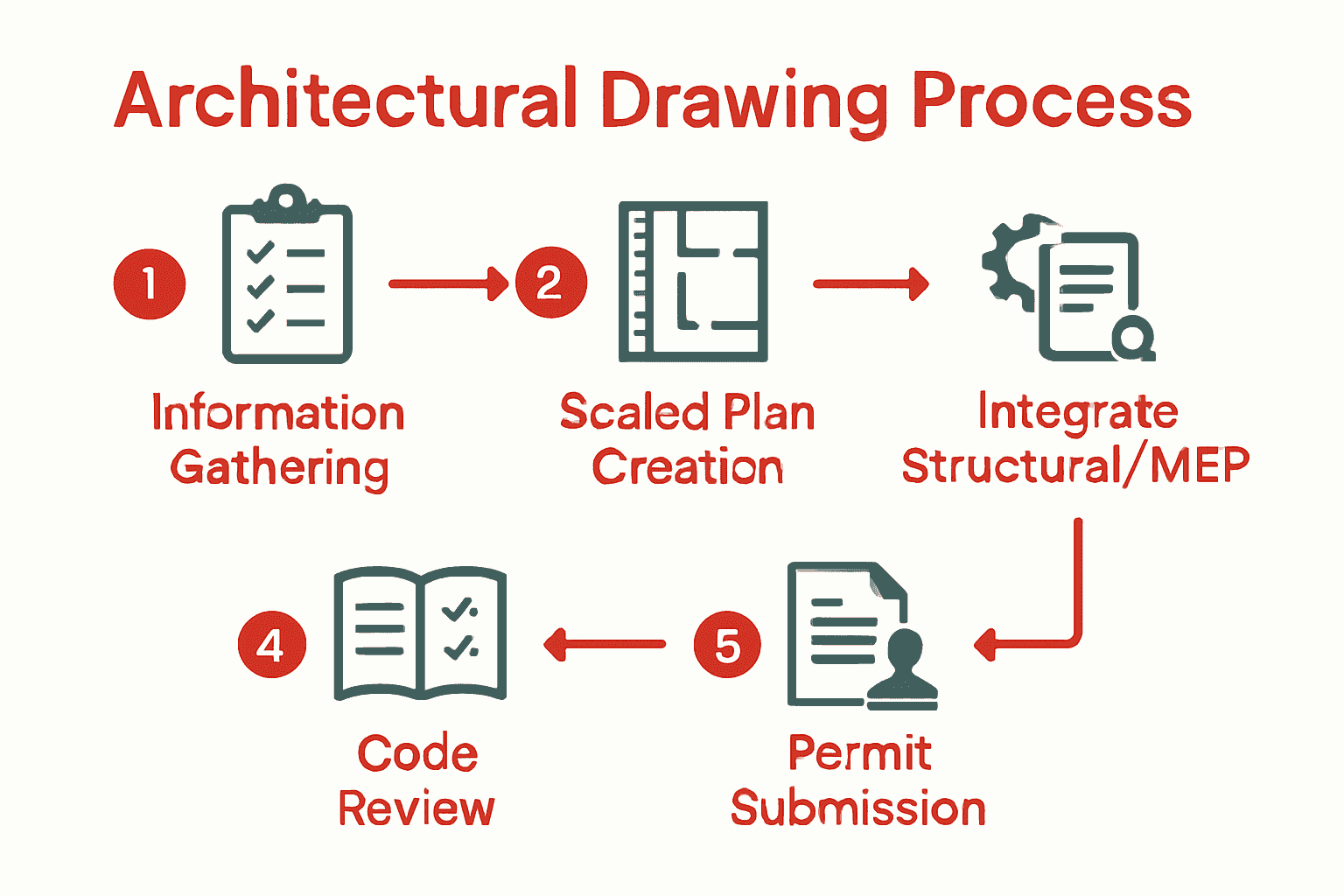
- Step 1: Gather Essential Project Information And Requirements
- Step 2: Develop Accurate Scaled Floor Plans And Elevations
- Step 3: Incorporate Structural, Mep, And Site Details
- Step 4: Review Drawings For Code Compliance And Clarity
- Step 5: Finalize And Prepare Drawings For Permitting Submission
Quick Summary
| Key Point | Explanation |
|---|---|
| 1. Gather comprehensive project details | Meet with clients to understand spatial layouts, functionalities, aesthetics, and budget constraints. Document everything meticulously for future reference. |
| 2. Create accurate scaled drawings | Use standard architectural scales to develop precise floor plans and elevations. Confirm all measurements to ensure clarity and functionality. |
| 3. Integrate structural and MEP elements | Overlay structural and mechanical systems on your drawings to avoid conflicts. Use color coding to differentiate between various components. |
| 4. Ensure code compliance during review | Systematically verify drawings against local codes and standards. Use checklists to confirm every element meets regulatory requirements. |
| 5. Prepare detailed submission for permitting | Organize all necessary documentation for submission, ensuring clarity and technical specifications meet local requirements to avoid rejections. |
Step 1: Gather Essential Project Information and Requirements
Before diving into architectural drawing, you need to collect critical project details that will guide every subsequent design decision. According to CASN Berkeley, comprehensive project information forms the foundation of successful architectural drafting.
Start by meeting with your client or project stakeholders to understand their specific needs and vision. You want to capture intricate details like desired spatial layouts, functional requirements, aesthetic preferences, and budget constraints. Eric Files Research emphasizes the importance of gathering detailed project data to ensure your architectural plans accurately reflect project objectives. During this information gathering phase, ask probing questions about intended space usage, potential future modifications, and any unique requirements specific to the project.
A pro tip: Document everything meticulously. Create a comprehensive project brief that includes sketches, notes, client conversations, and initial concept ideas. This living document will serve as your north star throughout the design process, helping you stay aligned with the original project vision and client expectations. By investing time upfront to understand project requirements, you set the stage for a smoother architectural drawing experience that minimizes revisions and misunderstandings.
Step 2: Develop Accurate Scaled Floor Plans and Elevations
Now that you have gathered project requirements, it is time to translate those details into precise architectural drawings. According to Eric Files Research, creating scaled floor plans and elevations requires careful attention to measurement accuracy and consistent scaling to ensure clarity and functionality.
CASN Berkeley emphasizes the importance of using standard architectural scales when developing your drawings. Start by selecting an appropriate scale that allows you to represent all architectural elements comprehensively. Common scales for residential projects include 1/4 inch = 1 foot and 1/2 inch = 1 foot. When drafting floor plans, include precise measurements for rooms, wall thicknesses, door and window placements, and critical spatial relationships. For elevation drawings, capture the vertical relationships of exterior and interior elements including floor heights, roof pitch, and architectural features.
A crucial pro tip is to use professional drafting tools like digital architectural software or high quality drafting paper with grid lines to maintain precision. Double check all measurements and ensure your drawings communicate the spatial intent clearly. These scaled plans will become your blueprint for construction and serve as a critical communication tool between you, contractors, and clients. Accurate drawings minimize misunderstandings and help prevent costly construction errors down the line.
 For additional guidance on creating comprehensive blueprints, check out our complete guide to residential project blueprints.
Step 3: Incorporate Structural, MEP, and Site Details
With your scaled floor plans and elevations complete, the next critical phase is integrating structural, mechanical, electrical, and plumbing (MEP) systems into your architectural drawings. According to AIBD, successful design requires careful coordination among different disciplines to create cohesive and functional architectural plans.
Eric Files Research emphasizes the importance of accurately representing all technical systems to prevent potential conflicts during construction. Begin by overlaying structural elements such as load bearing walls, foundation details, and framing specifications onto your existing floor plans. Then integrate mechanical systems like HVAC ductwork, electrical panel locations, and plumbing pipe routes. Pay close attention to how these systems intersect and ensure there are no spatial conflicts. Consider using different color layers or transparent overlays to distinguish between architectural, structural, and MEP components, which helps maintain clarity.
A pro tip is to collaborate closely with specialized engineers who can provide precise technical details for each system. If you are working on a complex project, consider using building information modeling (BIM) software that allows seamless integration of multiple design disciplines. For more detailed guidance on navigating these intricate design challenges, check out our structural plans workflow guide that can help you understand the nuanced process of integrating various engineering systems.
Step 4: Review Drawings for Code Compliance and Clarity
As you approach the final stages of architectural drawing development, a comprehensive review for code compliance and clarity becomes paramount. According to AIBD, this review process is critical to ensure your drawings adhere to industry standards and accurately represent all project details necessary for construction and approval.
Eric Files Research provides guidelines for a systematic review that reduces potential errors and facilitates smoother project execution. Start by carefully cross referencing your drawings with local building codes, zoning regulations, and specific municipal requirements. Pay special attention to critical areas such as structural integrity, fire safety provisions, accessibility standards, electrical and mechanical system specifications, and spatial requirements. Use a methodical checklist approach to verify each drawing element meets regulatory standards. Confirm that dimensions are precise, annotations are clear, and all technical specifications are comprehensively documented.
A pro tip is to consider having an independent third party or senior engineer review your drawings before submission. This additional set of expert eyes can catch subtle inconsistencies or compliance issues you might have overlooked. For more detailed insights into preparing for technical reviews, explore our building inspection checklist guide that can help streamline your review process and ensure maximum regulatory compliance.
Step 5: Finalize and Prepare Drawings for Permitting Submission
You have reached the crucial final stage of preparing your architectural drawings for official submission and permitting. According to AIBD, this process requires meticulous attention to detail to ensure all necessary documentation meets local regulatory requirements and is ready for comprehensive review.
Eric Files Research emphasizes the importance of creating a comprehensive submission package that goes beyond just the drawings. Organize your documents systematically including architectural plans, structural calculations, site surveys, energy compliance reports, and any additional technical specifications required by your local jurisdiction. Ensure all drawings are printed on high quality paper with crisp lines and clear annotations. Create multiple sets of drawings with original signatures from licensed professionals where required. Double check that your drawing scale matches municipal requirements and that all dimensions are consistent across different plan views.
A critical pro tip is to schedule a pre submission consultation with the local building department to understand their specific requirements and potential submission pitfalls. This proactive approach can save significant time and prevent potential rejections. For additional guidance on navigating the complex permitting landscape, explore our guide to preparing for engineering inspection that can help you approach the submission process with confidence and thoroughness.
Streamline Your Architectural Drawing Process with Expert Engineering Support
Creating clear, accurate architectural drawings can feel overwhelming when you face complex project requirements, technical integrations, and strict code compliance demands. You want your scaled floor plans, structural details, and MEP components to come together seamlessly without costly revisions or delays. Our team understands these challenges and is here to help you transform your design vision into precise, build-ready plans.

Take advantage of our comprehensive engineering services, including architectural, structural, mechanical, electrical, and plumbing plans. We also specialize in inspections, permitting expeditor services, and civil engineering solutions such as drainage, grading, and flood mitigation. Visit Florida Licensed Engineers today to ensure your drawings meet all regulatory guidelines and are fully prepared for permitting submission. Don’t let the final stages of your project slow you down. Contact us now to get expert guidance and quality technical support that keeps your build on track.
Frequently Asked Questions
What are the essential steps to create architectural drawings for my project?
To create architectural drawings, first, gather essential project information and requirements. Then, develop scaled floor plans and elevations, incorporate structural and MEP details, review for code compliance, and finalize the drawings for permitting submission.
How can I ensure my architectural drawings meet client expectations?
To ensure your drawings meet client expectations, conduct thorough meetings to understand their specific needs, preferences, and budget constraints. Document everything in a comprehensive project brief to maintain alignment throughout the design process.
What tools or techniques should I use to create precise scaled floor plans?
Use professional drafting tools like digital architectural software or high-quality drafting paper with grid lines to maintain precision when creating scaled floor plans. Double-check all measurements for accuracy to minimize errors during the construction phase.
How do I incorporate structural and MEP details into my architectural drawings?
Begin by overlaying structural elements onto your existing floor plans and then integrate mechanical, electrical, and plumbing (MEP) systems. Pay attention to spatial relationships between these systems and use distinct layers for clarity.
What should I include in the review process for my architectural drawings?
Include a systematic check of your drawings against local building codes, zoning regulations, and project specifications. Verify dimensions, annotations, and technical details to ensure compliance and clarity before submission.
How can I prepare my architectural drawings for permitting submission?
Organize all necessary documentation into a comprehensive submission package, including architectural plans, structural calculations, and energy compliance reports. Ensure that all drawings are printed properly and signed as required, then consult with the local building department for specific submission requirements.
Recommended
- Architectural Plans vs Structural Plans Explained – FloridaLicensedEngineers.com
- Complete Guide to Blueprints for Residential Projects – FloridaLicensedEngineers.com
- The Function As-Built Drawings Guide | Expert Engineers
- Structural Plans Workflow: Step-by-Step Success Guide – FloridaLicensedEngineers.com


