
Why Engineering Reports Matter for Property Owners
Every American property owner navigating a construction project faces tough decisions that can affect long-term investment and safety. A single oversight in technical documentation can result in costly mistakes, with studies showing that over 60 percent of project delays stem from missing or incomplete engineering reports. Understanding what an engineering report is and how it shapes construction outcomes means protecting your investment, reducing risk, and improving project success at every stage.
Table of Contents
- Defining Engineering Reports In Construction
- Types Of Engineering Reports And Their Uses
- Essential Elements And How They Work
- Legal And Regulatory Requirements Worldwide
- Risks Of Skipping Or Misusing Reports
- How Engineering Reports Protect Your Investment
Key Takeaways
| Point | Details |
|---|---|
| Importance of Engineering Reports | Engineering reports are essential documents that provide objective analysis and insights into construction projects, guiding critical decision-making. |
| Types and Uses | Various types of engineering reports, including feasibility studies and design reports, serve distinct purposes in project development and must be tailored to specific needs. |
| Legal Considerations | Engineering reports act as legal documents that establish accountability and provide reference points for future projects, emphasizing the need for proper documentation and compliance. |
| Risks of Neglect | Skipping or misusing engineering reports can lead to substantial financial and structural risks, emphasizing the necessity of thorough professional assessments before proceeding with a project. |
Defining Engineering Reports in Construction
An engineering report represents a crucial technical document that systematically records and analyzes complex technical challenges specific to construction projects. These specialized documents serve as comprehensive assessments that provide objective analysis of research, design, and investigation across various project stages.
Engineering reports function as more than simple documentation. They are strategic communication tools designed to convince stakeholders, recommend specific actions, and support critical decision making. Professional engineers utilize these reports to present quantifiable evidence, technical findings, and precise recommendations that guide construction project development. Each report typically encompasses detailed technical observations, measurement data, potential risks, proposed solutions, and comprehensive project evaluations.
The core components of an engineering report include technical analysis, empirical data collection, visual representations like diagrams or charts, and professional recommendations. These documents follow strict formatting guidelines, ensuring clarity, precision, and professional standardization. Engineers meticulously document everything from structural assessments and material evaluations to environmental impact studies and compliance verification.
Pro Tip for Property Owners: Always request a comprehensive engineering report before initiating any significant construction project. These documents provide critical insights that can save you substantial time, money, and potential legal complications by identifying potential issues before they become expensive problems.
Pro Tip: Request digital and physical copies of your engineering report, ensuring you have multiple formats for future reference and potential legal documentation.
Types of Engineering Reports and Their Uses
Engineering reports are not one-size-fits-all documents. Instead, they represent a diverse range of technical communication tools designed to translate complex technical activities into understandable documentation for specific project needs. Property owners and professionals encounter several distinct types of engineering reports, each serving a unique purpose in construction and development.
The primary categories of engineering reports include request for proposals, feasibility studies, design reports, technical memoranda, and letter reports. Request for proposals documents outline project requirements and solicit potential solutions from contractors. Feasibility studies evaluate the practicality and potential success of a proposed project, analyzing technical, financial, and operational considerations. Design reports provide comprehensive technical specifications, detailing precise engineering solutions, material requirements, and implementation strategies.
Technical memoranda offer concise summaries of specific technical findings or recommendations, typically used for internal communication or quick project updates. Letter reports represent shorter, more informal documentation that communicates essential project insights, often used for preliminary assessments or interim progress tracking. These varied report types enable property owners to gain critical insights into project complexity, potential challenges, regulatory compliance, and recommended approaches.
Pro Tip for Engineering Report Management: Develop a systematic filing system for your engineering reports, organizing them chronologically and by project type. Digital and physical backup copies ensure you have comprehensive documentation for future reference, legal protection, and potential insurance claims.
Pro Tip: Always request a comprehensive breakdown of the engineering report type and its specific purpose before commissioning the document.
Here’s a summary of major engineering report types and how they are applied in construction:
| Report Type | Primary Purpose | Typical Audience | Example Use Case |
|---|---|---|---|
| Request for Proposals | Solicit design or service solutions | Contractors, bidders | Inviting bids for a new building |
| Feasibility Study | Assess project viability | Owners, investors | Examining risks for site purchase |
| Design Report | Detail technical specifications | Designers, engineers | Outlining plans for bridge design |
| Technical Memorandum | Summarize specific findings | Project teams, managers | Documenting a safety issue |
| Letter Report | Share brief, informal recommendations | Clients, regulators | Summarizing preliminary findings |
Essential Elements and How They Work
Engineering reports are meticulously structured documents that follow a precise framework designed to communicate complex technical information through systematic sections and visual representations. These comprehensive documents typically encompass several critical elements that transform raw technical data into actionable insights for property owners and stakeholders.
The standard engineering report structure includes key components such as an introduction, methodology, design principles and calculations, results, discussion, and recommendations. The introduction provides context and project overview, explaining the purpose and scope of the investigation. Methodology sections detail the specific approaches, techniques, and scientific processes used in gathering and analyzing data. Design principles and calculations offer technical depth, presenting the mathematical and engineering foundations that support the project’s technical recommendations.

Visual elements play a crucial role in engineering reports, with detailed figures and diagrams helping to translate complex technical information into easily comprehensible formats. Engineers utilize charts, graphs, technical drawings, and computational models to illustrate structural assessments, material analysis, load calculations, and potential project challenges. The results and discussion sections synthesize these visual and numerical data, providing clear interpretations of findings and potential implications for the property owner.
Pro Tip for Understanding Engineering Reports: Always request a brief walkthrough of the report with the engineering professional who prepared it, focusing on understanding the key visual elements and technical conclusions.
Pro Tip: Ask for both a technical and layman’s summary of the engineering report to ensure complete comprehension of the findings.
Legal and Regulatory Requirements Worldwide
Engineering reports serve a critical function beyond technical documentation, functioning as permanent historical and legal records that ensure accountability and provide reference points for future projects. These documents are not merely technical assessments but legally binding instruments that protect both property owners and engineering professionals by establishing clear documentation of project parameters, potential risks, and professional recommendations.
Regulatory requirements for engineering reports vary significantly across different jurisdictions, but they universally demand comprehensive documentation, professional certification, and adherence to specific technical standards. Professional licensing, code compliance, and risk mitigation represent the core legal considerations in engineering reporting. Different regions mandate unique requirements, ranging from structural integrity certifications in earthquake-prone areas to environmental impact assessments in ecologically sensitive zones. Professional engineers must demonstrate rigorous adherence to local building codes, zoning regulations, safety standards, and professional conduct guidelines.
The legal implications of engineering reports extend far beyond simple documentation. These reports can serve as critical evidence in potential litigation, insurance claims, property transactions, and regulatory compliance investigations. They provide a comprehensive paper trail that demonstrates professional due diligence, technical competence, and adherence to established engineering principles. Potential legal challenges can be mitigated through meticulous reporting that includes detailed methodologies, comprehensive risk assessments, and clear professional recommendations supported by empirical data and technical analysis.
Pro Tip for Legal Protection: Always ensure your engineering reports are signed, dated, and include the professional engineer’s license number and seal to maximize legal credibility.
Pro Tip: Retain multiple copies of engineering reports in both digital and physical formats, storing them in secure locations for potential future legal or insurance requirements.
Risks of Skipping or Misusing Reports
Skipping or improperly utilizing engineering reports can expose property owners to substantial financial, legal, and structural risks. Engineering reports are critical for facilitating informed decision-making processes that evaluate technical outcomes and guide project strategies. Neglecting these essential documents can lead to catastrophic consequences that extend far beyond immediate project complications.
The potential risks associated with bypassing professional engineering reports include significant structural vulnerabilities, regulatory non-compliance, and potential legal liabilities. Structural failures, code violations, and insurance complications represent the most immediate threats. Without comprehensive engineering assessments, property owners may unknowingly proceed with construction or renovation projects that compromise building integrity, violate local building codes, or create dangerous living and working environments. These oversights can result in expensive retrofitting, mandatory demolition, substantial legal penalties, and potential personal injury risks.
Misusing or misinterpreting engineering reports can be equally dangerous. Incomplete understanding of technical recommendations might lead property owners to implement partial solutions or misapply professional guidance. This can create false confidence in a project’s safety and viability, potentially masking critical structural weaknesses or environmental risks. Financial implications can be devastating, with potential costs ranging from minor repairs to complete property reconstruction. Insurance providers may also deny claims if engineering recommendations were not properly followed, leaving property owners financially vulnerable and legally exposed.
Pro Tip for Risk Mitigation: Always consult directly with the engineering professional who prepared the report to ensure complete comprehension of technical recommendations and potential implementation challenges.
Pro Tip: Schedule a comprehensive review of your engineering report with a qualified professional who can help you understand and accurately implement all recommended actions.
How Engineering Reports Protect Your Investment
Engineering reports represent a sophisticated risk management tool that provides comprehensive protection for property investments across multiple dimensions. These documents serve as critical communication instruments that extend valuable insights across various stakeholder groups, enabling property owners to make informed decisions that safeguard their financial interests.
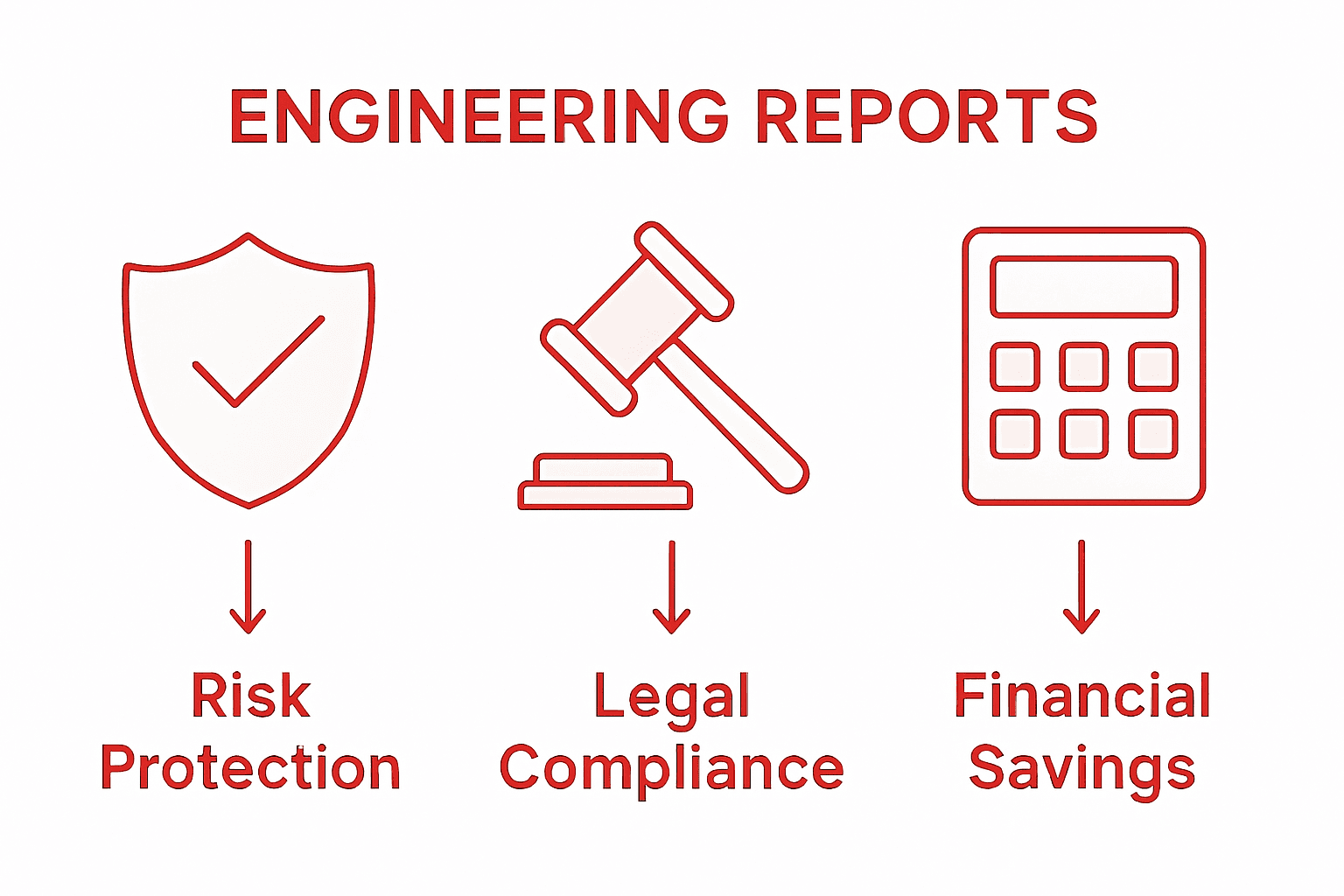
The protective mechanisms of engineering reports manifest through several key strategies. Financial risk mitigation, structural integrity verification, and preventative maintenance planning form the core protective elements. These reports identify potential structural vulnerabilities, estimate potential repair costs, and provide detailed recommendations for maintaining and enhancing property value. By revealing hidden issues like foundation weaknesses, potential code violations, or environmental risks, engineering reports enable property owners to address problems proactively before they escalate into costly repairs or decrease property market value.
Beyond immediate structural assessments, engineering reports offer substantial protection in legal and insurance contexts. They create a documented paper trail that demonstrates professional due diligence, which can be crucial during property transactions, insurance claims, and potential litigation. Professional engineers provide unbiased, scientifically grounded evaluations that can substantiate property conditions, validate maintenance histories, and support complex financial and legal negotiations. These reports effectively translate technical complexities into actionable insights that protect property owners from unexpected financial surprises and potential legal complications.
Compare how engineering reports protect property investments:
| Protection Aspect | How the Report Helps | Practical Benefit |
|---|---|---|
| Financial Risk Mitigation | Identifies costly problems early | Avoids surprise repair expenses |
| Structural Integrity | Verifies safety and stability | Prevents catastrophic failures |
| Regulatory Compliance | Documents adherence to codes | Reduces legal and insurance issues |
| Investment Verification | Provides unbiased, certified record | Supports property value and resale |
Pro Tip for Investment Protection: Request a comprehensive engineering report before purchasing a property, during major renovation projects, and every five to seven years to maintain ongoing property value assessment.
Pro Tip: Always retain multiple copies of engineering reports in secure digital and physical formats, as they serve as critical documentation for future property management and potential legal requirements.
Secure Your Property Investment with Expert Engineering Support
Property owners face many challenges highlighted in this article such as understanding complex engineering reports, ensuring structural integrity, and navigating legal requirements. These challenges can lead to costly risks if overlooked. Our team offers professional engineering services tailored to residential and commercial projects that transform technical complexities into clear, actionable insights. We cover everything from inspections and blueprints to forensic investigations and civil engineering solutions including drainage and flood mitigation.

Don’t let uncertainty put your investment at risk. Explore how our comprehensive services at Florida Licensed Engineers can provide you with reliable engineering reports and expert guidance. For specialized knowledge in structural, mechanical, electrical, or plumbing plans, or if you need help with permitting and compliance, visit our Uncategorized Archives – Pennsylvania Licensed Engineers and Uncategorized Archives – New Jersey Licensed Engineers for additional insights. Act now to safeguard your property with professional engineering expertise that you can trust.
Frequently Asked Questions
What is an engineering report?
An engineering report is a technical document that systematically records and analyzes technical challenges in construction projects, providing objective analysis, recommendations, and assessments at various project stages.
Why are engineering reports important for property owners?
Engineering reports are crucial for property owners as they identify potential risks and challenges before construction begins, saving time and money while ensuring compliance with regulatory standards.
What types of engineering reports should property owners know about?
Property owners should be familiar with several types of engineering reports, including requests for proposals, feasibility studies, design reports, technical memoranda, and letter reports, each serving a unique purpose in construction and development.
How do engineering reports help protect my investment?
Engineering reports protect investments by identifying structural vulnerabilities and compliance issues, offering insights that enable property owners to address problems proactively, thereby preventing costly repairs and legal complications.
Recommended
- Why Structural Reports Matter for Property Owners – FloridaLicensedEngineers.com
- How to Read an Engineering Report for Clear Results – FloridaLicensedEngineers.com
- Engineering Reports: Everything You Need to Know – FloridaLicensedEngineers.com
- Why Building Inspections Matter for Property Owners – FloridaLicensedEngineers.com

