
Why Engineering in 2025 Matters for Florida Development

Florida project developers are confronting more complex regulations and rapid advances in engineering than ever before. The Florida Board of Professional Engineers is raising the bar with updated rules demanding top-tier expertise and stricter ethical standards. In 2025, engineering in Florida is defined by sustainability, digital integration, and environmental adaptation, with new approaches required to meet the state’s unique compliance and resilience needs. Staying ahead means understanding how these trends shape your project’s success.
Table of Contents
- Defining Engineering In 2025 For Florida Projects
- Major Engineering Disciplines Impacting Development
- Technology, Sustainability, And Resilience Trends
- Permitting, Codes, And Compliance In 2025
- Risk Management And Cost Implications For Projects
Key Takeaways
| Point | Details |
|---|---|
| Evolving Engineering Standards | Florida’s engineering regulations demand higher technical expertise and ethical practices, focusing on sustainability and resilience in infrastructure. |
| Interdisciplinary Collaboration | Modern engineering in Florida requires teamwork across various disciplines to tackle complex environmental challenges and promote innovation. |
| Technological Integration | Engineers must leverage advanced technologies like AI and digital tools to enhance design processes, risk management, and sustainability efforts. |
| Compliance and Risk Management | Navigating rigorous regulatory requirements necessitates meticulous documentation and proactive risk assessment to ensure project success. |
Defining Engineering in 2025 for Florida Projects
Engineering in Florida is undergoing a transformative evolution, driven by technological advances, regulatory changes, and complex environmental challenges. The Florida Board of Professional Engineers is actively reshaping the professional landscape through updated regulations that demand higher standards of technical expertise and ethical practice.
In 2025, Florida engineering encompasses several critical domains that go beyond traditional design and construction:
- Sustainability and Resilience: Developing infrastructure capable of withstanding extreme weather conditions
- Digital Integration: Incorporating artificial intelligence and advanced computational modeling
- Environmental Adaptation: Creating solutions that address sea-level rise and climate change impacts
- Regulatory Compliance: Maintaining strict adherence to evolving state and federal guidelines
The Herbert Wertheim College of Engineering highlights that modern Florida engineering requires a multidisciplinary approach. Innovative student experiences are now focusing on integrating technical skills with leadership capabilities, preparing professionals to tackle complex regional challenges.
Key technological shifts are redefining engineering practices, emphasizing collaboration between academic institutions, industry partners, and regulatory bodies. Engineers must now possess not just technical skills, but also adaptability, digital literacy, and a deep understanding of Florida’s unique environmental context.
The following table contrasts traditional and modern engineering approaches in Florida for 2025:
| Aspect | Traditional Approach | Modern 2025 Approach |
|---|---|---|
| Design Process | Manual calculations | AI-driven digital modeling |
| Materials | Conventional concrete | Eco-friendly composites |
| Regulation | Static codes | Dynamic, adaptive standards |
| Risk Assessment | Historical data only | Predictive digital analytics |
| Collaboration | Siloed roles | Cross-disciplinary teamwork |
Pro tip: Stay continuously updated with the Florida Board of Professional Engineers’ latest regulatory changes to maintain professional licensure and competitive edge.
Major Engineering Disciplines Impacting Development
Florida’s engineering landscape in 2025 is characterized by a diverse and interconnected set of disciplines that are critical to regional development. Emerging engineering disciplines are transforming how we approach infrastructure, technology, and environmental challenges across the state.
Key engineering disciplines driving Florida’s development include:
- Civil Engineering: Designing resilient infrastructure and transportation systems
- Structural Engineering: Creating hurricane-resistant buildings and coastal structures
- Marine Engineering: Developing solutions for coastal preservation and maritime technologies
- Aerospace Engineering: Supporting Florida’s robust space exploration and technology sectors
- Biomedical Engineering: Advancing healthcare technologies and medical infrastructure
- Agricultural Engineering: Innovating sustainable food production systems
The integration of advanced technologies like artificial intelligence and computational modeling is revolutionizing these disciplines. Engineers are now required to combine technical expertise with adaptive problem-solving skills, particularly in addressing complex environmental challenges unique to Florida’s landscape.
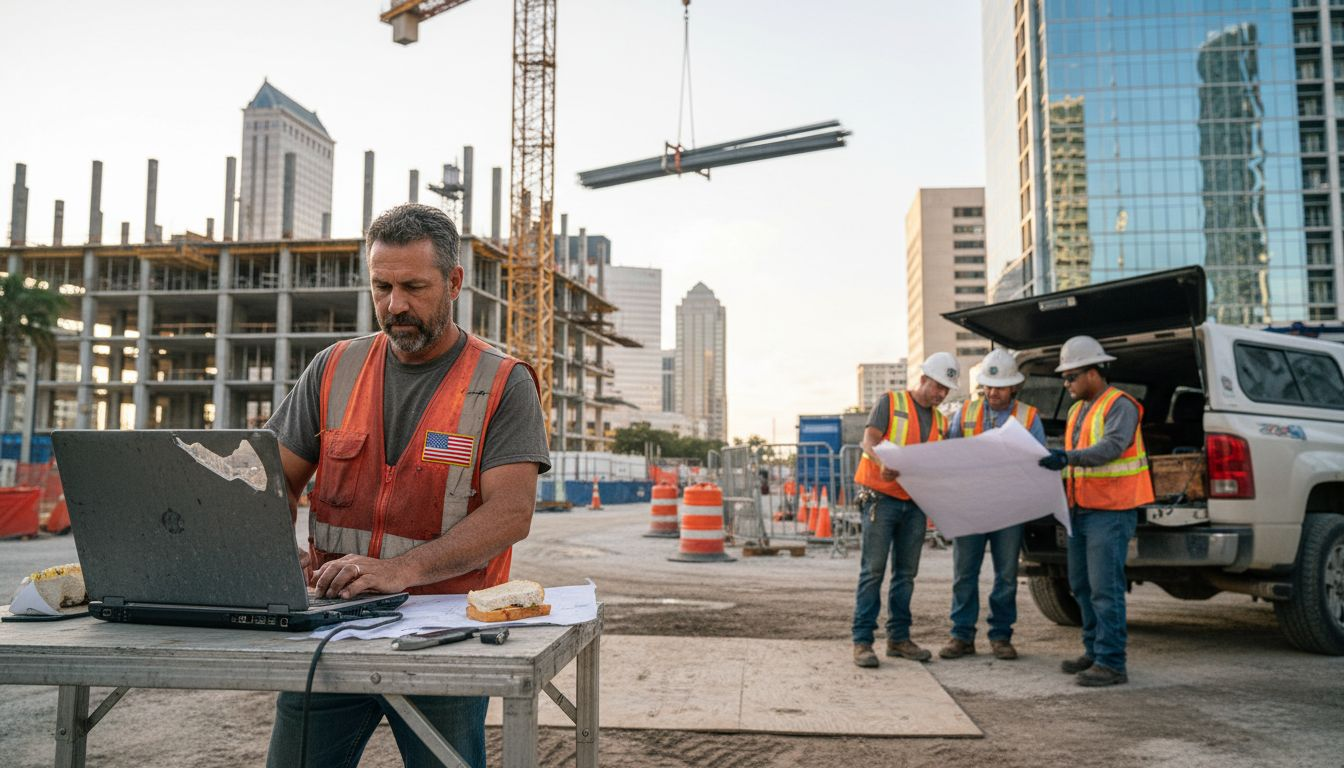
These engineering disciplines collectively contribute to Florida’s economic resilience and technological innovation. From developing sea-level rise mitigation strategies to creating advanced space exploration technologies, engineers are pivotal in shaping the state’s future infrastructure and economic potential.
Here is a summary of how major engineering disciplines advance Florida’s development goals:
| Discipline | Main Contribution | Example Application |
|---|---|---|
| Civil Engineering | Infrastructure resilience | Flood-resistant roadways |
| Structural Engineering | Building safety in storms | Hurricane-proof high-rises |
| Marine Engineering | Coastal and water management | Erosion control systems |
| Aerospace Engineering | Space industry growth | Satellite launch complexes |
| Biomedical Engineering | Healthcare infrastructure improvement | Smart hospital technologies |
| Agricultural Engineering | Sustainable food systems | Water-efficient irrigation |
Pro tip: Continuously expand your interdisciplinary skills to remain competitive in Florida’s evolving engineering job market.
Technology, Sustainability, and Resilience Trends
Florida’s engineering landscape is experiencing a transformative shift towards more sustainable and technologically advanced solutions. Cutting-edge resilience technologies are emerging as critical components in addressing the state’s unique environmental challenges, particularly in coastal and infrastructure development.
Key sustainability and technology trends include:
- Eco-Friendly Materials: Developing advanced sustainable construction materials
- AI-Driven Energy Management: Implementing intelligent energy monitoring systems
- Climate Adaptive Design: Creating infrastructure resistant to extreme weather events
- Digital Twin Technologies: Utilizing computational modeling for predictive planning
- Robotic Environmental Solutions: Deploying advanced cleanup and monitoring systems
Engineering certifications are becoming increasingly important, with standards like LEED gaining prominence. These certifications not only demonstrate environmental commitment but also provide a competitive edge in the market. The integration of artificial intelligence and digital tools is revolutionizing how engineers approach sustainability, enabling real-time monitoring and more precise environmental impact assessments.
Resilience has become a cornerstone of modern engineering practice in Florida. Professionals are now required to develop holistic solutions that address climate change impacts, focusing on infrastructure that can withstand extreme weather conditions while minimizing environmental disruption.
Pro tip: Invest in continuous learning of sustainable technologies and digital tools to remain competitive in Florida’s evolving engineering landscape.
Permitting, Codes, and Compliance in 2025
Engineering projects in Florida now face increasingly complex regulatory requirements that demand precise attention to detail and comprehensive understanding. Recent updates to engineering regulations have significantly transformed the compliance landscape, creating new challenges and opportunities for developers and engineers across the state.
Key compliance requirements for Florida engineering projects include:
- Detailed Documentation: Comprehensive project documentation with precise technical specifications
- Professional Licensure: Mandatory verification of engineer credentials and qualifications
- Safety Standards: Rigorous adherence to state and federal safety regulations
- Environmental Considerations: Comprehensive impact assessments for all development projects
- Digital Submission Protocols: Standardized electronic permitting and review processes
The Florida Board of Professional Engineers has implemented more stringent oversight mechanisms to ensure projects meet the highest standards of professional practice. These regulations cover multiple aspects of engineering work, from initial design conceptualization through final project completion and certification.
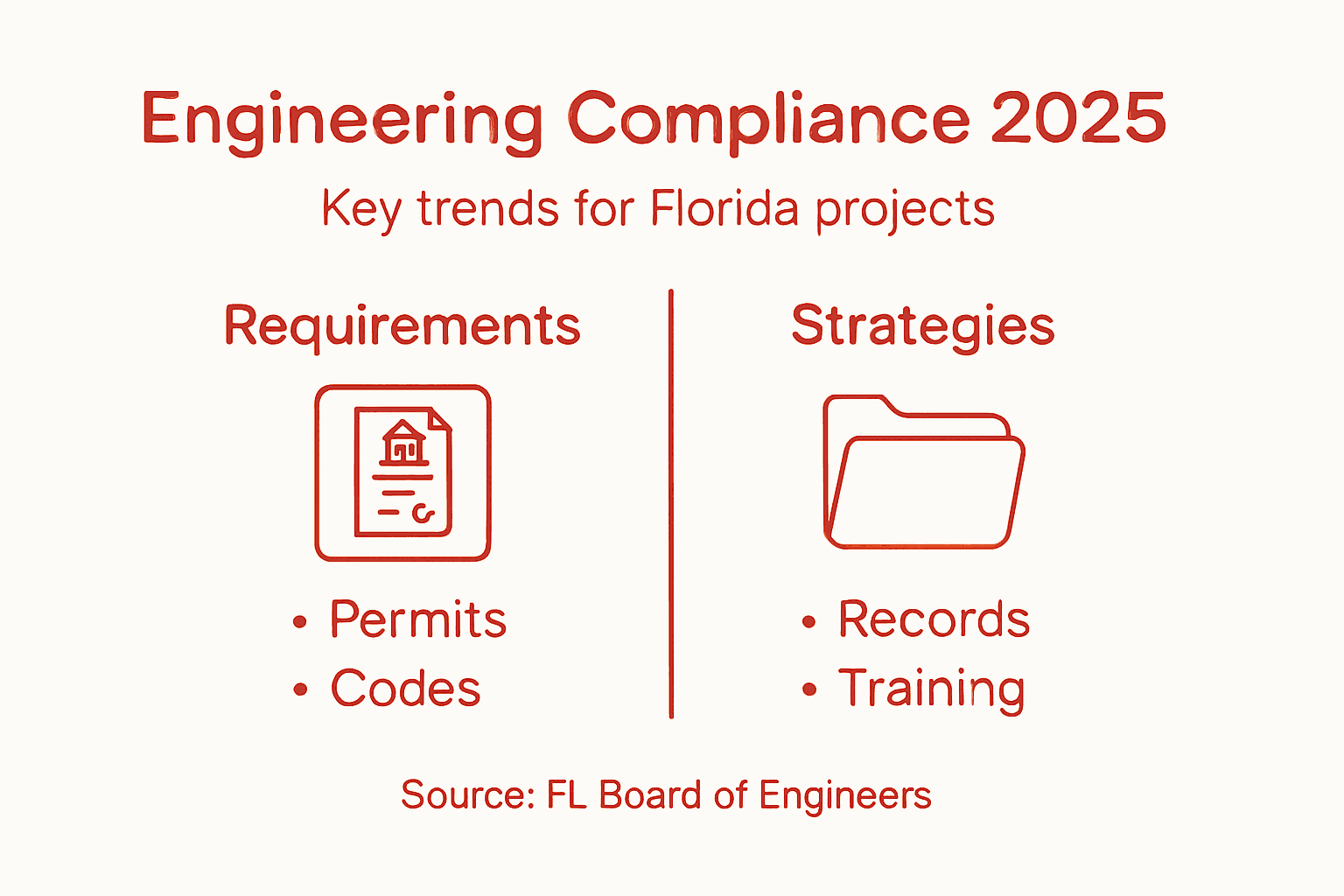
Navigating the complex permitting landscape requires a multifaceted approach that combines technical expertise, regulatory knowledge, and strategic planning. Engineers must now demonstrate not just technical competence, but also a comprehensive understanding of evolving regulatory frameworks that govern infrastructure development in Florida.
Pro tip: Maintain meticulous records and stay continuously updated on regulatory changes to streamline your permitting and compliance processes.
Risk Management and Cost Implications for Projects
Effective risk management has become a critical component of engineering projects in Florida, directly impacting financial outcomes and project success. Advanced risk mitigation strategies are now essential for controlling project costs and minimizing potential financial exposure.
Key risk management considerations for Florida engineering projects include:
- Technical Risk Assessment: Identifying potential technical challenges before project initiation
- Financial Modeling: Developing comprehensive cost projection and contingency planning
- Digital Risk Tools: Utilizing AI and computational modeling for predictive analysis
- Insurance Strategy: Implementing robust liability protection mechanisms
- Compliance Risk Management: Anticipating regulatory and legal potential challenges
The Florida Division of Risk Management emphasizes proactive strategies that integrate data analysis, training, and comprehensive risk evaluation. Modern engineering projects require a sophisticated approach that goes beyond traditional risk assessment, leveraging digital technologies and predictive analytics to identify and mitigate potential financial and operational risks.
Successful risk management in 2025 demands a holistic approach that combines technological innovation, strategic planning, and continuous monitoring. Engineers must develop adaptive strategies that can quickly respond to emerging challenges while maintaining project financial integrity and operational efficiency.
Pro tip: Invest in robust digital risk management tools and continuously update your risk assessment methodologies to stay ahead of potential project challenges.
Take Control of Your Florida Engineering Projects Today
The challenges of engineering in Florida in 2025 demand precision, compliance, and innovative solutions. If you are navigating complex permitting, flood mitigation, or require expert inspections and blueprints, you need a trusted partner who understands the unique risks and regulatory landscape described in this article. Our team offers comprehensive services including architectural, structural, mechanical, electrical, plumbing plans, as well as civil engineering solutions like grading, drainage, and no rise certificates.
Explore how our expertise can help you overcome the evolving engineering demands through our Engineering and Inspection Archives – Florida Licensed Engineers. Act now to secure professional support that aligns with Florida’s 2025 development standards. Visit Florida Licensed Engineers to get started and transform your project with confidence.
Frequently Asked Questions
What are the key engineering trends expected in Florida by 2025?
Key trends include sustainability and resilience, digital integration of AI and computational modeling, environmental adaptation strategies, and a strong focus on regulatory compliance.
How are engineering disciplines evolving to meet Florida’s development goals in 2025?
Engineering disciplines like civil, structural, marine, aerospace, biomedical, and agricultural engineering are integrating advanced technologies to address environmental challenges and support economic resilience in the state.
What role does technology play in modern Florida engineering practices?
Technology is central to modern practices, with advancements like eco-friendly materials, AI-driven energy management, predictive digital modeling, and robotic environmental solutions reshaping how engineers approach projects.
How can engineering professionals stay compliant with new regulations in Florida?
Engineers should maintain meticulous records, stay updated on recent regulatory changes, and ensure adherence to safety standards, environmental considerations, and digital submission protocols to streamline their compliance processes.
Recommended
- Sustainable Engineering: Florida Impact on Energy, Safety – Florida Licensed Engineers
- 7 Essential Civil Engineering Tips for Florida Developers – FloridaLicensedEngineers.com
- 7 Essential Civil Engineering Tips for 2025 Success – FloridaLicensedEngineers.com
- Energy Efficiency in Engineering: Florida Project Impact – Florida Licensed Engineers
- Sicurezza nei rilievi con droni: Soluzioni 2025

