
Electrical Plans Definition: Ensuring Building Safety

Looking at new construction or renovations in Florida means electrical plans are not just paperwork, they are your foundation for safety and compliance. Florida’s climate presents unique electrical challenges that demand clear technical drawings of every circuit and component. Understanding electrical plans and standardized symbols empowers property owners and contractors to avoid inspection failures, costly rewiring, and hazards. This guide explains what electrical plans are, why they matter in Florida, and how they protect your investment.
Table of Contents
- Electrical Plans: What They Are And Why They Matter
- Types Of Electrical Plans For Florida Projects
- Key Elements And Symbols In Electrical Drawings
- Legal Requirements And Permit Compliance In Florida
- Common Mistakes And Inspection Risks
Key Takeaways
| Point | Details |
|---|---|
| Importance of Electrical Plans | Electrical plans are essential for ensuring safety, compliance with Florida building codes, and preventing costly installation errors. |
| Types of Plans Required | Different projects require specific types of electrical plans, such as residential, commercial, or new construction, each with unique compliance needs. |
| Standardized Symbols | Utilizing standardized symbols in electrical drawings helps prevent miscommunication, ensuring all professionals interpret plans correctly. |
| Permit and Inspection Necessity | All electrical work in Florida must be permitted and performed by licensed electricians to avoid fines and coverage issues in case of damage. |
Electrical Plans: What They Are and Why They Matter
Electrical plans are technical drawings that map out every circuit, wire, and component in your building’s electrical system. They’re not optional paperwork—they’re the blueprint that keeps your property safe and compliant with Florida building codes.
Think of an electrical plan like a detailed map of your home or commercial space. Instead of showing streets and landmarks, it shows where power flows, how circuits are protected, and where switches and outlets live.
The Core Elements
Electrical plans use symbols and lines to communicate the electrical design to electricians, inspectors, and contractors. These aren’t fancy drawings—they’re functional documents that show:
- Wire types, sizes, and routing paths
- Circuit breaker locations and ratings
- Switch and outlet placements
- Power distribution from the main panel
- Equipment specifications and connections
- Grounding and bonding systems
In Florida, electrical plans document how power safely reaches every appliance and device in your building. When you’re pulling permits or preparing for inspection, these plans prove your system meets electrical code requirements.
A complete electrical plan prevents costly rewiring mistakes, ensures inspector approval, and keeps occupants safe from electrical hazards.
Why Florida Property Owners Need Them
Florida’s climate, humidity, and salt air create unique electrical challenges. Your electrical plan accounts for these conditions—specifying corrosion-resistant materials, proper grounding in potentially wet environments, and surge protection for expensive equipment.
Contractors rely on electrical plans to coordinate with other trades. Plumbers, HVAC technicians, and framers all need to know where electrical runs are located. Without clear plans, you end up with wires running through walls that should have plumbing, or circuits competing for space in crowded utility areas.
Inspectors won’t sign off on electrical work without a plan showing what was installed and how it meets code. Whether you’re upgrading a kitchen, adding a room, or building from scratch, electrical plans are mandatory.
The Safety Connection
Electrical problems cause fires, shocks, and equipment damage. Plans prevent these disasters by showing proper circuit loading, adequate wire sizing, and correct protective devices. A plan designed by licensed engineers ensures your system won’t overload when Florida’s air conditioning runs at full blast during summer.

Pro tip: Request electrical plans from a Florida-licensed engineer during your permitting process—having them reviewed before installation catches code violations and safety issues before they become expensive problems.
Types of Electrical Plans for Florida Projects
Different projects require different types of electrical plans. Understanding which type you need prevents delays, ensures compliance, and keeps your project on budget.
Residential Electrical Plans
Residential plans serve single-family homes, duplexes, and small apartment buildings. These plans show lighting layouts, outlet placement, and circuit design for kitchens, bathrooms, and living areas.
Florida’s heat and humidity mean residential plans often include:
- Dedicated circuits for air conditioning systems
- GFCI outlets for wet areas and outdoor spaces
- Proper grounding in humid environments
- Surge protection for expensive appliances
Small renovations might need simplified plans, while new construction requires detailed circuit maps and load calculations.
Here’s a quick comparison of electrical plan types for Florida projects:
| Plan Type | Typical Uses | Level of Detail | Key Compliance Needs |
|---|---|---|---|
| Residential | Homes, duplexes, apartments | Moderate to high | GFCI, grounding, surge protection |
| Commercial | Offices, stores, warehouses | High (multiple systems) | Panel schedules, fire systems |
| New Construction | Brand new buildings | Complete, flexible | Smart tech, growth planning |
| Renovation | Existing structures | Coordinated with old | Code updates, integration |
| Three-phase | Industrial, large projects | Complex | Special panels, heavy equipment |
| Single-phase | Most homes | Simple | Proper load, standard panels |
Commercial Electrical Plans
Commercial projects—offices, retail spaces, warehouses—need more complex plans. These account for higher power demands, multiple floors, and specialized equipment like emergency backup systems.
Understanding electrical load and power needs becomes critical in commercial settings. Contractors must coordinate lighting systems, data infrastructure, fire alarm connections, and mechanical equipment in a single coherent plan.
Commercial plans typically include:
- Panel schedules showing breaker locations and ratings
- Emergency generator connections
- Fire alarm and security system integration
- Accessibility compliance for public areas
New Construction vs. Renovation Plans
New construction plans start from scratch. Engineers design the entire electrical system around the building’s layout, anticipated usage, and future growth. These plans account for smart home integration and flexible infrastructure.
Renovation plans work within existing structures. They show how new circuits connect to existing panels, where walls allow new wiring, and how to avoid damaging existing systems. Renovation plans require careful coordination with older code standards.
Commercial projects and new construction require professional engineering plans—Florida inspection requirements are stricter for these project types.
Three-Phase vs. Single-Phase Plans
Most residential properties use single-phase power. Commercial and industrial projects often need three-phase power for heavy equipment.
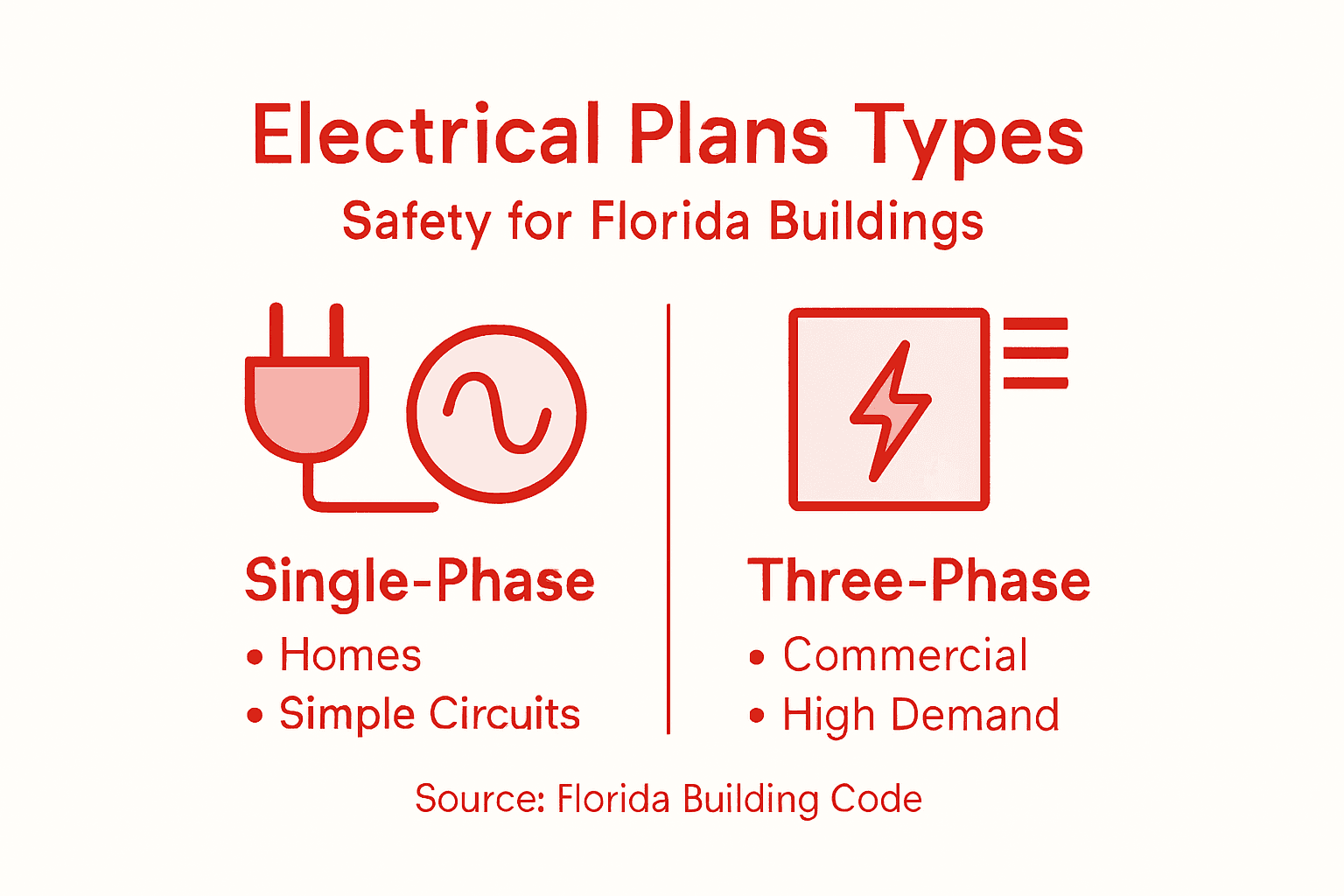
Your plan must specify which type your project requires. Three-phase plans are more complex and demand different calculations, panel designs, and breaker configurations.
Pro tip: Request the correct plan type during your initial engineering consultation—specifying residential versus commercial, new construction versus renovation, and single-phase versus three-phase prevents costly revisions before construction starts.
Key Elements and Symbols in Electrical Drawings
Electrical drawings use a visual language that engineers, electricians, and inspectors must all understand. Without standardized symbols, miscommunication leads to installation errors and costly rework.
Understanding Standardized Symbols
Standardized graphical symbols represent electrical components on construction drawings across North America. The NECA 100-2024 standard ensures that a symbol for a switch means the same thing whether you’re building in Miami or Tampa.
These symbols serve as a universal language among architects, engineers, electricians, and inspectors. When everyone reads the same symbol the same way, installations go faster and inspections pass on schedule.
Common electrical symbols include:
- Switches (single-pole, three-way, four-way)
- Outlets and receptacles (standard, GFCI, weatherproof)
- Lighting fixtures (ceiling, wall, recessed)
- Circuit breakers and panels
- Wiring types and methods
- Ground symbols and bonding connections
Why Symbol Standardization Matters
Florida contractors work with electricians from across the country. A contractor trained in New York needs to understand plans created by engineers in California. Standardized symbols eliminate confusion.
Electrical symbols convey complex information succinctly, allowing professionals worldwide to understand layouts and wiring connections accurately. When a symbol is ambiguous or non-standard, electricians must contact the engineer for clarification, causing delays.
Using standardized symbols reduces installation errors, speeds up inspections, and prevents costly misunderstandings on job sites.
Reading Electrical Diagrams
Three main types of electrical diagrams exist: single-line diagrams, schematic diagrams, and wiring diagrams. Single-line diagrams simplify complex systems using minimal symbols. Schematic diagrams show how components connect functionally. Wiring diagrams show exact cable runs and connection points.
Each diagram type serves a different purpose. Electricians use wiring diagrams during installation. Inspectors use single-line diagrams to verify overall system design. Understanding which diagram you’re reading prevents confusion.
Florida-Specific Considerations
Florida electrical plans include additional symbols for safety systems. GFCI outlets appear frequently due to moisture and water exposure risks. Surge protection symbols indicate areas where lightning or power surges threaten expensive equipment.
Grounding symbols appear prominently in Florida plans. The combination of humidity, salt air, and periodic flooding means proper grounding is non-negotiable. Plans must clearly show grounding connections at the service entrance, equipment, and throughout the structure.
Pro tip: Request a legend or symbol key with your electrical plans—even experienced electricians reference symbol guides regularly, and having the correct standards on-site prevents installation mistakes.
To help visualize standardized electrical symbols, here’s a quick reference:
| Symbol | What It Represents | Typical Florida Usage |
|---|---|---|
| Single-pole switch | Controls one light/circuit | Common in most rooms |
| GFCI outlet | Ground-fault safety device | Bathrooms, kitchens, outdoors |
| Lighting fixture | Ceiling or wall-mounted light | Indoor and outdoor areas |
| Circuit breaker | Circuit overload protection | Panel boards and subpanels |
| Ground symbol | Electrical safety connection | Moisture-prone locations |
| Surge protector | Safeguards sensitive devices | Main panel, electronics areas |
Legal Requirements and Permit Compliance in Florida
Florida doesn’t allow electrical work without permits and licensed professionals. The state treats electrical safety as non-negotiable, and ignoring these requirements creates liability, failed inspections, and insurance claim denials.
Florida Building Code and Electrical Standards
Florida’s 2025 Electrical Code revisions introduce enhanced safety protocols adapted to the state’s unique environmental challenges like hurricanes and flooding. The Florida Building Code (FBC) incorporates state-specific amendments to the National Electrical Code (NEC).
These aren’t suggestions. Compliance is mandatory for all residential and commercial properties. Your electrical system must meet current standards regardless of when your building was constructed.
Florida’s code updates address:
- Hurricane-resistant electrical installations
- Flood mitigation for equipment and panels
- Enhanced grounding in high-moisture environments
- Updated safety protocols for modern appliances
- Climate-resilient construction practices
Permit Requirements for Electrical Work
Almost all electrical work requires a permit in Florida. Replacing a switch? You might not need a permit. Running new circuits? Absolutely need a permit. Adding a subpanel? Definitely need a permit.
Unclear about your specific project? Contact your local building department. They’ll tell you whether you need a permit and what documentation is required. Starting work without permits exposes you to fines, failed inspections, and liability if someone is injured.
Licensed Electrician Requirements
Florida law requires licensed electricians to perform electrical work. Homeowners can perform some minor work themselves, but commercial projects and most residential work demand licensed professionals.
Licensed electricians carry liability insurance and follow code requirements. If an unlicensed person performs work and something goes wrong, your homeowner’s insurance won’t cover damages.
Electrical code compliance affects construction costs, insurance rates, property financing, and resale value—cutting corners creates expensive problems later.
Inspections and Approvals
Building inspectors verify that electrical work meets code before you can use it. Inspections happen at rough-in stage (after wiring is in walls but before drywall) and final stage (after everything is finished).
Inspectors check:
- Wire types and sizing match plans
- Circuit protection is adequate
- Outlets and switches are properly grounded
- Equipment installations follow manufacturer specifications
- All connections are secure and accessible
Failed inspections mean rework before approval. This is why hiring licensed engineers to design plans prevents costly revision cycles.
Property Financing and Insurance
Lenders and insurers require code-compliant electrical systems. If your electrical work doesn’t meet current code, lenders won’t finance the property and insurers won’t cover electrical-related claims.
Upgrades to meet current code sometimes increase property value more than the upgrade cost. Modern electrical systems support today’s appliances, EV chargers, and smart home technology.
Pro tip: Start with a licensed engineer to design compliant electrical plans—proper planning prevents permit delays, inspection failures, and costly rework that exceeds the engineering cost.
Common Mistakes and Inspection Risks
Inspection failures cost time and money. Most failures stem from preventable mistakes made during design or installation. Understanding these errors helps you avoid them.
Grounding and Bonding Failures
Improper grounding and bonding are among the most common Florida electrical code violations. Inspectors fail systems with inadequate grounding because it creates serious shock and fire hazards.
Florida’s humidity and salt air make proper grounding non-negotiable. Every panel, metal conduit, and equipment enclosure must bond to the main grounding electrode system. Missing or corroded grounding connections fail inspection immediately.
Grounding issues include:
- Disconnected or missing grounding conductors
- Corroded grounding connections in humid environments
- Improper bonding of equipment to panels
- Inadequate grounding electrode systems
- Missing equipment grounding in metal conduit
GFCI and AFCI Protection Gaps
GFCI outlets in kitchens, bathrooms, and outdoor areas are mandatory. AFCI protection is required in bedrooms, living areas, and hallways. Missing these protective devices is an automatic inspection failure.
Many DIY installations skip GFCI protection to save money. This creates shock hazards and fails every inspection. The cost of adding GFCI outlets is trivial compared to inspection rework.
Protection gaps that fail inspection:
- No GFCI in kitchen countertop outlets
- Missing GFCI in bathrooms
- Absent AFCI in bedrooms
- Unprotected outdoor outlets
- GFCI outlets installed incorrectly
Panel and Circuit Overloading
Overcrowded electrical panels create fire hazards. Inspectors check breaker panel layouts, wire sizing, and available space for future circuits. Panels stuffed with too many breakers or improperly wired fail inspection.
Circuit overloading is equally problematic. Running 20 amps on a 14-gauge wire will fail inspection. Wire size must match breaker rating and circuit load.
The three most common inspection failures in Florida are missing GFCI protection, improper grounding, and wire sizing that doesn’t match circuit demands.
Unpermitted and DIY Work
Unpermitted work and DIY electrical installations cause most inspection failures. Inspectors can immediately tell when a homeowner performed wiring without a licensed electrician. Non-standard connections, incorrect wire types, and poor workmanship are obvious red flags.
Florida requires licensed electricians for most electrical work. Unpermitted work creates liability, voids insurance coverage, and prevents property sale or refinancing.
Inadequate Panel Labeling
Every breaker in your panel must be clearly labeled showing what circuit it controls. Inspectors verify labeling during final inspection. Missing or inaccurate labels fail the inspection.
Correct labeling also helps electricians troubleshoot problems and helps you know which breaker to flip during an emergency.
Poor Wiring and Material Choices
Using incorrect wire types for Florida’s climate creates long-term problems. Non-compliant materials, improper connections, and insufficient clearance around panels all fail inspection.
Hired contractors sometimes cut corners with cheap materials. Inspectors catch these shortcuts immediately. Proper materials cost slightly more but prevent failures.
Pro tip: Before final inspection, request a pre-inspection walkthrough with your electrician to verify GFCI placement, grounding connections, panel labeling, and wire sizing—catching mistakes before the official inspection prevents costly rework.
Protect Your Property with Expert Electrical Plans and Inspections
Understanding the critical role of precise electrical plans is the first step to ensuring building safety and compliance with Florida’s rigorous codes. Whether you are tackling new construction, renovations, or complex commercial projects, avoiding common pitfalls like improper grounding, missing GFCI protection, or unpermitted work is essential for your safety and peace of mind. If you want to eliminate costly inspection failures and protect your investment, professional engineering services are your solution.

Partner with experienced professionals who provide comprehensive services including electrical blueprints, meticulous inspections, and permitting expediter support tailored to Florida’s unique environment. Discover how our team helps residential and commercial property owners navigate code requirements and ensures projects run smoothly. Start with trusted expertise today by visiting Engineering and Inspection Archives – Florida Licensed Engineers and learn how to safeguard your property now. For tailored engineering support, visit Florida Licensed Engineers and take the next step toward compliant, safe electrical systems.
Frequently Asked Questions
What are electrical plans and why are they important?
Electrical plans are detailed technical drawings that outline the layout of a building’s electrical system, including circuits, wiring, and components. They are essential for ensuring safety, compliance with building codes, and preventing costly rewiring mistakes.
What are the key elements included in an electrical plan?
Electrical plans typically include information on wire types and sizes, circuit breaker locations, outlet and switch placements, power distribution, equipment specifications, and grounding systems.
How do electrical plans contribute to safety in buildings?
Electrical plans help prevent hazards like electrical fires and shocks by ensuring proper circuit loading, adequate wire sizing, and the inclusion of protective devices. They are crucial for compliance with safety codes and standards.
What are the consequences of not having electrical plans for a project?
Without electrical plans, projects may face delays in permits and inspections, costly mistakes in installations, and risks of non-compliance with safety regulations, which can lead to fines or liability in case of accidents.
Recommended
- Electrical Plans Process for Florida Construction Success – Florida Licensed Engineers
- Electrical Drawings Step by Step for Contractors – FloridaLicensedEngineers.com
- Electrical Drawings Step by Step for Contractors – Florida Licensed Engineers
- Purpose of Building Plans: Securing Safety and Compliance in Texas – Texas Licensed Engineers
- What is Building Waterproofing? Understanding Its Importance

