
Top Architectural Plan Types for Florida Projects

Choosing the right architectural plan type for your Florida project isn’t just about aesthetics or preference. It’s a decision that directly impacts permitting timelines, construction quality, and overall costs. Florida enforces unique code factors for wind loads, flood elevations, and occupancy classifications that make plan selection more complex than in many other states. This guide walks you through the essential plan types, comparison frameworks, and expert selection tips to help you navigate Florida’s stringent requirements with confidence and clarity.
Table of Contents
- How to choose the right architectural plan type
- Site plans: Laying the groundwork for every project
- Architectural plans: Bringing the vision to life
- Structural plans: Building for safety and compliance
- Mechanical, electrical, and plumbing (MEP) plans: The project’s core systems
- Specialty and advanced plan types: When standard isn’t enough
- Comparison of top architectural plan types in Florida
- Choosing your best-fit plan: Key decision takeaways
- Streamline your Florida project with expert architectural plans
- Frequently asked questions
Key Takeaways
| Point | Details |
|---|---|
| Know your site conditions | Florida code requirements change based on wind, flood, and zone location. |
| Choose plans by project type | Residential, commercial, and specialty projects each need different documentation. |
| Licensed professionals are essential | Engineer or architect seals are mandatory for most plan types and code approvals. |
| Early plan coordination saves costs | Involving your project team early prevents errors and speeds up permitting. |
| Special zones need extra steps | HVHZ, flood, and mixed-use sites require additional plan details. |
How to choose the right architectural plan type
Before diving into specific plan types, it’s vital to understand how to evaluate the best fit for your site and goals. Your location dictates code requirements. If your property sits in a High Velocity Hurricane Zone or a flood-prone area, plans must comply with Florida Building Code requirements customized for wind, flood, and occupancy. Project type matters too. Residential builds often follow prescriptive methods, while commercial and mixed-use developments demand more rigorous documentation.
Budget and timeline also shape your choice. Complex projects require multiple sealed plan sets, which increase upfront costs but prevent expensive delays during permitting. Permitting complexity varies by jurisdiction. Some counties enforce stricter reviews than others, especially in coastal regions.
When should you involve a licensed engineer or architect? Always for commercial projects, and for residential builds in HVHZ or flood zones. Even simple renovations may trigger structural review if you’re altering load-bearing walls or adding square footage.
Pro Tip: Check if your area is in a High Velocity Hurricane Zone (HVHZ) for stricter codes. Miami-Dade and Broward counties enforce enhanced wind and impact protection standards that affect every plan type you’ll need.
For a broader understanding of how architectural plans work in Florida, explore this overview of architectural plans to see what goes into a complete set.
Site plans: Laying the groundwork for every project
Once you know your project’s framework, the first plan type to consider is the site plan, which sets the stage for all construction. A site plan shows building placement, legal property boundaries, setbacks, and topography. It’s the document that proves your project fits within zoning regulations and respects neighboring properties.
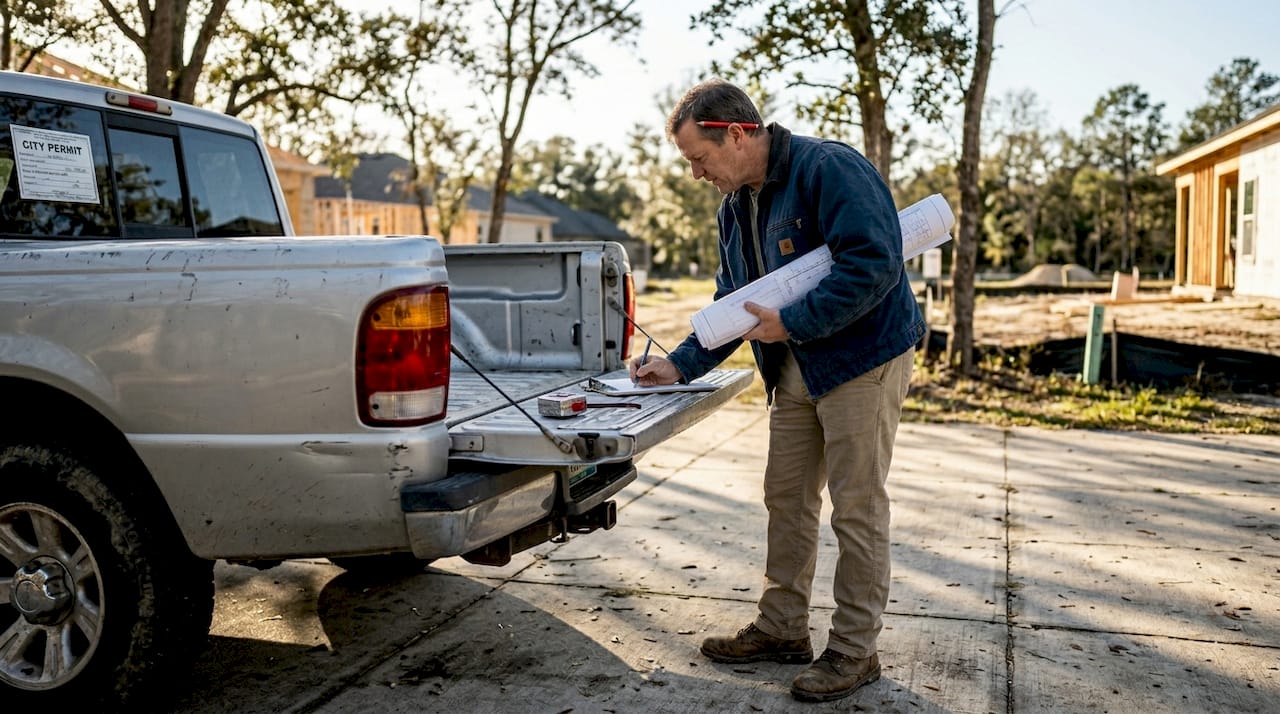
In Florida, site plans must specify wind speed zones and flood elevations. Coastal areas require Base Flood Elevation (BFE) data to ensure structures meet FEMA and local flood standards. Wind load data is equally critical. The Florida Building Code requires compliance with wind speeds up to 180 mph in HVHZ regions, a statistic that underscores why site-specific engineering is non-negotiable.
Key components of a Florida site plan include:
- Property boundaries and easements
- Building footprint and setback dimensions
- Topographic contours and drainage patterns
- Utility connections and access points
- Wind zone classification and flood zone designation
Permitting authorities scrutinize site plans closely. Missing or inaccurate data can halt your project before it starts. For practical guidance and visual references, review these examples of site plans to see what local jurisdictions expect.
Architectural plans: Bringing the vision to life
With the groundwork mapped out, architectural plans flesh out your project’s vision with actionable detail. These plans include floor layouts, elevations, cross sections, door and window schedules, and construction details. They translate your design concept into a buildable format that contractors and inspectors can follow.
Florida law requires a licensed architect’s seal for commercial and complex residential projects. Architectural plans must be sealed and may use prescriptive methods for residential, but commercial needs more rigorous documentation. Simple residential projects may qualify for prescriptive code methods, which streamline the process by following standardized construction practices. Commercial projects require occupancy analysis, egress calculations, and fire-rated assembly details.
A typical architectural plan set includes:
- Floor plans showing room layouts and dimensions
- Exterior elevations depicting building facades
- Building sections revealing interior height and structure
- Door, window, and finish schedules
- Construction details for critical connections
Architectural plans must coordinate with structural, mechanical, electrical, and plumbing plans to avoid conflicts during construction. Early coordination prevents costly rework and keeps your project on schedule. To understand how architectural plans differ from structural documentation, read this comparison of architectural vs structural plans.
Structural plans: Building for safety and compliance
Beyond design, structural plans deliver peace of mind by ensuring your building stands strong against Florida’s environmental risks. These plans detail all load-bearing elements: foundations, beams, columns, shear walls, and roof trusses. They include engineering calculations that prove your structure can withstand wind, seismic, and gravity loads.
Florida’s unique hazards demand special attention. All structural plans must be designed and sealed.pdf?v=147) by a licensed engineer; coastal and flood zones require elevated foundations. HVHZ and flood-prone zones trigger additional requirements. Structures in these areas must meet ASCE 24 standards for flood resistance and enhanced wind load provisions.
Many coastal counties require flood elevation certificates as part of the structural plan submittal. These certificates document that your lowest floor meets or exceeds the BFE, protecting your investment from flood damage and ensuring insurance eligibility.
“Florida’s wind zones demand structures withstand winds up to 180 mph in specific coastal areas.”
Structural plan components include:
- Foundation design and soil bearing capacity
- Framing plans for floors, walls, and roofs
- Connection details for hurricane straps and anchors
- Load calculations and material specifications
- Flood elevation and wind load certifications
For projects that require detailed site analysis and grading, refer to these site-specific plans to see how structural and civil engineering overlap.
Mechanical, electrical, and plumbing (MEP) plans: The project’s core systems
After the building structure is safe and code-compliant, your project’s comfort and functionality depend on professional MEP plans. These plans define HVAC systems, electrical wiring and load calculations, and plumbing and rainwater management. They ensure your building operates efficiently and meets health and safety codes.
Commercial projects in Florida require all MEP plans to be sealed by qualified engineers. Residential projects may not always require sealed MEP plans, but multifamily, commercial, and institutional buildings always do. MEP plans must coordinate with architectural and structural plans to avoid conflicts. Ductwork can’t run through structural beams, and plumbing stacks must align with wall framing.
Pro Tip: Early MEP coordination reduces costly rework and helps meet permitting timelines. Involve your MEP engineers during the design phase, not after architectural plans are finalized.
MEP plans are mandatory for:
- Commercial buildings of all types
- Multifamily residential (apartments, condos)
- Hospitals, schools, and hotels
- Any project with complex HVAC or electrical systems
For step-by-step guidance on creating compliant MEP documentation, explore resources on designing MEP plans, mechanical plans explained, and the electrical plans process.
Specialty and advanced plan types: When standard isn’t enough
Some Florida projects trigger additional plan requirements. Here’s where advanced and specialty plans come into play for complex or regulated builds. HVHZ projects in Miami-Dade and Broward counties require enhanced wind and impact protection details. Windows and doors must meet strict testing standards, and roof assemblies need additional fastening.
Coastal and flood zone projects demand elevated foundation plans and BFE compliance per ASCE 24. HVHZ, coastal and flood zones, and mixed-use buildings require additional plans such as fire separation details and BFE compliance. Mixed-use developments need certified fire-rated separations, typically two-hour rated assemblies between residential and commercial spaces.
Accessibility and life safety plans are mandatory for hospitals, schools, hotels, and other public buildings. These plans show ADA-compliant routes, emergency egress paths, and fire alarm systems.
“Edge cases require unique documentation for code approval and insurance.”
Specialty plan triggers include:
- HVHZ location requiring impact-resistant assemblies
- Coastal or flood zones needing elevated foundations
- Mixed-use occupancy requiring fire separation
- Public buildings needing accessibility and life safety documentation
For a deeper dive into how residential and commercial requirements differ, review residential vs commercial plans and civil engineering tips for site-specific challenges.
Comparison of top architectural plan types in Florida
To make your selection easier, here’s a comparison table mapping the most-used architectural plan types, their code drivers, and when you’ll need each. Different plan types respond to distinct code requirements based on building use and location.
| Plan Type | Required For | Critical Features | Code Triggers | When Specialty Is Needed |
|---|---|---|---|---|
| Site Plan | All projects | Property boundaries, setbacks, topography, utilities | Zoning compliance, flood zones, wind zones | HVHZ, coastal areas, complex grading |
| Architectural | All projects | Floor plans, elevations, sections, schedules | Occupancy type, building size | Commercial, mixed-use, complex residential |
| Structural | Most projects | Foundations, framing, connections, load calculations | Wind loads, flood zones, building height | HVHZ, coastal, multistory, large spans |
| MEP | Commercial, multifamily | HVAC, electrical, plumbing systems | Building use, occupancy load | Hospitals, schools, hotels, complex systems |
| Specialty | Edge cases | Fire separation, accessibility, impact resistance | HVHZ, mixed-use, public buildings | High-risk zones, regulated occupancies |
This table helps you quickly identify what your project will require based on location, use, and complexity. For more detailed comparisons, explore plan type differences to understand how each plan set serves a distinct purpose.
Choosing your best-fit plan: Key decision takeaways
With all options and requirements clear, here’s how you can translate this knowledge into an informed, risk-proof decision. Follow these steps to ensure your project starts on solid ground:
- Review location-specific code requirements for wind, flood, and zoning
- Verify occupancy classification and determine which plan types are mandatory
- Coordinate all plan types early in the design phase to avoid conflicts
- Always use licensed professionals for sealing and stamping required plans
Pro Tip: Save time and money by requesting a designer who is familiar with local permitting nuances for your city or county. Local expertise prevents common pitfalls like missing BFE data, incorrect wind load calculations, or occupancy classification errors.
Common mistakes to avoid include submitting plans without required professional seals, omitting flood elevation data in coastal areas, and misclassifying occupancy types. Projects in stricter code zones or special occupancies require extra review by licensed professionals.
Know when to upgrade from standard to specialty plans. If your project involves HVHZ, mixed-use occupancy, or public access, budget for additional engineering and documentation. For comprehensive guidance on plan documentation, visit plan documentation tips to ensure your submittal is complete and compliant.
Streamline your Florida project with expert architectural plans
With the right plan type in mind, you can make your project smoother and safer. Florida Licensed Engineers provides expert support for both standard and specialty plans, ensuring your project meets all code requirements without delays. Whether you’re navigating HVHZ wind loads, flood zone elevations, or complex MEP coordination, our team delivers sealed plans that pass inspection the first time.

We offer comprehensive services including architectural, structural, mechanical, electrical, and plumbing plans, plus civil engineering for drainage, grading, and site development. Our forensic investigation and flood mitigation services provide additional support for challenging sites. Explore our engineering services overview to see how we can support your project from concept to permit approval. For a deeper understanding of blueprint varieties, review architectural blueprint types to ensure you’re requesting the right documentation for your specific needs.
Frequently asked questions
What is the difference between architectural and structural plans?
Architectural plans focus on design and layout, while structural plans detail the materials and engineering needed for safety and compliance. Architectural plans show what the building looks like; structural plans prove it won’t fall down.
Do all types of plans require a licensed professional’s seal in Florida?
All commercial and most specialty plans must be sealed. Simple residential may qualify for prescriptive exceptions, but plans to be sealed by licensed professionals are the norm for anything beyond basic construction. When in doubt, assume you need a seal.
How do I know if my property is in HVHZ or a flood zone?
Check with your local building department or HVHZ and flood zone mapping resources from the FBC. FEMA flood maps and county GIS systems provide detailed zone information for any address.
Are MEP plans required for single-family homes in Florida?
MEP plans are often not required for simple homes but are mandatory for commercial, multifamily, and complex projects. If your home includes complex HVAC or electrical systems, your jurisdiction may still require sealed MEP documentation.
What happens if plans don’t comply with FBC?
Non-compliant plans can be rejected, resulting in delays, extra costs, or safety issues. FBC compliance requirements and consequences are enforced strictly. Resubmittals cost time and money, and construction without proper permits can lead to stop-work orders and fines.
Recommended
- What are architectural plans? Your 2026 Florida guide – Florida Licensed Engineers
- Architectural vs structural plans in Florida: Key differences – Florida Licensed Engineers
- Architectural Plan Essentials: Ensuring Code Compliance – Florida Licensed Engineers
- Civil Construction Project Management Tips

