
Forensic investigation: protecting Florida properties in 2026
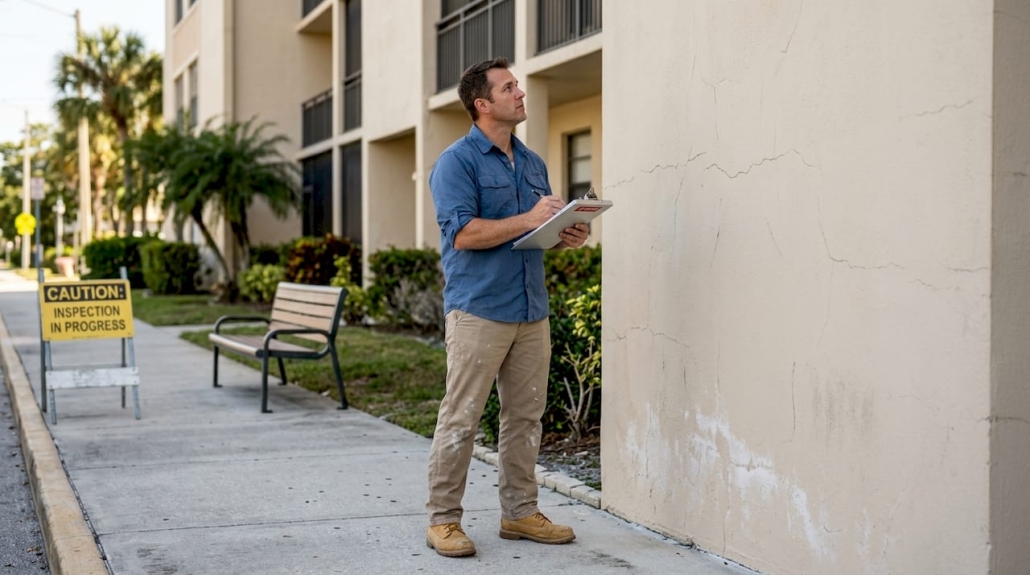
When a condominium tower collapses or a newly built bridge falls, the question everyone asks is: how did this happen? In Florida, where aging infrastructure meets hurricane-force weather and rapid development, structural failures carry life-altering consequences. Forensic investigation is the disciplined process that answers that question, tracing failures back to their root causes so they can be corrected, documented, and prevented. This guide walks you through what forensic investigation is, how it works in practice, the regulatory debate shaping its future, and the concrete steps Florida homeowners and property managers can take after receiving a forensic report.
Table of Contents
- What is forensic investigation in property engineering?
- How forensic investigations uncover root causes in Florida properties
- The standards debate: strict rules vs. engineering judgment
- Applying forensic findings: what Florida property owners should do
- Why most property owners underestimate the value of forensic investigation
- Get expert forensic investigation services in Florida
- Frequently asked questions
Key Takeaways
| Point | Details |
|---|---|
| Uncovers root causes | Forensic investigation determines why structural issues happen, preventing repeat disasters. |
| Supports insurance claims | Accurate forensic findings provide critical, unbiased evidence for resolving property and insurance disputes. |
| Compliance and safety | Following forensic recommendations helps ensure your property meets legal codes and safety standards. |
| Choose the right expert | A licensed Florida forensic engineer with up-to-date knowledge is your best ally for reliable results. |
What is forensic investigation in property engineering?
Forensic investigation in property engineering is the scientific analysis of a failed or damaged structure to determine what went wrong, why it went wrong, and who bears responsibility. Think of it as a medical autopsy for buildings. Just as a doctor traces the cause of death through evidence, a forensic engineer traces the cause of a structural failure through physical evidence, documents, and testing.
This type of investigation is triggered by a wide range of events, including:
- Structural collapses or partial failures that put occupants at risk
- Persistent water intrusion that damages walls, floors, or foundations
- Visible cracking in slabs, columns, or load-bearing walls
- Code violations discovered during inspections or permit reviews
- Disputes between contractors, property owners, or insurers
The team conducting a forensic investigation typically includes licensed structural engineers, building inspectors, and sometimes material scientists who can test concrete cores, steel samples, or waterproofing membranes in a lab. Each professional brings a specific lens to the problem.
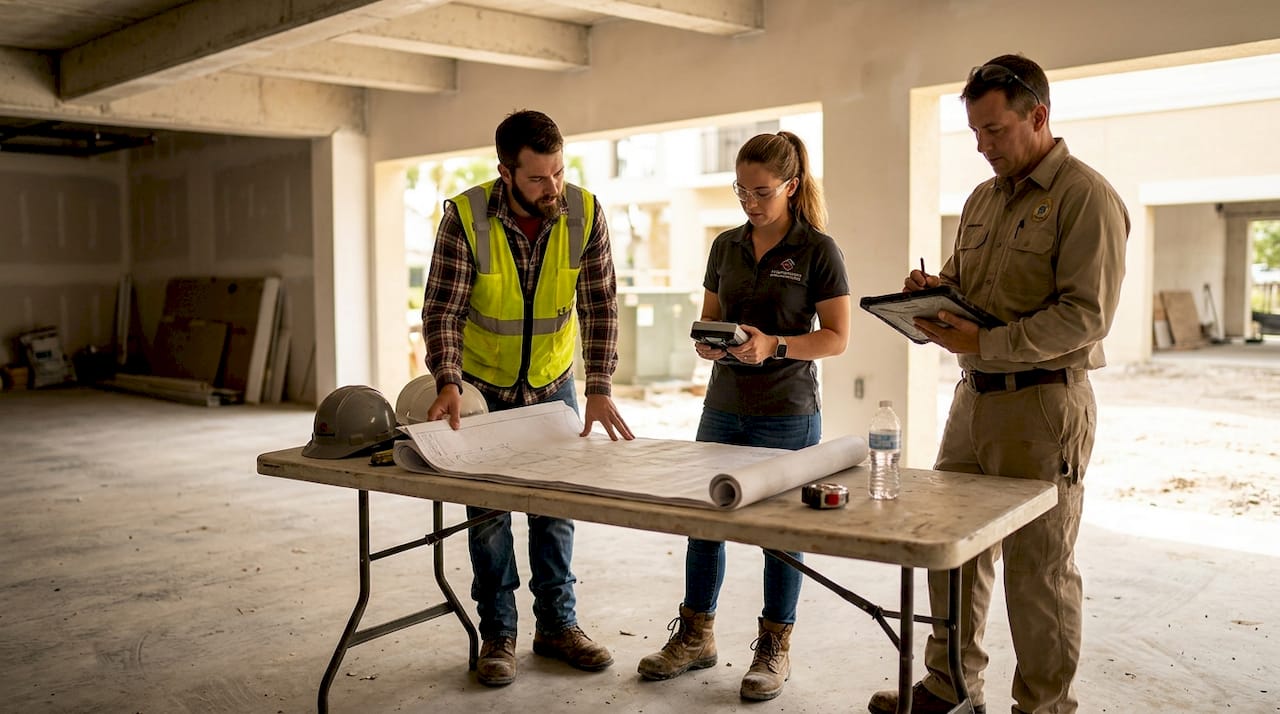
The Champlain Towers South investigation is one of the most significant ongoing forensic cases in U.S. history, and it illustrates exactly why this process matters. Investigators are piecing together years of deferred maintenance, design decisions, and environmental factors to understand a tragedy that killed 98 people.
Understanding forensic engineering standards before you hire an investigator helps you ask the right questions and evaluate the quality of the report you receive.
Pro Tip: If you suspect a structural problem, involve a forensic engineer early. Early involvement often resolves contractor disputes before they reach litigation, saving you time, money, and stress.
How forensic investigations uncover root causes in Florida properties
Understanding the definition sets the stage, but what happens during a real forensic investigation, and what can homeowners expect?
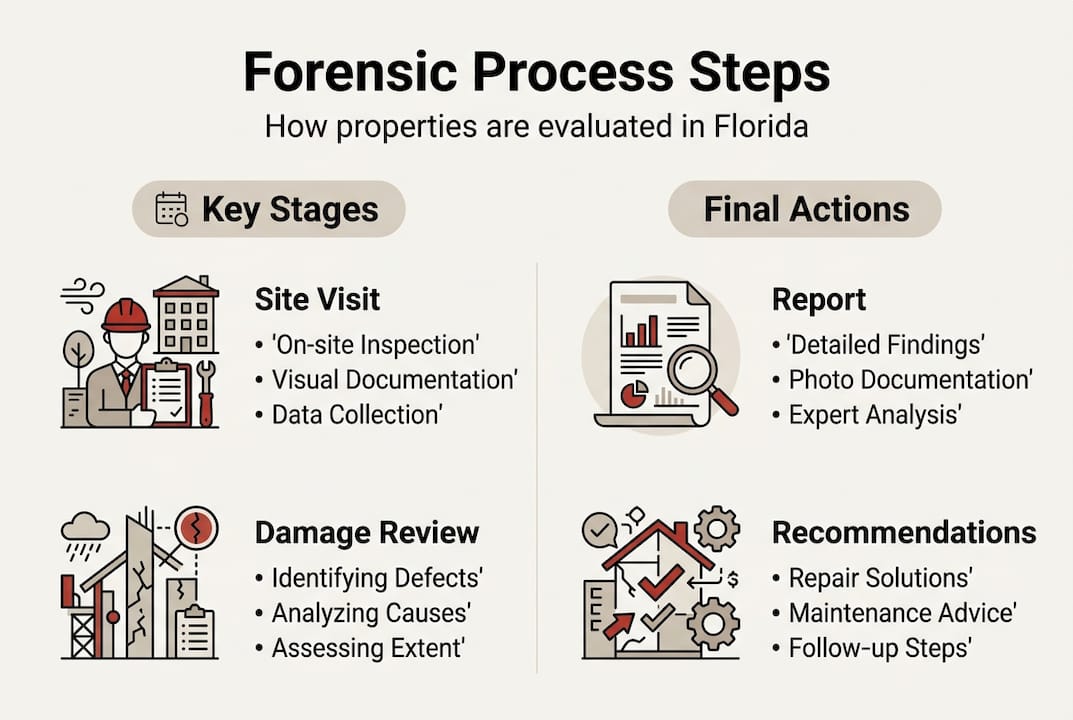
A forensic investigation follows a structured process. Here is what that typically looks like:
- Initial site visit to document visible damage, take measurements, and photograph conditions
- Record review including original blueprints, permits, inspection reports, and maintenance logs
- Material sampling where engineers collect concrete cores, steel coupons, or soil samples for lab testing
- Laboratory analysis to determine material strength, corrosion levels, or moisture content
- Root cause analysis where findings are synthesized into a clear explanation of failure mechanisms
- Written report with conclusions, supporting evidence, code references, and repair recommendations
Florida has produced several high-profile cases that show how this process shapes safety outcomes. The investigation process overview for each of these events followed similar steps, yet each revealed unique failure patterns.
| Event | Issue identified | Forensic finding | Impact |
|---|---|---|---|
| Champlain Towers South | Concrete deterioration | Long-term corrosion and design gaps | Statewide condo inspection laws |
| FIU pedestrian bridge | Design error | Inadequate shear capacity | Federal safety protocol updates |
| Hurricane Ian light poles | Wind load failures | Undersized anchor bolts | Revised Florida wind code standards |
As Hurricane Ian failures and the FIU bridge collapse demonstrate, forensic findings do not just explain the past. They drive code changes that protect future buildings and occupants.
Research on structural investigations shows that a significant share of major forensic cases result in updated building codes or revised safety standards, making each investigation a contribution to the broader built environment. You can review forensic investigation case examples to see how different failure types are handled in practice. For property managers dealing with tenant disputes or liability questions, forensic investigations for property disputes offer a practical framework for moving forward.
The standards debate: strict rules vs. engineering judgment
With basics and process covered, it is important to address the rules that shape how investigations are reported and used.
Florida is currently in the middle of a significant debate over how forensic engineering reports should be written and evaluated. The Florida Board of Professional Engineers (FBPE) has proposed new rules requiring forensic reports to cite specific building codes, clearly explain the failure mechanism, and support conclusions with scientific testing. The goal is to raise the floor on report quality and reduce the number of vague or unsupported opinions that end up in insurance claims and courtrooms.
Arguments in favor of stricter standards:
- Reduces fraudulent or poorly supported reports
- Creates a clearer evidentiary standard for courts and insurers
- Protects property owners from biased opinions dressed up as science
Arguments against stricter standards:
- May restrict the professional judgment that experienced engineers rely on
- Could increase investigation costs, making forensic services less accessible
- Rigid rules may not fit every unique failure scenario
As some experts argue, new FBPE standards could increase costs and reduce flexibility for engineers working on complex cases. The concern is that a one-size-fits-all approach may actually produce worse outcomes in unusual situations.
| Approach | Strengths | Weaknesses |
|---|---|---|
| Rigid FBPE standards | Consistency, fraud reduction | Less flexibility, higher cost |
| Traditional ethics/ASTM model | Expert judgment preserved | Inconsistent report quality |
Insurers generally favor standardization because it helps them fight fraudulent claims. Policyholders and their attorneys, however, worry that rigid standards could be used to dismiss legitimate claims. You can read more about insurers and policyholder views on this evolving issue.
Understanding how forensic reports in insurance claims function helps you navigate this landscape. The step-by-step engineering process also clarifies what a high-quality report should contain regardless of which standards apply.
“The stakes in this debate are not just technical. They determine whose version of the truth gets heard in a claim or a courtroom.”
Applying forensic findings: what Florida property owners should do
Armed with forensic insights and an understanding of the regulatory environment, here is what you can do with the findings.
Receiving a forensic report can feel overwhelming, especially if it contains technical language and references to building codes you have never seen. Here is a practical sequence for turning that report into action:
- Read the executive summary first. Most reports lead with a plain-language summary of findings. Start there before diving into technical appendices.
- Identify the root cause clearly. The report should name a specific failure mechanism, not just describe symptoms. If it does not, ask the engineer to clarify.
- Prioritize safety-critical repairs. Address any findings that pose immediate risk to occupants before moving on to cosmetic or long-term issues.
- Select a contractor with relevant experience. Not every contractor understands how to correct a design flaw versus a construction defect. Match the contractor to the finding.
- Submit the report to your insurer with a cover letter. Forensic reports play a critical role in property insurance claims, so present the findings clearly and professionally.
- File for permits before starting repairs. Florida requires permits for most structural repairs, and your forensic report can support the permit application.
When using forensic reports for claims, timing matters. Submit your report as early in the claims process as possible to establish the factual record. For compliance-related repairs, using forensic findings for compliance outlines how to coordinate with local building departments.
Pro Tip: Hire an engineer who understands both the technical findings and the current Florida reporting standards. That combination protects you whether you are negotiating with a contractor, an insurer, or a municipality.
Why most property owners underestimate the value of forensic investigation
Most property owners think about forensic investigation the same way they think about calling a plumber: only when something is visibly broken. That reactive mindset is understandable, but it is also expensive.
The Champlain Towers tragedy did not happen overnight. Engineers had flagged concerns years before the collapse. The cost of acting on those early warnings would have been a fraction of the human and financial toll that followed. That pattern repeats itself across Florida properties every year, just at smaller scales.
Preventive forensic evaluation, meaning a scheduled review of your property’s structural condition before any visible failure occurs, can catch deteriorating concrete, failing waterproofing, or undersized connections while they are still manageable problems. Waiting until you see a crack or experience a leak means you are already behind.
Property managers who make forensic audits a routine part of their maintenance calendar consistently spend less on emergency repairs and face fewer liability claims. The data from accurate forensic results supports this: early detection changes the cost curve dramatically.
Pro Tip: Schedule periodic forensic audits every three to five years, not just after an incident. Treat it like a structural health checkup for your property.
The uncomfortable truth is that most property owners skip forensic evaluation because they do not see an immediate problem. But the whole point of forensic investigation is to find what you cannot see.
Get expert forensic investigation services in Florida
If a structural concern is keeping you up at night, or if you simply want to stay ahead of Florida’s increasingly strict inspection requirements, working with a licensed forensic engineer is the right move.
Our team provides engineering services across residential and commercial properties throughout Florida, including forensic investigation and detailed reporting that meets current FBPE standards. Whether you need to get accurate forensic results for an insurance claim or want to understand the types of forensic investigations available for your specific situation, we are ready to help. Schedule a consultation today to protect your property’s value, your tenants’ safety, and your legal standing.
Frequently asked questions
When should I order a forensic investigation for my Florida property?
Order a forensic evaluation whenever you notice unusual cracks, water intrusion, unexpected settlement, or after a major storm. Forensic investigations are essential after any visible damage or structural failure to determine the root cause before making repairs.
What does a forensic engineering report include?
A forensic report includes findings, physical evidence, tested failure mechanisms, code references, and specific repair recommendations. FBPE standards call for clear code citation and documented test evidence to support every conclusion.
Can forensic investigation help with insurance claims?
Yes. An unbiased forensic report is often the most critical piece of evidence in a disputed insurance claim. Insurers and policyholders both rely on forensic findings to validate or challenge the cause and extent of property damage.
What qualifications should a Florida forensic engineer have?
Look for engineers who are licensed in Florida, hold experience in structural engineering, and demonstrate current knowledge of FBPE reporting standards and ASTM testing protocols.
Recommended
- Forensic Reports: Critical Evidence for Florida Claims – Florida Licensed Engineers
- What is a forensic report? A Florida homeowner’s guide 2026 – Florida Licensed Engineers
- Types of Forensic Investigations in Florida: 70% Error Detection – Florida Licensed Engineers
- Forensic Engineering Tools Comparison – Expert Insights 2025 – Florida Licensed Engineers


