
Understanding drainage plans: guide for Florida property owners

TL;DR:
- Proper drainage plans are essential for Florida construction to prevent flooding, damage, and code violations.
- Plans must include grading, flow directions, elevations, stormwater structures, and runoff calculations.
- Compliance involves local regulations, engineering approval, ongoing maintenance, and understanding county-specific requirements.
A drainage plan is not just paperwork standing between you and your building permit. In Florida, where heavy rainfall, flat terrain, and strict environmental rules converge, a poorly managed stormwater system can flood your property, damage neighboring land, and trigger costly code violations before your project even breaks ground. A detailed engineering document required for Florida construction projects outlines exactly how stormwater runoff will be managed on your site. This guide walks Florida home and business owners through what drainage plans include, what compliance actually looks like, and how to avoid the mistakes that stall projects and drain budgets.
Table of Contents
- What is a drainage plan and why do you need one?
- Core elements of a compliant Florida drainage plan
- The Florida compliance process: Permits, codes, and local variations
- Nuances and best practices: Avoiding common pitfalls in Florida drainage planning
- Expert perspective: What most guides miss about Florida drainage plans
- Need help with your Florida drainage plan?
- Frequently asked questions
Key Takeaways
| Point | Details |
|---|---|
| Critical for compliance | A drainage plan is essential for new construction approval in Florida and prevents costly legal setbacks. |
| Site specifics matter | Plan requirements change based on lot size, impervious area, and local county or water district rules. |
| Professional guidance pays off | Hiring a licensed engineer streamlines approval and reduces risk of post-build drainage problems. |
| Avoid long-term pitfalls | Regular maintenance and recertification of drainage features help maintain compliance over time. |
What is a drainage plan and why do you need one?
A drainage plan is a set of engineered drawings and calculations that show how water moves across your property during and after a rain event. It maps out where water comes from, where it goes, and how your site prevents that water from causing problems for your building, your neighbors, and the surrounding environment. Think of it as a traffic plan, but for rainwater.
Florida’s climate makes this especially critical. The state receives an average of 54 inches of rain per year, with intense summer storms capable of dumping several inches in a matter of hours. Without a proper plan, that water has nowhere controlled to go.
Here is what a compliant drainage plan typically covers:
- Site grading and contours: Shows how the land slopes to direct water away from structures
- Flow arrows: Indicates the direction water travels across the site
- Finished floor and grade elevations: Ensures buildings sit above flood-prone areas
- Stormwater structures: Swales, French drains, catch basins, and retention areas
- Runoff calculations: Quantifies how much water the site generates before and after construction
As required for new construction, drainage plans must include grading, flow arrows, and elevations for substantial improvements and new builds alike. Skipping this step is not an option under Florida law.
Why it matters beyond compliance: A drainage plan protects your investment. Improper grading is one of the leading causes of foundation damage, mold, and structural deterioration in Florida homes and commercial buildings.
Local regulations add another layer. What satisfies Miami-Dade County may not meet the requirements in Hillsborough or Citrus County. Always review your specific county’s checklist, such as the Florida site plan checklist, before submitting anything. Reviewing site plan examples from similar projects in your area can also help you understand what reviewers expect. Even your gutters play a role. Properly installed gutters help prevent localized flooding by directing roof runoff away from foundations and into managed drainage paths.
Core elements of a compliant Florida drainage plan
Once you understand why drainage plans matter, the next step is knowing exactly what goes into one. Each component serves a specific function, and missing even one can trigger a plan revision request that delays your permit.
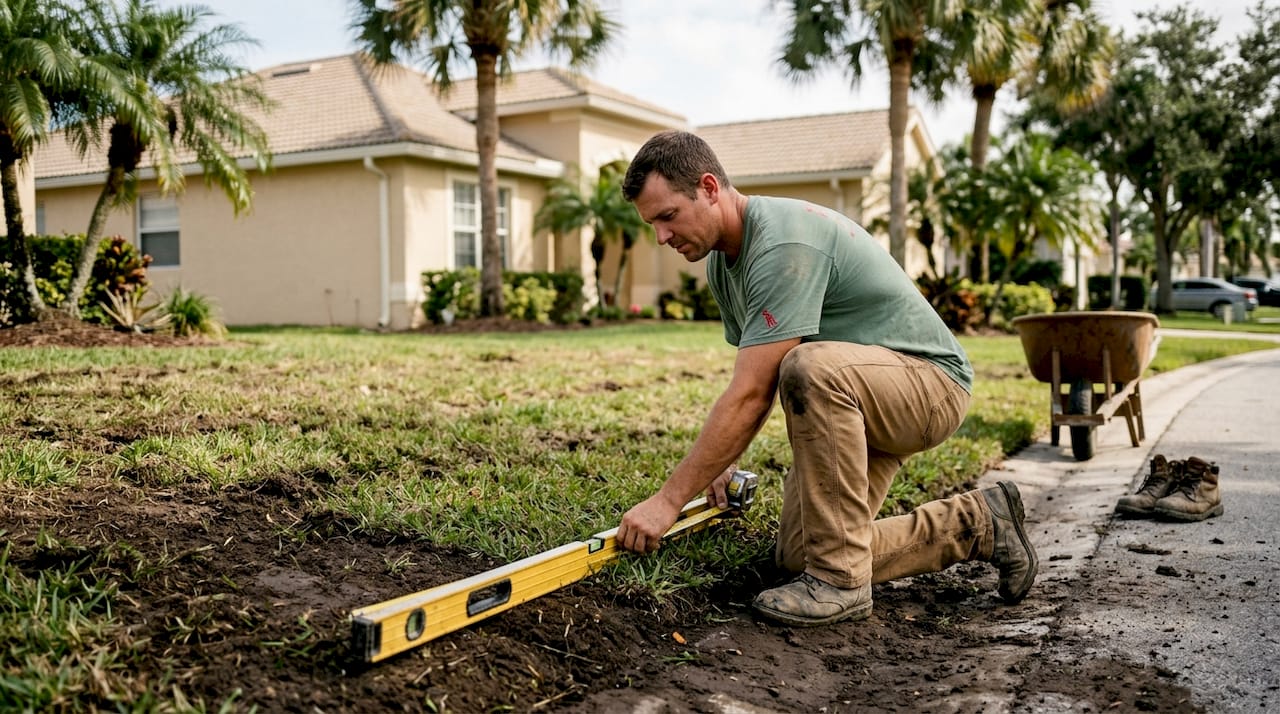
Site grading is the foundation of any drainage plan. The Florida Building Code requires a minimum 6-inch fall over 10 feet away from any structure. This slope ensures water moves away from your foundation rather than pooling against it.
Beyond grading, Florida drainage plans rely on a combination of stormwater management features. Here is how common options compare for residential versus commercial sites:
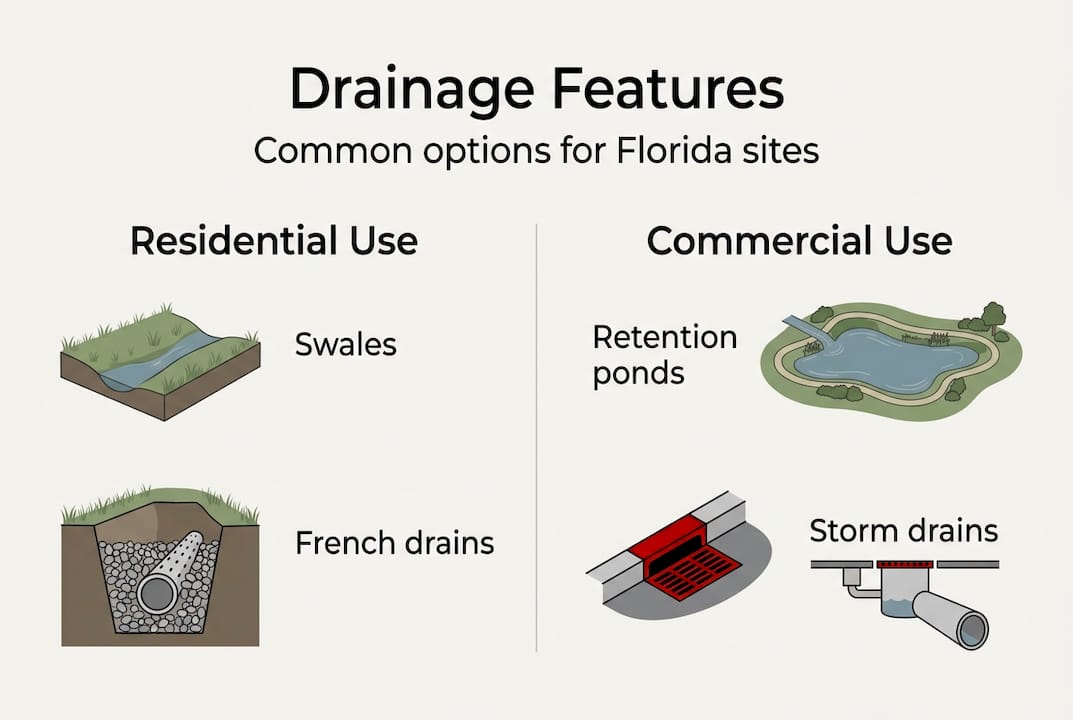
| Feature | Residential use | Commercial use |
|---|---|---|
| Swales | Common along lot lines | Used at perimeter and parking areas |
| French drains | Backyard and side yard drainage | Under parking lots and loading areas |
| Catch basins | Less common, used on larger lots | Standard on most commercial sites |
| Retention ponds | Required on larger parcels | Required for significant impervious area |
| Permeable paving | Optional, gaining popularity | Encouraged for parking lots |
The plan must also include pre- and post-construction runoff calculations. These numbers prove that your finished site will not send more water onto neighboring properties or into public drainage systems than the undeveloped land did. Florida counties follow key mechanics that include underground pipes, permeable surfaces, and retention ponds to manage this balance.
Here is the standard sequence for building out a drainage plan:
- Conduct a site survey to establish existing grades and drainage patterns
- Identify the design storm event required by your county (often a 25-year, 24-hour storm)
- Calculate pre-development runoff volumes
- Design stormwater features to meet or reduce post-development runoff
- Produce stamped engineering drawings with all required details
Pro Tip: For any site with significant grading changes or large impervious areas, a licensed Professional Engineer must prepare and stamp the plans. Reviewing a full engineering plan breakdown before you start can save you from costly revisions. If certain engineering terms in the plan feel unfamiliar, getting them clarified early prevents misunderstandings during review.
The Florida compliance process: Permits, codes, and local variations
Knowing what goes into a drainage plan is only half the battle. Getting it approved means navigating a layered system of codes, agencies, and local rules that can vary significantly from one county to the next.
The permitting process generally follows these steps: submit your drainage plan with the building permit application, wait for review by the local building department and sometimes the Water Management District, respond to any revision requests, and receive approval before construction begins. Simple in theory. In practice, incomplete submissions or mismatched calculations are the most common reasons for delays.
Florida’s drainage compliance framework involves multiple layers:
- Florida Building Code (FBC): Sets baseline grading and drainage standards statewide
- Water Management Districts: Five regional districts (like SFWMD and SWFWMD) regulate stormwater permits for larger projects
- County ordinances: Add site-specific thresholds for impervious area, fill volume, and PE stamp requirements
Here is a snapshot of how county-level requirements can differ:
| Requirement | Smaller counties | Larger urban counties |
|---|---|---|
| Impervious area threshold | Often 20% or less before permit needed | May trigger at any new construction |
| PE stamp required | Above 20 cubic yards of fill | Required for most commercial projects |
| Recertification | Every 5 years in some areas | Varies by local ordinance |
Florida rules require that post-development runoff must not exceed pre-development levels, and plans must be designed for local design storms, often the 25-year, 24-hour event. PE-stamped plans are frequently required when significant impervious area or fill is involved.
Every drainage plan submission should include:
- Signed and sealed engineering drawings
- Stormwater calculations and supporting hydrology data
- Erosion and sediment control measures
- Legal description and site survey
Pro Tip: Call your local building department or Water Management District before you finalize your plan. Requirements change, and a quick conversation can prevent a costly resubmission. For a broader look at navigating Florida’s rules, the tips for Florida developers resource covers common pitfalls in detail. Do not forget that your roof drainage also matters. Gutters that are properly sized for storm protection reduce the volume of water your site drainage system must handle.
Nuances and best practices: Avoiding common pitfalls in Florida drainage planning
Meeting the minimum permit requirements is a starting point, not a finish line. Florida’s drainage environment is complex, and the projects that run smoothly are the ones that plan beyond the checklist.
One of the most overlooked requirements is demonstrating no adverse impact on neighboring properties. This means using professional hydrology software, such as HydroCAD, to model water behavior under storm conditions. Submitting hand calculations or outdated methods often triggers review comments that slow everything down.
Low Impact Development (LID) features are increasingly favored by Florida authorities. Bioswales, rain gardens, and permeable pavers reduce runoff volume at the source rather than managing it after the fact. Some counties offer streamlined reviews for projects that incorporate LID strategies.
Here are the top three pitfalls we see, and how to avoid them:
- Underestimating runoff: Always model for the required design storm, not just average rainfall. Florida’s intense summer storms can overwhelm undersized systems quickly.
- Missing local mandates: County rules often go beyond state minimums. A plan that passes state review may still fail at the county level if local thresholds are not addressed.
- Ignoring post-approval maintenance: Drainage features require ongoing upkeep. Swales must be kept clear, ponds must be inspected, and some counties require 5-year recertification of drainage features by a licensed engineer.
NPDES and SWPPP: If your project disturbs one or more acres, you likely need a Stormwater Pollution Prevention Plan (SWPPP) under the federal NPDES permit program. This document must be on-site during construction and updated as conditions change.
Pro Tip: Build your drainage plan early in the design process, not as an afterthought. Integrating it with your construction plans from the start avoids expensive redesigns. Proper downspout placement and water damage prevention strategies at the building level also reduce the load on your site drainage system.
Expert perspective: What most guides miss about Florida drainage plans
Most articles about drainage plans focus on what to include and how to submit. What they rarely address is the gap between meeting code and actually protecting your project long-term.
We have seen property owners approve plans that technically comply with state minimums, only to face flooded yards, neighbor disputes, and remediation costs after the first major storm. The reason is almost always the same: county-level requirements were not fully accounted for, or the drainage system was designed to pass review rather than to perform.
Local ordinances vary significantly from county to county, and they change over time. A rule that applied last year may have been updated. This is not just a compliance risk. It is a financial one. Fines, stop-work orders, and post-construction remediation are far more expensive than getting the plan right the first time.
The other piece most guides skip is post-approval responsibility. Once your permit is issued and construction is complete, the drainage system becomes your responsibility to maintain. Swales fill in. Catch basins clog. Retention areas lose capacity. Ignoring these issues does not just affect your property. It can make you liable for damage to neighboring sites.
Integrating drainage planning early, treating it as a core design element rather than a permit hurdle, is the single most effective way to protect your investment and avoid surprises.
Need help with your Florida drainage plan?
Getting your drainage plan right the first time means fewer revision cycles, faster approvals, and a site that actually performs when Florida storms hit.

Our licensed engineers at Florida Licensed Engineers handle drainage, grading, and site plans for residential and commercial projects across Florida. From initial site assessment through permit approval, we make sure your plan meets every state and county requirement. Explore our full range of engineering services in Florida or review our site plan permitting guide to understand exactly what your project needs before you submit. We are ready to help you move forward with confidence.
Frequently asked questions
Is a drainage plan required for every new construction in Florida?
In most Florida counties, a drainage plan is required for new construction, major renovations, or significant changes to impervious area. The specific threshold varies by county, so always verify locally.
Who can prepare or sign a drainage plan in Florida?
A Professional Engineer (PE) must prepare and stamp drainage plans when projects involve significant fill or impervious area. PE-stamped plans are required for more than 20 cubic yards per acre or substantial land changes under many county rules.
How much does a typical drainage plan cost in Florida?
Basic solutions like French drains start around $2,000 and go up based on scope, while full engineered site drainage plans for commercial projects can run considerably higher depending on site complexity.
Do drainage plans ever need to be renewed or recertified?
Yes. In certain Florida counties, drainage features require recertification by a licensed engineer every five years to confirm the system still functions as designed and meets current standards.
Recommended
- How to draft plumbing plans: step-by-step guide for Florida – Florida Licensed Engineers
- Florida site plan checklist: permitting made simple – Florida Licensed Engineers
- 7 Essential Civil Engineering Tips for Florida Developers – Florida Licensed Engineers
- Upgrade gutter drainage: step-by-step guide for Florida


