
Construction Documentation: Boosting Project Compliance
Every Florida contractor has faced the frustration of miscommunication or project delays because of missing or unclear paperwork. This confusion often traces back to poor construction documentation, which is more than just blueprints—it is the foundation for project clarity, legal protection, and smooth execution. By understanding the different document types, workflow strategies, and Florida-specific requirements, you will safeguard your business, keep your teams aligned, and avoid costly mistakes. For every build, clear, comprehensive construction documentation remains your most valuable tool.
Table of Contents
- Construction Documentation Defined And Debunked
- Essential Types For Building Projects
- Key Features And Workflow Explained
- Florida Regulations And Permitting Standards
- Risks, Liabilities, And Costly Mistakes
Key Takeaways
| Point | Details |
|---|---|
| Importance of Construction Documentation | It serves as the foundation for successful projects, facilitating clear communication among architects, engineers, and contractors. |
| Phases of Documentation | Documentation progresses through schematic design, design development, and final construction documents, with each phase providing increasing detail. |
| Florida-Specific Requirements | Essential to include elevation certificates and flood mitigation plans to comply with state regulations and secure permits. |
| Risks of Poor Documentation | Incomplete or unclear documentation can lead to legal liabilities, project delays, and costly disputes. |
Construction Documentation Defined and Debunked
Construction documentation isn’t some mysterious stack of papers gathering dust in a job site trailer. It’s the backbone of every successful project you’ll ever manage. Think of it as the conversation between your vision and reality.
Construction documents are detailed sets of drawings that translate architectural designs into actionable instructions your builders can actually follow. They include plans, specifications, and detailed drawings that spell out every structural, mechanical, electrical, and plumbing requirement. Without them, you’d have contractors guessing at your intentions.
Here’s what gets included in a complete documentation package:
- Architectural plans showing layouts, dimensions, and material finishes
- Structural drawings detailing how the building stands and handles loads
- Mechanical, electrical, and plumbing systems with all their interconnections
- Specifications that define product brands, qualities, and installation methods
- Site plans indicating grading, drainage, utilities, and building placement
- Detail sheets zooming in on complex intersections and connections
The real power of construction documentation lies in coordination. Your architect, engineers, contractors, and subcontractors all reference the same set of documents. This eliminates the costly finger-pointing when something doesn’t match.
One common misconception: people think these documents are set in stone the moment the contractor breaks ground. False. Construction documents progress through phases starting with schematic design, moving through design development, and finally reaching detailed construction documents. Each phase adds more specificity. Sketches become precise dimensions. Concepts become specifications.
Another myth worth debunking—that you only need drawings. In Florida’s climate, you need more. Flood mitigation considerations, elevation certificates, drainage analysis, and no-rise certifications must be documented alongside traditional construction plans. Your documentation reflects your specific location’s challenges.
Florida contractors often overlook how documentation protects them legally. Every change order, every approval, every decision gets recorded. When disputes arise (and they do), your documentation proves what was agreed upon.
The phases matter because they serve different purposes. Early phases communicate intent. Later phases provide step-by-step instructions. Both matter. Both belong in your project file.
Here’s a quick comparison of the construction documentation phases and their primary focus:
| Phase | Main Purpose | Level of Detail |
|---|---|---|
| Schematic Design | Convey project vision | Conceptual sketches, minimal |
| Design Development | Refine key systems | Preliminary dimensions, outline specs |
| Construction Documents | Enable accurate construction | Complete details, code-ready |
Clear, comprehensive construction documentation reduces costly field changes and keeps all team members aligned on project requirements.
Pro tip: Create a documentation checklist specific to Florida requirements—include flood elevation data, drainage plans, and wind-resistant details—before design phases begin to avoid costly omissions later.
Essential Types for Building Projects
Not all construction documents serve the same purpose. Some protect you legally. Others guide the work itself. Understanding which is which keeps your project running smoothly and prevents costly misunderstandings.
Every project needs several document categories working together. Construction projects utilize crucial documents including construction agreements, general and special conditions, architectural drawings, schedules, and safety reports. These work in concert to manage scope, timelines, payments, and compliance from day one through final closeout.
Here’s what your project file should contain:
- Architectural drawings showing building layouts, dimensions, and design intent
- Structural plans detailing how loads transfer through the building
- Mechanical, electrical, and plumbing (MEP) drawings for all systems
- Construction agreements establishing legal obligations between parties
- General and special conditions spelling out terms, safety standards, and procedures
- Project schedules mapping out timelines and dependencies
- Safety reports and certificates of insurance proving compliance and protection
In Florida, you’ll also need documentation specific to our environment. Elevation certificates, flood mitigation plans, drainage analysis, and no-rise certifications matter as much as any structural drawing. These aren’t optional add-ons. They’re mandatory for permit approval in most Florida jurisdictions.
Architectural blueprints explained show what gets built. Engineering plans show how it stands. Together, they tell the complete story. Architects handle aesthetics and function. Structural engineers ensure safety. MEP engineers make systems work. Your documentation must include all three perspectives.
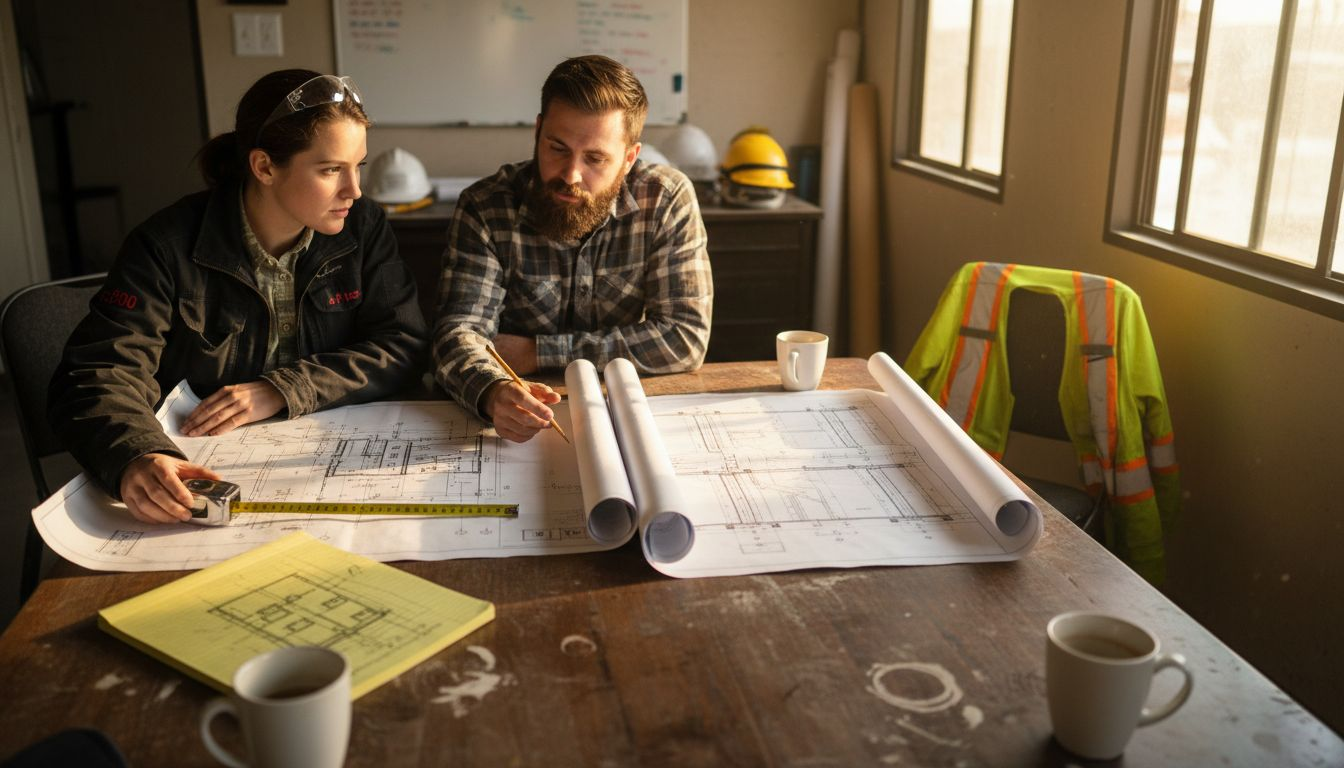
Bidding documents and work orders keep contractors aligned on scope and payment. When a subcontractor questions what’s included, you reference these documents. No guessing. No disputes.
The legal documents protect everyone. Construction agreements establish who’s responsible for what. Insurance certificates prove you’re covered. Special conditions address site-specific challenges. In Florida’s hurricane season, this matters tremendously.
Each document type serves a specific purpose—architectural drawings communicate design, engineering plans ensure structural integrity, and legal documents protect all parties from disputes.
Pro tip: Organize your documentation package by category before construction begins—architectural, structural, MEP, civil, legal, and compliance—so every team member knows exactly where to find the information they need.
Key Features and Workflow Explained
Good documentation doesn’t happen by accident. It requires planning, organization, and a system that keeps everyone on the same page throughout construction. Without structure, you’ll end up with scattered files, missed deadlines, and compliance nightmares.
Effective construction documentation involves planning and managing records that promote accountability and communication among all stakeholders. The workflow starts before the first nail gets driven and continues through final closeout. You need a documented plan, assigned responsibilities, digital storage solutions, and frequent updates to every single file.
Here’s what a solid workflow includes:
- Documentation plan established at project kickoff
- Assigned roles specifying who manages what documents
- Centralized storage accessible to all authorized team members
- Real-time updates to contracts, drawings, permits, and logs
- Daily capture of site conditions, decisions, and changes
- Automated notifications when documents change or require action
- Regular reviews to catch missing information before it becomes a problem
The workflow itself moves through phases. Early stages focus on contracts, permits, and design documents. Mid-project emphasizes daily logs, RFIs (Requests for Information), meeting notes, and change orders. Late stages require final inspections, certificates of completion, and warranty documentation.
Florida contractors need to layer in additional requirements. Your workflow must capture elevation data, flood mitigation certifications, drainage permits, and hurricane-resistant design documentation. These items can’t be afterthoughts. They need slots in your system from day one.
Change orders deserve special attention in your workflow. Every scope change, every price adjustment, every schedule shift gets documented and approved before work proceeds. This prevents disputes and protects your bottom line. Without this discipline, contractors lose thousands to undocumented work.
Modern workflows emphasize centralized digital storage over paper files. Cloud-based systems allow real-time collaboration, automatic version control, and searchable archives. Your electrician, plumber, and general contractor can all access current plans simultaneously. No more outdated prints causing field conflicts.
A structured documentation workflow minimizes errors, enforces compliance, maintains accountability, and provides the evidence trail you need if disputes arise.
Pro tip: Assign one team member as documentation manager responsible for organizing files, tracking updates, and ensuring all parties receive current documents—this single role prevents countless coordination failures.
Florida Regulations and Permitting Standards
Florida doesn’t operate like other states when it comes to building codes and permits. The rules are stricter, timelines are tighter, and documentation requirements are more comprehensive. Get this wrong, and your project stalls. Get it right, and you move forward predictably.
The Florida Building Code is the statewide code regulating design and construction standards across all jurisdictions. This unified framework replaced dozens of conflicting local codes, making compliance consistent from the Panhandle to the Keys. The Florida Building Commission maintains and interprets this code, ensuring every project meets safety, accessibility, and disaster resilience standards.
Here’s why this matters for your documentation:
- Unified standards eliminate confusion about which local code applies
- Hurricane resistance requirements mandate specific wind and water design standards
- Flood mitigation documentation must accompany all coastal and elevation-sensitive projects
- Accessibility compliance requires detailed documentation for ADA requirements
- Energy code compliance proof must be submitted with permit applications
- Modular building approvals follow state processes, not local variations
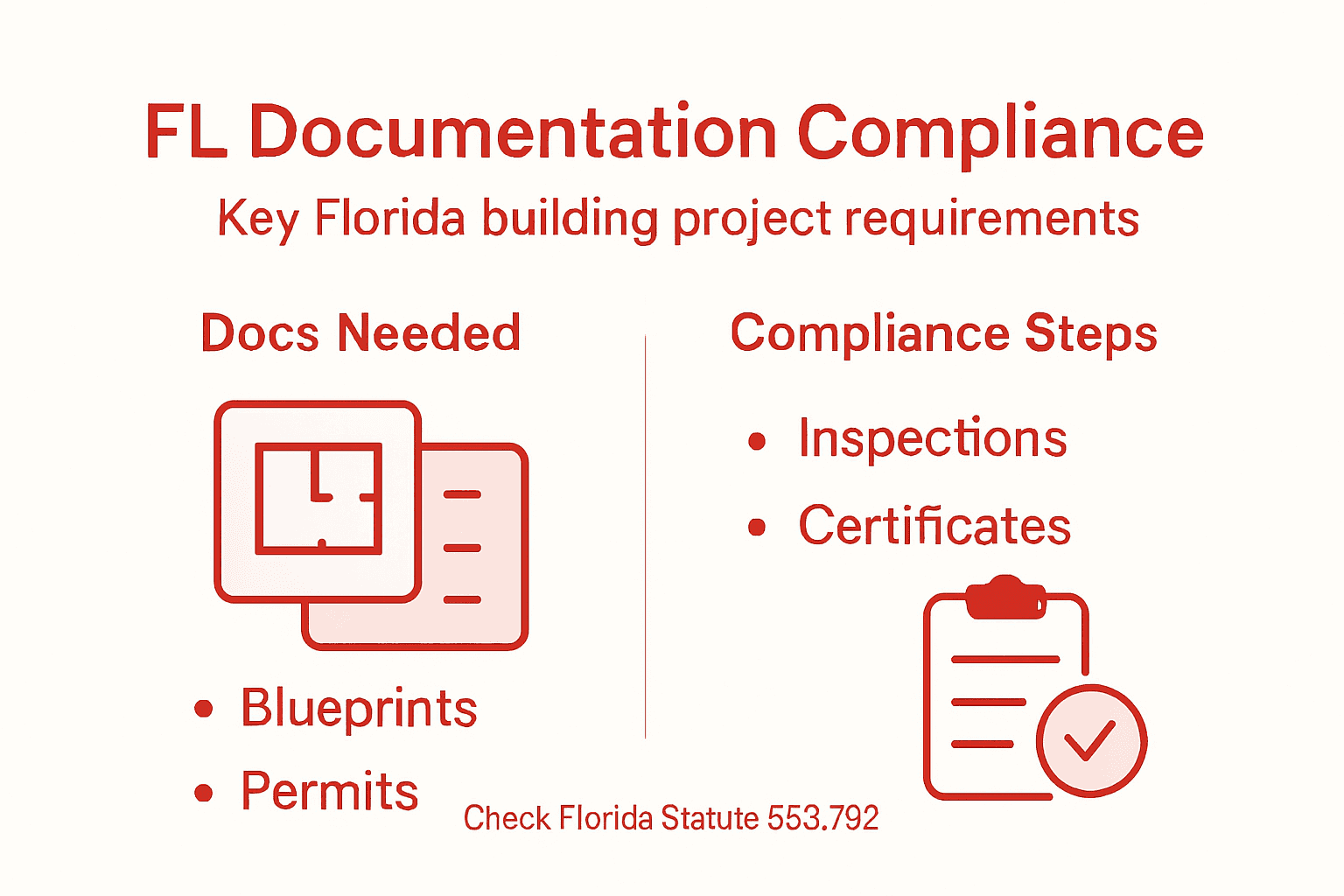
Permit timelines in Florida are not suggestions. Florida statute 553.792 outlines specific timelines and requirements for local building permits, ranging from 10 to 60 business days depending on project type. Residential permits typically process faster than commercial. Specialty permits (like those involving flood mitigation or hurricane hardening) may take longer. If your local jurisdiction misses the deadline without valid reason, the permit can be deemed automatically approved.
Your documentation must address Florida-specific requirements. Elevation certificates prove flood risk compliance. No-rise certifications show your project won’t increase flooding to neighboring properties. Wind resistance documentation demonstrates compliance with hurricane standards. These aren’t optional attachments. They’re mandatory for permit approval.
Review how Florida-specific documentation requirements impact the permitting process:
| Requirement | Impact on Permitting | Risk if Omitted |
|---|---|---|
| Elevation Certificate | Proves flood zone compliance | Permit delays or rejections |
| Wind Resistance Design | Verifies hurricane safety | Inspection failure, liability |
| Drainage Analysis | Ensures site water control | Redesign, project stoppage |
| No-Rise Certification | Confirms no flood increase | County denial, legal issues |
The role of engineers in Florida permitting is substantial. Structural engineers must stamp and certify designs comply with Florida Building Code requirements. Civil engineers handle drainage, grading, and flood mitigation documentation. Your engineering documentation carries legal weight and speeds permit review significantly.
Florida’s strict building codes and rigid permit timelines require documentation that’s thorough, accurate, and submitted early—delays cost money, and omissions cost much more.
Pro tip: Submit all Florida-specific documentation (elevation certificates, flood analysis, wind resistance calcs) with your initial permit application rather than waiting for agency requests—this prevents 30-to-60-day review cycle delays.
Risks, Liabilities, and Costly Mistakes
Poor documentation doesn’t just create inconvenience. It exposes you to legal liability, financial losses, and project failure. The mistakes you make today become evidence in tomorrow’s dispute.
Construction projects involve significant risks including workplace safety hazards, defective workmanship, and contractual disputes. Liability issues arise when safety protocols get ignored, poor quality materials sneak in, or contracts contain ambiguous language. Without comprehensive documentation, you cannot prove what was agreed upon, what was completed, or who bears responsibility.
Here are the costliest mistakes Florida contractors make:
- Incomplete change order documentation leading to unpaid work and disputes
- Missing safety records exposing you to OSHA violations and worker injury liability
- Ambiguous contracts creating uncertainty about scope and payment terms
- Inadequate RFI (Request for Information) trails allowing misunderstandings about specifications
- No-rise certification failures triggering flood permit rejections and costly redesigns
- Inadequate quality control records making it impossible to prove workmanship standards were met
- Missing daily logs leaving no evidence of what actually occurred on site
Florida-specific risks multiply quickly. A contractor who doesn’t document elevation data properly faces permit denial and project delay. A project manager who omits drainage calculations risks liability when flooding occurs. An architect who doesn’t specify wind-resistant details violates Florida Building Code requirements.
Common costly mistakes include lack of detailed planning, poor budgeting, and inadequate risk management. These errors compound when documentation is scattered or incomplete. You can’t manage what you don’t measure. You can’t defend what you don’t document.
Disputes escalate because documentation is missing or contradictory. A subcontractor claims they submitted change orders; you have no records. A homeowner disputes final quality; you have no daily inspection photos. An inspector flags a code violation you already corrected; you have no documentation of the correction.
Liability extends beyond money. Safety lapses without documented protocols create criminal exposure. Environmental violations without compliance records trigger regulatory penalties. Structural failures without engineer certifications damage your professional reputation permanently.
Complete, accurate documentation protects you legally, proves your diligence, and provides the evidence you need when disputes or inspections occur.
Pro tip: Photograph and document every significant construction stage (foundation pours, rough-ins, inspections, corrections) with timestamps and notes—this visual evidence proves compliance and prevents liability disputes years later.
Ensure Flawless Construction Documentation with Expert Engineering Support
The article highlights the critical challenge of creating thorough, Florida-compliant construction documentation to avoid costly delays, permit denials, and legal risks. If you are managing residential or commercial projects, you understand how essential it is to have precise architectural, structural, mechanical, electrical, and plumbing plans along with specialized documentation such as elevation certificates, flood mitigation analysis, and no-rise certifications. Missing or incomplete documentation can lead to disputes, scheduling setbacks, and financial losses.

Don’t let documentation pitfalls jeopardize your project success. At Florida Licensed Engineers, we provide comprehensive engineering services tailored to meet Florida’s strict regulatory demands. From detailed blueprints and site plans to expert permitting expediter services and forensic reports, we ensure your construction documents are complete, code-ready, and submitted on time. Protect your investment by partnering with professionals who understand the nuances of Florida’s building codes and environmental requirements. Start securing your project compliance today by visiting Florida Licensed Engineers, accessing our wide range of engineering and permitting services, and gaining peace of mind that your documentation will stand up to any inspection or dispute.
Frequently Asked Questions
What are construction documents?
Construction documents are detailed plans, specifications, and drawings that guide builders in executing a construction project. They include architectural layouts, structural engineering details, and MEP (mechanical, electrical, plumbing) systems.
Why is construction documentation important for projects?
Construction documentation is crucial as it reduces misunderstandings among team members, ensures compliance with building codes, and serves as legal proof of agreements, protecting all parties involved from disputes and liabilities.
How do construction document phases work?
Construction documents progress through several phases: Schematic Design, which conveys project vision; Design Development, refining key systems; and Construction Documents, which provide detailed, code-ready instructions for builders.
What specific documentation is required for compliance in a construction project?
Essential documentation includes architectural drawings, structural plans, MEP drawings, construction agreements, project schedules, safety reports, and specific compliance documents like elevation certificates and drainage analyses.
Recommended
- 7 Essentials for a Complete Construction Documentation List – Florida Licensed Engineers
- 7 Essentials for a Complete Construction Documentation List – FloridaLicensedEngineers.com
- Engineering Documentation Explained: Building Confidence – FloridaLicensedEngineers.com
- 7 Essential Construction Documentation Tips for Success – Florida Licensed Engineers
- Knotweed Property Survey Workflow for UK Homebuyers
