
Foundation Plan: Ensuring Florida Code Compliance
Facing permit rejections and costly change orders is all too common for Florida contractors who misunderstand what a foundation plan truly covers. Whether you work in Miami or Ocala, the wrong approach to subsurface engineering risks more than just delays—it threatens structural integrity and liability. This guide breaks down what a foundation plan includes, clears up expensive misconceptions, and explains why getting these details right protects your timeline, your budget, and your business.
Table of Contents
- Foundation Plan Definition And Misconceptions
- Main Types Of Foundation Plans In Florida
- Key Components And How A Plan Works
- Florida Building Codes And Legal Requirements
- Critical Compliance Risks And Costly Mistakes
Key Takeaways
| Point | Details |
|---|---|
| Foundation Plans are Essential | A detailed foundation plan is necessary for compliance with Florida’s building codes and is critical to the structural integrity of any project. |
| Misconceptions Can Lead to Costs | Misunderstanding the role of foundation plans can result in rework, project delays, and increased expenses for contractors. |
| Soil Testing is Crucial | Conducting soil tests before design helps prevent costly foundation failures and ensures appropriate engineering solutions. |
| Flood Zone Compliance is Mandatory | Adhering to flood zone regulations is essential for insurability and compliance, affecting funding and insurance eligibility. |
Foundation plan definition and misconceptions
A foundation plan is a detailed technical drawing that shows the design, dimensions, and specifications of a building’s foundation system. It’s a critical component of your structural package, separate from general architectural blueprints.
Many Florida contractors confuse foundation plans with site plans or assume they’re optional for smaller projects. Neither is accurate. Here’s what you actually need to know.
What a Foundation Plan Actually Shows
A proper foundation plan includes specific details that architects alone cannot provide:
- Footing dimensions and depth requirements for your soil conditions
- Reinforcement specifications showing where steel rebar goes and how much
- Foundation type (slab-on-grade, pier and beam, or piles for flood-prone areas)
- Elevation references critical for Florida’s water table and flood zones
- Load-bearing wall locations and how they transfer weight to the foundation
- Drainage specifications beneath slabs, which matters significantly in Florida’s climate
These details aren’t decorative. They’re engineering requirements based on soil testing, local codes, and your specific site conditions.
Common Misconceptions That Cost Contractors Money
Misconception 1: Foundation plans are the same as site plans.
Incorrect. Site plans show property lines, setbacks, and landscaping. Foundation plans show subsurface engineering. You need both. Site plans tell inspectors where the building sits on the lot. Foundation plans tell them how it stays stable beneath grade.
Misconception 2: Smaller projects don’t need foundation engineering.
Florida doesn’t make exceptions based on project size. Whether you’re building a 500-square-foot addition or a 50,000-square-foot commercial structure, code compliance applies equally. A single-story residential addition still requires a foundation plan prepared by a licensed engineer or architect.
Misconception 3: Existing foundation standards work everywhere in Florida.
Flawed thinking. Your site’s soil conditions, water table depth, and flood zone classification determine your foundation requirements. What works in Pensacola doesn’t automatically work in Miami. Soil compaction, bearing capacity, and subsurface materials vary dramatically across the state.
Misconception 4: The architect can handle foundation design without engineering input.
Not in Florida. While architects can produce foundation plans, structural engineers provide the calculations proving those plans meet engineering standards and code requirements. Strategic institutional planning shows how professional expertise in specialized roles strengthens overall system reliability—the same principle applies here. Your architect and structural engineer have complementary, not overlapping, responsibilities.
Why This Matters for Your Projects
Permit reviewers examine foundation plans first. Missing details or non-compliant specifications mean rejections, delays, and rework costs. In Florida’s competitive market, those delays directly impact your bottom line.
A complete foundation plan prevents costly field corrections. When contractors discover foundation issues mid-construction, fixing them becomes exponentially more expensive than getting the design right upfront.
Flood mitigation increasingly affects foundation requirements. If your project sits in a flood zone, proper foundation inspection practices validate that designs account for water pressure, elevation requirements, and post-flood durability.
Your foundation plan isn’t a formality—it’s your legal proof that the building won’t fail. Inspectors, lenders, and future owners all rely on it.
Pro tip: Request foundation plans early in your design phase, not after architectural drawings are finalized. Early collaboration between architects and structural engineers prevents design conflicts and saves weeks of revisions.
Main types of foundation plans in Florida
Florida’s foundation types aren’t one-size-fits-all. Your location, soil conditions, and flood risk determine which system works for your project. Understanding the differences prevents costly design mistakes during the permit phase.
Florida contractors work with four primary foundation types. Each has distinct advantages, limitations, and code requirements that directly impact your timeline and budget.
Slab-on-Grade Foundations
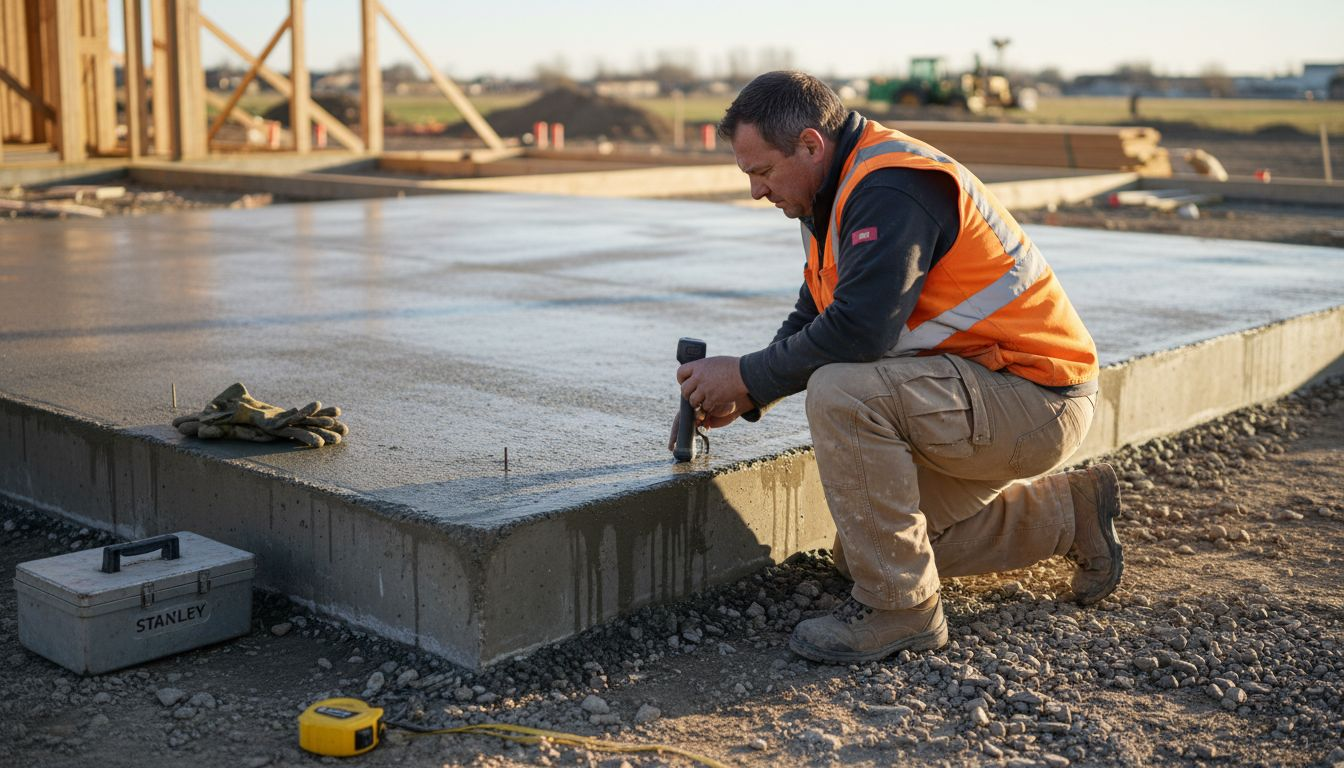
Slab-on-grade is the most common choice in Florida, especially in coastal and flat inland areas where cost-effectiveness matters. The entire building sits on a reinforced concrete slab poured directly on the ground.
This system offers clear advantages:
- Lower initial construction costs compared to other methods
- Faster installation and occupancy timeline
- Simpler mechanical and electrical routing through the slab
- Works well for single-story residential and commercial projects
However, slabs create challenges in flood zones. Water pressure beneath the slab causes damage, and elevated structures aren’t possible. If your site sits in a mapped flood zone, inspectors will likely reject slab-on-grade designs.
Slab plans must show proper slope and drainage specifications to prevent standing water and subsurface moisture accumulation. In Florida’s humid climate, this detail prevents long-term foundation failure.
Crawl Space Foundations
Crawl space foundations elevate the building slightly above grade using short walls or posts. This system dominates northern Florida where water tables sit lower and flooding risk decreases.
Crawl spaces provide real advantages:
- Ventilation reduces moisture and mold issues
- Accessible space for utilities and repairs
- Better flood resilience than slab-on-grade
- Easier foundation inspection after construction
Your foundation plan must specify ventilation requirements, moisture barriers, and access points. Florida’s Building Code requires specific vent sizing based on crawl space square footage.
Pier and Beam Foundations
Pier and beam systems elevate buildings on individual support posts driven deep into stable soil or rock. This method is essential in flood-prone areas and uneven terrain.
Pier and beam excels where it matters most:
- Provides elevation for flood zones and V-zones
- Works on sloped or unstable ground
- Allows water and storm surge to flow beneath
- Supports buildings on poor soil conditions
These plans require extensive detail: pier spacing, depth calculations, beam sizing, and connections. Your engineer must verify that pier depths reach competent bearing soil, which varies significantly across Florida.
Basements (Rare in Florida)
Basements are rarely practical in Florida due to shallow water tables and high groundwater. When they occur, they require aggressive dewatering systems and specialized foundation design.
Permit reviewers scrutinize basement plans carefully. Your design must prove adequate drainage, waterproofing, and structural integrity against hydrostatic pressure.
Your foundation type decision happens early in design. Changing it later means redesigning structural plans, resubmitting permits, and losing weeks on your schedule.
Pro tip: Conduct site soil testing and flood zone verification before your architect finalizes the foundation type. This $500 investment prevents $10,000+ in design revisions later.
Here is a comparison of the main foundation types used in Florida, highlighting their ideal applications and key considerations:
| Foundation Type | Best Used In | Flood Suitability | Key Design Challenge |
|---|---|---|---|
| Slab-on-Grade | Coastal/inland, flat sites | Poor in flood zones | Managing water pressure |
| Crawl Space | North Florida, moderate water table | Better than slab-on-grade | Ensuring proper ventilation |
| Pier and Beam | Flood-prone or sloped terrain | Excellent | Accurate pier depth/spacing |
| Basement (rare) | Rare, deep water table only | Challenging in Florida | Preventing groundwater entry |
Key components and how a plan works
A foundation plan isn’t just a pretty drawing. It’s a detailed technical document that shows exactly how your building will stand, settle, and survive Florida’s environmental challenges. Each component serves a specific purpose in ensuring structural integrity.
Understanding what goes into these plans helps you communicate better with engineers and catch potential issues before construction begins.
Essential Plan Components
Every complete foundation plan includes specific elements that work together:
- Foundation layout showing the entire footprint and wall locations
- Footing dimensions detailing width, depth, and reinforcement spacing
- Soil and site conditions based on geotechnical testing results
- Material specifications for concrete, steel, and other components
- Reinforcement details showing rebar size, spacing, and placement
- Elevations and depths critical for flood zones and water table clearance
- Drainage systems preventing water accumulation beneath and around the foundation
- Moisture control features like vapor barriers and waterproofing membranes
These aren’t optional details. Florida Building Code requires each one.
How Load Transfer Works
Your foundation’s primary job is transferring your building’s weight safely into the soil. Think of it as a series of pathways moving force downward.
The process flows like this: Roof and walls push down on beams. Beams transfer load to columns or walls. Columns and walls rest on footings. Footings spread that concentrated load across a wider soil area. The soil then supports everything.
If any step fails, the building settles unevenly. This causes cracks, door jams, and structural failure. Your foundation plan must prove each transfer point handles the calculated loads.
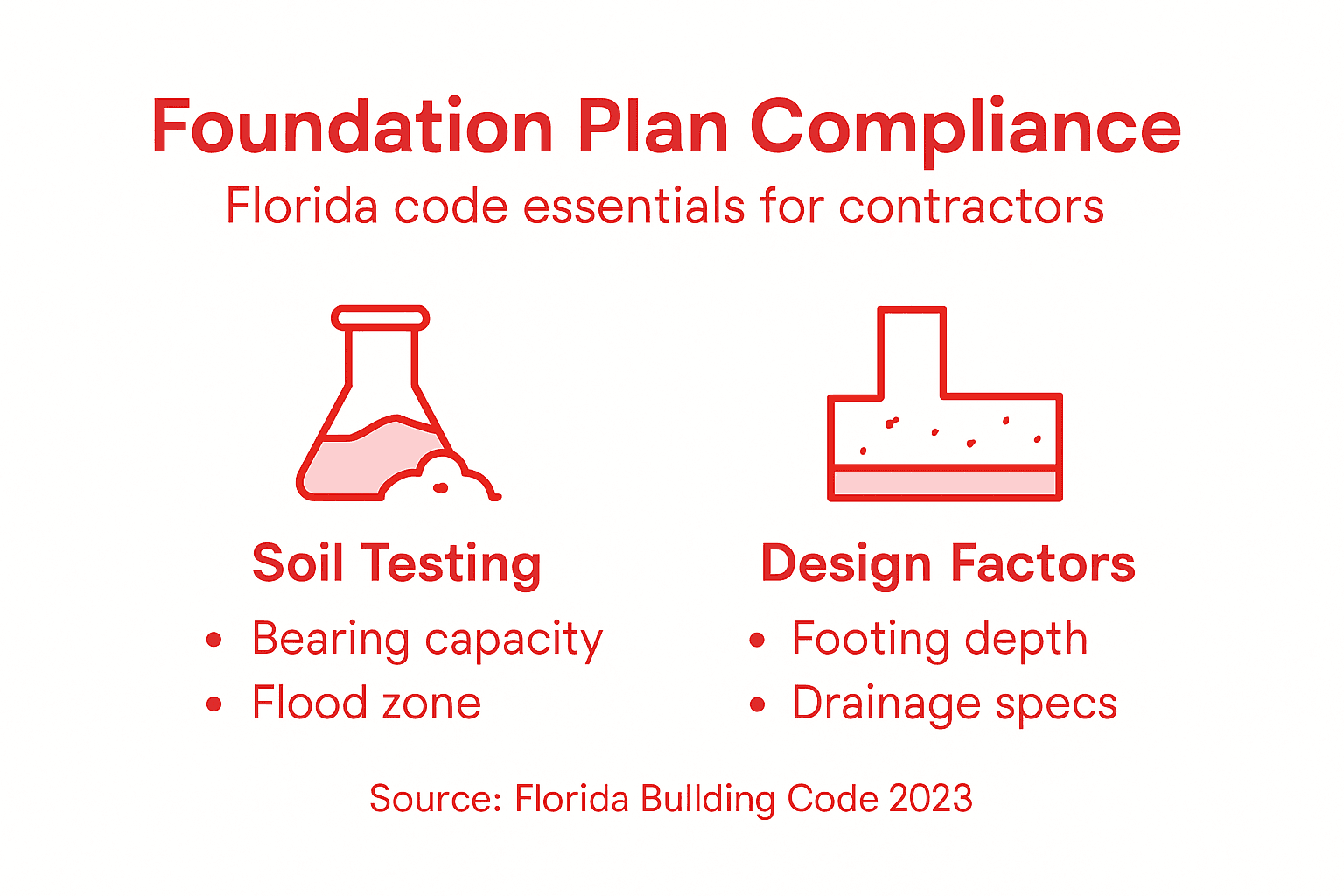
Soil Conditions and Bearing Capacity
Florida’s soil varies dramatically by location. Sandy soil near coasts compacts differently than clay in central regions. High water tables complicate everything.
Your engineer uses soil testing reports showing bearing capacity to determine footing depths and sizes. This isn’t guesswork. It’s engineering calculation based on site-specific data.
Shallow footings on weak soil cause settlement. Deep footings cost more but guarantee stability. Your soil report determines which approach your plan requires.
Drainage and Moisture Protection
Water is your foundation’s enemy in Florida. Standing water creates pressure, promotes decay, and destabilizes soil.
Proper plans include:
- Sloped grades directing water away from the building
- Subsurface drainage systems beneath slabs and crawl spaces
- Vapor barriers preventing moisture migration from soil into concrete
- Proper backfill materials allowing water drainage
These features prevent expensive problems like efflorescence, mold, and foundation movement caused by seasonal water table changes.
Plan Review and Permit Approval
Permit reviewers check foundation plans against specific code sections. They verify footing depths exceed minimum frost line requirements, reinforcement matches calculations, and drainage meets standards.
Incomplete or non-compliant plans get rejected. This costs you time and money. A thorough plan gets approved the first submission.
A foundation plan is your legal commitment that the building won’t fail. Inspectors, lenders, and courts rely on it as proof of competent design.
Pro tip: Request a soil boring report and geotechnical analysis before your engineer designs the foundation. This $800 investment ensures your plan reflects actual site conditions and prevents costly redesigns.
Florida building codes and legal requirements
Florida’s building codes aren’t suggestions. They’re legally binding standards enforced by local jurisdictions and backed by state authority. Non-compliance means rejected permits, fines, and liability exposure for you and your clients.
The Florida Building Code (FBC) establishes comprehensive standards addressing the state’s unique environmental challenges. Understanding these requirements prevents costly redesigns and project delays.
The Florida Building Code Foundation
The FBC applies to all new construction and substantial repairs throughout the state. It’s updated every three years to reflect new engineering knowledge and weather event lessons.
Local jurisdictions adopt the FBC and may add stricter amendments. Your county might require deeper footings than the state baseline. Always check local amendments before design begins.
Non-compliance carries real consequences:
- Permit rejection and project delays
- Liability for structural failure or water damage
- Fines and penalties from building departments
- Insurance denial for non-code construction
- Legal action from property owners
Your foundation plan must prove compliance with adopted code editions in your jurisdiction.
Foundation-Specific Code Requirements
The FBC mandates specific standards for foundation materials and construction methods to resist soil movement, moisture intrusion, and wind damage. These aren’t optional guidelines.
Key requirements include:
- Footings must rest on undisturbed soil or properly engineered fill at depths below frost line
- Reinforcement must meet minimum spacing and sizing per soil conditions
- Materials must resist corrosion and salt exposure in coastal areas
- Elevations in flood zones must satisfy base flood elevation requirements
- Drainage must prevent water accumulation and subsurface saturation
Different regulations apply to coastal versus inland regions reflecting unique environmental challenges. Your plan must address your specific location’s requirements.
Flood Zone and Elevation Compliance
Florida’s flood risk is real. FEMA flood zone designations directly determine foundation requirements. V-zone (velocity) properties demand elevated structures. A-zone properties need different approaches.
Your foundation plan must show elevation references tying to the base flood elevation. This isn’t optional in mapped flood zones. Lenders won’t finance non-compliant foundations, and insurers won’t cover them.
Coastal Construction Control Line (CCCL) Areas
Properties within the CCCL face stricter material and design standards due to saltwater exposure and hurricane wind loads. Foundation plans here require corrosion-resistant materials and reinforcement specifications addressing these specific hazards.
Permit reviewers check foundation plans against current code editions first. Non-compliance means automatic rejection, regardless of design quality.
Pro tip: Before starting design, request a code applicability letter from your local building department clarifying which FBC standards, amendments, and flood zone regulations apply to your specific project.
Critical compliance risks and costly mistakes
One foundation mistake can cost you tens of thousands in repairs, liability claims, and project delays. Many Florida contractors make preventable errors that undermine structural integrity and violate code requirements.
Understanding these risks helps you protect your projects and your business from expensive consequences.
Inadequate Soil Testing and Analysis
Skipping soil investigation is the costliest mistake contractors make. You can’t design a proper foundation without knowing what you’re building on.
Common errors include:
- Designing foundations without geotechnical reports
- Using soil assumptions from neighboring properties
- Ignoring expansive clay and shifting soil conditions
- Failing to test water table depth and composition
When soil conditions differ from assumptions, foundations settle unevenly. Cracks appear. Doors jam. Structural failure follows. Repairing settled foundations costs 5 to 10 times more than designing correctly upfront.
Your engineer needs actual soil data before design begins. Period.
Shallow Foundations in Poor Soils
Foundation failures in Florida often result from shallow foundations that don’t reach competent bearing soils. Sand, silt, and clay compact differently and settle at different rates.
Building on shallow footings in unstable soil causes:
- Differential settlement creating structural stress
- Cracking in walls, slabs, and foundations
- Water infiltration through settlement cracks
- Progressive failure over months or years
Footing depth requirements exist for a reason. Your engineer calculates depth based on soil bearing capacity. Cutting corners here guarantees problems.
Inadequate Waterproofing and Drainage
Florida’s high water tables and frequent rainfall create constant moisture challenges. Foundations without proper drainage fail prematurely.
Common drainage mistakes:
- Missing subsurface drainage systems
- Improper slope grading around the building
- No vapor barriers beneath slabs
- Inadequate backfill materials
- Blocked or clogged drainage systems
Water pressure beneath foundations causes damage that spreads. Efflorescence appears. Concrete deteriorates. Mold grows in crawl spaces. Foundation movement accelerates.
Proper drainage systems prevent these issues entirely.
Flood Zone Non-Compliance
Designing foundations that don’t meet flood zone elevation requirements creates uninsurable buildings. Lenders won’t finance them. Insurance companies won’t cover them.
Your foundation plan must show elevation tied to base flood elevation in flood hazard areas. V-zone properties need elevated structures. A-zone properties need different approaches.
Ignoring flood zone requirements means permit rejection and complete design rework.
Poor Workmanship During Construction
Even excellent plans fail with poor construction. Inadequate reinforcement placement, improper concrete curing, and careless backfill installation undermine design intent.
Inspections during construction catch these problems before concrete sets. Skip inspections and you inherit the problems.
One overlooked soil issue or drainage detail can create 10 years of foundation problems and liability exposure.
Pro tip: Require soil testing, geotechnical analysis, and licensed engineer design review before breaking ground. This upfront investment prevents catastrophic failure costs and protects your reputation with clients.
The following table summarizes critical risks during foundation planning, their business impact, and prevention strategies:
| Compliance Risk | Potential Impact | Best Prevention Step |
|---|---|---|
| Skipping soil testing | Expensive foundation failures | Require geotechnical report |
| Shallow footings in weak soil | Structural cracking and movement | Verify soil bearing capacity |
| Poor drainage/waterproofing | Moisture damage, settlement | Design proper drainage system |
| Ignoring flood zone rules | Uninsurable, rejected permits | Show elevations in plans |
| Construction shortcuts | Liability, costly future repairs | Schedule construction audits |
Secure Your Foundation Plan Compliance with Expert Engineering Services
Navigating Florida Building Code requirements for foundation plans can be overwhelming. From soil testing and flood zone compliance to proper drainage and reinforcement details your project demands precision and expertise to avoid costly delays and rework. If you want to prevent common pitfalls such as permit rejection or structural failures caused by inadequate design, partnering with seasoned professionals is essential.

Experience peace of mind by relying on our comprehensive engineering solutions tailored for Florida residential and commercial projects. We specialize in foundation blueprints, soil analysis, flood mitigation including elevation certificates, and permit expediter services to ensure your plans satisfy all regulatory criteria from the start. Don’t risk costly mistakes on your foundation design. Visit Florida Licensed Engineers today. Request your consultation now and secure timely approvals that keep your project on track.
Frequently Asked Questions
What is a foundation plan?
A foundation plan is a detailed technical drawing that outlines the design, dimensions, and specifications of a building’s foundation system. It includes essential details such as footing dimensions, reinforcement specifications, and drainage requirements.
Why are foundation plans necessary for construction projects?
Foundation plans are necessary to ensure compliance with local building codes, prevent structural failures, and avoid costly construction delays caused by permit rejections. They provide detailed engineering requirements specific to your site conditions.
What are the common misconceptions about foundation plans?
Common misconceptions include the belief that foundation plans are the same as site plans, that smaller projects don’t need foundation engineering, and that existing foundation standards apply universally across different locations.
How does soil condition affect foundation design?
Soil condition impacts foundation design significantly. Factors such as soil type, bearing capacity, and water table depth determine the required footing depth and type of foundation. Accurate soil testing is essential for proper foundation planning.
Recommended
- Architectural Plan Essentials: Ensuring Code Compliance – Florida Licensed Engineers
- Architectural Plan Essentials: Ensuring Code Compliance – Florida Licensed Engineers
- Comprehensive Inspection Procedures: Ensuring Florida Compliance – Florida Licensed Engineers
- Comprehensive Inspection Procedures: Ensuring Florida Compliance – Florida Licensed Engineers
