
Load analysis for safe Florida construction projects
TL;DR:
- Load analysis assesses forces like wind, live, dead, and environmental loads for building safety.
- Accurate load calculations are essential for permitting, design, and resilience in Florida’s climate.
- Licensed engineers perform and stamp load analysis to ensure code compliance and storm durability.
Most Florida homeowners and business owners assume that a stamped set of blueprints or a passed inspection means their building is truly safe. That assumption can be dangerously incomplete. The real foundation of structural safety is load analysis, the process that determines whether your building can actually handle the forces placed on it every single day, and during the storms that define Florida’s climate. Whether you’re building a new home, adding a commercial addition, or replacing a roof, understanding what load analysis is and how it shapes your project will help you make smarter decisions and avoid costly surprises.
Table of Contents
- What is load analysis and why is it essential?
- Key types of loads in Florida building projects
- How is load analysis performed? Process, professionals, and permitting
- Common pitfalls in load analysis for Florida homes and businesses
- A Florida engineer’s perspective: What most guides miss about load analysis
- Partnering with Florida-licensed engineers for safer, faster projects
- Frequently asked questions
Key Takeaways
| Point | Details |
|---|---|
| Load analysis defined | It’s the process of calculating all the forces a building must safely support, not just meeting minimum code. |
| Local Florida challenges | Wind, hurricanes, and code zones make proper analysis crucial for safety and permitting in Florida. |
| Avoiding common errors | Misjudging loads or skipping expert review can cause costly delays or failures, so attention to detail is key. |
| Professional support | Licensed engineers use specialized knowledge to perform code-compliant, resilient load analyses. |
What is load analysis and why is it essential?
Load analysis is the process of identifying, quantifying, and evaluating forces acting on a structure to ensure safety and stability. Think of it as a complete accounting of every weight, pressure, and force your building must resist without failing. It’s not optional, and it’s not something you can guess at.
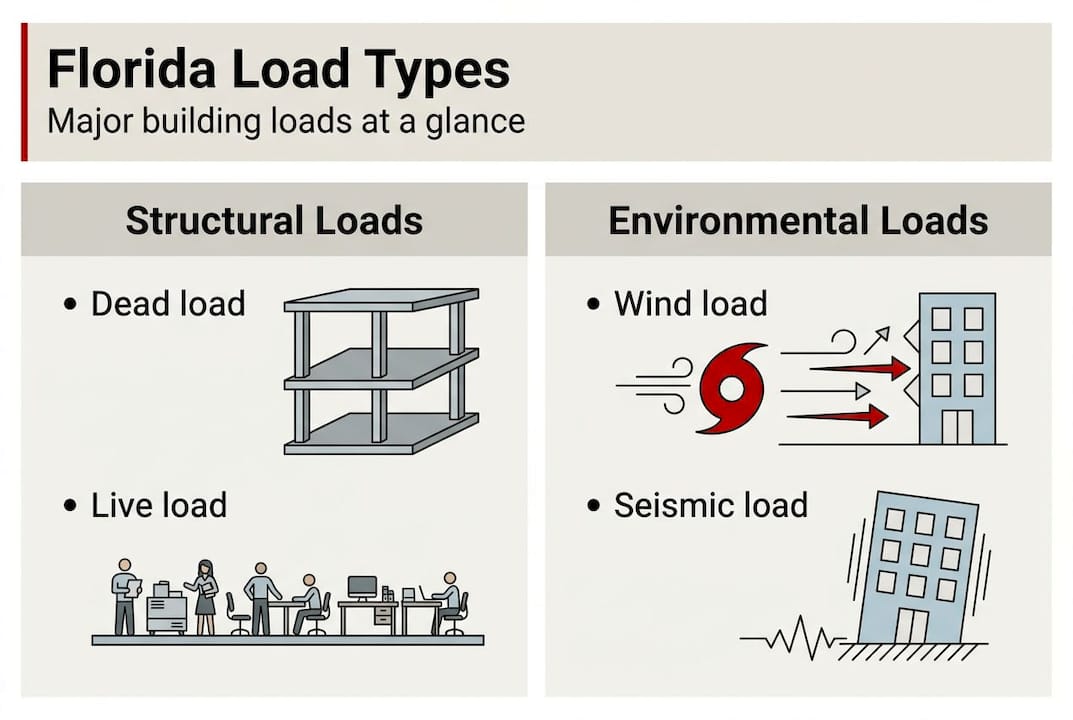
Every building faces multiple types of forces at once. Here are the core load categories engineers evaluate:
- Dead loads: The permanent weight of the structure itself, including framing, roofing, concrete, and fixed equipment.
- Live loads: Temporary forces from people, furniture, stored materials, and in Florida, rain ponding on flat roofs.
- Wind loads: Lateral and uplift forces from wind, which in Florida can be extreme during hurricane season.
- Seismic loads: Ground motion forces, which are minor in Florida but still factored into code compliance.
- Environmental loads: Thermal expansion, moisture effects, and soil pressure on foundations.
In Florida, wind and hurricane resistance dominate the conversation. The state has learned hard lessons from storms like Hurricane Andrew, which exposed catastrophic gaps in how structures were designed and built. The Florida Building Code now requires that wind loads be calculated with precision, accounting for your building’s location, height, shape, and exposure.
“A continuous load path, where forces transfer safely from roof to wall to foundation, is what prevents progressive structural failure during extreme events.”
Proper load analysis also protects you financially. Skipping or shortcutting this step leads to over-built or under-built structures, both of which cost you money. Over-engineering wastes materials. Under-engineering creates liability, failed inspections, and potentially dangerous conditions. Understanding the difference between architectural vs structural plans helps clarify why structural calculations go far beyond what a floor plan or elevation drawing can show.
Load analysis is the invisible backbone of every safe building in Florida. Without it, even the most beautiful blueprints are just drawings.
Key types of loads in Florida building projects
Now that you’ve grasped what load analysis is, let’s zero in on the load types that matter most in Florida and how they’re calculated.
Dead loads are straightforward but often underestimated. Asphalt shingles add 2 to 3 psf (pounds per square foot) to your roof structure, while metal roofing adds only 1 to 2 psf, and uninhabitable roof spaces carry a live load of 20 psf. These numbers matter when you’re adding solar panels, a new HVAC unit, or re-roofing with heavier materials.
Live loads in Florida are shaped by the climate. Snow is not a concern, but rain ponding on low-slope commercial roofs is a real risk. If drainage is inadequate, water accumulates and adds significant weight fast. Engineers account for this when designing roof slopes, drainage systems, and structural members.
Wind loads are where Florida truly stands apart. Exposure categories B, C, and D classify your site based on terrain and proximity to open water. Coastal properties in Exposure D face the highest wind pressures. The High-Velocity Hurricane Zone (HVHZ), which covers Miami-Dade and Broward counties, has the strictest requirements in the country, including mandatory impact-resistant glazing and wind-borne debris protection.
| Load type | Typical range (Florida) | Key consideration |
|---|---|---|
| Roof dead load (shingles) | 2 to 3 psf | Material weight adds up fast |
| Roof dead load (metal) | 1 to 2 psf | Lighter but still calculated |
| Roof live load | 20 psf | Rain ponding on flat roofs |
| Wind load (coastal) | 150 to 180 mph design | HVHZ requires highest standards |
| Floor live load (residential) | 40 psf | People, furniture, activity |
Seismic loads are low priority in Florida compared to wind, but they’re still included in engineered calculations for completeness and code compliance.
Pro Tip: Attic ductwork, solar panel arrays, and rooftop HVAC equipment all count as dead loads. If your engineer isn’t asking about these items, that’s a red flag. Every added component changes the load calculation and must be reflected in your foundation plan compliance and your structural checklist.
Getting these numbers right from the start is what separates a project that sails through permitting from one that gets flagged for revisions.
How is load analysis performed? Process, professionals, and permitting
With the main types of loads in mind, it’s time to see how professionals actually perform a load analysis and how this process ties directly into Florida permitting.
A licensed professional engineer leads this work. Here’s how the process typically unfolds for a Florida project:
- Site assessment: The engineer reviews the property location, exposure category, wind speed zone, and soil conditions.
- Load calculations: Using Florida Building Code standards, the engineer quantifies dead, live, wind, and other applicable loads for every structural element.
- Code compliance check: Calculations are verified against current FBC requirements, including HVHZ rules where applicable.
- Documentation: A stamped engineering report is prepared, detailing all load assumptions, calculations, and design decisions.
- Plan review submission: The stamped documents are submitted with permit applications for review by the local building department.
Commercial projects carry higher occupancy risk, which means a full engineered load analysis is required for permits. Residential projects in standard zones may follow prescriptive code paths, but anything in HVHZ, with unusual roof geometry, or involving additions to existing structures typically requires a licensed engineer.
Florida’s post-hurricane code revisions following storms like Andrew have made continuous load path design a non-negotiable standard. This means every connection, from roof sheathing to truss to wall to foundation, must be engineered to transfer forces without breaking the chain.
Smooth permitting starts with accurate load analysis. Building departments flag incomplete or inconsistent calculations quickly, and revisions cost time and money. Reviewing structural inspection procedures before your project starts helps you understand what inspectors are looking for. Pairing that with proper design and permitting support keeps your project on schedule.
Pro Tip: Bring your engineer in at the design phase, not after plans are drawn. Early involvement means load requirements shape the design, rather than forcing expensive structural changes after the fact.
Common pitfalls in load analysis for Florida homes and businesses
Understanding the process is one thing, but knowing what commonly goes wrong can save you time, money, and major headaches.
HVAC oversizing is one of the most common errors in Florida. Contractors sometimes install units that are too large, assuming bigger means better. But oversized systems short-cycle, fail to remove humidity properly, and add unnecessary dead load to the structure. Manual S calculations verify that latent capacity matches your actual building conditions, and they must be part of your mechanical load analysis.
Attic ductwork is another overlooked factor. Ducts in unconditioned attics can cause 15 to 25% efficiency loss and also add weight that must be included in structural calculations. Engineers who skip this step are leaving real data out of the equation.
Here are the most common load analysis mistakes seen on Florida projects:
- Failing to account for solar panel weight and wind uplift on rooftop arrays
- Using outdated wind zone maps instead of current FBC wind speed maps
- Ignoring wind-borne debris region requirements in coastal and HVHZ areas
- Underestimating rain ponding loads on low-slope commercial roofs
- Missing load path connections at critical structural junctions
| Scenario | Correct approach | Common mistake |
|---|---|---|
| HVAC sizing | Manual S calculation with latent load | Oversizing based on rule of thumb |
| Solar panels | Added to dead load calculations | Treated as negligible weight |
| Wind zone | Current FBC map, site-specific | Generic statewide assumption |
| Attic ducts | Included in structural and mechanical loads | Overlooked entirely |
“Even a small error in load assumptions can compound through the entire structural design, leading to undersized connections, failed inspections, or worse, real damage during a storm.”
As a homeowner or project manager, watch for red flags like engineers who don’t ask about existing equipment, contractors who skip debris zone checks, or plans that don’t reference current code maps. Understanding mechanical design in Florida and following a thorough construction inspections guide helps you catch these issues before they become expensive problems. Even site work like pool excavation can affect adjacent structural loads and soil conditions, which must be factored into your analysis.
A Florida engineer’s perspective: What most guides miss about load analysis
Most guides stop at explaining the code minimums. Here’s what that misses entirely.
Meeting minimum code means your building is legal. It does not mean your building is resilient. Florida’s code sets a floor, not a ceiling. We’ve seen structures that passed every inspection and still suffered significant damage in a major storm because the design met the letter of the code without understanding the spirit behind it.
The most costly mistakes we see don’t come from bad math. They come from early design decisions that ignore load realities, or from plan review submissions that treat load analysis as a paperwork exercise rather than a safety tool. When load paths aren’t fully thought through at the design stage, fixing them later is expensive and sometimes impossible without major structural changes.
Building resilience beyond the minimum is a real investment decision. It means asking your engineer not just “does this meet code” but “how does this perform in a Category 4 storm.” Those are very different questions. Reviewing your permitting and Florida codes process with an engineer who thinks this way changes the outcome of your project.
Pro Tip: Ask your engineer how their load analysis protects your investment beyond the minimum code requirement. If they can’t answer that clearly, keep looking.
Partnering with Florida-licensed engineers for safer, faster projects
Now that you have real clarity on load analysis, the next step is working with professionals who know Florida’s codes, climate, and permitting landscape inside and out.

At Florida Licensed Engineers, we handle engineering services for residential and commercial projects across the state, including structural, mechanical, electrical, and plumbing plans, as well as inspections, permitting expediting, and forensic reports. Our team understands what local building departments need and how to get your project approved without unnecessary back-and-forth. From the first load calculation to the final stamped blueprint, we keep your project safe, code-compliant, and moving forward. Reach out today to talk through your project with a licensed Florida engineer.
Frequently asked questions
What are the most important loads considered in Florida construction?
Wind, dead, and live loads are most critical in Florida, with wind load design taking priority in hurricane and coastal zones where design speeds can exceed 150 mph.
How does load analysis affect the building permit process?
Accurate load analysis is required for permit approval, especially for commercial projects and structures in higher risk categories, because it proves your design meets safety standards.
Who does load analysis for Florida homes and businesses?
Licensed professional engineers perform and stamp load analyses in Florida, ensuring calculations meet state and local code requirements for both residential and commercial projects.
Can load analysis prevent roof collapse during storms?
Yes. Proper load analysis combined with continuous load path design ensures roofs are engineered to transfer wind and rain forces safely through the entire structure, reducing collapse risk significantly.
Recommended
- Florida building codes explained: safe, compliant projects – Florida Licensed Engineers
- Site Inspection: Ensuring Safe, Compliant Projects in Florida – Florida Licensed Engineers
- 7 Essential Civil Engineering Tips for Florida Developers – Florida Licensed Engineers
- Why Hire Licensed Pool Builders in Florida


